
Handmade Wedding Dresses
Handmade wedding dresses represent the pinnacle of bridal craftsmanship: garments shaped by human hands, precise measurements, and intentional detail rather than industrial repetition. In an era of fast fashion and identical runway looks, they deliver perfect fit, emotional resonance, heirloom potential, and originality.
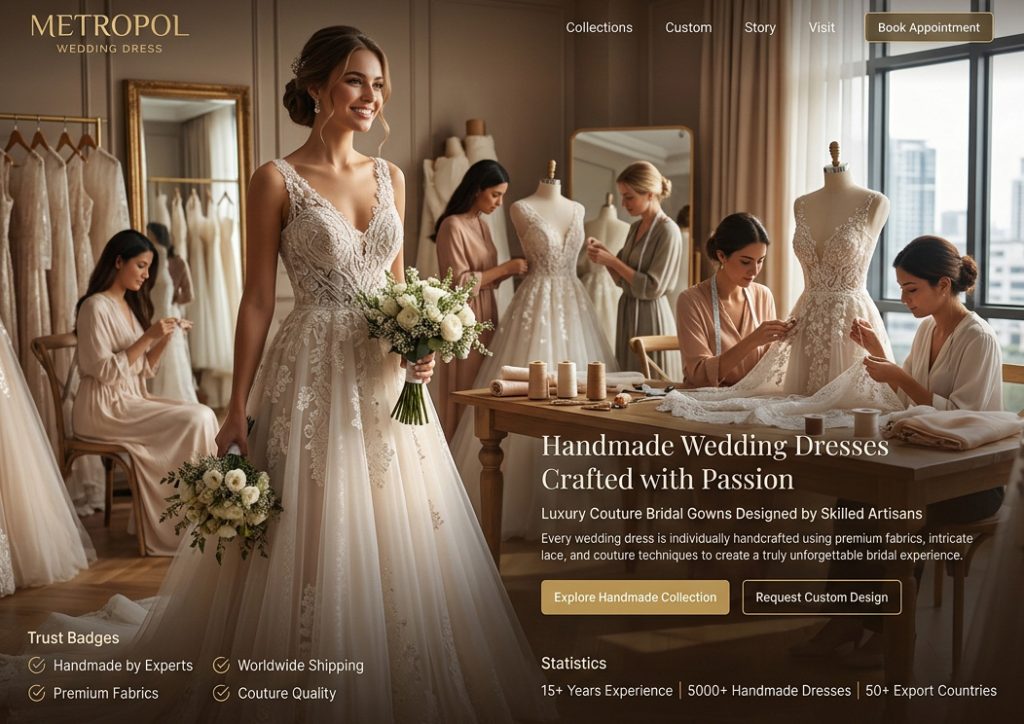
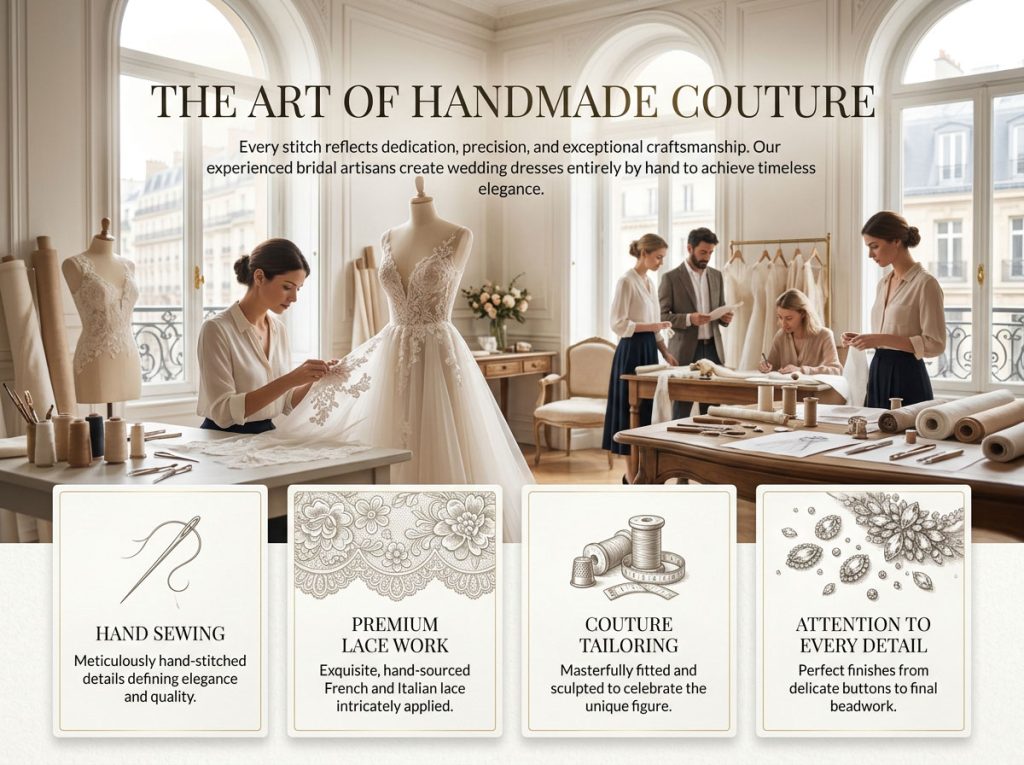
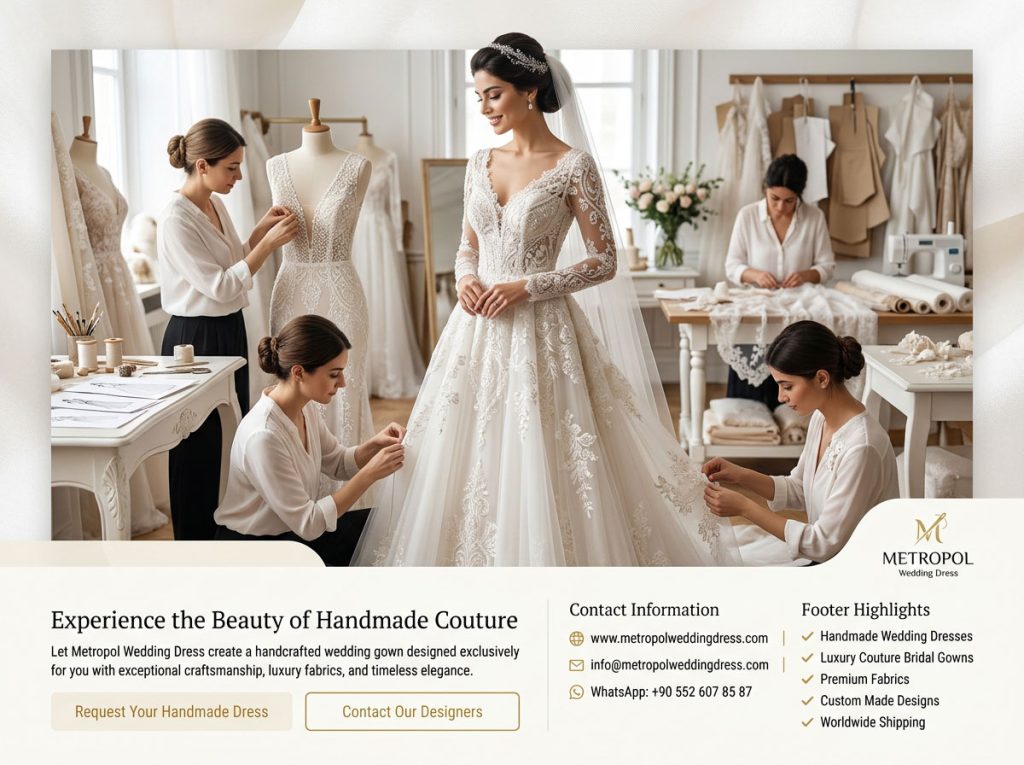
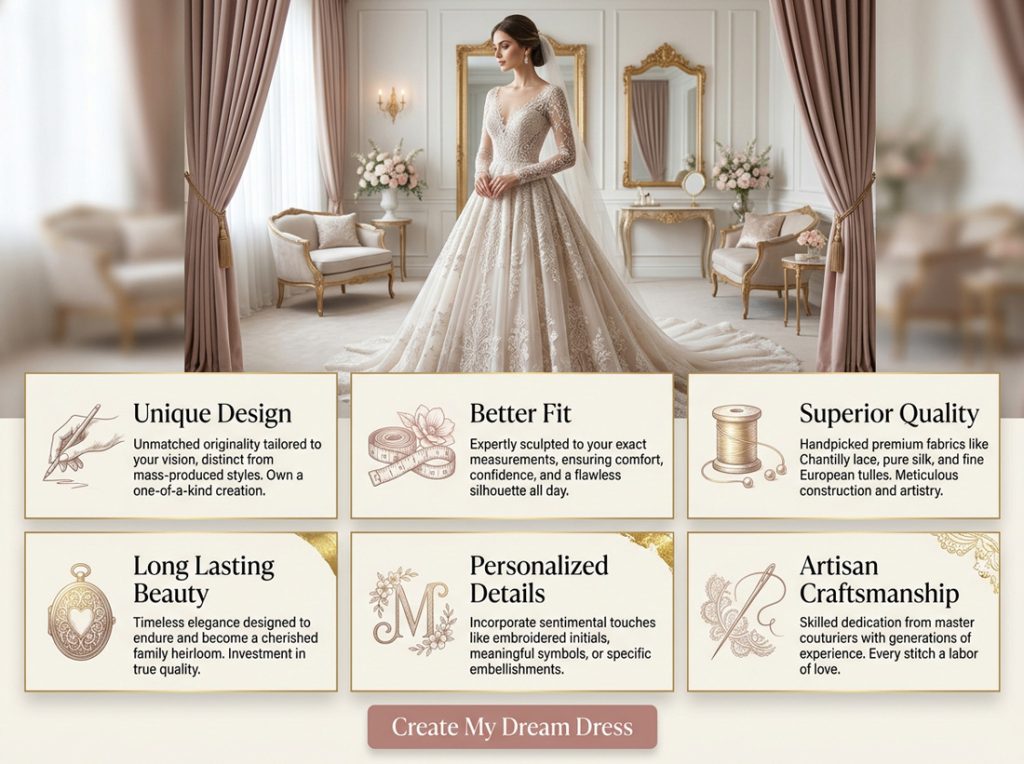
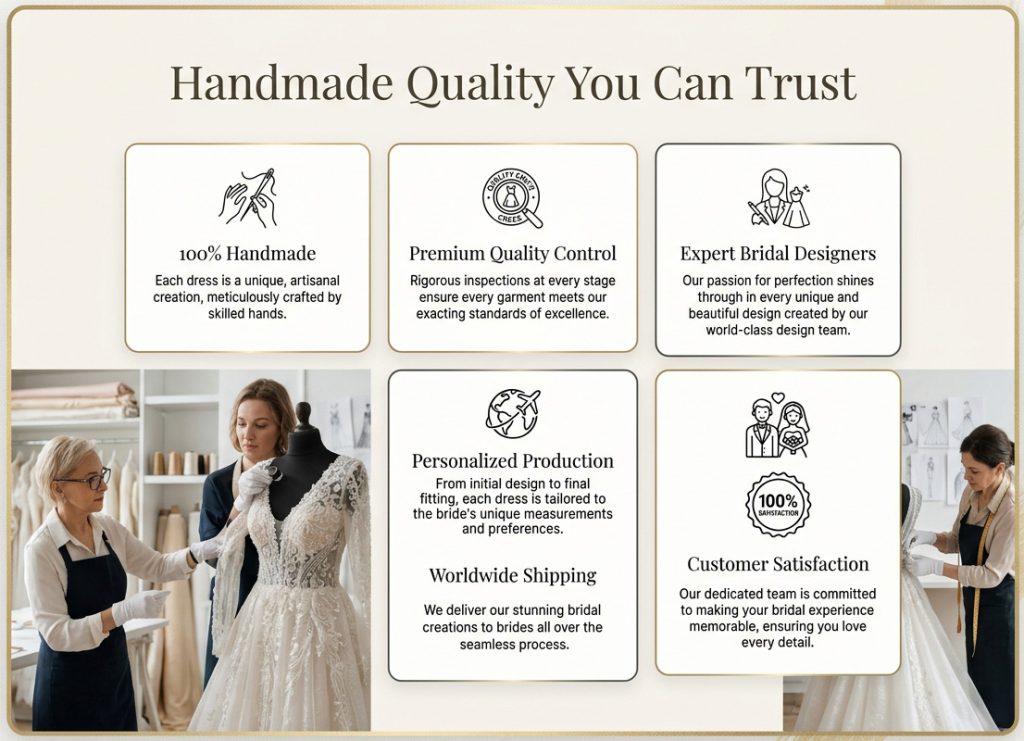
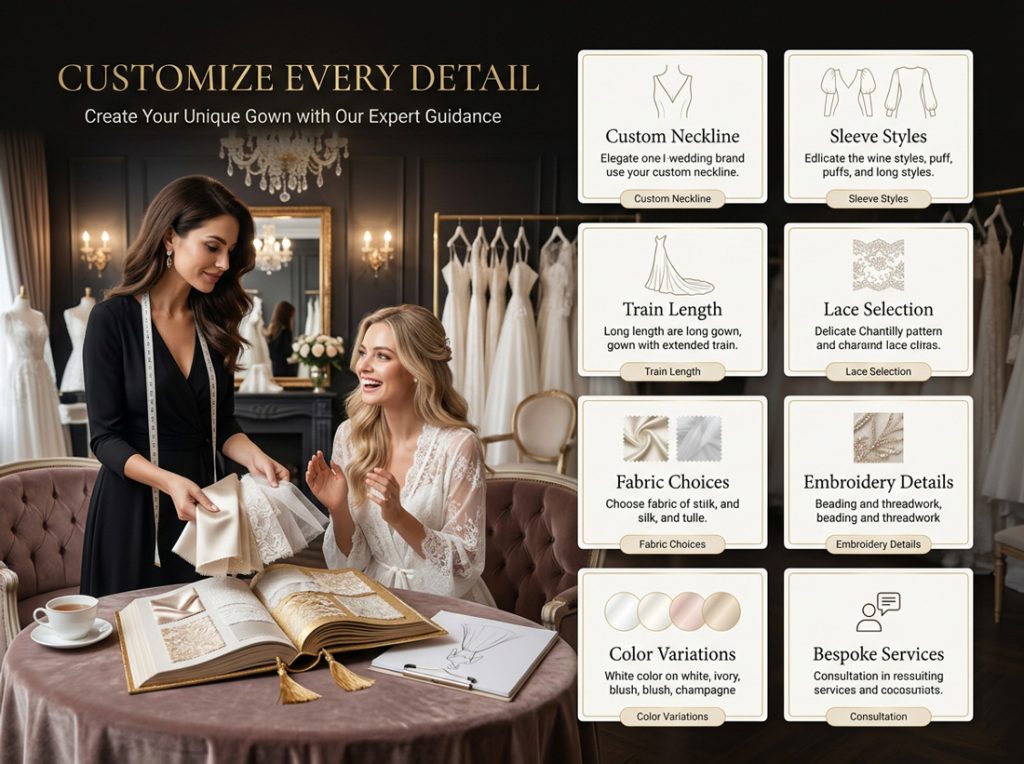
Metropol Wedding Dress, a Turkish atelier with more than two decades of experience operating from an expansive Izmir workshop, specializes in this art. The brand combines traditional hand techniques with modern silhouettes, offering fully customizable gowns (including culturally adaptive options) at accessible luxury price points for individual brides and wholesale partners worldwide.
This guide explores materials, production realities, 2026 trends favoring artisanal details, cost structures, selection criteria, common pitfalls, and practical decision frameworks. It is written for brides seeking authenticity and for retailers evaluating quality partners. The focus is substance over hype: what handmade actually means, why it matters, and how to secure one that lasts beyond the wedding day.
The Quiet Revolution in Bridal Wear: Why Handmade Wedding Dresses Matter More Than Ever
Something shifted in bridal fashion around 2025–2026. Runway shows and boutique floors began filling with pieces that felt deliberately imperfect in the best sense—slight variations in bead placement, hand-applied florals that catch light differently from every angle, lace motifs that refuse perfect machine symmetry. Crochet textures, three-dimensional fabric blooms requiring 15–40 minutes of handwork each, irregular freshwater pearls constellation-mapped onto tulle: these are not accidents of production. They are declarations.
Brides are rejecting the idea that a wedding dress should look identical to the one worn by someone else on Instagram. They want garments that carry the mark of human time. Handmade wedding dresses answer that desire. They are not simply “more expensive versions of the same thing.” They are structurally, materially, and emotionally different objects.
Metropol Wedding Dress has operated in this space for over twenty years. Based in İzmir, Turkey, the brand runs a substantial production atelier (reported in the 800–1,200 square meter range) staffed by pattern makers, embroiderers, and seamstresses who treat each gown as an individual commission rather than a batch item. The company serves both end brides seeking custom work and boutiques requiring wholesale exclusivity. Price points typically range from accessible luxury (around 300 euros) into higher custom territory (up to roughly 2,000 euros and beyond depending on complexity), positioning Metropol as a bridge between pure haute couture and realistic budgets.
This article examines the full landscape of handmade bridal gowns through the lenses of materials science, production labor, market trends, cost reality, fit engineering, and long-term value. It is not a catalog. It is a decision framework.
Material Reality: What Actually Goes Into a Handmade Gown
Fabric choice determines everything that follows—drape, structure, comfort across a twelve-hour day, photographic behavior, and aging potential.
Primary face fabrics commonly used in quality handmade work include:
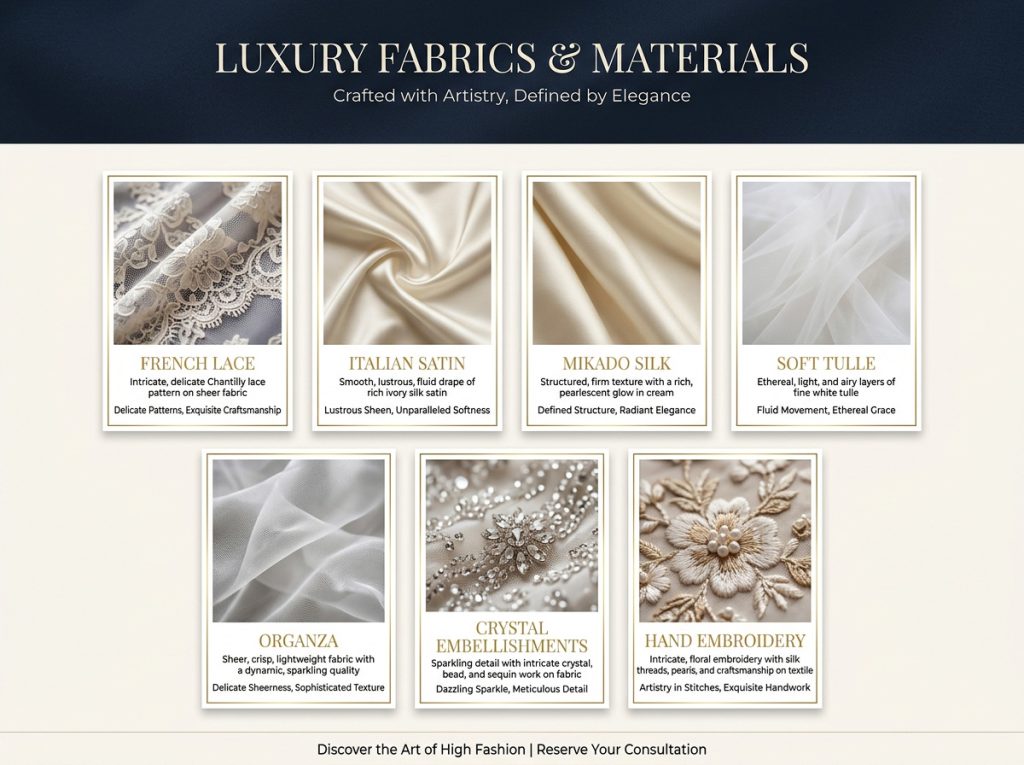
- Silk (charmeuse, crepe, mikado, organza, gazar): Natural luminosity, excellent drape or controlled structure depending on weave. Mikado offers architectural body; charmeuse delivers liquid movement.
- High-grade lace (French Calais, Chantilly, Alençon, Guipure, rebrodé): Patterns that can be cut and repositioned by hand. French lace remains the benchmark for clarity of motif and durability under tension.
- Tulle and organza (silk or high-quality nylon/poly blends): Volume without crushing weight. Multiple layers create soft architecture.
- Crepe and satin variants: Matte or luminous finishes that photograph cleanly and resist some wrinkling.
Supporting structures matter equally: silk organza interfacing, spiral steel or plastic-free boning, horsehair braid for hem stability, and carefully chosen linings that allow the outer fabric to move independently.
In a handmade process these materials are selected, cut, and joined with knowledge of how each will behave on a specific body in specific climate conditions. Machine production often substitutes lower-grade synthetics or uniform lace that cannot be selectively applied. The difference becomes visible under natural light and after hours of wear.
Expert observation: A gown built with genuine silk and hand-placed lace will show subtle movement and light refraction that machine embroidery rarely replicates. The hand-applied motif has slight dimensional variation; the machine version is flatter and more repetitive.
The Production Sequence: Hours That Cannot Be Compressed
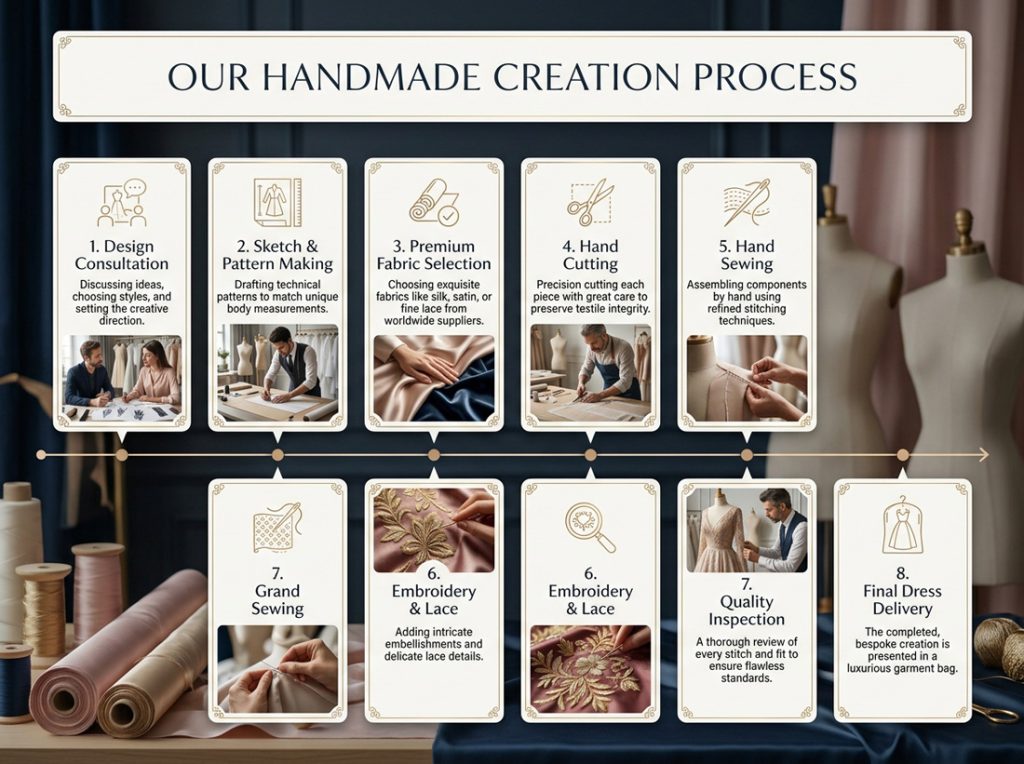
Creating a true handmade wedding dress follows a disciplined sequence. Skipping or rushing any stage degrades the final result.
- Consultation and design translation Discussion of silhouette, neckline, sleeve treatment, train length, cultural requirements (for example, modest coverage or detachable elements), venue, and season. Sketches or digital visualizations are refined until both parties agree.
- Precise measurement More than the standard eight points. Experienced fitters take 15–25 measurements including apex positions, seated waist, armscye depth, and posture-related notes. Body asymmetry is recorded rather than ignored.
- Pattern development and toile (muslin mock-up) A full or partial toile is constructed and fitted. Adjustments are made to darts, princess seams, and balance lines before any fashion fabric is cut. This stage prevents expensive mistakes.
- Fabric cutting and foundation construction Outer fabric and lining are cut. The internal architecture—boning channels, interfacing, support layers—is built first. Structure precedes beauty.
- Assembly and hand finishing Seams are sewn (often with a combination of machine for strength and hand for finesse). Lace motifs are positioned, pinned, and stitched by hand. Beads, pearls, or 3D florals are applied individually. Closures (invisible zippers, buttons, corset lacing) are installed with care for both function and aesthetics.
- Multiple fittings and final refinement Two to four fittings are typical. Hem length is set last, usually after the bride has chosen final shoes. Steam, pressing, and quality inspection close the process.
Labor estimates for a moderately complex handmade gown range from 40–100+ hours of skilled work, not counting design time. A skirt fully covered in three-dimensional florals can require 80–200 hours of embellishment alone. These numbers explain both the price differential and the impossibility of true handmade work at fast-fashion speed.
Metropol’s atelier process includes client photo updates at key stages (after mold approval, after lace application) so remote brides can remain involved without traveling for every fitting.
2026 Trends That Favor the Handmade Approach
Current bridal direction actively rewards the qualities only handwork can deliver:
- Hand-applied or crochet-effect textures and openwork.
- Selective three-dimensional florals rather than all-over machine prints.
- Organic placement of freshwater pearls and irregular beading.
- Soft volume paired with intentional structure (hidden corsetry under fluid outer layers).
- Transformer or convertible elements that allow one gown to serve ceremony and reception.
- Heirloom-minded details: personal embroidery, panels that can later be repurposed, or designs intended to be worn again or passed down.
These trends are not aesthetic whims. They reflect a broader cultural preference for objects with provenance and for experiences that feel personal rather than algorithmically optimized. Machine production can approximate surface effects; it cannot supply the same narrative of human time invested.
Cost Structure and Value Calculation
Average wedding dress spend in major markets sits roughly in the $1,500–$3,000 range for many brides, with significant variation by region and complexity. Fully custom or high-handwork pieces often start higher.
What the price actually buys in a handmade context:
- Fabric and notions of higher grade.
- Labor hours of trained artisans.
- Fit precision that reduces or eliminates extensive post-purchase alterations.
- Exclusivity (the dress is not sold in identical form to hundreds of others).
- Potential longevity as an heirloom rather than a single-use garment.
A realistic comparison is not “handmade versus the cheapest machine dress.” It is “handmade versus a mid-to-high machine gown plus inevitable alterations plus the emotional cost of a less-than-perfect fit.” When alterations on an off-the-rack dress run $500–$2,000, the gap narrows. When the handmade gown is built to exact measurements from the start, the total ownership experience often favors the artisanal route.
Metropol’s model deliberately occupies the accessible-luxury segment, making genuine handcraft available without the five-figure couture price tags of certain European or American houses.
Decision Framework: Is Handmade Right for You?
Strong indicators in favor:
- You value uniqueness and dislike the idea of another bride wearing the identical design.
- Your body falls outside standard size ranges or has notable asymmetry.
- You want specific cultural, religious, or personal modifications.
- You have six to twelve months of lead time.
- Emotional resonance and potential heirloom status matter to you.
Situations where ready-to-wear or made-to-order may be preferable:
- Wedding date is less than four months away.
- Budget is strictly under the entry level for quality handmade work.
- You prefer the certainty of trying on a finished sample and walking out with it.
Practical Selection Checklist
Use this list when evaluating any handmade or custom option:
- Can the maker demonstrate clear stages of the process with photos or video from previous commissions?
- Are measurements taken by someone experienced, and is a toile stage included?
- What is the exact fabric composition and origin of the lace or main materials?
- How many fittings are included, and what is the policy for remote clients?
- Who performs the hand embellishment—trained specialists or general sewers?
- What is the timeline from deposit to final delivery, and are milestone updates provided?
- Are there written agreements covering design approval, payment schedule, and cancellation terms?
Common Pitfalls and How to Avoid Them
- Ordering too late and then pressuring the maker to compress handwork stages. Result: compromised quality.
- Choosing a design that photographs beautifully on a sample but ignores real body movement or climate.
- Focusing only on the exterior while neglecting internal structure; the gown will collapse or feel uncomfortable after a few hours.
- Assuming “handmade” always means fully bespoke; some brands use the term loosely for limited machine-assisted production. Clarify the percentage of hand labor.
- Neglecting care instructions; even the best materials require proper storage and professional cleaning after the event if the gown is to survive as an heirloom.
Real-World Scenarios
A destination bride with a beach ceremony needs lightweight layers, breathable structure, and a train that can be bustled or detached. A handmade process allows exact fabric weight and support decisions rather than adapting a stock heavy gown.
A bride with significant height or posture variation benefits from pattern adjustments that standard sizing cannot achieve.
A boutique owner seeking exclusive inventory can commission limited runs with signature details that differentiate the store from mass-market competitors. Metropol’s wholesale model supports this need.
Maintenance and Afterlife
A well-made handmade gown, properly cleaned and stored in acid-free tissue away from light and humidity, can last decades. Many brides later have elements reinvented into christening gowns, anniversary dresses, or framed textile art. The investment is not solely for one day.
Closing Perspective
Handmade wedding dresses are not a luxury accessory for the few. They are a deliberate choice for anyone who believes the most important garment of a lifetime should carry the imprint of care, time, and individual attention. Metropol Wedding Dress has spent more than twenty years refining the practical execution of that choice—combining Turkish craftsmanship heritage with global accessibility and modern design sensibility.
The result is not merely a dress. It is a wearable record of intention.
Frequently Asked Questions
What exactly distinguishes a handmade wedding dress from a machine-made one? Handmade involves significant portions of cutting, assembly, embellishment, and finishing performed by skilled individuals rather than automated production lines. Fit is developed around specific measurements rather than graded standard sizes. Details such as lace placement and beading show subtle human variation.
How long does it typically take to create a handmade wedding dress? From final design approval to completion, four to nine months is common for complex pieces, depending on the maker’s schedule and the amount of hand embellishment. Simpler styles can be faster; highly detailed ones take longer.
Can I still get a handmade dress if my wedding is only five months away? It depends on the atelier’s current capacity and the complexity of the design. Some makers can accelerate simpler gowns; others maintain firm timelines to protect quality. Early inquiry is essential.
Are handmade dresses only for traditional ball gowns? No. Contemporary silhouettes—slip dresses, clean sheaths, convertible styles, minimalist columns—benefit equally from precise hand construction and custom fit.
What is the realistic price range for quality handmade bridal gowns? Entry-level accessible handmade work can begin in the low-to-mid hundreds of euros or dollars. Fully custom pieces with extensive hand embroidery commonly range from roughly $1,500–$5,000+, with pure haute couture extending higher. Metropol operates primarily in the accessible-to-mid luxury band.
Does “handmade” guarantee better quality than a well-made machine gown? Not automatically. Quality depends on the skill of the makers, the materials chosen, and the integrity of the process. However, true hand processes allow superior fit and unique detailing that machines struggle to match.
How many fittings should I expect? Two to four is standard. The first is often a toile or foundation fitting; subsequent ones refine the fashion fabric version.
Can remote or international brides order successfully? Yes. Many ateliers, including Metropol, work with detailed measurement guides, photo progress updates, and local seamstresses for final hem adjustments if needed.
What fabrics are best for warm-weather or destination weddings? Lightweight silk crepe, fine tulle, organza, and certain chiffons. Structure can still be built in without excessive weight.
How do I know if the lace is truly high quality? Ask about origin (French Calais lace is a recognized benchmark), fiber content, and whether motifs can be selectively applied by hand. Examine the clarity of the pattern and the strength of the ground fabric.
Is it possible to incorporate family heirloom lace or fabric? Many handmade makers can integrate existing materials, though compatibility testing is required.
What happens if my measurements change during the process? Reputable makers build in a degree of adjustability and schedule final fittings close enough to the wedding to accommodate modest changes. Significant weight fluctuations should be discussed early.
Do handmade dresses require special cleaning? Yes. Professional bridal cleaning is recommended after the event, followed by proper archival storage if the gown is to be preserved.
Can the same atelier produce matching or coordinating pieces for the bridal party? Some can; others specialize only in bridal. Clarify scope at the consultation stage.
How important is the internal structure? Critical. A beautiful exterior without proper boning, interfacing, and support will lose shape, feel uncomfortable, or photograph poorly after hours of wear.
Are there sustainable advantages to handmade production? Small-batch or made-to-order production generally creates less overstock waste. Choice of natural or certified materials further improves the profile.
What should a contract or order agreement include? Design specifications, fabric details, timeline with milestones, payment schedule, fitting schedule, cancellation policy, and ownership of the design.
Can I request design changes mid-process? Minor adjustments are often possible early on. Major changes after fabric is cut become costly or impossible.
How does wholesale ordering work for boutiques? Metropol and similar manufacturers typically offer collections or custom runs with minimum quantities, exclusivity options in certain territories, and support for retail partners.
What is the advantage of working with a Turkish atelier such as Metropol? Strong tradition of bridal craftsmanship, competitive pricing relative to Western Europe or North America, scalable production capacity, and experience serving both individual and wholesale international clients.
Will the dress look the same in person as in photos? High-quality makers provide accurate photography and often fabric swatches. Lighting and body movement still create differences; fittings remain essential.
Is hand-beading stronger or more durable than machine embroidery? Hand techniques can offer superior three-dimensional quality and material flexibility. Durability depends on the specific method and materials used.
Can a handmade dress be altered later for a different wearer? Yes, within reason. Heirloom redesigns are a recognized practice.
How do I evaluate the skill level of an atelier? Review completed commissions in detail, ask about the training of the team, request process documentation, and speak with previous clients if possible.
What role does the pattern maker play? The pattern is the architectural blueprint. A skilled pattern maker translates measurements and design intent into pieces that fit and move correctly.
Are there cultural or religious adaptations commonly requested? Yes—modest coverage, detachable sleeves or jackets, specific color accents, or hijab-compatible designs are routinely accommodated in experienced ateliers.
How should I prepare for the first consultation? Gather inspiration images, note firm dislikes, know your approximate budget and timeline, and have a clear sense of the wedding setting and season.
What is the difference between “made-to-order” and fully handmade custom? Made-to-order usually means a existing design produced in your size. Fully custom begins with original design development for the individual client.
Does a higher price always equal better craftsmanship? Not always. Transparency about materials, labor hours, and process is more reliable than price alone.
Can I visit the atelier in person? For local or traveling clients, yes. Many international clients manage the process remotely with strong communication protocols.
What aftercare advice is most important? Avoid hanging the gown for long periods before the wedding (it can stretch). Store it properly after cleaning. Follow the maker’s specific care recommendations.
How does Metropol handle design exclusivity for wholesale clients? The company works with partners to provide distinctive pieces and can limit distribution of certain styles within defined markets.
Is it realistic to expect a one-of-a-kind result? With true custom work, yes. Even within a collection, hand finishing creates variation.
What questions should I ask about the team? Who will cut the fabric? Who performs the embroidery or beading? How many years of specialized bridal experience do key artisans have?
Can the gown be designed for multiple wears or future events? Yes. Cleaner lines, convertible elements, or separable components increase versatility.
How do lighting and photography interact with handmade details? Hand-applied textures and dimensional embellishments often create more interesting light play and movement in photographs than flat machine surfaces.
What is a realistic deposit structure? Many ateliers require 30–50% to begin work, with the balance due before shipping or at final fitting.
Are shipping and customs handled for international orders? Experienced exporters such as Metropol manage logistics; clients should clarify insurance, duties, and delivery timelines.
How can I verify claims of “handmade”? Request process documentation, ask specific questions about which stages are performed by hand, and examine the quality of finishing details that machines rarely perfect.
What is the single most important factor for success with a handmade dress? Clear, ongoing communication between bride (or boutique) and maker, combined with realistic timelines and mutual respect for the craft.
Five Distinct Calls to Action
- Begin the conversation. Share your vision, measurements, and timeline with Metropol Wedding Dress and discover how a truly handcrafted gown can be shaped around you.
- For boutique owners and retailers: explore exclusive wholesale collections that deliver authentic craftsmanship at sustainable margins. Request the current lookbook and partnership details.
- If you have already decided that mass-produced sameness is not enough, take the next practical step—schedule a design consultation and receive a personalized proposal.
- Preserve the memory of your wedding day in fabric that carries real human time. Contact the Metropol team to start the process of creating your one-of-a-kind dress.
- Quality, fit, and individuality are not abstract ideals. They are the daily output of a dedicated Turkish atelier. Reach out today and experience the difference that intentional handmade work makes.
A handmade bridal dress is not a product category. It is a precision-engineered object built around one body, one set of measurements, one emotional narrative, and a defined number of skilled labor hours. Machine production optimizes for volume and uniformity. Handmade production optimizes for fit integrity, material honesty, and dimensional detail that cannot be replicated at scale.
Metropol Wedding Dress, operating from a substantial atelier in İzmir, Turkey, has spent more than two decades refining this exact process for both individual brides and international retail partners. The brand delivers fully customizable gowns—covering silhouette, fabric, embellishment density, cultural adaptations, and convertible elements—within an accessible luxury price band while maintaining genuine handwork standards.
This document functions as a decision system. It maps materials, construction sequences, cost drivers, fit engineering, 2026 trend alignment, retail profitability, common failure modes, and verification protocols. It is written for brides who refuse interchangeable garments and for boutique buyers evaluating long-term supplier reliability.
The Engineering of Intimacy: A Systems Analysis of Handmade Bridal Dresses
Most bridal content treats the gown as an aesthetic object. This analysis treats it as a load-bearing structure that must perform under dynamic conditions: twelve hours of standing, sitting, dancing, temperature change, humidity, and photographic scrutiny. The difference between a garment that survives the day with dignity and one that collapses is not “style.” It is engineering.
Handmade construction is the only method that currently allows simultaneous optimization of three variables that mass production forces into conflict: individual anatomical accuracy, high-value surface detail, and structural longevity.
Material Systems and Performance Mapping
Fabric is not decoration. It is the primary structural material.
Performance table of core bridal materials under handmade protocols
| Material Family | Key Mechanical Properties | Hand-Construction Advantage | Typical Failure Mode if Machine-Optimized | Climate Suitability |
|---|---|---|---|---|
| Silk Mikado | High body, moderate drape, memory | Precise grain alignment possible | Flattens under repeated pressing | Cool to mild |
| Silk Charmeuse | Liquid drape, high luminosity | Bias cutting controlled by hand | Seams distort on body movement | Warm, controlled |
| French Calais / Chantilly Lace | Open structure, motif clarity | Selective motif placement & rebrodé | Uniform density, motif repetition | Year-round with lining |
| Silk Organza | Crisp shear, volume without weight | Layered architecture built by hand | Collapses when over-layered by machine | Warm outdoor |
| Fine Tulle (silk or high-grade nylon) | Extreme lightness, opacity control | Multi-layer density tuned to body | Static cling or transparency issues | Warm to hot |
| Crepe (silk or silk-blend) | Matte surface, controlled stretch | Shape retention through hand shaping | Sagging at stress points | All seasons |
Handmade ateliers select and cut these materials with knowledge of the specific wearer’s posture, shoulder slope, and hip-to-waist differential. Machine lines grade a standard block and apply the same fabric behavior assumptions to every size.
Expert note on lace behavior: When lace is applied by hand, motifs can be oriented to follow the body’s natural curves and stress lines. Machine-applied lace is usually continuous and therefore creates bulk or tension where the body moves most.
Construction Sequence as a Controlled Process
A reliable handmade bridal process follows a fixed sequence that cannot be rearranged without quality loss.
- Requirements capture Venue, climate, ceremony duration, movement requirements, cultural constraints, and photographic priorities are documented before any sketch is finalized.
- Anatomical data acquisition Fifteen to twenty-five measurements plus posture notes. Digital or physical fit forms are created.
- Pattern architecture A custom pattern or heavily modified base is developed. Balance lines, grain, and support channels are calculated, not guessed.
- Toile (muslin) validation A structural prototype is fitted. Adjustments to apex position, waist suppression, and skirt balance occur here—before fashion fabric is touched.
- Foundation engineering Boning channels, interfacing, and internal support layers are built first. The exterior is only as good as the architecture beneath it.
- Surface construction and hand finishing Lace, beads, pearls, or three-dimensional florals are positioned and secured by hand. Closures are installed with dual attention to strength and invisibility.
- Dynamic fitting series At least two, preferably three, fittings under conditions that approximate wedding-day movement.
- Final calibration and quality gate Hem set with final footwear, steam, inspection under multiple light sources, and packaging protocols for transit.
Metropol’s documented process includes photographic stage updates for remote clients, allowing verification without constant physical presence.
2026 Trend Alignment with Handcraft Capabilities
Current directional signals favor exactly the attributes handmade methods control:
- Selective rather than all-over embellishment (hand placement of 3D florals or irregular pearl constellations).
- Soft volume achieved through layered architecture rather than heavy understructures.
- Convertible or modular elements that require precise engineering of attachments.
- Texture interest (crochet-effect, openwork, hand-applied surface) that machines flatten.
- Heirloom-oriented construction intended for multi-generational use or redesign.
These are not decorative preferences. They are functional requirements that increase the value of skilled hand labor relative to pure automation.
Cost Architecture and Total Ownership Calculation
Price is a poor proxy for value unless the cost drivers are transparent.
Primary cost components in genuine handmade work
- Raw materials (fabric, lace, notions) — typically 20–35 %
- Skilled labor hours (pattern, foundation, surface, finishing) — 40–55 %
- Design development and multiple fittings — 10–15 %
- Overhead, logistics, and margin — remainder
A mid-complexity handmade gown frequently requires 50–120 hours of direct skilled work. A fully dimensional floral skirt can consume 80–200 hours of embellishment alone. These numbers make sub-€400 “handmade” claims structurally improbable at professional quality levels.
Metropol’s positioning deliberately targets the zone where real handwork remains financially accessible for both private clients and wholesale partners. The brand’s reported price corridor (approximately €300–€2,000 depending on specification) reflects this calibration.
Retail buyer perspective: When a boutique sources from a reliable handmade or semi-couture supplier, the margin structure improves because the product differentiates on fit and exclusivity rather than competing solely on price against identical machine inventory.
Fit Engineering: Why Standard Sizing Fails
Bodies are not symmetric. Posture varies. Weight distribution changes with stress and temperature. A handmade process records these variables and builds them into the pattern. A graded machine size applies average assumptions and then relies on post-purchase alterations to correct the mismatch.
Alteration costs of $500–$2,000 on an already-purchased machine gown are common. When those costs are added to the original price, the economic advantage of the “cheaper” option frequently disappears, while the structural integrity of the original design is compromised by the alterations themselves.
Verification Protocol for Claims of “Handmade”
Use this checklist before committing capital or emotional energy:
- Request stage photography from previous commissions showing toile, foundation, and surface work.
- Ask which specific operations are performed by hand versus machine.
- Confirm the number of fittings included and the remote-client protocol.
- Obtain fiber-content and origin documentation for primary fabrics and lace.
- Clarify lead time from deposit to final delivery and the consequences of design changes after cutting.
- Review the written agreement for design ownership, payment milestones, and cancellation terms.
Failure Modes and Prevention
Common failure 1: Compressed timeline. Hand embellishment cannot be accelerated without visible quality loss. Prevention: Lock design and measurements early; protect the labor calendar.
Common failure 2: Ignoring internal architecture. A beautiful exterior with inadequate support will lose shape by the reception. Prevention: Insist on seeing or discussing the foundation construction.
Common failure 3: Climate mismatch. Heavy silk mikado in a tropical outdoor ceremony creates discomfort and visible stress. Prevention: Match material performance data to venue and season before design finalization.
Common failure 4: Vague “handmade” language. Some producers use the term for limited machine-assisted production. Prevention: Demand process transparency.
Country and Supply-Chain Considerations
Turkey maintains a deep reservoir of bridal pattern-making and embroidery skill combined with competitive cost structures relative to Western Europe and North America. Metropol’s location in İzmir places it inside this ecosystem while operating at a scale (hundreds of monthly units capacity reported) that supports both individual commissions and wholesale programs. Export experience reduces logistical friction for international clients and retailers.
Maintenance and Secondary Life Cycle
A correctly constructed handmade gown, cleaned by a specialist after the event and stored in acid-free conditions away from light and humidity, retains structural and aesthetic integrity for decades. Many owners later commission partial redesigns for anniversary wear, christening garments, or framed textile preservation. The original investment therefore amortizes across a longer time horizon than a single-use machine garment.
Decision Matrix for Brides and Retail Buyers
Choose genuine handmade when:
- Anatomical precision is non-negotiable.
- Surface detail density or uniqueness is a primary requirement.
- Lead time of six months or more is available.
- Long-term or multi-generational value is part of the brief.
Consider high-quality made-to-order or limited machine production when:
- Timeline is under four months.
- Budget ceiling sits below the entry threshold for professional handwork.
- The wearer prioritizes speed and sample try-on certainty over absolute uniqueness.
Closing Systems View
A handmade bridal dress is a temporary structure built for permanent memory. Its success is measured not only by how it looks at the altar but by how it behaves across an entire day, how it ages in storage, and whether the wearer still recognizes herself in it years later. Metropol Wedding Dress has organized people, process, and materials around exactly these performance criteria for more than twenty years.
The remaining decision is whether the variables that matter to you—fit, material honesty, dimensional detail, and provenance—are best served by a process that still respects the limits of human skill.
“You may also want to take a look at this article.” Custom Wedding Dresses Denmark
Frequently Asked Questions
How many discrete labor hours typically go into a mid-complexity handmade bridal dress? Fifty to one hundred twenty hours of direct skilled work is a realistic band once design is locked. Highly dimensional surface work can push embellishment alone past one hundred hours.
What is the minimum realistic lead time for professional handmade construction? Four months is aggressive for complex work. Six to nine months is safer and protects quality gates.
Can a handmade process accommodate significant asymmetry or posture variation? Yes. That is one of its primary engineering advantages over graded sizing.
How does Metropol handle remote international clients? Through detailed measurement protocols, stage photography, and structured communication. Final hem adjustment can often be completed locally if required.
Is French lace still the quality benchmark? For clarity of motif and long-term behavior under tension, yes. Origin documentation should be requested.
What percentage of a genuine handmade gown is typically finished by hand versus machine? Foundations and long seams may use machine strength; surface embellishment, lace application, and critical finishing are hand operations in authentic ateliers.
How should a boutique evaluate a wholesale handmade or semi-couture supplier? Examine process transparency, consistency of finishing across multiple samples, lead-time reliability, and exclusivity terms for the territory.
Does higher embellishment density always equal higher quality? No. Selective, well-engineered placement usually outperforms dense but poorly structured surface work.
What is the most common structural failure in bridal gowns? Inadequate internal support relative to the weight and drape of the exterior fabric, leading to distortion after several hours of wear.
Can existing family lace or fabric be integrated? Many ateliers can incorporate it after compatibility testing for weight, color, and structural behavior.
How does climate affect material choice more than aesthetics? Heat and humidity increase the importance of breathability, weight, and moisture management. Heavy structured silks perform poorly in tropical outdoor settings.
“You may also want to take a look at this article.” Custom Wedding Dresses France
What documentation should accompany a professional order? Design specification sheet, material list, measurement record, timeline with milestones, payment schedule, and change-order protocol.
Is a toile stage optional? For complex or highly fitted designs it is not optional if quality is the objective. It is the primary risk-reduction step.
How do convertible or modular designs affect construction complexity? They increase engineering demand on attachment points and balance. Handmade methods handle these variables more reliably than pure machine production.
What is a realistic alteration cost comparison? Machine gowns frequently require $500–$2,000 in post-purchase alterations. A properly developed handmade gown minimizes or eliminates this secondary spend.
How should the gown be transported and stored before the wedding? Never long-term hanging. Professional bridal bag, supported horizontally or in a specialized box, away from heat and light.
Can the same atelier produce coordinating bridal-party pieces? Some can; capacity and specialization vary. Clarify scope early.
What questions reveal whether “handmade” is marketing language only? Ask for the sequence of operations, the identity of the people performing surface work, and photographic evidence of intermediate stages.
How does Metropol’s price corridor relate to true handwork economics? It is calibrated to keep genuine skilled labor accessible rather than positioning at pure haute-couture scarcity pricing.
What happens if body measurements change after the toile stage? Modest changes can often be absorbed. Large fluctuations require early communication and may trigger redesign costs.
Is silk always superior to high-grade synthetics? Silk offers unique drape and aging characteristics. Certain modern high-performance synthetics can outperform in extreme climate or durability scenarios. Material choice should be performance-driven.
How important is the pattern maker relative to the embroiderer? Both are critical. A weak pattern cannot be rescued by beautiful surface work; beautiful surface work on a weak pattern still fails on the body.
What is the expected secondary life of a well-made handmade gown? Decades with proper cleaning and storage. Many are later redesigned for other formal uses or preserved as textile objects.
How do photographic requirements influence construction decisions? Backlighting, movement, and close detail shots reward dimensional handwork and honest materials. Flat machine surfaces often underperform under the same conditions.
Can a handmade process support modest or culturally specific coverage requirements? Yes. Experienced ateliers routinely engineer sleeves, overlays, jackets, or hijab-compatible structures as integral design elements rather than afterthoughts.
What is the single highest-leverage decision a bride can make? Selecting a maker whose process transparency and timeline discipline match the complexity of the desired gown.
How should a retailer calculate landed cost and margin on imported handmade inventory? Include fabric/labor cost, shipping, duties, insurance, and a realistic defect or adjustment buffer. Differentiation on exclusivity and fit usually supports healthier margins than pure price competition.
Does Metropol offer design exclusivity for wholesale partners? The brand works with partners on limited or territory-specific collections. Terms are negotiated case by case.
What is the practical difference between “made-to-order” and fully custom handmade? Made-to-order produces an existing design in the client’s measurements. Fully custom develops the design itself around the individual brief.
How can a buyer verify that stage photography is genuine? Request consistent lighting, multiple angles, and correspondence between the photographed stages and the final garment.
What maintenance protocol maximizes longevity? Specialist bridal cleaning within weeks of the event, acid-free tissue storage, cool dark environment, and periodic inspection if stored long-term.
Is there a performance advantage to spiral steel boning over plastic? In most structured applications yes—better recovery and less visible ridging under fine fabrics.
How does the choice of closure system affect both aesthetics and function? Invisible zippers prioritize clean lines; corset or button closures can offer adjustability and visual interest. Engineering must match the chosen system to the support architecture.
What is the risk of ordering from an atelier without a clear toile stage? High. Fit and balance problems discovered only in fashion fabric are expensive or impossible to correct fully.
Can hand-applied pearls and beads be made more durable for active wear? Yes—through proper knotting, thread choice, and strategic placement away from highest abrasion zones.
How should a bride prepare measurement data for a remote order? Use a professional fitter if possible, follow the atelier’s exact measurement protocol, and supply clear photographs in fitted clothing under good lighting.
What is the most reliable indicator of an atelier’s real capacity? Consistent delivery performance across multiple previous clients rather than marketing claims about workshop size.
Does the presence of a large physical workshop guarantee higher quality? No. Process discipline and skill density matter more than square meters. Scale can support consistency when managed correctly.
How do 2026 directional trends specifically reward handmade methods? By elevating selective dimensional detail, texture authenticity, and modular engineering—attributes that remain inefficient or impossible under pure automation.
What final verification should occur before the gown leaves the atelier? Full inspection under multiple light sources, movement test if possible, confirmation of all agreed specifications, and secure packaging documentation.
Handmade Wedding Dresses: The Quiet Difference You Can Feel — Metropol Wedding Dress
There is a particular quality that appears in a wedding dress when it has been made by hand. It is not always obvious in photographs. It shows up in the way the seams lie against the body, in the softness of an edge that was finished by hand rather than by machine, in the slight irregularities that prove a person was present at every stage. In an industry that can produce thousands of identical gowns, handmade work remains deliberate, slower, and more exacting.
At Metropol Wedding Dress we build our gowns this way. Not as a marketing claim, but as a practical standard. The pattern is cut for the individual. The construction involves both precise machine work where it serves strength and extensive hand-finishing where it improves feel, flexibility and longevity. The result is a dress that behaves differently on the body and ages differently over time.
This article looks at what handmade actually means in the context of a wedding dress, why it still matters, and what brides can realistically expect when they choose this route.
What “Handmade” Means When the Word Is Used Accurately
In bridal the term is often applied loosely. A dress may be described as handmade simply because some of the lace was applied by hand or because it was sewn in a small workshop. At Metropol we use the word more strictly. Handmade refers to a process in which the majority of critical decisions and finishing stages are carried out by skilled people rather than by automated production lines.
This includes hand-cutting of pattern pieces for the individual body, hand-basting during fittings so adjustments can be evaluated accurately, hand-finishing of seams and edges that will sit against skin, and careful hand-application of lace, beading or other details so they follow the intended line rather than a predetermined template. Machine work is used where it provides superior strength or consistency. The human hand is used where it provides superior sensitivity.
The difference is most noticeable in movement and in prolonged wear. A dress finished by hand tends to flex with the body instead of resisting it. Internal structures can be shaped more precisely. Edges that might otherwise feel stiff or abrasive are softened. These are small things individually. Together they change how the dress feels after the first hour, and after the fifth.
Why the Human Hand Still Matters
Modern manufacturing can produce clean, consistent garments at speed. What it cannot easily replicate is judgement applied in real time to a specific body and a specific design. When a maker is working by hand, small corrections can be made as the dress develops. A seam can be eased. A curve can be refined. The weight of a skirt can be balanced more accurately against the bodice.
There is also the question of longevity. A wedding dress is often kept for decades. Hand-finished seams and carefully considered internal construction tend to hold their integrity longer. The dress is less likely to develop the sharp creases, strained stress points or tired appearance that can appear in garments made entirely for efficiency.
Brides who have worn both types of dress often describe the handmade version as quieter on the body. It requires less management. It does not need constant small adjustments. That absence of friction becomes part of the experience of the day.
How Handmade Construction Works at Metropol Wedding Dress
Our process begins, as always, with the individual. Measurements are taken with the final dress in mind, not merely to select a size. The design — whether original or refined from an existing foundation — is developed so that construction methods support the intended result.
Pattern pieces are cut specifically for the bride. A toile is frequently made so fit and balance can be tested before the final fabrics are touched. During construction, stages that benefit from human sensitivity are done by hand: the setting of complex seams, the application of delicate lace, the finishing of necklines and armholes, the building of internal support that must remain both strong and comfortable.
Fittings are treated as working sessions rather than quick checks. The dress is evaluated in movement. Adjustments are made while the garment is still in a state where change is possible. This iterative approach is only practical when the work is being carried out at a human scale.
The final stages include careful pressing, inspection, and preparation so the dress arrives ready for the day. Guidance on care and long-term storage is provided because a handmade garment rewards proper attention after the wedding as well.
The Practical Realities of Choosing Handmade
Handmade work takes time. Fully original or highly refined commissions generally benefit from nine to fourteen months. The schedule allows for design development, toiles, thoughtful construction and proper fittings without compression. Rushed handmade work often loses the very qualities that make it valuable.
The investment reflects the hours involved and the level of skill required. It is higher than mass-produced alternatives, and the difference is visible in the finished garment and in how it performs. Many brides find that the cost of extensive alterations on a standard dress, combined with the residual sense that the gown was never quite right, makes the handmade route more rational than it first appears.
Transparency matters. We discuss what will be done by hand, what the timeline requires, and what the investment covers before work begins. There should be no ambiguity about what the bride is commissioning.
A Different Kind of Confidence
The value of a handmade wedding dress is not primarily romantic. It is practical and sensory. The dress fits because it was made to fit. It moves because the construction allows it to move. It remains comfortable because the internal details were considered rather than standardised. The emotional effect follows from those facts. A bride who is not managing her dress is freer to inhabit the day.
At Metropol Wedding Dress this is the standard we work to. We do not produce gowns in volume. We produce them one at a time, with the attention that becomes possible only when the scale remains human.
If you are looking for a wedding dress in which the construction itself has been considered as carefully as the design, we would be glad to begin the conversation. The work is detailed, the process is collaborative, and the finished gown carries the quiet evidence of having been made by hand — for you.
Metropol Wedding Dress Handmade wedding dresses, built with precision and care.