
Custom Wedding Dresses France
Custom Wedding Dresses France French wedding dresses embody understated elegance, refined silhouettes, exceptional lace (especially Calais), fluid fabrics, and a modern take on romance—minimalist lines, architectural details, soft volumes, subtle transparency, and effortless movement suited to châteaux, gardens, or city halls. Brides searching for “French wedding dresses online” increasingly want true custom or made-to-measure options that fit their body, vision, and timeline without the €6,000–€15,000+ price tags or long waitlists of pure Parisian ateliers.
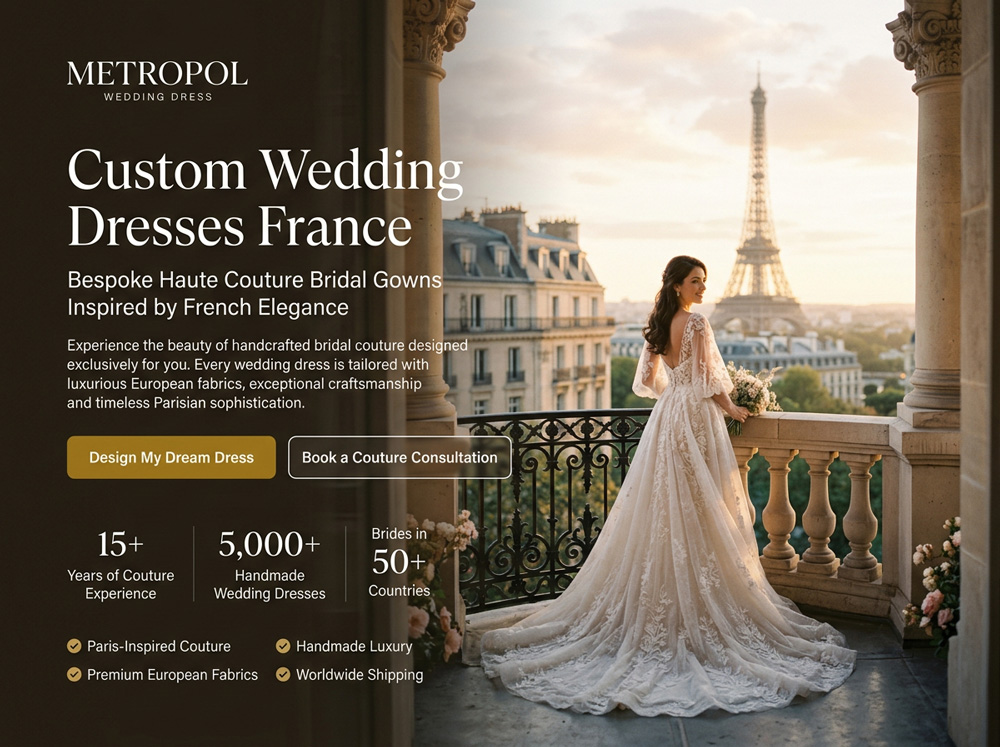
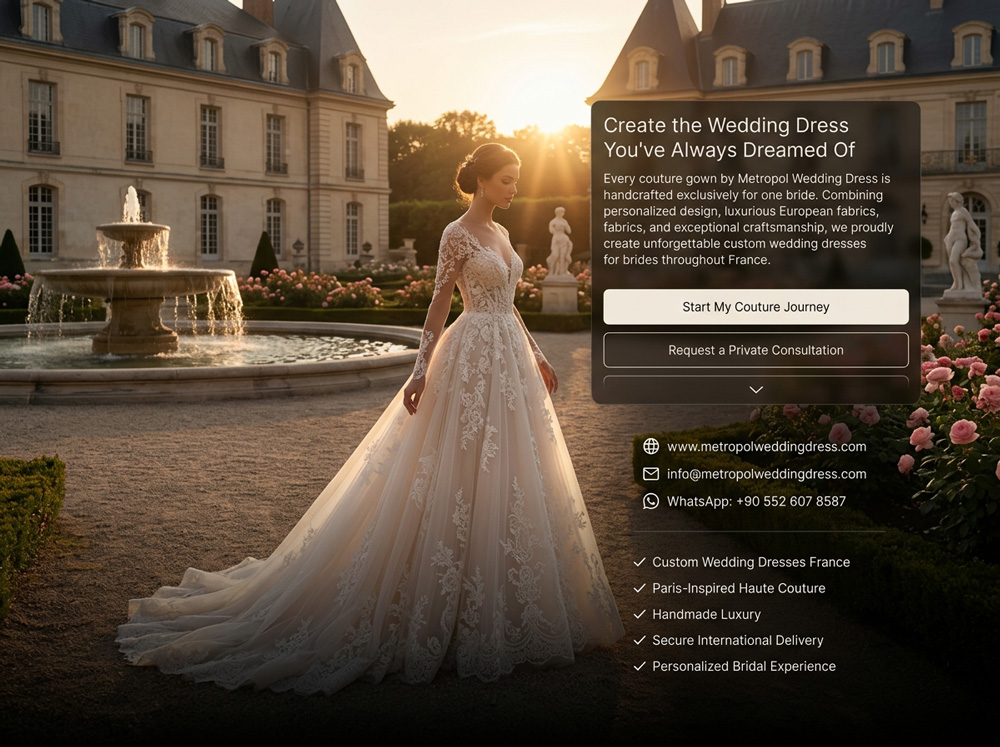
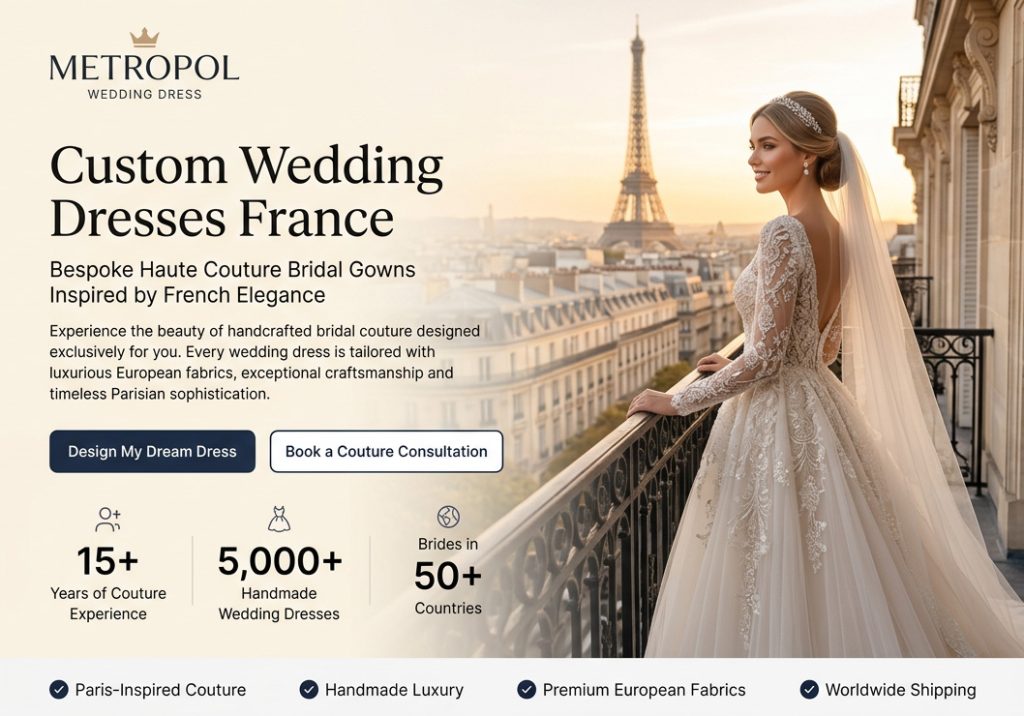
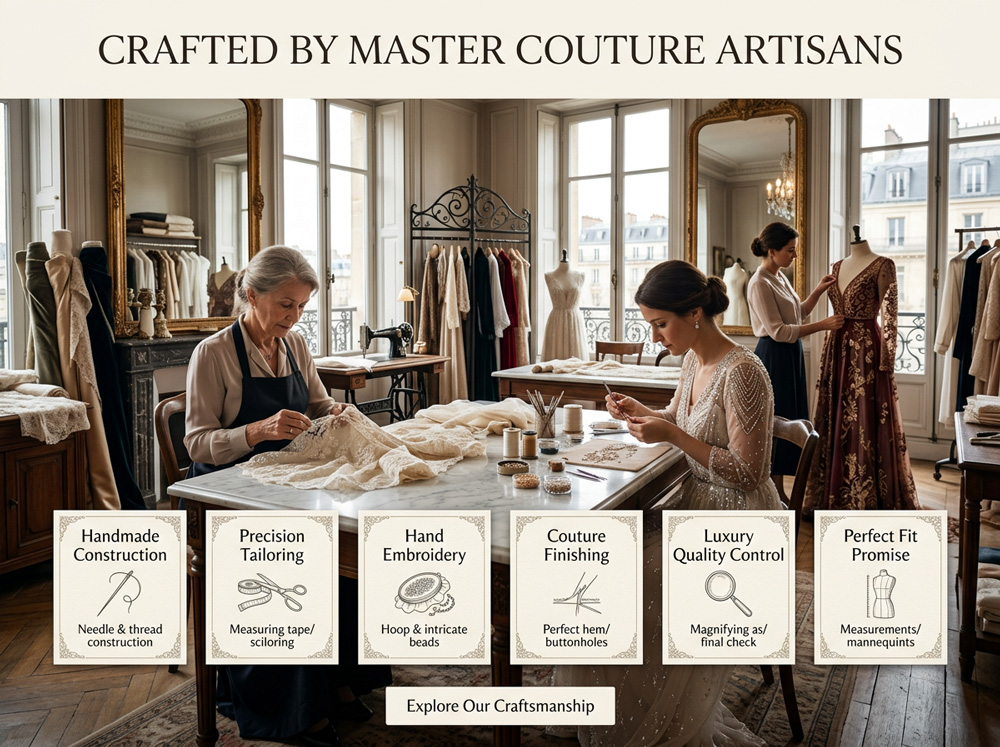
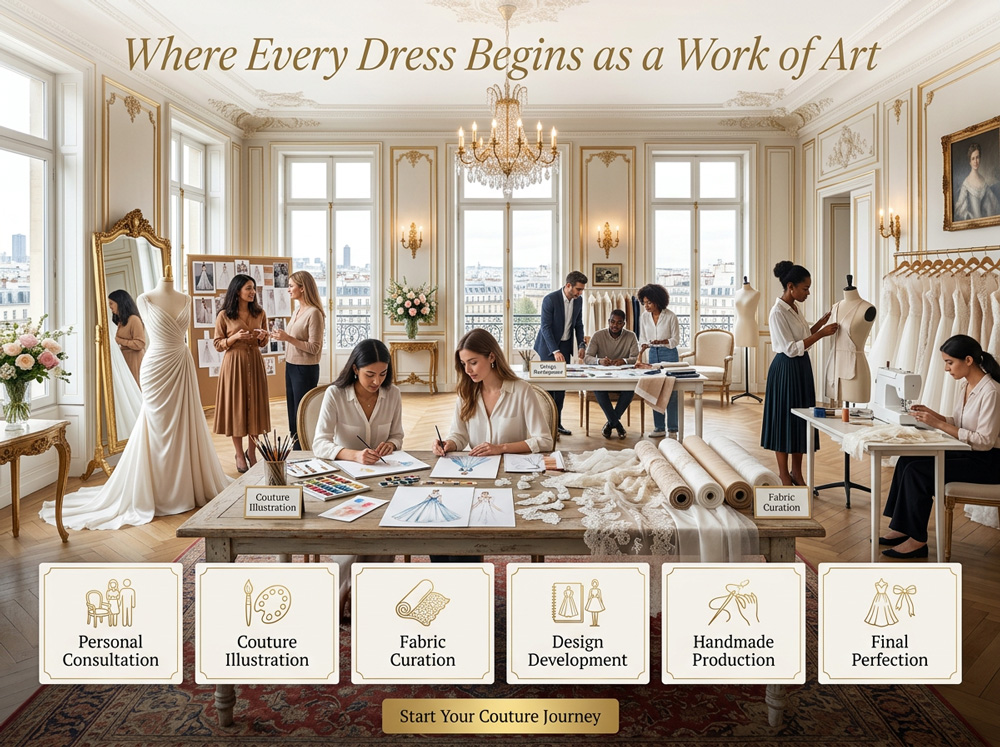
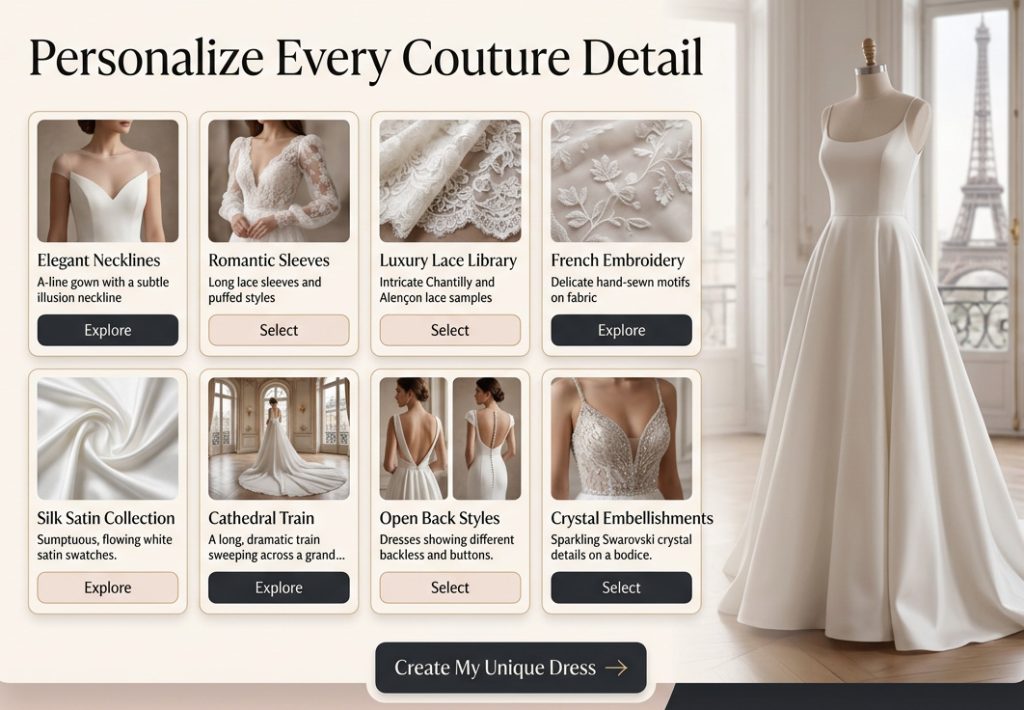
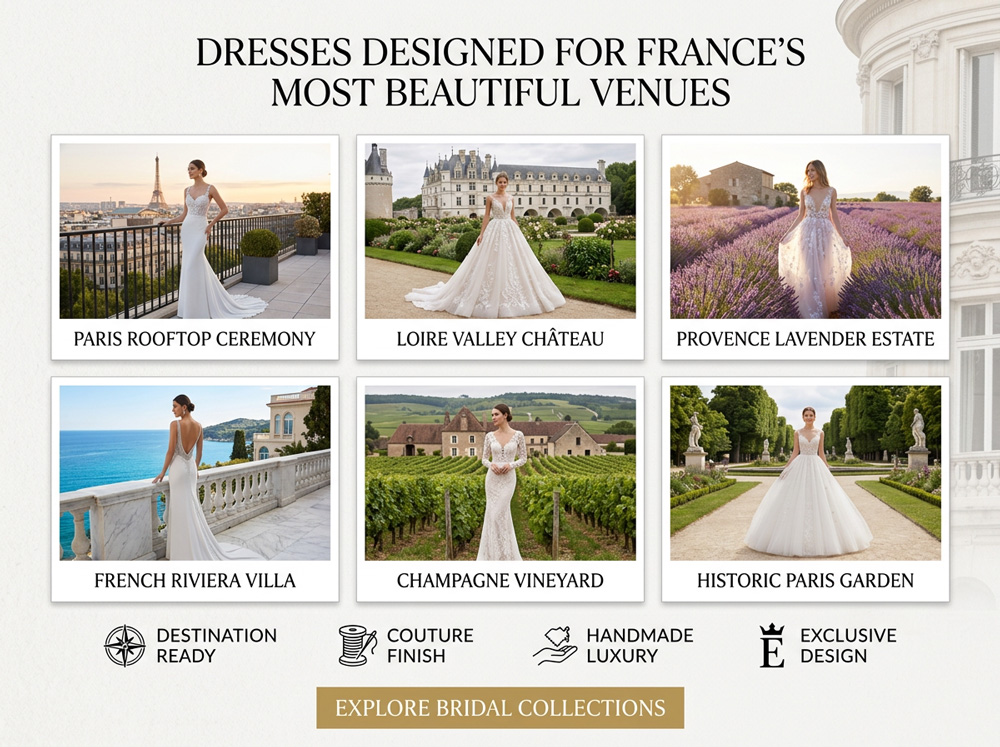
Metropol Wedding Dress, a established Turkish atelier with over two decades of experience and a large production facility, specializes in fully custom, haute-couture-inspired gowns crafted to exact measurements. They ship directly to France with tracking and insurance, offer rapid production (typically 4–10 weeks), high personalization (lace, beading, silhouette changes, fabrics), and accessible pricing that delivers French-inspired elegance at a fraction of pure couture costs. This guide covers styles, the online custom process, cost realities, measurement precision, timelines, common pitfalls, and how to secure a gown that feels authentically French while being made uniquely for you.
The French Bridal Aesthetic: What “French Wedding Dress” Really Means
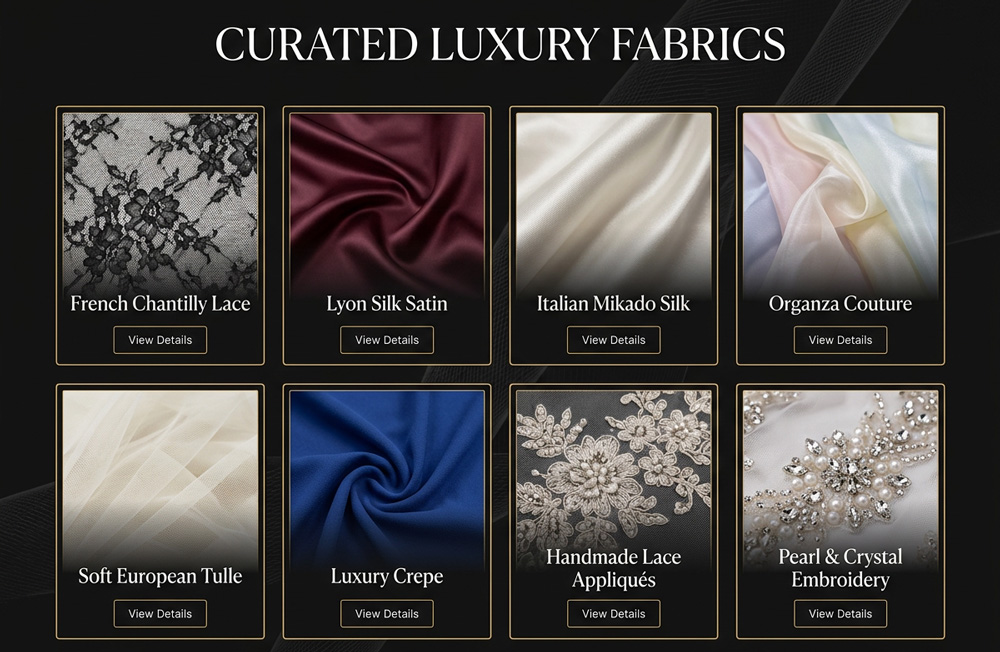
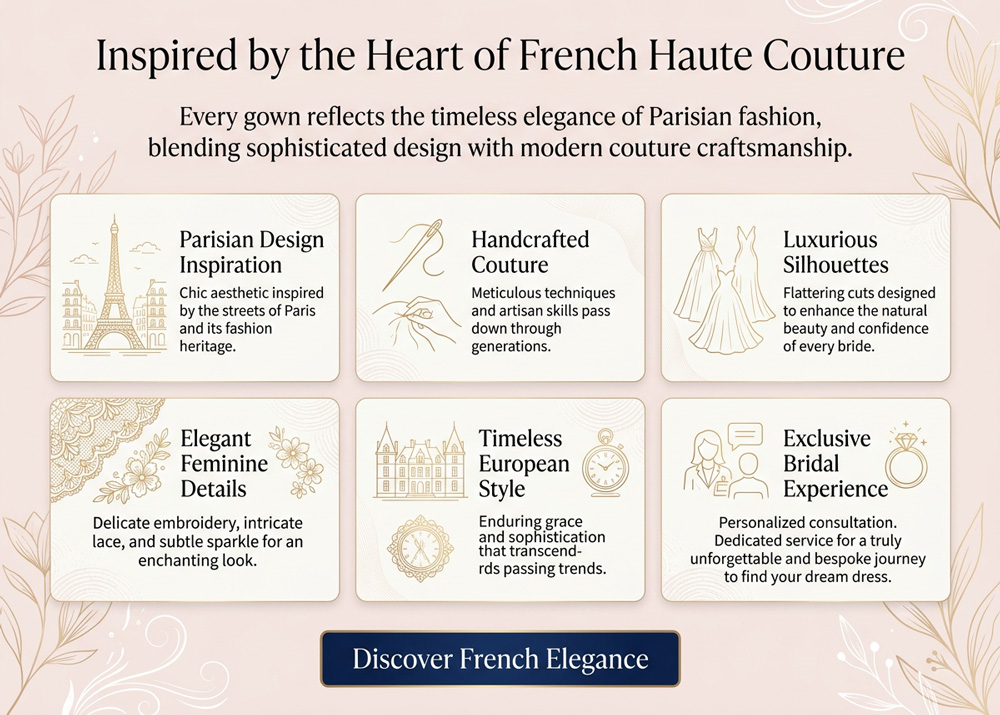
French bridal style prioritizes quiet luxury over spectacle. Think clean lines, impeccable cut, high-quality natural or semi-natural fabrics (silk crepe, mikado, fine tulle, Chantilly or Calais lace), and silhouettes that move with the body rather than constrict it. 2025–2026 trends from French designers reinforce this: strapless or soft-corset bodices with volume below, unstructured ruffles, mix-and-match fabric weights for transparency plays, round or architectural open backs, subtle color accents, and the return of the veil in soft, modern forms. Short and midi lengths gain ground for civil ceremonies or second looks. Minimalism with 1990s references coexists with romantic lace returns and corsetry.
Key characteristics that define the look:
- Silhouette preference for A-line, soft mermaid, column, or fluid bias cuts that elongate without exaggeration.
- Fabrics that drape and breathe: crepe for clean modernity, lace for romance, tulle for lightness, satin or mikado for structure.
- Details kept intentional—delicate embroidery, pearl or crystal accents used sparingly, French seams or hand-finished hems.
- Fit that flatters real bodies rather than idealized samples; French sizing and made-to-measure culture emphasize proportion.
- Versatility for French wedding contexts: comfortable enough for long cocktail hours, dinners, and dancing; suitable for indoor chapels, outdoor Provençal gardens, or urban mairies.
Pure French designers (Laure de Sagazan, Rime Arodaky, Cymbeline, Delphine Manivet, Elsa Gary, and others) deliver this at premium prices, often with in-person or hybrid appointments and longer lead times. Many brides now combine the aesthetic inspiration with more accessible custom production that still prioritizes European-quality materials and precise fit.
Why Online Custom Has Become the Practical Path for French Brides
Traditional bridal shopping in France can involve multiple salon appointments, limited stock sizes, alteration costs, and waitlists. Online custom changes the equation:
- Full design control from a blank or highly adaptable base.
- Exact body measurements rather than closest sample size plus heavy alterations.
- Transparent pricing without salon markups.
- Ability to iterate on sketches or digital mock-ups before cutting fabric.
- Shipping directly to your door in France, often with DDP (duties paid) options or clear customs guidance.
- Faster production cycles than many high-end French ateliers for comparable customization levels.
Metropol Wedding Dress operates as a specialist manufacturer focused on this model. Based in İzmir with a substantial workshop, they produce both wholesale collections and fully individual custom gowns. Clients send inspiration photos or describe desired changes; the atelier creates a pattern to measurements, provides progress updates, and ships finished pieces. Fabrics include premium lace, tulle, satin, mikado, and crepe selected for drape and longevity. Embellishments range from hand-applied lace and beads to Swarovski elements when requested. Production windows of roughly 4–10 weeks (depending on complexity) suit many European timelines when ordered with adequate buffer.
This approach works particularly well for:
- Destination or multi-location French weddings where fittings across cities are impractical.
- Brides outside major urban centers (Paris, Lyon, etc.) who lack nearby high-end salons.
- Those wanting significant design changes (neckline, sleeve, train length, fabric swap, modesty adjustments, or plus-size/petite adaptations) without couture pricing.
- Second looks, civil ceremony dresses, or convertible styles.
The Online Custom Process: Step-by-Step for a French Bride
1. Inspiration and Vision Clarification Collect 5–10 reference images that capture silhouette, neckline, fabric mood, and detail level. Note what you love and what to avoid. Consider your wedding setting (château formality vs. garden fluidity), season, and personal comfort priorities (danceability, temperature, photography).
2. Measurement Protocol Accurate measurements are non-negotiable. Use a soft tape, wear appropriate undergarments, and follow a detailed guide (bust, underbust, waist, high hip, low hip, hollow-to-hem, arm length, etc.). Photos from front, side, and back help the atelier verify proportion. Many services now offer video guidance or virtual measurement checks. French brides should note that sizing charts differ from US/UK standards; always provide centimeter measurements rather than relying on a labeled size.
3. Design Specification and Sketch Approval Submit measurements + inspiration. The atelier returns a sketch or technical sheet for refinement. Iterate on neckline depth, sleeve style, skirt volume, train length, lace placement, or color (ivory, soft white, blush undertones). Approve the final specification before fabric is cut.
4. Production and Progress Tracking Once approved and deposit paid, the gown moves into patterning, cutting, assembly, and finishing. Request photo updates at key stages (toile/mock-up if offered, lace application, near-completion). Typical timelines for custom work fall in the 4–16 week range depending on complexity and season; buffer extra weeks for shipping and any local alterations.
5. Shipping, Customs, and Arrival in France Reputable shippers provide tracking and insurance. For non-EU origin goods, French recipients may face TVA (20%) and possible duties. Clarify whether the seller offers DDP (delivered duty paid) or whether you handle clearance. Unpack carefully, inspect under good light, and try on with planned undergarments and shoes. Local alterations for hem or minor fit tweaks are common and recommended.
6. Final Preparation Steam or professional press if needed. Store properly. Schedule a final try-on closer to the wedding for confidence.
Material and Construction Analysis for Longevity and Movement
High-quality custom gowns prioritize fabrics that photograph beautifully, move well, and hold structure without excessive weight:
- Lace: Calais or similar fine lace for authenticity and delicacy; avoid stiff or poorly finished edges.
- Tulle and chiffon: layered for volume or softness; look for consistent weave and good recovery.
- Crepe and mikado: excellent for clean modern lines and wrinkle resistance.
- Satin or silk blends: for richer sheen and drape.
- Construction details that matter: French seams or clean finishes, reinforced stress points, quality zippers or closures, and balanced weight distribution so the gown does not pull or ride up.
Metropol’s production emphasizes hand-finishing and European-sourced or high-grade materials selected for these properties, allowing brides to achieve the refined French hand-feel at accessible price points.
Cost Realities: Budgeting for Custom French-Style Gowns
Pure French designer made-to-measure often starts around €2,500–€4,000 for entry collections and climbs to €6,000–€15,000+ for full custom or high embellishment. Online custom from specialized ateliers frequently falls in a more accessible band while still delivering full personalization:
- Simpler clean silhouettes: lower end of the custom range.
- Complex lace, beading, or multi-layer construction: mid-to-higher within custom pricing.
- Factor in shipping, possible duties/TVA, and local alteration budget (often €100–€400 depending on complexity).
Transparent sellers provide clear quotes after design discussion. Avoid “too good to be true” pricing that signals compromised materials or unreliable production. Total cost of ownership includes the gown itself plus any necessary local work and accessories.
Practical Cost Comparison Table (approximate ranges observed in market)
| Category | Typical Price Range (EUR) | Timeline | Customization Level | Notes |
|---|---|---|---|---|
| French RTW / stockist | 2,500–6,000 | 4–8 months | Limited modifications | Salon experience |
| French made-to-measure | 6,000–8,750+ | 8–12 months | Moderate changes | Atelier fittings |
| Full French custom | 8,000–15,000+ | 10–14 months | Full original design | Highest craftsmanship |
| Specialized online custom (e.g., Metropol-style) | Often significantly more accessible | 4–12 weeks typical | Full or high personalization | Direct shipping, measurement-based |
Prices vary with fabric, embellishment density, and complexity. Always obtain a written quote.
Timeline Planning for a French Wedding
Ideal start: 8–12 months before the date for complex custom. Many online custom options compress this to 4–6 months with buffer. Key milestones:
- Vision + measurements: Month 1
- Sketch approval + deposit: shortly after
- Production: 4–10+ weeks
- Shipping + customs: 1–3 weeks
- Inspection + local alterations: 2–4 weeks before wedding
- Final try-on and packing: final weeks
Rush options exist but reduce iteration time and increase risk. Build contingency for potential delays in peak wedding seasons.
Common Pitfalls and How to Avoid Them
- Relying on standard size charts instead of precise measurements → use detailed guides and photos.
- Choosing purely by price without verifying fabric quality and finishing → request material details and real client photos.
- Insufficient buffer for shipping and alterations → order earlier than the minimum stated.
- Unclear customs responsibility → confirm DDP or budget for possible duties/TVA.
- Over-customizing without considering comfort or venue practicality → prioritize movement and temperature.
- Skipping local professional pressing or minor adjustments → plan for them.
Checklist Before Placing an Order
- Accurate full set of measurements in cm + supporting photos
- Clear design brief or reference images with notes
- Written confirmation of price, inclusions, timeline, and shipping terms
- Understanding of payment schedule (deposit vs. balance)
- Plan for local alterationist if needed
- Storage and care instructions upon arrival
Expert Practical Advice for French Brides Ordering Online
Prioritize communication quality. Responsive English- or French-speaking support that answers measurement and design questions thoroughly is a strong signal. Request recent real-bride photos in similar body types or lighting. Consider the full experience: how the gown will feel after hours of wear, how it photographs in natural French light, and whether details survive transport and handling. Convertible or multi-look designs (detachable trains, overskirts) offer practical value for long French wedding days that move from ceremony to extended celebrations.
For those drawn to specific French designer aesthetics (architectural modernity of Rime Arodaky, romantic ease of Laure de Sagazan, classic refinement of Cymbeline), use those as inspiration boards while working with a custom maker capable of translating the spirit into a made-to-measure piece.
Real-World Use Cases
- A bride in provincial France wanting a soft A-line with Calais-inspired lace and modest sleeves for a family château wedding, ordered fully custom with precise petite measurements and received with time for local hem adjustment.
- An international couple marrying in Provence who needed a lightweight, packable yet elegant gown that could travel and still look refined for outdoor portraits.
- A modern city-hall civil ceremony followed by a larger celebration, using a clean minimalist custom dress that felt contemporary and comfortable for both parts of the day.
These scenarios highlight the flexibility of measurement-based online custom production.
Maintenance and Care After the Wedding
Professional cleaning by a specialist experienced with delicate lace and beading is recommended. Proper storage (breathable garment bag, cool dry place, minimal folding of structured areas) preserves the gown for potential future use, heirloom purposes, or restyling. Many brides later convert trains or embellishments into keepsakes.
Closing Perspective
A custom French-inspired wedding dress ordered online is no longer a compromise. When executed with precise measurements, clear design communication, quality materials, and realistic timelines, it delivers a gown that fits the body and the vision more accurately than many off-the-rack experiences. Metropol Wedding Dress represents one established route for brides seeking that combination of European aesthetic sensitivity, full personalization, and practical accessibility for delivery into France. Start with a clear vision, prioritize measurement accuracy, choose a transparent partner, and allow appropriate time—the result can be a dress that feels both unmistakably you and quietly, elegantly French.
Frequently Asked Questions (FAQ)
1. What defines a “French wedding dress” style in practical terms? Understated elegance, excellent cut and proportion, fine lace or clean fabrics, fluid or softly structured silhouettes, and details that feel intentional rather than excessive. Comfort for long celebrations is built in.
2. Can I realistically get a custom French-style gown entirely online without visiting an atelier? Yes. Many specialized makers complete the process via detailed measurement guides, photos, sketches, and video communication, then ship the finished dress.
3. How accurate are online measurements for a perfect fit? Very accurate when the guide is followed carefully, photos are clear, and the atelier has experience verifying proportions. Local minor alterations remain a sensible final step for most brides.
4. What is a realistic production + shipping timeline for a custom gown to France? Often 4–12 weeks production plus 1–3 weeks shipping/customs, depending on complexity and season. Always build buffer.
5. Do I need to pay French TVA and customs on a gown ordered from outside the EU? Possibly. Confirm whether the seller uses DDP (duties paid) or whether you will handle clearance. Budget accordingly.
6. How much should I budget for a quality custom French-inspired gown online? Significantly less than pure Parisian full custom in many cases, while still allowing full personalization. Obtain a specific quote after design discussion. Include alteration and shipping variables.
7. What fabrics best capture the French bridal hand-feel? Fine lace (Calais-style or equivalent), soft crepe, quality tulle, mikado, and well-finished satins or silk blends that drape cleanly.
8. Can I request changes to an existing design or start completely from scratch? Both options are typically available with true custom makers. Provide clear references for either path.
9. How do I protect against poor quality or non-delivery when ordering online? Choose established makers with verifiable history, clear contracts, progress photo updates, and secure payment methods. Avoid extreme low pricing relative to the work described.
10. Is plus-size or petite custom possible? Yes. Measurement-based production is especially advantageous for non-standard proportions.
11. What about modest or cultural adaptations (sleeves, higher necklines, etc.)? Fully custom processes accommodate these requests as part of the design specification.
12. Should I still plan local alterations even with a custom-made dress? Yes, for hem length (especially with specific shoes), minor ease adjustments, or personal preference after trying the finished gown.
13. How important is the veil and accessories in completing a French look? Very. Soft, well-proportioned veils and restrained jewelry reinforce the understated aesthetic.
14. Can the same gown work for both a civil ceremony and a larger celebration? Convertible designs (detachable elements, overskirts, or simpler base silhouettes) make this practical.
15. What lighting and photography considerations matter for French outdoor or château settings? Fabrics that handle natural light without excessive shine or transparency issues photograph best. Matte or softly luminous finishes often look more refined.
16. How do seasonal temperature and venue affect fabric choice? Lightweight layers and breathable constructions for summer gardens; slightly more structured or layered options for cooler château interiors.
17. What information should I prepare before contacting a custom maker? Measurements, body photos, inspiration images with notes, wedding date, venue type, and budget range.
18. Are progress photos standard during production? Reputable custom services provide them at key stages so you can confirm direction before final finishing.
19. What happens if the dress arrives and needs more adjustment than expected? A local experienced bridal seamstress can usually resolve fit issues. Factor this possibility into timeline and budget.
20. How should I store the gown between arrival and the wedding? Breathable garment bag, cool dry place, minimal stress on beading or structured areas. Avoid plastic long-term.
21. Can I order a second look or reception dress from the same maker? Many offer complementary shorter or alternative styles that share design language.
22. What role does sustainability play in current French bridal preferences? Growing interest in quality materials, longevity, and makers who avoid excessive waste. Ask about fabric sourcing if this matters to you.
23. How do French sizing conventions differ from other markets? They are often more precise and can run differently from US or UK charts. Always work in actual body measurements rather than labeled sizes.
24. Is it possible to match or closely approximate a specific French designer look through custom? Inspiration translation is common and effective when the maker understands proportion, fabric behavior, and finishing standards.
25. What payment structure is typical? Deposit to begin (often 30–50%), balance before shipping or upon near-completion. Clarify terms in writing.
26. How can I verify real client experiences? Request recent photos or reviews specific to shipping destinations similar to France, and look for consistent quality in finishing details.
27. Are rush orders advisable? Only if the maker has capacity and you accept reduced iteration time. Prefer standard timelines when possible.
28. What undergarments work best with French-style custom gowns? Seamless, supportive options that match the neckline and fabric weight; discuss with the maker if structured corsetry is part of the design.
29. Can the gown be altered later for a different silhouette or restyled? Many construction methods allow future modifications by a skilled seamstress.
30. How does weather or humidity in different French regions affect fabric choice? Breathable, less clingy fabrics perform better in humid southern summers; consider local climate in material decisions.
31. What is the best way to communicate design preferences if I am not a fashion expert? Use visual references and simple descriptive language (“soft A-line, slight train, lace on bodice only, no heavy beading”). The maker’s role includes translating this into technical specifications.
32. Should I involve family or friends in the online process? Limit input to trusted voices to keep decisions focused. Virtual design reviews can still feel collaborative.
33. How do I handle potential language barriers? Choose makers with clear English or French communication channels and written confirmations of all details.
34. What final checks should I perform upon arrival? Inspect under natural light for construction quality, try on with wedding undergarments and shoes, check for shipping damage, and schedule any needed local work promptly.
35. Can Metropol Wedding Dress accommodate specific French aesthetic requests? As a custom specialist with extensive experience in European markets, they work from client inspiration and measurements to create individualized gowns that can reflect refined French-inspired lines, fabrics, and details while offering accessible production and direct shipping options.
Attending a French wedding as a guest requires a specific balance: one notch more formal than many Anglo-Saxon events, refined rather than flashy, and highly practical for venues that often involve gravel, grass, cobblestones, long outdoor ceremonies, and extended celebrations. Key rules include avoiding white/ivory/cream (and often pale blush or champagne), treating black carefully at religious ceremonies, choosing natural or breathable fabrics for summer heat, and prioritizing block heels or sturdy shoes over stilettos. Midi or knee-length structured dresses, fluid maxis for countryside settings, and polished color or print choices define the prevailing aesthetic.
Custom or made-to-measure formal and evening dresses offer a smart solution for guests who want perfect fit, unique details, rewearable quality, and the ability to match specific venue or seasonal demands without settling for mass-market options. Metropol Wedding Dress, known for high-quality custom and evening/after-party styles produced with European-grade materials and craftsmanship, provides accessible made-to-measure formal pieces that ship to France and can be tailored to refined French guest expectations—clean lines, elegant drape, thoughtful details, and body-specific fit. This guide covers etiquette, style frameworks, practical realities, cost considerations, common errors, and how to secure a dress that looks intentional and feels comfortable from ceremony through late-night dancing.
Understanding the French Wedding Guest Context
French weddings frequently combine a civil ceremony (often in a mairie) with a religious or symbolic ceremony, followed by a long cocktail hour, seated dinner, and dancing that can stretch late. Venues range from urban city halls and elegant hotels to Provençal domaines, châteaux with gravel courtyards, vineyards, and garden settings. This creates specific practical demands: temperatures can reach 30–35°C in summer southern locations, surfaces are rarely smooth, and the overall tone leans polished rather than casual.
Cultural expectations favor dressing up rather than down. Men typically wear full suits; women lean toward midi or below-the-knee lengths in structured or fluid fabrics, with maxis acceptable in outdoor or countryside settings. Color is welcomed—jewel tones, pastels, prints, deep greens, navies, burgundies—while white and near-white remain reserved for the couple. Black is more accepted at civil or evening events but can feel heavy at traditional religious ceremonies unless softened with color accessories. Shoulders may need coverage for church services (a light wrap, blazer, or étole solves this).
French women often invest in one or two strong pieces and restyle them across multiple weddings through accessories, shoes, and layering. The goal is elegant restraint with personality rather than costume-level drama.
Core Style Pillars for French Wedding Guests
Length and silhouette Midi and knee-length structured dresses form the safe default. Soft A-line, gentle fit-and-flare, column, or lightly draped styles photograph well and move comfortably. Maxi lengths work for garden or domaine settings if the hem does not drag on grass or gravel. Shorter cocktail lengths suit evening or city receptions. Overly body-con or mini styles can feel underdressed at more formal French events.
Fabric priorities Natural or high-quality blends (silk, linen blends, fine crepe, quality chiffon, lightweight wool or structured cotton mixes) handle heat and movement better than heavy synthetics. Breathable fabrics prevent visible discomfort during long outdoor portions. Structured fabrics hold shape for city or château formality; fluid ones suit countryside ease.
Color and pattern strategy Deep jewel tones, sophisticated pastels, considered prints, and bold but intentional colors perform well. Avoid pure white, ivory, cream, and very pale blush or champagne that could be misread as bridal. Black requires context awareness. Prints should feel deliberate rather than busy.
Footwear reality Block heels, wedges, or elegant flats with grip outperform stilettos on gravel, grass, and cobblestones—the most frequent practical failure among international guests. Many guests change into more comfortable shoes for dancing later.
Accessories and layering One strong accessory (statement earring, elegant clutch, refined hat or fascinator where appropriate) plus a light wrap or blazer for temperature drops and church coverage keeps the look polished without excess.
Tip Box – Quick Decision Filter Ask: Does this dress look intentional next to a well-cut suit? Will it survive two hours outdoors in heat or wind? Can I walk on gravel without anxiety? Does the color stay clear of bridal territory? If yes to all, proceed.
Why Custom Formal Dresses Make Sense for Guests
Off-the-rack options often force compromises on length, bust fit, shoulder coverage, or fabric quality. Custom or made-to-measure formal and evening dresses solve these by building to exact measurements and allowing targeted adjustments (sleeve length, neckline depth, hem, fabric weight, modesty details). The result is a piece that fits better, feels more personal, and can be reworn with different accessories across seasons and occasions.
Metropol Wedding Dress produces not only bridal gowns but also evening and after-party styles suitable for formal guest wear. Their made-to-measure approach, use of quality materials, and experience shipping to European destinations make them a practical source for guests seeking elevated, body-specific formal dresses that align with French expectations of refined elegance without requiring multiple salon visits.
Practical Scenarios and Matching Strategies
Château or formal indoor/outdoor hybrid Structured midi in deep emerald, navy, or burgundy. Consider light sleeves or a wrap for the ceremony portion. Block-heel pumps or elegant wedges.
Provençal garden or domaine summer wedding Fluid midi or soft maxi in breathable fabric, considered print or soft color. Prioritize movement and heat management. Avoid trailing hems.
City mairie + evening reception Polished midi or elegant cocktail length. Clean lines that transition easily. A light blazer or structured jacket elevates the look.
Winter or cooler-season formal event Slightly heavier fabrics, long sleeves or layering pieces, deeper colors. Ensure the silhouette remains refined rather than bulky.
International guest traveling to France Choose a dress that packs reasonably, resists severe wrinkling, and requires minimal on-site tailoring. Confirm shipping timelines and possible customs implications if ordering custom from outside the EU.
Material and Construction Considerations for Guest Wear
Look for fabrics that drape cleanly, hold shape through movement, and photograph without excessive shine or cling. Quality linings, secure closures, and balanced weight distribution prevent riding or pulling during long days. Hand-finished or carefully constructed details elevate the piece beyond fast fashion and support rewear. For summer, prioritize breathability; for cooler months, structure and coverage.
Cost and Value Analysis
A well-chosen custom formal dress often costs more upfront than a disposable high-street option but delivers better fit, longevity, and cost-per-wear across multiple events. Factor in possible shipping, any duties/TVA for non-EU origin goods, and local minor adjustments. Compare against the total of several mid-range dresses that never quite fit perfectly.
Comparison Overview
| Aspect | Fast-Fashion Guest Dress | Mid-Range Ready-to-Wear | Custom/Made-to-Measure Formal |
|---|---|---|---|
| Fit precision | Approximate | Better with alterations | Exact measurements |
| Uniqueness | High risk of duplicates | Moderate | High |
| Fabric quality | Variable | Generally good | Selectable higher grades |
| Rewear potential | Limited | Strong | Highest |
| Timeline | Immediate | Days to weeks | Weeks (plan ahead) |
| Ideal for | Last-minute | Standard needs | Specific fit/venue demands |
Common Mistakes and Prevention Checklist
Frequent errors include wearing near-white tones, choosing stilettos for outdoor venues, under-dressing relative to local formality, selecting non-breathable fabrics for southern heat, and arriving without a cover-up option for religious portions.
Pre-Order / Pre-Purchase Checklist
- Confirm venue type, surface, and expected weather
- Clarify any stated dress code and religious vs civil nature
- Select color safely away from bridal territory
- Prioritize walkable footwear
- Ensure fabric suitability for temperature and movement
- Plan a light layer for shoulders/temperature
- For custom: provide accurate measurements + photos, approve design details in writing, build shipping buffer
- Test full outfit (including shoes and undergarments) before travel if possible
Expert Practical Guidance
French guest style rewards intentional simplicity. One excellent dress restyled thoughtfully often outperforms multiple average ones. When ordering custom, communicate the wedding context clearly (outdoor gravel, heat, formality level) so the maker can advise on fabric weight, hem practicality, and coverage. Request progress updates and clarify shipping terms to France. Local steaming or minor hem adjustments upon arrival remain useful final steps.
For those seeking distinctive formal pieces, specialists experienced in evening and occasion wear (including options from established ateliers like Metropol) can deliver refined silhouettes and quality construction that align with the polished French guest standard while offering the advantage of true personalization.
Real-World Application Examples
A guest traveling from abroad to a summer vineyard wedding chooses a custom midi in a breathable structured fabric with slightly higher neckline and soft sleeves, pairs it with block-heel sandals, and adds a light silk wrap—comfortable through the outdoor ceremony and elegant for dinner. Another attending a formal château event opts for a deeper-toned made-to-measure piece with clean lines that photographs well against stone architecture and transitions easily with a change of accessories for the evening.
These approaches prioritize function, cultural respect, and personal confidence simultaneously.
Closing Perspective
Succeeding as a wedding guest in France is less about following rigid trends and more about understanding context—formality level, venue realities, color sensitivity, and practical movement. A thoughtfully chosen or custom-made formal dress that fits well, respects the setting, and feels authentic to the wearer becomes both a practical tool and a source of ease throughout a long, memorable day. Whether sourcing from established ready-to-wear or exploring made-to-measure options suited to refined occasion wear, the priority remains intention, comfort, and quiet elegance.
“You may also want to take a look at this article.” Bridal Atelier
Frequently Asked Questions (FAQ)
1. What is the baseline dress code expectation for most French weddings? Smart elegant—typically a midi or below-the-knee dress for women and a full suit for men. Err on the side of more formal rather than less.
2. Can I wear black to a French wedding? Yes at many civil and evening events. Exercise caution at traditional religious ceremonies, where it may feel heavy; soften with color accessories if chosen.
3. Why is white or near-white discouraged for guests? It is traditionally reserved for the couple. Even pale champagne or blush can read as too close to bridal territory in the French context, especially with minimalist bridal styles.
4. What shoe type works best for typical French venues? Block heels, wedges, or elegant flats with good grip. Stilettos struggle on gravel, grass, and cobblestones.
5. How important is fabric breathability? Critical for summer outdoor or southern venues where temperatures can be high and ceremonies long. Natural or high-quality breathable fabrics prevent discomfort.
6. Are maxi dresses appropriate? Yes for garden, domaine, or countryside settings if the hem does not drag. Midi remains the more universal safe length.
7. Do I need shoulder coverage? Often advisable for religious ceremonies. A light wrap, blazer, or scarf solves this elegantly.
8. Can a custom formal dress work better than ready-to-wear for guest occasions? Yes when fit, specific coverage, fabric weight, or uniqueness matter. Made-to-measure allows precise adjustments for body and venue needs.
9. Does Metropol Wedding Dress offer suitable options for wedding guests? They produce evening and after-party styles in addition to bridal, with custom capabilities that can create refined formal pieces aligned with polished occasion requirements and shippable to France.
10. How far in advance should I order a custom guest dress? Allow several weeks for production plus shipping and any local adjustments. Earlier is safer for peak seasons.
11. What colors are reliably safe and stylish? Deep greens, navies, burgundies, sophisticated pastels, and considered prints. Avoid bridal-adjacent pales.
12. Is it acceptable to rewear the same dress to multiple French weddings? Yes—and common among French women who restyle with different accessories, shoes, and layers.
13. How should international guests handle packing and travel? Choose relatively packable fabrics, confirm dress length works with travel, and plan for possible steaming on arrival.
14. What undergarments work best under structured or fluid guest dresses? Seamless, supportive options matched to neckline and fabric. Test the full combination before the event.
15. Are jumpsuits or separates acceptable? Elegant jumpsuits can work well for city or evening settings; ensure the overall formality matches the event.
16. How do I handle potential customs or duties when ordering custom from outside the EU? Clarify with the seller whether duties are prepaid (DDP) or your responsibility, and budget accordingly.
17. What is the most common practical mistake international guests make? Choosing stilettos for outdoor gravel or grass venues, leading to discomfort or instability.
18. Should the dress allow for dancing and long wear? Yes. Prioritize comfort and movement; many guests change shoes later for dancing.
19. How formal is a typical French “cocktail” or “tenue de cérémonie” indication? Generally more polished than a casual garden party but short of strict black-tie. When unclear, dress up.
20. Can I add personal style without looking overdone? Yes through intentional color, one strong accessory, or subtle detail while keeping overall refinement.
21. What length works best for mixed indoor-outdoor events? Midi usually offers the best versatility and practicality across surfaces.
22. Is lace appropriate for guests? Delicate or refined lace details can work if the overall look stays elegant and non-bridal.
23. How do I verify quality when ordering custom formal wear online? Review material descriptions, request progress photos if available, examine real-client images, and confirm construction details.
24. What role does weather play in fabric choice beyond temperature? Wind, humidity, and potential light rain influence drape and practicality—choose accordingly.
25. Are hats or fascinators expected? Not universally, but elegant headpieces can suit more formal or traditional settings when desired.
26. How should the dress photograph in typical French light and architecture? Clean lines and considered colors usually photograph more successfully than overly shiny or busy surfaces against stone, gardens, or natural light.
27. What if the invitation gives little dress-code detail? Default to polished midi/suit level, check the venue type, and when in doubt choose the more formal option.
28. Can custom dresses accommodate specific body needs or preferences (sleeves, higher neckline, etc.)? Yes—this is one of the primary advantages of made-to-measure formal wear.
29. How important is local steaming or pressing upon arrival? Useful for removing travel creases and ensuring a polished final appearance.
30. What is a realistic mindset for guest dressing success? Respect the cultural formality and practical constraints, choose intentional pieces that fit well and feel comfortable, and prioritize ease throughout a long celebration day.
This resource is structured as a high-value, practical landing page for anyone seeking refined, context-aware French wedding guest attire—including those exploring custom formal options that deliver better fit and individuality.
Paris remains one of the world’s most influential centers for bridal design. Its ateliers—ranging from established houses like Rime Arodaky, Laure de Sagazan, and Cymbeline to smaller independent makers—deliver distinctive French aesthetics: refined cuts, exceptional lace and fabric quality, understated elegance, and made-to-measure precision. Prices for Parisian designer and atelier pieces typically start around €1,500–€2,500 for accessible collections and climb to €6,000–€15,000+ for higher customization or couture-level work. Timelines often run 6–14 months depending on the level of personalization, with multiple fittings traditionally required in the city.
“You may also want to take a look at this article.” Custom Wedding Dresses
Custom Wedding Dresses France
Many brides, including destination and international ones, successfully navigate Paris shopping through in-person appointments, video consultations, or international stockists. Others seek the same Parisian-inspired sensibility—clean lines, fluid movement, high-quality materials, and body-specific fit—through specialized custom makers that offer remote processes, faster production windows, and more accessible pricing while still shipping finished gowns into France, including Paris. Metropol Wedding Dress, with its established atelier production of fully custom and haute-couture-inspired gowns, serves as one such practical route for brides who want precise measurements, design flexibility, and direct delivery without the full multi-trip Paris commitment. This guide maps the real Paris landscape, cost and timeline realities, decision frameworks, common pitfalls, and how to achieve a refined French result whether shopping locally or via custom remote production.
The Paris Bridal Landscape: What Actually Happens
Paris bridal shopping is appointment-driven and relatively intimate compared with large American bridal superstores. Flagship ateliers emphasize conversation, fabric handling, and silhouette testing rather than high-volume try-on sessions. Many houses now accommodate English-speaking clients and offer hybrid processes (initial video discussion followed by in-person or stockist fittings). Destination brides form a significant portion of the clientele for leading designers; the typical flow involves consultation, fabric and design selection, one or two fittings (in Paris or via stockist), and delivery several weeks before the wedding.
Key style signatures associated with Paris:
- Architectural modernity and clean structure (Rime Arodaky influence)
- Soft romanticism and everyday ceremony ease (Laure de Sagazan)
- Classic refined French lines and flattering proportions (Cymbeline and similar houses)
- Structural minimalism or contemporary clean silhouettes from other independent makers
Fabrics prioritize drape, quality, and movement: fine lace, crepe, mikado, silk blends, and carefully finished tulle. Embellishment tends toward the intentional rather than the excessive.
Reality Check – Pricing Bands Observed in Paris Market
- Entry / accessible collections and stockist pieces: roughly €1,600–€4,500
- Made-to-measure with moderate modifications: commonly €2,500–€8,000+
- Full custom or higher couture-level work: €8,000–€15,000 and upward
- Smaller independent ateliers can start lower (from approximately €1,500) depending on complexity and materials
VAT is included in French retail prices; non-EU residents may reclaim a portion via the détaxe process when departing France.
Decision Framework: Paris Atelier vs. Custom Remote Production
When a Paris atelier experience makes sense
- You can schedule multiple trips or an extended stay for fittings
- The brand’s specific aesthetic is non-negotiable
- You value the sensory experience of fabric selection and in-person collaboration in the city
- Budget and timeline align with 8–14 month windows for higher customization
When a specialized custom maker (remote-capable) is the stronger practical choice
- Travel to Paris for repeated fittings is difficult or costly
- You want full design control from measurements and inspiration rather than limited modifications to an existing model
- Timeline is tighter (many custom ateliers deliver in 4–12 weeks depending on complexity)
- Budget prioritizes quality materials and precise fit over brand-name Parisian provenance
- You still desire Parisian-inspired proportions, fabric behavior, and refined finishing
Metropol Wedding Dress operates in this second category: a production-focused atelier experienced in fully custom gowns, European-grade materials, and shipping to France. Clients supply measurements and design direction; the workshop creates to those specifications with progress communication and delivers the finished piece. This model suits brides seeking the outcome of careful French-influenced design and fit without requiring physical presence in a Paris salon for every stage.
Timeline and Process Realities
Typical Paris designer / atelier path
- Research and shortlist (inspiration boards, budget alignment)
- Appointment booking (often months ahead for popular houses)
- Consultation and design/fabric decisions
- Order placement and deposit
- Production (several months)
- Fittings (1–3, in Paris or stockist)
- Final delivery and any last adjustments (ideally 4–6 weeks before the wedding)
Lead times commonly recommended: 8–12 months for made-to-measure, longer for full original design.
Custom remote production path (example structure)
- Clear vision brief + accurate measurements + photos
- Sketch or technical specification approval
- Deposit and production start
- Progress updates (photos at key stages)
- Shipping to France / Paris address
- Local inspection and any minor hem or ease adjustments by a trusted seamstress
- Final preparation
Production windows of 4–10 weeks are realistic for many specialized makers when ordered with buffer; always confirm current capacity.
Tip Box – Buffer Planning Add 3–6 weeks beyond the stated production + shipping estimate for customs clearance (if applicable), local alterations, and personal try-on confidence. Peak spring/summer wedding seasons tighten schedules everywhere.
Material and Fit Priorities That Define Parisian Results
Regardless of whether the gown originates in a Paris atelier or a specialized custom workshop, the distinguishing factors remain:
- Proportion and balance relative to the individual body
- Fabric that moves and photographs with quiet luxury rather than stiffness or excess shine
- Clean internal construction and finishing
- Details that feel considered (lace placement, neckline architecture, train weight, sleeve integration)
Accurate measurements are the foundation of any successful made-to-measure or custom process. Provide centimeter measurements taken carefully, preferably with supporting photos from multiple angles. French sizing conventions differ from US/UK charts; never rely solely on a labeled size.
Cost Structure and Value Comparison
A pure Paris designer experience includes the brand premium, salon overhead, and often multiple in-person interactions. Custom production focused on craftsmanship and materials can deliver comparable fit and aesthetic quality at a different price point, particularly when travel costs for fittings are factored in.
Illustrative Cost Factors Table
| Element | Paris Designer / Atelier Path | Specialized Custom Production Path |
|---|---|---|
| Base gown range | €2,500–€15,000+ | Often more accessible for full custom |
| Modifications / full design | Limited to extensive (price scales) | Built into the process |
| Fittings | Typically 1–3 in Paris or stockist | Remote + optional local final |
| Travel & accommodation | Significant if multiple trips | Minimal or none |
| Shipping / delivery | Included or arranged | Direct to France address |
| Local alterations buffer | Often still needed | Recommended |
| Total ownership view | Brand + experience + product | Product + precision + practicality |
Always request a detailed written quote covering fabric, labor, embellishment, shipping terms, and payment schedule.
Common Pitfalls Specific to Paris-Focused Shopping
- Underestimating the number of trips or the difficulty of coordinating fittings across international travel
- Assuming sample sizes will translate easily without significant alterations
- Leaving insufficient time for production and final delivery
- Overlooking VAT recovery procedures or shipping logistics for non-residents
- Choosing purely on aesthetic without testing movement and comfort for the actual wedding day length and venue
- Failing to clarify the exact scope of “made-to-measure” versus full original design
Pre-Commitment Checklist
- Confirm current lead times and appointment availability
- Clarify language support and communication channels
- Obtain written details on modification limits, fabric options, and final pricing
- Map realistic travel or remote logistics
- Build buffer for shipping, customs (if relevant), and local finishing
- Prepare accurate measurements and clear inspiration references
- Identify a local seamstress in advance for any post-delivery adjustments
Practical Scenarios
Bride living in or near Paris Multiple atelier visits are feasible. Prioritize houses whose aesthetic matches the vision and whose timeline fits. Use the experience fully—fabric handling, silhouette testing, and collaborative refinement.
Destination or international bride with limited Paris time Hybrid approach: video consultation with a Paris house or stockist, possible single fitting trip, or complete remote custom production that ships the finished gown. Many successful outcomes come from the latter when measurements and design communication are precise.
Bride seeking Parisian style on a more constrained budget or timeline Specialized custom makers experienced in refined formal and bridal construction can translate the desired lines, fabric behavior, and finishing quality into a made-to-measure piece without the full Paris atelier premium or multi-month multi-trip commitment.
Expert Perspective on Achieving the Result
The most successful Paris-related bridal outcomes share three traits: clear vision communication, realistic timeline management, and prioritization of fit and fabric quality over pure brand geography. Whether the gown is cut in a Marais atelier or a specialized production workshop that ships into France, the bride’s body, the wedding context, and the quality of execution determine how the dress ultimately feels and photographs.
For those drawn to the Parisian sensibility but needing flexibility, makers such as Metropol Wedding Dress provide a structured custom path—measurement-driven, design-responsive, and logistics-aware for French delivery—that can deliver a refined, individual result aligned with the quiet elegance associated with French bridal design.
Maintenance and Post-Wedding Considerations
Professional cleaning by a specialist familiar with delicate fabrics and embellishment is recommended. Proper storage preserves the gown for potential future use or restyling. Many brides later adapt trains or details into keepsakes or secondary garments.
Closing View
Paris offers an unmatched concentration of bridal design talent and heritage. The city experience itself can be memorable. At the same time, the practical realities of travel, fittings, timelines, and cost mean that not every bride who wants a Parisian-caliber result needs to complete the entire process inside the city. A combination of clear aesthetic direction, accurate measurements, and a capable custom production partner can produce a gown that carries the same refined proportions, fabric integrity, and personal fit—delivered to Paris or elsewhere in France. Choose the path that aligns with your logistics, budget, and desired level of collaboration; the outcome should feel both intentional and effortless on the day.
Frequently Asked Questions (FAQ)
1. Do I need to travel to Paris to buy a high-quality French-style wedding dress? No. Many designers work through international stockists or video consultations, and specialized custom ateliers can create refined made-to-measure gowns remotely and ship them into France.
2. What is a realistic budget for a Paris atelier wedding dress? Accessible collections often start in the low-to-mid thousands of euros; higher customization and couture-level work commonly reach €6,000–€15,000+.
3. How far in advance should I begin the Paris shopping process? Ideally 8–12 months or more for made-to-measure or custom work to allow for appointments, production, and fittings.
4. Can non-French speakers work successfully with Paris ateliers? Yes. Leading houses routinely handle English-speaking and international clients.
5. What is the difference between made-to-measure and full custom in the Paris context? Made-to-measure typically modifies an existing design to measurements; full custom builds an original design from a blank pattern.
6. Are fittings mandatory in Paris? For many traditional atelier processes yes, though hybrid and stockist options reduce the number of required trips. Fully remote custom production eliminates the need for Paris fittings.
7. How does VAT affect the final price for non-EU residents? French prices include 20% TVA. Eligible non-EU residents can often reclaim a portion through the détaxe process when leaving the country.
8. What fabrics best capture the Parisian bridal aesthetic? Fine lace, quality crepe, mikado, silk blends, and carefully finished tulle that prioritize drape and quiet luxury.
9. Can I achieve a similar refined result through a non-Paris custom maker? Yes, when the maker prioritizes precise measurements, high-grade materials, clean construction, and responsive design collaboration. Metropol Wedding Dress is one established option focused on this model with shipping capability to France.
10. What are typical production times once an order is placed? Paris designer made-to-measure often spans several months; specialized custom production can be shorter (frequently 4–12 weeks depending on complexity and current workload).
This content is structured as a practical, decision-oriented landing page for brides exploring wedding dresses connected to Paris—whether through direct atelier engagement or high-quality custom alternatives that deliver refined French-inspired results with greater logistical flexibility.