
Couture Wedding Dresses
Couture Wedding Dresses are not merely garments—they are engineered expressions of identity, craftsmanship, and legacy. In 2026, the best pieces balance sculptural corsetry, hand-applied embellishment, premium natural fabrics, and precise body architecture while remaining wearable across climates, cultures, and multi-day celebrations.
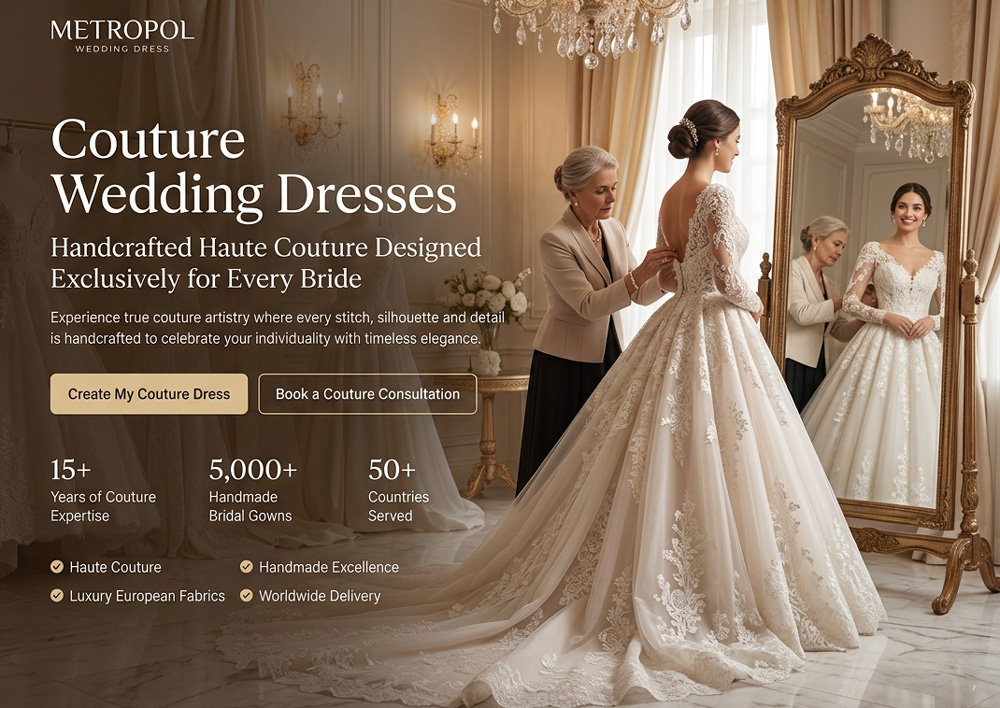

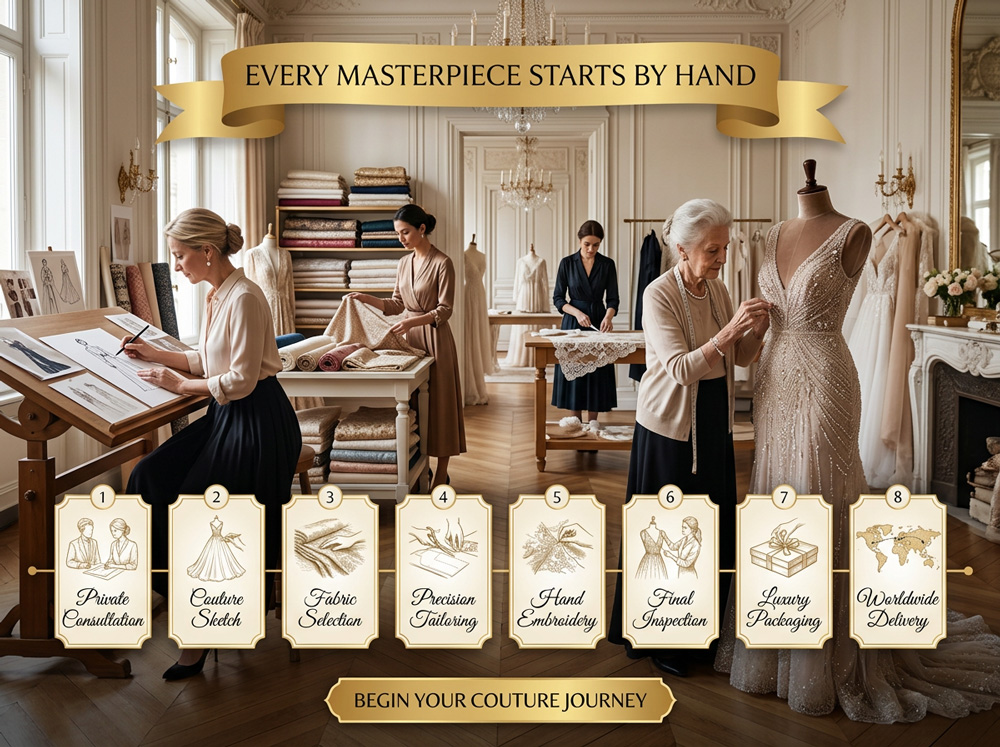
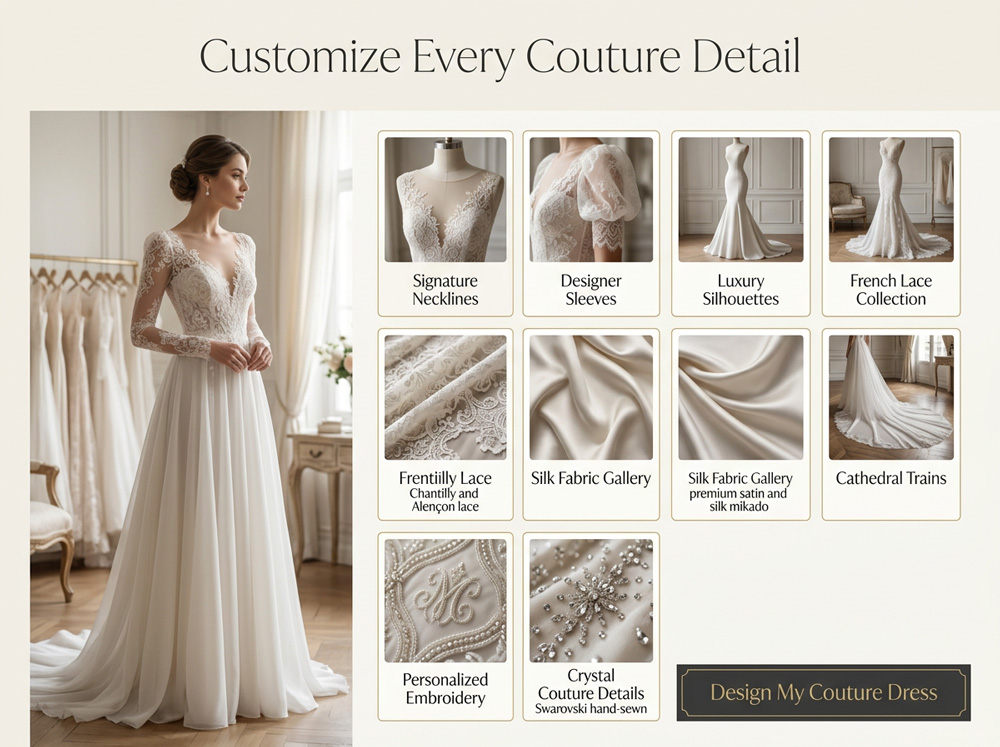
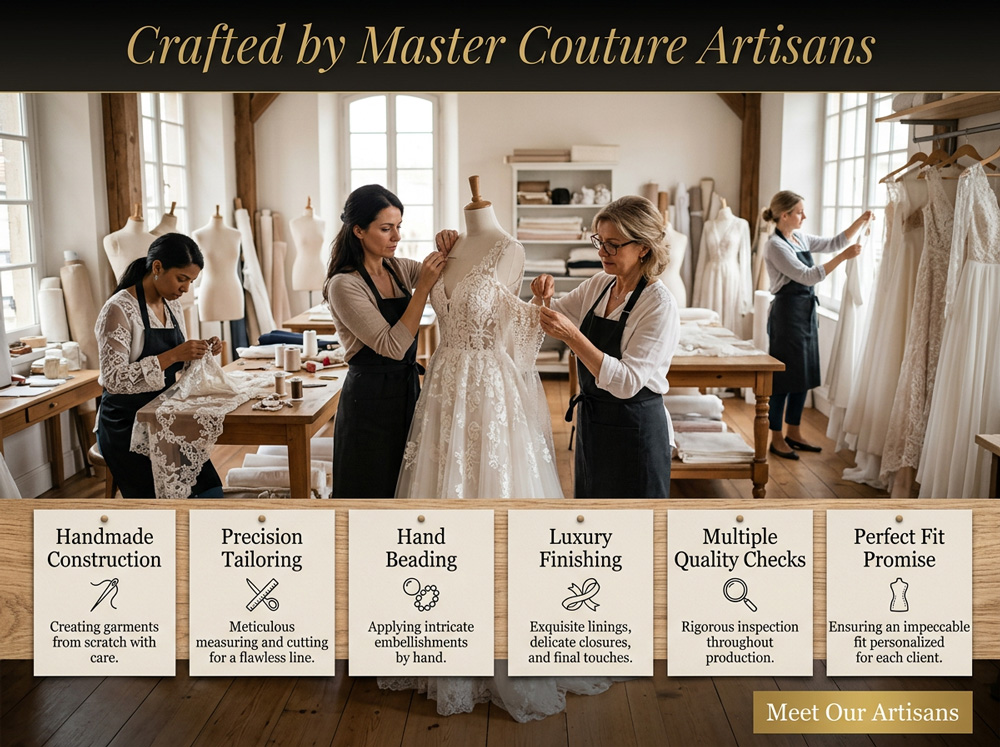
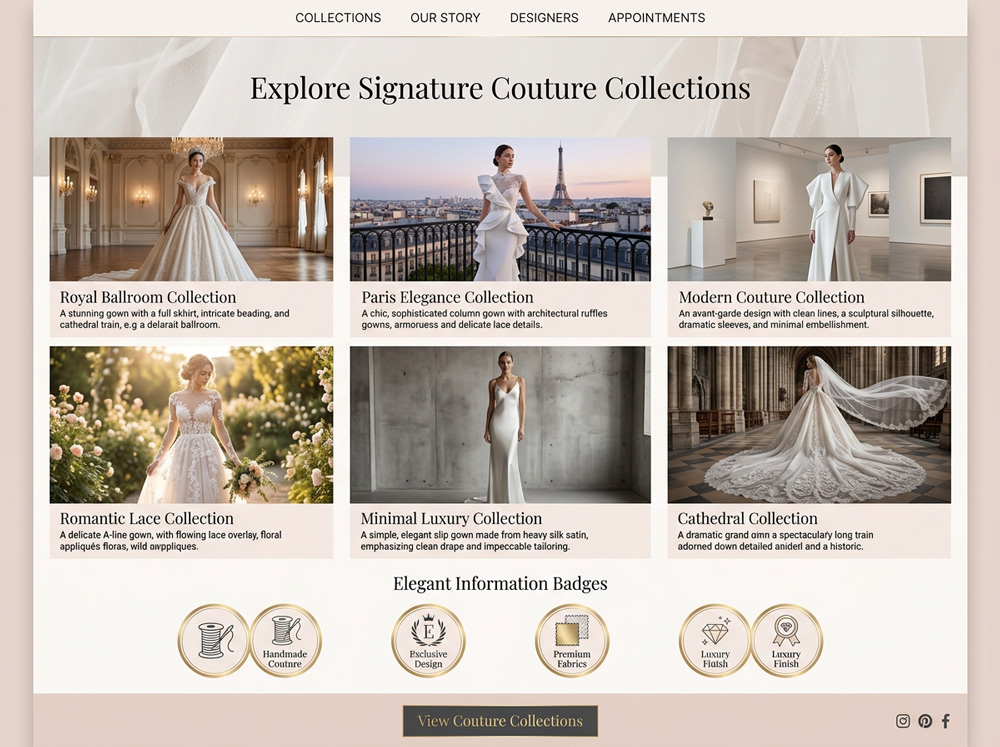
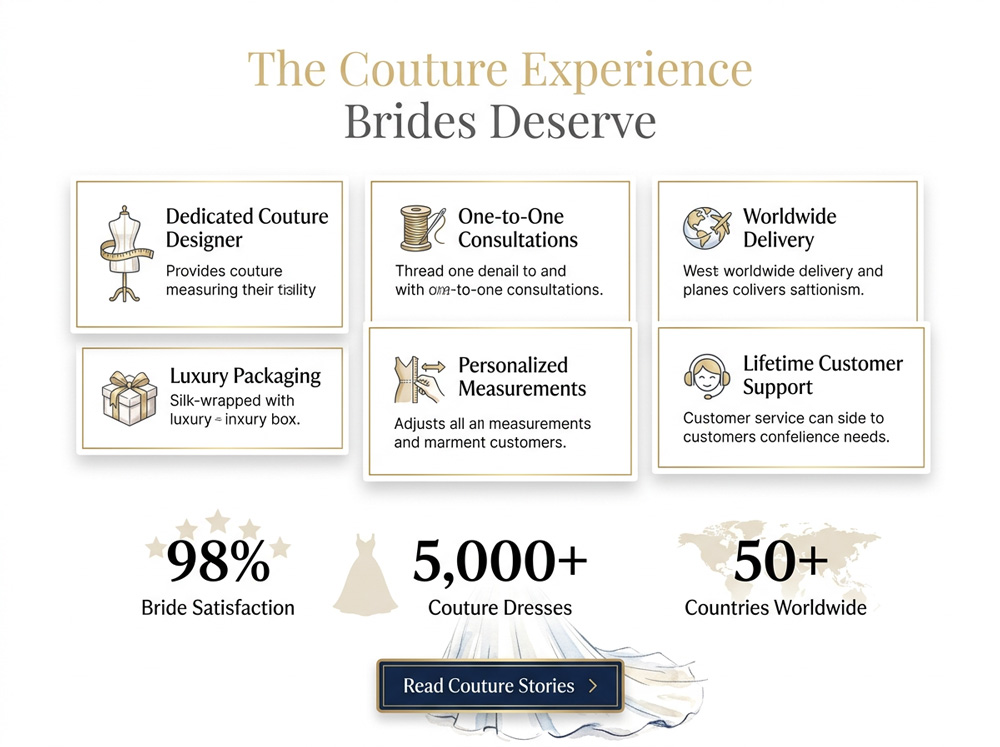
Metropol Wedding Dress, operating from its İzmir atelier since the early 2000s, delivers this level of artistry at accessible price points (typically €300–€2,000) through full customization, transparent production stages, and global wholesale capability. This guide moves beyond trend lists to examine materials science, construction timelines, cost drivers, body-and-climate fit, cultural adaptability, and decision frameworks so brides and boutique buyers can invest with clarity rather than emotion alone.
The Architecture of Commitment: Why Couture Still Matters in an Age of Instant Everything
A couture wedding dress is the rare object that must perform three contradictory roles at once: it must photograph like sculpture under every light condition, move with the body through hours of standing, kneeling, dancing and sitting, and carry emotional weight long after the day ends. Ready-to-wear solves speed and price. Couture solves permanence of fit and intention.
Metropol Wedding Dress occupies a distinct position in this landscape. Based in İzmir, Turkey—a city with deep textile and atelier traditions—the brand operates a substantial production workshop (reported around 800–1,200 m²) that combines pattern expertise, embroidery skill, and modern capacity. It serves both individual brides seeking fully custom pieces and international boutiques needing reliable wholesale volumes. Average monthly output reaches approximately 100 gowns, with clients spanning Europe, the Middle East, Asia and beyond. The brand’s strength lies in translating haute-couture techniques—hand draping, multi-stage fittings, lace appliqué, crystal work—into price ranges that remain realistic for most serious brides.
What Actually Separates Couture from High-End Ready-to-Wear
| Element | True Couture / High Custom | Premium Ready-to-Wear | Typical Mass-Market |
|---|---|---|---|
| Pattern origin | Created or heavily adapted for the individual body | Graded from a standard size block | Standardized factory pattern |
| Construction | Multiple hand fittings, toile/muslin stage, hand finishing | Limited alterations after production | Minimal or none |
| Embellishment | Hand-applied lace, beading, embroidery (often hundreds of hours) | Mix of machine and selective hand work | Mostly machine |
| Fabric sourcing | Selected for specific drape, weight, and opacity per design | Pre-chosen collection fabrics | Cost-optimized synthetics or blends |
| Lead time | Weeks to months | Days to a few weeks | Immediate or short |
| Price reality (2026) | €2,000–€15,000+ (Paris/New York houses far higher) | €1,500–€6,000 | Under €1,000 |
Metropol operates closer to the first column while pricing nearer the accessible end of the second. This is possible because of Turkey’s skilled labor base, direct atelier control, and efficient material pipelines.
2026 Silhouette and Detail Landscape (Not Trends—Structural Preferences)
Current couture runways and bridal weeks emphasize:
- Structured yet soft corsetry with visible or semi-visible boning
- Drop and basque waists that elongate or define the torso
- Convertible elements (overskirts, removable trains, capes)
- Layered lace and sheer panels balanced with opacity
- Architectural necklines and subtle volume rather than extreme ballgown bulk
- Lightweight movement fabrics for destination and multi-climate events
These are not fleeting fads; they respond to real bridal needs: photographic impact, comfort across long days, and the desire for a dress that can be restyled or preserved.
Materials Science for the Bride Who Will Actually Wear the Dress
Fabric choice determines temperature regulation, movement, longevity, and how light interacts with the gown.
Core families used in serious couture work:
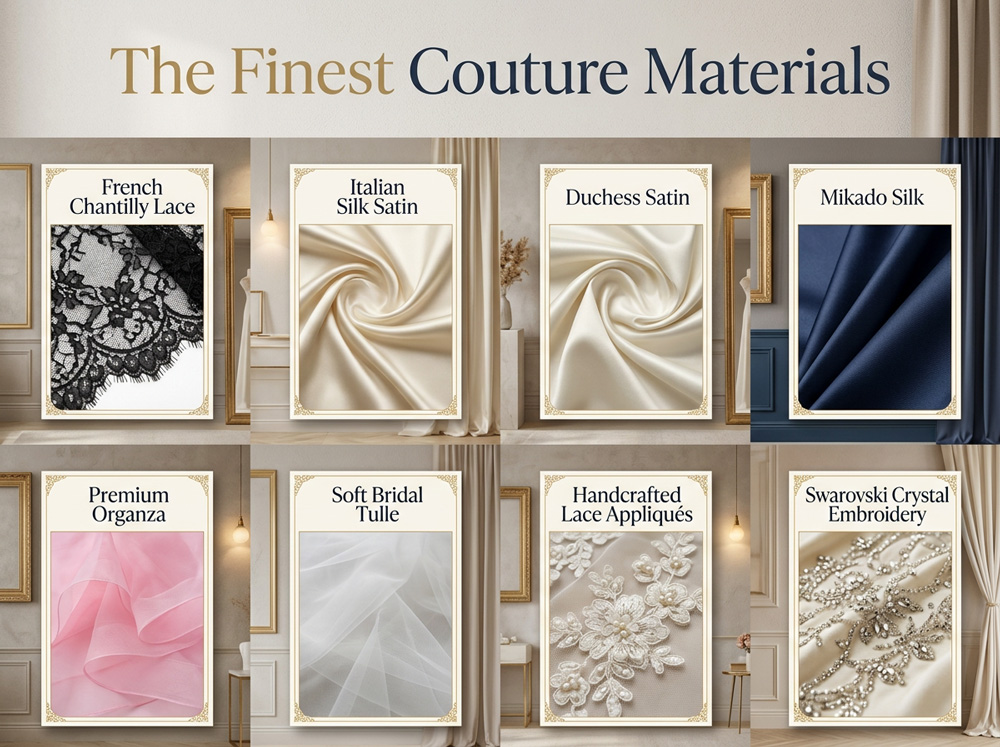
- Silk satin / duchess satin / mikado: Structure and luminous surface. Excellent for clean architectural lines. Heavier weights create sculptural volume; lighter versions remain fluid.
- Silk crepe and charmeuse: Soft drape, subtle sheen, excellent for bias-cut and body-skimming silhouettes.
- French and Chantilly lace, Alençon, Guipure: The defining romantic texture. Quality is judged by motif clarity, ground density, and how cleanly edges can be appliquéd.
- Tulle, organza, illusion net: Volume without weight, sheer overlays, and structured veils or trains.
- Crystal, pearl, and fine bead work: Hand placement creates light play that machine embroidery rarely matches.
Metropol emphasizes premium imported satins, tulles, and luxury laces alongside skilled local embroidery and weaving. For tropical or high-humidity destinations, lighter chiffon, georgette, and breathable linings become critical. For cooler European cathedrals, denser satins and multi-layered construction provide both warmth and presence.
Practical climate matrix
| Climate / Venue | Preferred Fabrics | Avoid or Minimize |
|---|---|---|
| Hot, humid beach or garden | Chiffon, georgette, lightweight organza, silk crepe, breathable linings | Heavy multi-layer satin, dense beading without ventilation |
| Air-conditioned formal hall | Mikado, duchess satin, structured lace | Excessively sheer unlined layers |
| Cool cathedral or winter | Heavier satin, velvet accents, full linings, long sleeves or capes | Ultra-lightweight single-layer silk |
| Multi-day or destination | Convertible pieces, removable overskirts, travel-friendly packing construction | Extremely fragile pure lace with no support |
Production Reality: How a Metropol-Level Couture Gown Is Actually Built
- Consultation and design translation — Sketches, mood references, body measurements (often 20+ points), venue and climate data.
- Pattern and toile — Paper pattern or direct draping; cotton muslin prototype for fit testing and proportion adjustment.
- Fabric selection and cutting — Hand cutting for precision, especially with lace motifs that must be matched.
- Construction and internal architecture — Boning, cups, seam finishing, understructure that supports without rigidity.
- Hand embellishment — Lace appliqué, beading, embroidery. This stage frequently accounts for the majority of labor hours.
- Multiple fittings — Adjustments for posture, movement, and final emotional response.
- Finishing and quality control — Hemming, steaming, inspection of every seam and motif.
Lead times typically range from several weeks for made-to-measure adaptations to longer for fully original designs. Transparent ateliers provide progress photos at key stages—exactly the collaborative model Metropol highlights.
Cost Architecture: Where the Money Actually Goes
A realistic 2026 breakdown for quality custom work:
- Fabric and notions: 20–35%
- Labor (especially hand embroidery and fittings): 40–55%
- Design and pattern development: 10–15%
- Overhead, fittings logistics, shipping: remainder
Metropol’s reported range of roughly €300–€2,000 places many of its pieces in the “accessible couture” zone. Paris or New York house couture often starts well above €8,000–€15,000 and climbs rapidly with celebrity-level handwork. The difference is rarely pure quality of material; it is brand prestige, atelier location costs, and exclusivity marketing.
For boutique buyers, the wholesale model offers another layer of value: consistent quality, customization options (including culturally specific features such as hijab-compatible coverage or vibrant non-white options for certain traditions), and reliable production volume.
Body Architecture and Cultural Fit
Silhouette recommendations remain useful starting points, not rigid rules:
- Hourglass: Mermaid, trumpet, or defined-waist A-line to celebrate proportion.
- Pear: A-line or ballgown volume that balances hips; structured bodice.
- Apple / fuller midsection: Empire or soft A-line with strategic draping; avoid tight midriff cling.
- Rectangle / athletic: Defined waist via belts, basque lines, or ruching; volume at hip or shoulder.
- Petite: Higher waistlines, vertical lines, moderate volume.
- Tall: Fuller skirts, longer trains, dramatic proportions.
Asian body proportions often feature shorter torsos relative to Western grading systems; precise measurement and adjustable construction become especially important. Cultural requirements—modesty panels, sleeve length, coverage for religious ceremonies—can be engineered into the design rather than added as afterthoughts. Metropol’s experience with diverse markets supports this flexibility.
Decision Framework for the Serious Buyer
Checklist before committing
- Exact body measurements taken by a professional (or detailed self-measurement protocol)
- Venue, climate, and ceremony movement requirements documented
- Preferred silhouette + two alternatives
- Fabric weight and opacity preferences
- Embellishment density tolerance (comfort vs. visual impact)
- Budget ceiling including potential travel or shipping
- Timeline from order to final fitting
- Preservation and potential future use or alteration plans
Red flags
- Unwillingness to discuss construction details or fabric origin
- No toile or intermediate fitting stage for custom work
- Vague lead times
- Pressure to decide without seeing quality samples or progress images
Real-World Scenarios
Destination beach wedding in a warm climate Lightweight layered chiffon or organza with minimal train, breathable lining, and a removable cape or overskirt for the ceremony. Structure concentrated in the bodice so the skirt can move freely.
Formal European cathedral Structured mikado or heavy lace with architectural neckline, longer sleeves or modest coverage options, and a train that can be bustled for the reception.
Multi-day celebration requiring versatility Base gown plus detachable overskirt or cape that transforms the look between events. Clean lines that photograph well under both natural and artificial light.
Boutique wholesale buyer Seek consistent grading, clear size charts, photo documentation of construction stages, and the ability to request limited modifications for local market preferences.
Expert Perspective on Longevity and Value
A well-constructed couture gown, properly stored, can be preserved as a family heirloom, altered for another generation, or restyled. The higher initial investment often yields better cost-per-wear when emotional and photographic value are included. Conversely, a poorly fitted or fragile ready-to-wear piece can generate stress and additional alteration costs that erode any initial savings.
Metropol’s model—direct atelier control, experienced mold and embroidery teams, and willingness to customize—positions it as a practical bridge between pure haute couture fantasy and real-world bridal needs.
Closing Perspective
The best Couture Wedding Dresses is the one whose construction disappears into the experience of the day. It supports posture without constriction, moves when the body moves, catches light intentionally, and feels like an extension of the person wearing it. When that level of integration is achieved at a transparent and accessible price point, the decision becomes less about status and more about intelligent investment in a singular object.
Metropol Wedding Dress demonstrates that this standard is attainable outside the traditional European capital ateliers. For brides and retailers willing to engage with the process rather than simply select from a rack, the result is a garment engineered for both the photograph and the lived moment.
Frequently Asked Questions
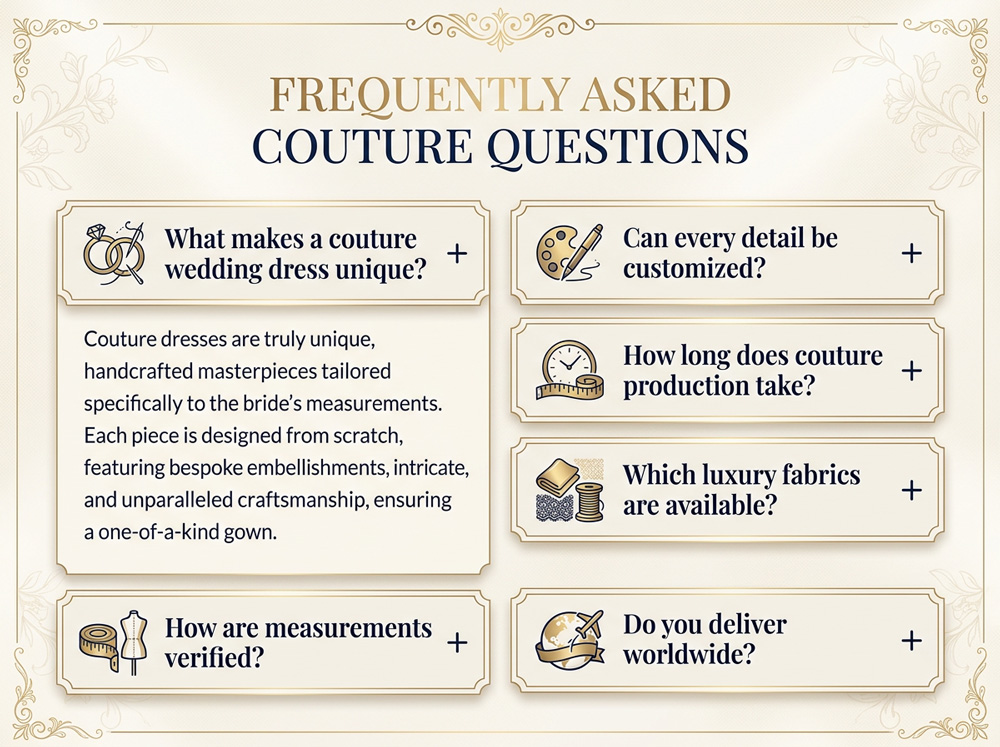
What distinguishes a true couture wedding dress from a high-quality designer ready-to-wear gown? Couture Wedding Dresses begins with individual measurements and a pattern or draping process created for that body. It typically includes a toile stage, multiple fittings, and extensive hand finishing. Ready-to-wear starts from graded blocks and relies on post-purchase alterations.
How long does a custom couture process realistically take with a capable atelier? From final design approval to delivery, expect several weeks to a few months depending on complexity and current order volume. Rush timelines exist but usually carry premiums and reduced revision windows.
What is a realistic budget range for quality custom work in 2026? Accessible custom ateliers can deliver strong results from roughly €1,000–€3,000. Established European or New York houses often begin significantly higher. Fabric quality, hand embellishment density, and number of fittings drive the majority of cost variation.
Can couture gowns be practical for destination or outdoor weddings? Yes, when fabric weight, train length, and understructure are chosen deliberately for climate and terrain. Convertible designs further increase versatility.
How important is the internal construction (boning, cups, seam finishing)? Critical. External beauty fails if the gown shifts, digs, or loses shape during movement. Quality internal architecture is invisible when correct and immediately noticeable when absent.
Are heavy beading and lace practical for long ceremonies? Dense surface embellishment adds weight and can reduce breathability. Strategic placement—concentrated on bodice or train rather than full coverage—preserves impact while improving comfort.
How should Asian or non-Western body proportions be handled in Western-style couture patterns? Through precise vertical measurements (especially torso length) and willingness to adjust standard blocks. Ateliers experienced with international clients already account for these differences.
What cultural adaptations are commonly requested? Modest coverage (higher necklines, longer sleeves, hijab-compatible options), non-white colorways for specific traditions, and silhouettes that accommodate local ceremonial movement.
Is it possible to have a couture gown that works for both ceremony and reception without a second dress? Yes, via detachable overskirts, trains, or sleeves. Many modern designs are engineered precisely for this transition.
How should a bride evaluate fabric quality in person or via samples? Assess hand (softness and drape), opacity under strong light, recovery after crushing, and how cleanly edges can be finished. Request composition details and origin when possible.
What role does the toile or muslin play? It is the three-dimensional prototype that allows fit, proportion, and movement testing before expensive fabric is cut. Skipping it increases risk of irreversible problems.
Can alterations be made after the gown is finished? Limited changes are usually possible, but major silhouette shifts or extensive re-beading become expensive and can compromise structure. Better to resolve issues at the toile stage.
How does wholesale purchasing differ from individual custom orders? Wholesale typically involves agreed collections or limited modifications, volume pricing, and standardized grading with optional size runs. Individual custom allows fuller design freedom at higher per-piece cost.
What preservation steps maximize the life of a couture gown? Professional cleaning shortly after the event, acid-free storage box, controlled temperature and humidity, and avoidance of plastic bags that trap moisture.
Are sustainable or lower-impact materials compatible with couture standards? Increasingly yes. High-quality silks, carefully sourced laces, and efficient production reduce waste. Some ateliers now offer traceable or lower-impact options without sacrificing performance.
How do lighting conditions affect fabric and embellishment choices? Crystal and pearl work perform differently under natural daylight versus warm indoor lighting. Matte fabrics reduce glare in bright outdoor settings; luminous satins excel under controlled indoor light.
What is the typical number of fittings for a full custom process? Two to four is common, depending on complexity and distance. Remote clients may rely more heavily on detailed measurements and progress photography.
Can a couture gown be designed for easy travel? Yes. Strategic construction, detachable elements, and packing instructions from the atelier make international transport feasible.
How should a boutique buyer assess a new atelier partner? Request construction samples, size charts, production timeline documentation, and references from other retailers. Consistent quality across multiple pieces matters more than any single showpiece.
Is white still the dominant color, or are alternatives gaining ground? Ivory, soft blush, and champagne remain primary, but cool pastels, ice blue, and culturally significant colors appear more frequently in 2026 collections, especially for non-traditional or multi-ceremony weddings.
What questions should every bride ask during the first consultation? Fabric options and weights available, exact measurement protocol, number of included fittings, revision policy, total timeline, and what is and is not included in the quoted price.
Couture Wedding Dresses
For brides and buyers ready to move from research to creation, direct engagement with an atelier that controls its own production—such as Metropol Wedding Dress—offers the clearest path to a gown whose quality is measurable in both structure and experience.
Couture Wedding Dresses prices in 2026 range from accessible custom work starting around €300–€2,000 (Metropol Wedding Dress territory) to €8,000–€20,000+ at traditional European and New York houses, with celebrity or ultra-handworked pieces climbing far higher. The gap is driven less by fabric alone and more by labor hours, fitting stages, brand overhead, and exclusivity.
This guide dissects every cost component—materials, handwork, pattern development, logistics, and hidden extras—so brides and boutique buyers can evaluate real value rather than sticker shock. Metropol’s İzmir-based model demonstrates how direct atelier control and skilled Turkish production deliver couture-level construction at prices that remain realistic for most serious budgets.
The Price of Precision: Engineering the Real Cost of a Couture Wedding Dress
A couture wedding dresses is one of the few consumer products where the final invoice can legitimately vary by a factor of ten for garments that look superficially similar in photographs. Understanding why requires treating the gown as an engineered object rather than a fashion item. The price is the sum of measurable inputs: fabric square meters and quality, skilled labor hours, number of physical fittings, pattern complexity, embellishment density, and the commercial structure of the atelier.
Metropol Wedding Dress occupies a distinctive band in this spectrum. Operating from a substantial production workshop in İzmir, Turkey, the brand produces both individual custom gowns and wholesale volumes. Public information places many of its pieces between roughly €300 and €2,000. This is not “cheap couture.” It is couture made efficient through local skilled labor, vertical control of pattern-making and embroidery, and the absence of Paris or Manhattan real-estate and marketing overhead.
Cost Component Breakdown (2026 Reality)
| Cost Driver | Typical Share of Final Price | What Actually Happens | Metropol-Relevant Note |
|---|---|---|---|
| Premium fabric & notions | 20–35% | Silk satin, French lace, Italian tulle, crystals purchased at wholesale or near-wholesale | Direct access to Turkish and imported textile networks keeps this efficient |
| Pattern development & toile | 8–15% | Custom pattern or heavy adaptation + cotton muslin prototype | In-house mold expertise reduces external pattern costs |
| Cutting & primary construction | 10–18% | Hand cutting for lace matching, machine + hand assembly of structure | Workshop scale allows consistent quality without boutique mark-ups |
| Hand embellishment | 25–45% | Lace appliqué, beading, embroidery—often the largest single labor block | Local embroidery teams keep hourly rates competitive |
| Fittings & adjustments | 5–12% | 2–4 physical or remote fittings with progressive changes | Collaborative photo updates reduce travel costs for distant clients |
| Overhead, design time, QC, packaging | 10–20% | Atelier rent, designer time, quality control, shipping materials | Lower Turkish operating costs versus Western Europe or US |
These percentages shift dramatically with design complexity. A clean mikado column with minimal lace may land closer to the lower end of each band. A multi-layered lace gown with dense crystal work and convertible elements pushes the hand-embellishment share upward.
Price Tiers Mapped to Reality
Accessible Custom / High-Quality Made-to-Measure (€300–€2,500) Metropol’s core range sits here. Expect full measurements, design adaptation or original sketch, quality imported or high-grade local fabrics, structured internal construction, and meaningful hand finishing. Multiple progress photos and at least one or two adjustment stages are typical. This tier delivers genuine couture techniques without the prestige tax.
Mid-to-Upper Designer Custom (€2,500–€8,000) Independent designers and smaller European or US ateliers. Higher fabric grades, more extensive handwork, more fittings, stronger brand storytelling. Still largely made-to-measure rather than pure haute couture.
Traditional Haute Couture Houses (€8,000–€25,000+) Paris, London, New York names. Multiple toiles, ateliers with specialized embroiderers, exclusive fabrics, extensive client service. Price includes the intangible of the label and the experience of the house.
Ultra / Celebrity Commission Can exceed €50,000–€100,000+ when hundreds of hours of specialized embroidery, rare materials, or extreme customization are involved.
Hidden and Variable Costs That Surprise Buyers
- Rush fees: 20–50% premium for compressed timelines
- Extra fittings beyond the included number
- Shipping, customs, and insurance for international orders
- Veil, cape, or detachable train as separate line items
- Post-wedding preservation cleaning and boxing
- Major last-minute design changes after fabric is cut
Boutique buyers face additional variables: minimum order quantities, sample costs, grading for multiple sizes, and private-label packaging.
“You may also want to take a look at this article.” Designer Wedding Dresses
Scenario Costings (Illustrative 2026)
Scenario A – Destination Beach Bride, Lightweight Design Clean A-line or soft mermaid in silk crepe or layered chiffon, light lace accent, removable overskirt. Estimated range with Metropol-level atelier: €800–€1,800. Higher Western atelier: €3,500–€7,000.
Scenario B – Formal Cathedral with Moderate Embellishment Structured bodice, French lace appliqué, moderate train, internal corsetry. Metropol range: €1,200–€2,200. Traditional house: €6,000–€15,000.
Scenario C – Full Hand-Beaded Statement Piece Dense crystal or pearl work, complex lace, multiple layers, convertible elements. Accessible custom: €1,800–€3,500+. Prestige houses: €12,000–€30,000+.
Scenario D – Boutique Wholesale Order (10–20 units) Consistent collection pieces with limited customization options. Unit cost can drop significantly below single custom pricing while maintaining construction standards.
Comparison Matrix: Where the Money Goes Differently
| Factor | Metropol-Style Atelier | Traditional Haute Couture House |
|---|---|---|
| Labor cost per hour | Competitive (skilled Turkish workforce) | High (Paris/New York rates) |
| Real estate & brand overhead | Moderate | Very high |
| Fabric markup | Lower | Higher |
| Number of specialist hands | Focused team | Large specialized ateliers |
| Exclusivity premium | Low to moderate | High |
| Transparency of process | High (progress photos common) | Variable, often more opaque |
| Typical final price for comparable construction | €800–€2,500 | €8,000–€20,000+ |
The construction quality gap is often narrower than the price gap. The difference is commercial structure and perceived prestige.
Procurement Checklist for Brides and Buyers
Before requesting a quote
- Exact measurements (or professional measurement protocol)
- Preferred silhouette + two alternatives
- Fabric weight and opacity priorities
- Embellishment density tolerance
- Venue climate and movement requirements
- Hard budget ceiling including shipping
- Required delivery date with buffer
Questions that reveal true cost structure
- What is included in the quoted price (number of fittings, veil, alterations)?
- How many hours of hand embellishment are estimated?
- Is a toile stage included?
- What is the policy and cost for design changes after fabric is cut?
- Are progress photos provided at key stages?
- What are the exact shipping and customs responsibilities?
Red-flag pricing signals
- Quotes that seem dramatically lower than material and labor reality without explanation
- Refusal to discuss construction stages or fabric origin
- Pressure to pay the full amount upfront with no milestone structure
- Vague lead times
Expert Cost-Control Observations
- Labor, not fabric, is usually the largest variable. Reducing hand-beading density or simplifying lace application can save more than switching to a slightly cheaper base fabric.
- Remote clients who provide excellent measurements and clear feedback reduce fitting costs and risk.
- Convertible design elements (detachable train or overskirt) often deliver higher perceived value than simply adding more static embellishment.
- For boutique buyers, consistency across a size run matters more than the perfection of a single sample.
- Preservation and potential future alteration value should be factored into the total cost of ownership.
Common Pricing Mistakes
- Comparing a fully custom quote to a ready-to-wear sample sale price
- Underestimating shipping, duties, and insurance for international orders
- Changing major design elements after the fabric is cut
- Ignoring the cost of a second “reception” look when a convertible design could solve it
- Choosing the lowest quote without verifying construction standards
Maintenance and Long-Term Value
A gown built with proper internal structure and quality materials retains more of its value (emotional and potential resale or heirloom) than a poorly constructed expensive label piece. Professional cleaning and proper storage protect the investment. Many Metropol-level gowns are designed with enough structural integrity to allow future alterations or restyling.
Closing Cost Perspective
The rational buyer does not ask “How expensive is couture?” but “What level of engineering, labor, and material do I actually need, and which production model delivers it most efficiently?” Metropol Wedding Dress illustrates that the answer can sit well below traditional haute couture price points without abandoning the techniques that define the category—custom patterning, hand finishing, structured construction, and collaborative development.
Price transparency is the new luxury. When an atelier can show the stages, the hours, and the materials, the final number becomes a decision rather than a mystery.
Frequently Asked Questions
What is the lowest realistic price for a true custom couture wedding dress in 2026? With efficient ateliers such as Metropol, well-constructed custom pieces can start in the €300–€800 range for simpler designs. Anything significantly below that usually compromises either fabric quality or handwork.
Why do some couture dresses cost ten times more than others with similar appearance? The majority of the difference is labor hours (especially embroidery), number of fittings, brand overhead, and exclusivity premium rather than fabric alone.
Does more expensive always mean better construction? No. Construction quality depends on the skill of the pattern makers, cutters, and finishers. Some high-prestige houses deliver exceptional work; some mid-priced ateliers do as well. Inspection of internal structure and progress documentation matters more than the label.
How much should I budget for shipping and customs on an international custom order? Typically 5–15% of the gown price depending on destination, declared value, and chosen shipping method. Always clarify Incoterms and insurance.
Are there significant savings for wholesale or multi-gown orders? Yes. Unit costs drop when an atelier can produce a small collection or size run. Boutique buyers routinely achieve better per-piece pricing than single custom clients.
What percentage of the price typically goes to hand embellishment? On heavily decorated gowns, 30–45% is common. Clean architectural designs may allocate under 15% to embellishment.
Can I reduce cost without sacrificing the couture feel? Yes—prioritize excellent fit and structure, choose strategic rather than all-over embellishment, and select fabrics with good drape and opacity rather than the absolute highest momme weight.
How do rush orders affect price? Expect 20–50% premiums and reduced flexibility for changes. Planning 4–6 months ahead is the most effective cost-control measure.
Is a toile (muslin prototype) worth the extra cost? Almost always. It prevents expensive mistakes in the final fabric and is one of the clearest markers of a serious custom process.
What hidden costs most frequently surprise brides? Extra fittings, design changes after cutting, separate veil or accessories, international shipping/duties, and professional preservation cleaning.
How does Metropol’s pricing compare to European capital ateliers for comparable construction? Metropol typically delivers similar technical standards at 20–40% (or less) of the price of traditional Paris or New York houses because of lower operating costs and direct production control.
Should I compare prices per kilogram of fabric or per hour of labor? Labor hours and complexity of pattern/embellishment are more accurate predictors than fabric weight alone.
Do convertible designs (detachable train/overskirt) cost more? They add some cost but often deliver higher functional and photographic value than simply increasing static embellishment density.
How should a boutique evaluate whether a supplier’s wholesale price is sustainable? Look at consistency across samples, clarity of size grading, production capacity, and willingness to share construction details. Unsustainably low prices often signal future quality or delivery problems.
What is a reasonable deposit structure? 30–50% to begin, further payments at toile approval and fabric cutting, final balance before shipping is a common and protective model.
Does buying in Turkey or from a Turkish atelier automatically mean lower quality? No. Turkey has deep textile and skilled-labor traditions. Quality depends on the specific atelier’s standards, not the country.
How much does fabric origin affect the final price? French or Italian lace and high-momme silks command premiums. High-quality alternatives from other sources can reduce cost with minimal visual difference when construction is strong.
Can I get a detailed cost breakdown from the atelier? Serious custom houses will discuss the major drivers even if they do not itemize every euro. Refusal to discuss construction stages is a warning sign.
Is the cheapest quote ever the best value? Rarely. The best value is the gown whose construction, fit, and materials match the required performance at the lowest sustainable price.
What long-term costs should be considered? Professional cleaning, proper storage, potential future alterations, and the emotional/photographic longevity of a well-made piece versus a fragile one.
These questions address the actual financial and logistical decisions brides and buyers face when evaluating couture pricing.
For those ready to move from analysis to a concrete proposal, engaging an atelier that controls its own production and is transparent about stages—such as Metropol Wedding Dress—turns price from a source of anxiety into a clear engineering decision.
Couture Wedding Dresses
Couture Wedding Dresses designers range from globally recognized houses whose names dominate red carpets to skilled production ateliers that quietly deliver the same technical standards at far more accessible price points. In 2026 the decisive factors are no longer only the designer’s fame, but pattern mastery, hand-finishing capability, collaborative process, cultural adaptability, and transparent production control.
Metropol Wedding Dress, operating from its İzmir atelier, functions as both designer and manufacturer—offering original design development, full customization, and reliable wholesale capacity. This guide examines how to evaluate real design capability rather than brand prestige, so brides and boutique buyers can select partners who deliver engineered excellence instead of marketing narratives.
Beyond the Label: Mapping the Real Designers and Ateliers of Couture Bridal
The phrase “Couture Wedding Dresses Designer” is often used loosely. Some names represent pure creative direction backed by large specialized workshops. Others represent highly skilled pattern makers and embroiderers who also design. A third group consists of production-focused ateliers that absorb client vision and translate it into precise, wearable architecture. Understanding which type of partner you are actually engaging determines fit quality, timeline reliability, cost structure, and long-term satisfaction.
Metropol Wedding Dress belongs to the third category with strong design capability. Based in İzmir, Turkey, the atelier combines in-house pattern expertise, embroidery and weaving skill, and the capacity to produce both one-of-a-kind custom gowns and consistent wholesale collections. It is not a runway celebrity brand. It is a working design-and-production house that has spent two decades refining the practical craft of bridal couture for international clients.
The Three Working Models of Couture Design
| Model | Primary Strength | Typical Client Experience | Price Implication | Example Profile |
|---|---|---|---|---|
| Celebrity / House Designer | Creative vision + brand prestige | High-touch appointments, strong storytelling, limited personalization windows | Highest | Traditional Paris or New York houses |
| Independent Designer-Atelier | Personal creative signature + smaller team | Closer collaboration, more flexible design input | Mid to high | Boutique designer labels |
| Design-Capable Production Atelier | Technical mastery + scalable execution | Collaborative development from sketch or reference, strong process transparency | Accessible to mid | Metropol Wedding Dress and similar specialized workshops |
Most brides and boutique buyers benefit from understanding where their chosen partner sits on this spectrum rather than assuming every “couture designer” operates identically.
What Actual Design Capability Looks Like
True design skill in bridal couture is measurable:
- Ability to create or adapt a pattern that respects the individual body’s proportions and movement requirements
- Mastery of internal architecture (boning placement, cup support, seam logic) that disappears when correct
- Knowledge of how specific fabrics behave under different lighting, climates, and motion
- Capacity to engineer convertible or multi-look elements without compromising structure
- Experience translating cultural or religious requirements into elegant construction rather than afterthoughts
Metropol’s documented strengths—mold expertise, embroidery quality, rich lace and fabric options, and willingness to produce hijab-compatible or culturally specific variations—align directly with these practical design competencies.
Evaluation Framework for Choosing a Designer or Atelier
Capability Checklist
- Does the partner control its own pattern making and construction, or outsource critical stages?
- Can they show progressive work (toile, lace application, internal structure) rather than only finished photographs?
- How do they handle non-standard body proportions or cultural coverage needs?
- What is the actual revision policy after the toile stage?
- Is the design process collaborative or primarily “select from our collection”?
- For boutique buyers: Can they maintain consistency across a size run and deliver on agreed timelines?
Warning Signs
- Heavy reliance on finished-gown photography without process documentation
- Reluctance to discuss internal construction or fabric origin
- One-size-fits-most grading presented as “custom”
- Pressure to decide quickly without clear measurement and fitting protocol
Design Process Comparison
A serious custom process typically follows this sequence regardless of the fame of the name:
- Intake of measurements, venue data, climate, movement needs, and aesthetic references
- Design development or adaptation (sketch or digital)
- Pattern creation or heavy modification
- Toile / muslin fitting and proportion refinement
- Fabric cutting with motif matching where lace is involved
- Construction of structure and primary assembly
- Hand embellishment stages
- Intermediate and final fittings
- Quality control and finishing
Ateliers that skip or minimize the toile stage increase risk. Those that provide photo updates at lace application and structural stages reduce uncertainty for distant clients—exactly the collaborative model Metropol emphasizes.
Geographic and Operational Reality in 2026
Traditional design centers (Paris, London, New York, certain Italian cities) still dominate prestige perception. Production excellence, however, is widely distributed. Turkey’s combination of textile infrastructure, skilled pattern and embroidery labor, and competitive operating costs has made it a significant source of high-quality bridal construction for both European and global markets. Metropol’s location in İzmir places it inside this practical ecosystem while maintaining direct design and production control.
For boutique buyers this geography often translates into better wholesale pricing, flexible minimums, and the ability to request limited private-label adjustments. For individual brides it means access to genuine custom work without the full overhead of a capital-city house.
Scenario Mapping: Matching Designer Type to Need
Bride seeking maximum creative collaboration and original design Independent designer-atelier or design-capable production house that welcomes sketch development and multiple revision stages.
Bride prioritizing flawless fit and technical reliability over name recognition Production atelier with proven mold expertise and transparent process (Metropol profile).
Boutique requiring consistent collection pieces plus occasional custom requests Design-capable manufacturer that can deliver both wholesale runs and individual adaptations.
Client with specific cultural or modest coverage requirements Partner experienced in engineering coverage elegantly rather than adding it as an afterthought.
Common Selection Errors
- Choosing solely by Instagram aesthetic without verifying construction capability
- Assuming higher price automatically equals better pattern skill
- Ignoring the difference between “made-to-order from a collection” and true custom patterning
- Overlooking shipping, customs, and communication logistics with distant partners
- Failing to request process documentation before committing deposits
Expert Perspective on Design Value
The most valuable designer is the one whose technical decisions remain invisible on the day—supporting posture, allowing movement, photographing cleanly, and surviving the physical reality of a long celebration. Name recognition can enhance the emotional experience; it does not automatically improve seam logic or lace application quality. Ateliers that treat design as both aesthetic and engineering discipline often deliver more consistent results for the majority of brides.
Metropol’s two-decade focus on mold accuracy, embroidery, and client-specific adaptation positions it as a practical design partner rather than a pure marketing brand. For buyers who value measurable capability over prestige signaling, this distinction is decisive.
Closing Evaluation Principle
Selecting a couture wedding dress designer is less about finding the most famous name and more about matching required technical competence, collaborative style, and commercial structure to the specific project. When the partner controls pattern, construction, and finishing under one roof and can demonstrate process transparency, the probability of a successful outcome rises substantially—regardless of whether the label is globally recognized.
Metropol Wedding Dress illustrates that serious design capability and production excellence can coexist at accessible price points when the atelier prioritizes craft over capital-city overhead.
Frequently Asked Questions
What is the difference between a couture designer and a couture atelier? A designer may focus primarily on creative direction. An atelier typically controls pattern making, construction, and finishing. The strongest partners combine both.
Does a famous name guarantee better fit? No. Fit quality depends on pattern skill, measurement protocol, and number of fittings—not brand recognition.
How can I verify a designer’s actual technical ability? Request process documentation: toile photographs, lace application stages, internal structure details, and examples of work on bodies similar to yours.
Are production ateliers less creative than named designers? Not necessarily. Many production houses employ experienced designers and can develop original work or precise adaptations from client references.
What should boutique buyers prioritize when selecting a design partner? Consistency across sizes, reliable timelines, clear communication, and the ability to handle both collection pieces and limited custom requests.
Can a Turkish atelier deliver the same construction standards as a Paris house? Yes, when the atelier maintains high pattern and finishing standards. The difference is usually commercial overhead and prestige pricing rather than inherent technical capability.
How important is in-house pattern making? Critical. Outsourced patterning increases the risk of miscommunication and reduces the ability to make precise adjustments.
What questions reveal whether a designer truly collaborates? Ask how they handle major proportion changes after the toile, whether they welcome detailed client sketches, and how cultural or coverage requirements are engineered.
Is “made-to-order” the same as couture design? No. Made-to-order usually means a collection design produced in the client’s measurements. True custom design involves original or heavily adapted patterning.
How do I evaluate design capability for non-standard body proportions? Look for evidence of successful work on similar proportions and a willingness to adjust standard blocks rather than force the body into a fixed pattern.
Should I prioritize the designer’s aesthetic signature or technical reliability? Both matter, but technical reliability determines whether the dress performs on the day. Aesthetic preference can often be achieved through collaboration with a technically strong partner.
What role does embroidery skill play in design evaluation? High-level embroidery and lace application are design decisions as much as decorative ones. Poor placement or density can ruin an otherwise good silhouette.
Can remote collaboration with a designer or atelier work well? Yes, when the partner provides clear measurement protocols, progress photography, and structured feedback stages.
How does Metropol differ from pure designer brands? It operates as both design and production house, controlling mold, embroidery, and construction while remaining open to full customization and wholesale partnerships.
What is a realistic timeline when working with a capable design atelier? Several weeks to a few months depending on complexity and current capacity. Extremely short timelines usually compromise either quality or revision flexibility.
Are there advantages to working with a design-capable manufacturer for multi-look needs? Yes. Convertible elements and multi-day versatility are easier to engineer when the same team controls both design and construction.
How should I interpret very low or very high design quotes? Extremely low quotes often signal compromised materials or handwork. Extremely high quotes frequently include significant brand and location premiums. Focus on the construction package being delivered.
What documentation should I request before placing a deposit? Measurement protocol, process stages, revision policy, estimated timeline, and clarification of what is included in the price.
Does cultural design experience matter? Yes. Partners experienced with modest coverage, specific color traditions, or regional ceremonial requirements can integrate those needs elegantly rather than treating them as constraints.
How do I know if a designer’s work will photograph well under my wedding lighting? Ask for examples shot in similar lighting conditions and discuss fabric behavior (matte vs. luminous, lace density, crystal placement) relative to your venue.
These questions focus on the practical evaluation criteria that determine successful outcomes with couture designers and ateliers.
“You may also want to take a look at this article.” Custom Wedding Dresses USA
For brides and retailers ready to engage a partner that combines design development with controlled production, Metropol Wedding Dress offers a clear alternative to prestige-driven models—technical capability, collaborative process, and accessible pricing under one roof.