Custom Wedding Dresses Saudi Arabia
Custom Wedding Dresses Saudi Arabia combine cultural modesty (long sleeves, high necklines, full coverage options), regional heritage influences, and modern couture elegance. Saudi weddings often involve multiple outfits across days of celebrations (henna/ghumra nights, main reception). White Western-style gowns are popular for the primary event alongside traditional regional pieces.
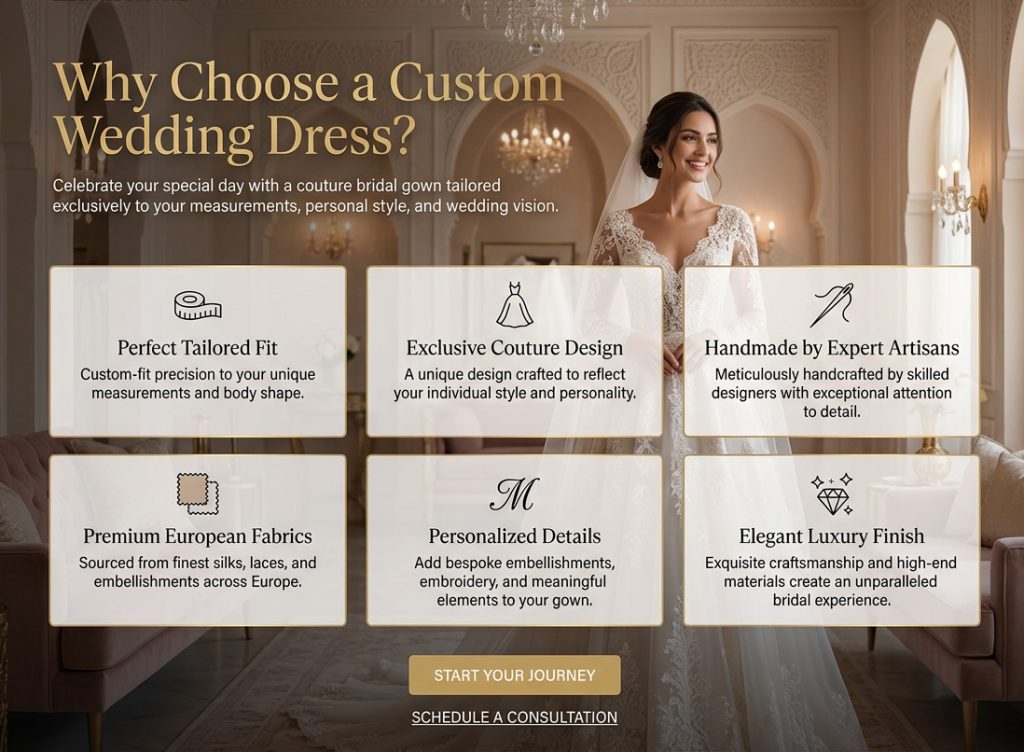
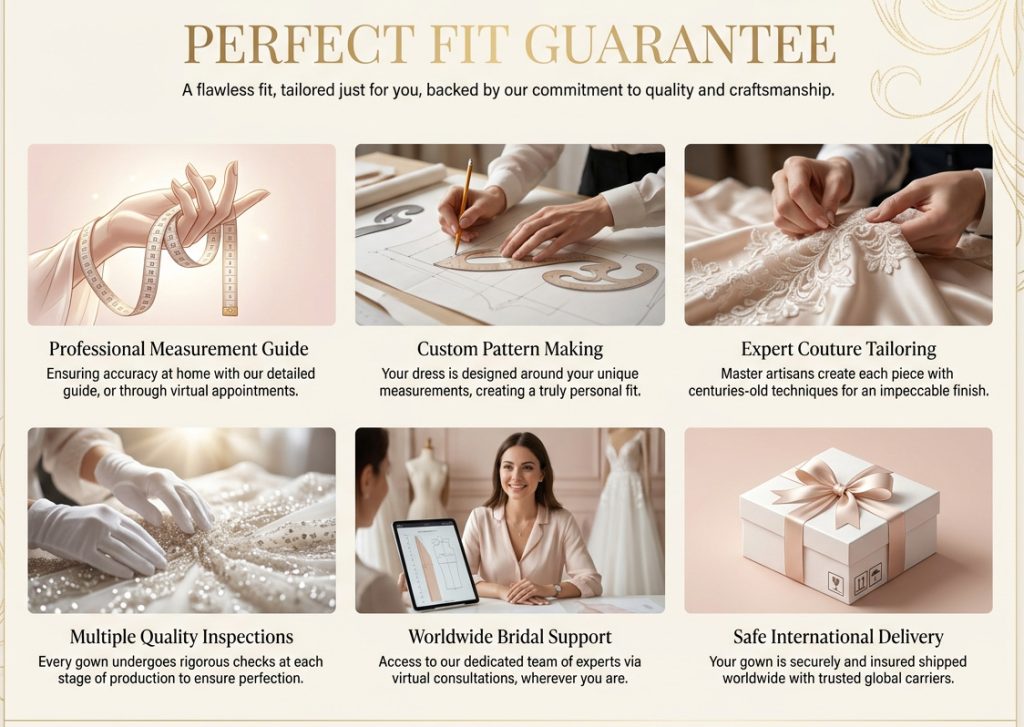
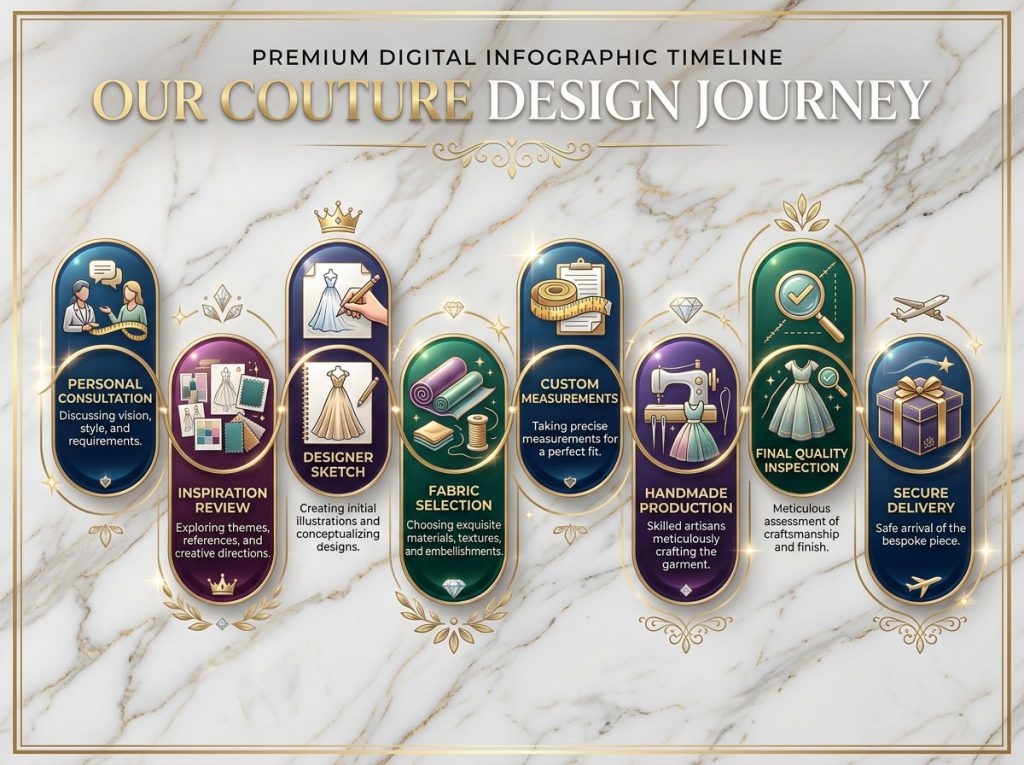
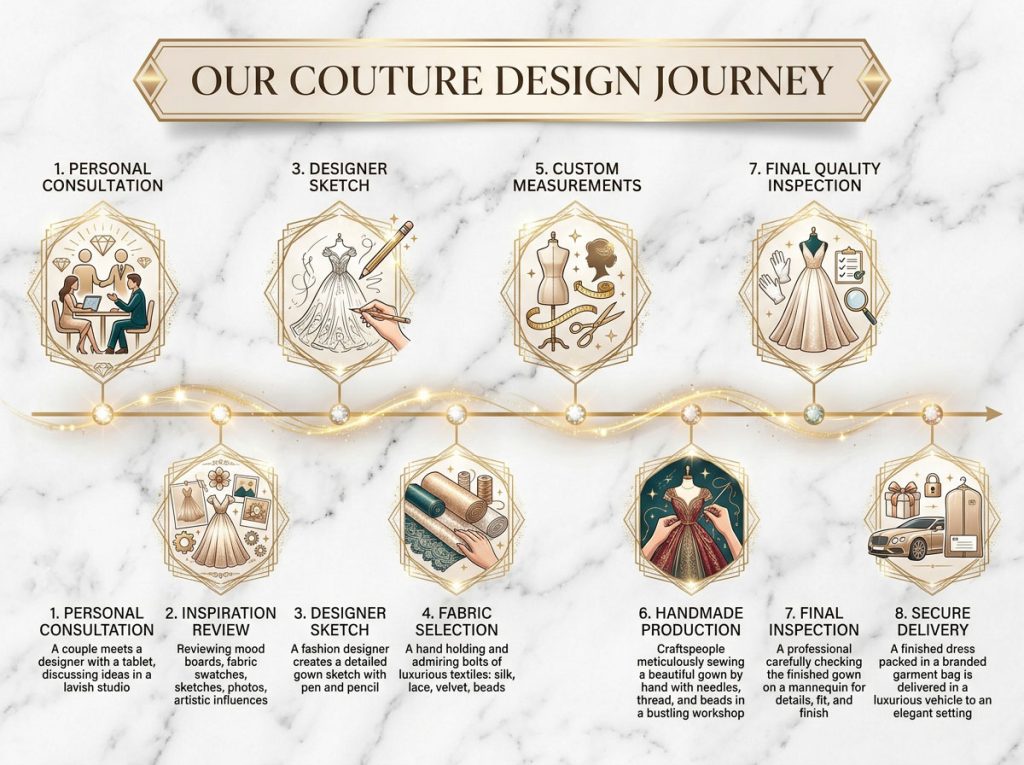
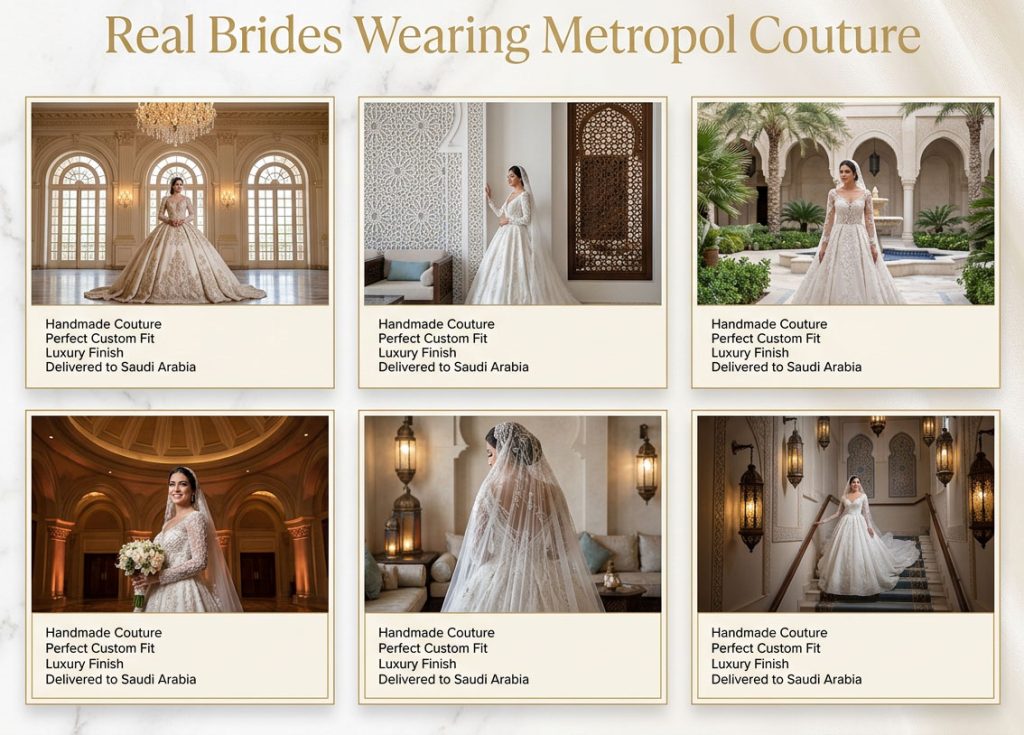
Metropol Wedding Dress, a Turkish manufacturer established in the early 2000s in Izmir with a large production atelier, specializes in fully custom and wholesale bridal gowns. They offer made-to-measure designs, rich lace and fabric options, modest/hijab-compatible styles, and worldwide shipping at accessible prices (typically €300–€2,000 range). This makes high-quality custom work realistic for Saudi brides seeking uniqueness, better value than pure local haute couture, and designs tailored to body measurements, climate, and event needs.
The process emphasizes early planning (6–10+ months), precise measurements, fabric selection suited to heat and movement, cultural appropriateness, and clear communication. Key benefits include personalization, quality craftsmanship, and the ability to blend Saudi preferences with European techniques.
This guide covers cultural context, practical selection and ordering steps, materials, costs, common pitfalls, comparisons, expert recommendations, and real-scenario advice so Saudi brides (and families) can confidently commission a gown that feels personal, respectful, and memorable.
Custom Wedding Dresses for Saudi Brides: A Practical Framework for Choosing, Commissioning, and Wearing Yours with Confidence
Saudi weddings are multi-layered celebrations. A bride may change outfits across nights—traditional regional ensembles for henna or ghumra gatherings, a statement white or ivory gown for the main reception, and sometimes additional looks for photography or family events. The modern Saudi bride often wants a gown that honors modesty and family expectations while reflecting her personal style and the evolving fashion landscape under Vision 2030 influences.
Custom work solves the core tension: ready-to-wear or pure local couture can feel limiting in fit, exclusivity, lead time, or price. Sourcing a fully custom gown from a specialized manufacturer such as Metropol Wedding Dress in Turkey opens options for precise measurements, fabric and silhouette control, modest adaptations, and designs that photograph beautifully under Saudi event lighting and climates.
This is not a generic “top 10 dresses” list. It is a decision framework built around real constraints Saudi brides face: heat and humidity in some regions, multi-day wear and movement, family input, photography requirements, budget ranges that vary dramatically by city and social circle, and the desire for something that will not look identical to every other gown in the season’s Instagram feeds.
Understanding the Saudi Bridal Context
Saudi bridal fashion sits at the intersection of regional heritage and global trends. Traditional pieces still appear, especially on pre-wedding nights. Examples include heavily embellished Hijazi styles (sometimes with layered elements and rich embroidery), Najdi garments with specific silhouettes and zari work, Madinah pink or gold-thread ensembles, and Eastern Province influences. These are often worn for women’s gatherings and carry family and regional meaning.
For the main wedding event, many brides choose a white or soft ivory Western-inspired gown—A-line, ball gown, mermaid, or soft column—adapted for coverage: long sleeves, higher necklines, optional overskirts or detachable trains, and modest backs. Some brides wear traditional for one segment and switch to a white gown; others commission a single custom piece that bridges both worlds through fabric weight, embellishment density, or silhouette.
Modesty remains a practical and cultural priority even as abaya rules have relaxed in many public contexts. Full-length, sleeve coverage, and thoughtful necklines are standard expectations in most family and venue settings. Comfort for sitting, dancing among women, and temperature regulation matters because events can run long and venues vary from air-conditioned halls to outdoor or tented spaces.
Family involvement is common. Mothers, sisters, and elders often participate in selection or approve key details. Photography (both professional and guest phones) means the gown must look intentional from every angle and under mixed lighting. Climate considerations differ: Riyadh’s dryness and heat versus Jeddah’s humidity affect fabric choice and lining.
Metropol’s model—custom production from a Turkish atelier with experience exporting to Gulf and international markets—fits this environment because it allows brides to specify coverage, train length, weight, and embellishment level while accessing European-influenced construction and a wide range of laces and base fabrics.
“You may also want to take a look at this article.” Custom Wedding Dresses Belgium
Why Custom Makes Sense for Saudi Brides
Off-the-rack or semi-custom local options can work, but limitations appear quickly: limited size ranges that do not match individual proportions, repeated popular silhouettes across boutiques, long wait times for true haute couture, and price jumps into the high tens of thousands of SAR for designer names.
Custom production addresses these directly:
- Exact body measurements produce a better base fit before any alterations.
- Silhouette, neckline, sleeve style, train, and embellishment density can be adjusted to the bride’s height, posture, preferred movement, and event type.
- Modest adaptations (long sleeves that still look intentional, high or illusion necklines, covered backs with interesting detail) are built in rather than added as afterthoughts.
- Fabric weight and breathability can be chosen with Saudi climate and multi-hour wear in mind.
- Exclusivity is higher; the gown is less likely to appear on multiple guests or in the same season’s social media.
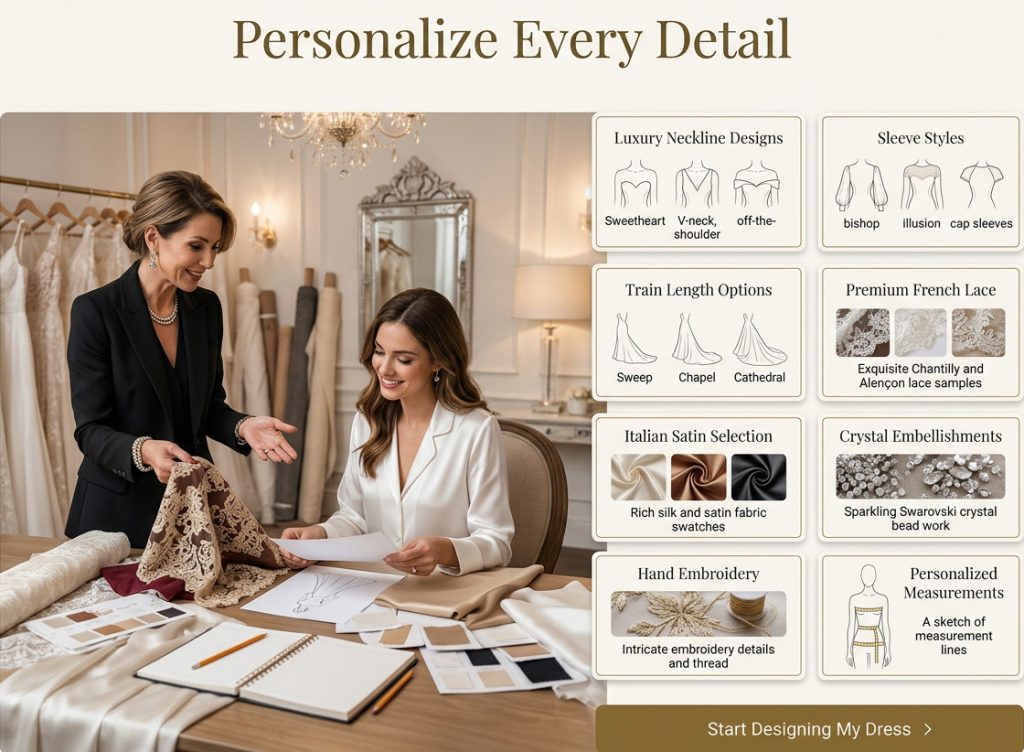
Metropol operates as both a wholesale manufacturer and custom maker. Their atelier handles full personalization—from existing models modified to completely new designs based on sketches or references. Production updates with photos at key stages, mold/pattern approval before final sewing, and worldwide shipping support the process for brides ordering remotely or through a local contact. Prices in the €300–€2,000 band (roughly SAR 1,200–8,000 depending on exchange and complexity at the time of writing) position many custom options in a mid-to-accessible range relative to pure local couture.
The Commissioning Process: A Realistic Timeline and Steps
Start 6–10 months before the wedding date when possible. Complex beading, multiple fittings, or peak season demand extend timelines. Shorter windows are possible with simpler designs or express options, but quality and stress levels suffer.
Step 1 – Clarify vision and constraints List must-haves: coverage level, preferred silhouette (A-line for ease of movement and photography, ball gown for drama, mermaid for structure), color (classic white/ivory, soft blush, or regional-inspired tones for secondary looks), train length, sleeve style, and any cultural or family requirements. Note venue type, expected temperature, and whether the gown will be worn for dancing, sitting for long periods, or both. Collect reference images—not to copy exactly, but to communicate volume, texture, and mood.
Step 2 – Select the maker and communicate clearly For Metropol or similar Turkish custom producers, initial contact is typically via website, WhatsApp, or email. Provide approximate measurements or schedule a professional measurement session (many Saudi brides use a trusted local tailor or bridal boutique for accurate numbers). Share reference photos, preferred fabrics if known, and any non-negotiables. Ask for fabric swatches when possible and confirm lead time, revision policy, and shipping method to Saudi Arabia (Riyadh, Jeddah, Dammam, or other cities).
Step 3 – Design development and pattern The maker develops a pattern/mold based on measurements and design. Approval of this stage is critical. Some services send progress photos after lace application or construction milestones. Request clear communication on any substitutions (lace availability, thread color matching).
Step 4 – Production and interim checks Construction proceeds. High-quality work involves careful understructure (boning, cups, or soft support as needed), secure beading or embroidery attachment, and proper finishing of seams and hems. For modest long-sleeve designs, ensure arm mobility and that the fabric does not cling uncomfortably in heat.
Step 5 – Final fitting, shipping, and local adjustments Upon arrival in Saudi Arabia, a local seamstress or the original maker’s guidance can handle minor hem, bust, or waist tweaks. Plan for at least one or two fittings with the actual undergarments, shoes, and any head covering or jewelry that will be worn. Steam or professional pressing should be done carefully according to fabric type.
Step 6 – Event-day logistics Arrange safe transport of the gown, a steamer or careful hanging space at the venue, and a trusted person who knows how to manage the train, bustle (if any), and any detachable elements. Have a small emergency kit: fashion tape, extra pins, stain remover suitable for the fabric, and spare buttons or hooks if relevant.
Materials and Construction Realities
Saudi climate and multi-hour wear favor certain combinations:
- Base fabrics: Lightweight satin, soft mikado, quality tulle, chiffon overlays, and stretch-friendly linings for comfort. Heavier silks or dense satins can feel oppressive in heat unless used strategically.
- Lace and embroidery: French or high-grade synthetic laces, beadwork, pearls, crystals, or sequins. Secure attachment is essential so nothing catches or falls during movement. For traditional-leaning looks, denser metallic or zari-inspired work can be incorporated.
- Structure: Soft cups, light boning, or built-in support improve shape without restricting movement. Avoid overly rigid corsetry if the bride expects to sit and socialize for hours.
- Linings and underlayers: Breathable options reduce discomfort. Multiple layers should be balanced so the gown does not become excessively heavy.
- Practical details: Hidden pockets (sometimes requested), easy bustles for dancing, and secure closures (zippers with hooks, covered buttons).
Metropol emphasizes rich lace and fabric variety plus experienced mold work and embroidery. This supports both delicate romantic looks and more structured, embellished statements popular in Gulf markets.
Cost Framework and Value Comparison
Local Saudi market ranges (approximate, based on publicly discussed figures) often run:
- Entry / ready or lightly custom: SAR 1,500–4,000
- Mid-range semi-custom: SAR 4,000–10,000
- Premium local or named designer couture: SAR 10,000–25,000+
Turkish custom production such as Metropol frequently falls in a competitive band once shipping, potential duties, and minor local alterations are included. Value comes from fit precision, material quality relative to price, and exclusivity.
“You may also want to take a look at this article.” Custom Wedding Dresses Denmark
Budget factors that move the number: amount and type of hand beading or embroidery, number of layers and train length, specialty laces, rush fees, and shipping method. A simpler elegant A-line with quality lace and modest sleeves will cost less than a heavily crystal-encrusted ball gown with multiple detachable elements.
Hidden or secondary costs: professional measurements, local alterations, cleaning/preservation after the wedding, and any required undergarments or accessories. Renting remains an option for secondary looks, but many brides prefer ownership of the main gown for sentimental and photographic reasons.
Comparisons: Local Couture vs. Turkish Custom vs. Online Ready-to-Ship
| Aspect | Local Saudi Designer / Boutique | Turkish Custom (e.g. Metropol) | Online Ready / Semi-Custom |
|---|---|---|---|
| Fit precision | High with fittings | High with measurements + local tweak | Variable |
| Exclusivity | High | High | Lower |
| Lead time | Often 4–8+ months | Typically several months | Weeks to a couple months |
| Price band (approx.) | Mid to very high | Accessible mid | Lower to mid |
| Modest adaptations | Excellent | Strong when specified | Depends on design |
| Fabric & technique range | Strong local + imported | Wide European-influenced | Variable |
| Communication ease | In-person preferred | Remote + photo updates | Mostly digital |
| Shipping / logistics | Local | International to KSA | International |
Turkish custom often wins on price-to-quality and willingness to execute detailed modest modifications without the premium of a famous local name. Local designers excel when the bride wants continuous in-person collaboration and deep knowledge of regional event norms. Online ready options suit tight budgets or secondary dresses but rarely match true custom fit and uniqueness.
Common Mistakes and How to Avoid Them
- Ordering too late and accepting rushed work or limited fabric choices.
- Providing inaccurate or incomplete measurements (always use a professional and note posture, preferred undergarments, and any weight-change plans).
- Choosing heavy fabrics or dense embellishment without considering heat and movement.
- Ignoring family or venue expectations until late in the process.
- Focusing only on front appearance; check back, side, and seated views.
- Skipping a bustle or practical train management plan.
- Underestimating shipping, customs, or local alteration needs.
- Selecting a silhouette that photographs poorly on the bride’s body type or under typical Saudi event lighting.
- Neglecting a preservation plan after the wedding.
Expert Practical Recommendations
Prioritize mobility and temperature comfort equal to aesthetics. A gown that looks perfect in the fitting room but restricts sitting or feels oppressive after two hours fails its purpose.
Build a small “gown team”: the maker, a local seamstress for final tweaks, the photographer (so they understand any detachable elements), and one trusted person for event-day management.
For multi-look weddings, consider one primary custom white/ivory gown and simpler or rental traditional pieces for other nights. This balances budget and impact.
Document the process with photos at key stages—this helps with any disputes and becomes part of the bridal memory.
If ordering from Metropol or similar, confirm current lead times, exact measurement chart requirements, payment milestones, and return/revision policies before depositing. Use clear, detailed references and written summaries of agreements.
Real-Scenario Considerations
A Riyadh bride planning a large hall reception with women’s dancing may favor a lighter A-line or soft ball gown with secure long sleeves, moderate train, and breathable lining. A Jeddah bride in a more humid coastal setting might prioritize even lighter fabrics and fewer heavy layers. A bride incorporating Hijazi or Najdi elements for the henna night can commission a separate traditional-inspired piece or adapt details (embroidery motifs, color accents) into the main gown for continuity in photographs.
Brides who travel or have family in multiple cities benefit from makers experienced in international shipping and clear remote communication. Those with specific body considerations (petite, tall, plus-size, or postpartum) gain the most from true custom patterning.
Maintenance, Preservation, and Aftercare
After the wedding, professional cleaning by a specialist experienced with beaded and delicate gowns is advisable before long-term storage. Acid-free tissue, a breathable garment bag, and a cool dry place protect the investment. Some brides later convert elements into keepsakes or have the gown altered for anniversary wear.
On the day itself, avoid excessive perfume or makeup transfer on the bodice, manage the train carefully, and have a plan for any food or drink near the gown.
Closing Perspective
A custom wedding dress for a Saudi bride is both a practical garment for a multi-hour, multi-sensory celebration and a personal statement. The strongest outcomes come from clear priorities (modesty + comfort + personal style), realistic timelines, precise measurements, and a maker capable of translating those into construction. Metropol Wedding Dress and similar specialized Turkish producers offer a proven route to high-quality, personalized results at accessible price points with the flexibility Saudi brides often need.
Start with honest conversation about what the gown must do on the day—how it should feel, move, photograph, and represent the bride—then work backward to design, fabric, and maker. The result is not merely a dress; it is the piece that allows the bride to move through her celebrations with confidence and presence.
Frequently Asked Questions
1. How far in advance should a Saudi bride order a custom wedding dress from a Turkish maker like Metropol? Ideally 6–10 months. This allows design development, production, shipping, and local adjustments without rush fees or compromised quality.
2. Can custom dresses accommodate full long sleeves and high necklines while still looking modern? Yes. These elements are routinely requested and can be designed so the coverage feels intentional rather than added on.
3. What measurements are most critical? Bust, underbust, waist, hips, hollow-to-hem (or full length with shoes), arm length, shoulder width, and any specific notes on posture or preferred ease. Professional measurement is strongly recommended.
4. How does climate affect fabric choice for Saudi weddings? Lighter satins, quality tulles, chiffons, and breathable linings perform better in heat and humidity. Heavy multi-layered silks can become uncomfortable during long events.
5. Is it realistic to order remotely and handle final fittings in Saudi Arabia? Yes. Many brides do this successfully. Plan for professional local alterations upon arrival.
6. What is a typical price range for a quality custom gown from a manufacturer like Metropol? Often €300–€2,000 depending on complexity, fabrics, and embellishment level (plus shipping and any duties or local work).
7. Can the gown incorporate elements inspired by traditional Saudi regional dress? Yes. Embroidery density, sleeve volume, color accents, or motif references can be discussed and integrated.
8. How important is a bustle or train management system? Very, especially if the bride will dance or move through crowded women’s gatherings. Discuss practical solutions early.
9. What happens if the bride’s weight changes between ordering and the wedding? Communicate potential changes. Some ease can be built in, and local alterations handle modest shifts. Major changes may require redesign discussion.
10. Are detachable sleeves, overskirts, or trains useful for Saudi multi-event weddings? They can be excellent for transforming the look between photography, ceremony segments, and dancing.
11. How do I communicate design preferences effectively across language or distance? Use clear photos, annotated sketches, written lists of must-haves and deal-breakers, and request confirmation summaries from the maker.
12. What shipping and customs considerations apply when ordering to Saudi Arabia? Confirm the maker’s preferred carriers, insurance, and any documentation. Factor possible duties or delays into the timeline.
13. Can the same maker produce both a main white gown and a traditional-inspired secondary look? Many can. Discuss as a package for consistency in quality and communication.
14. How much should I budget for local alterations after the dress arrives? Varies by complexity, but set aside funds for hem, minor shape adjustments, and any last-minute tweaks with final shoes and undergarments.
15. What undergarments work best with custom modest gowns? Seamless or structured pieces that match the neckline and support needs without visible lines. Bring them to all fittings.
16. Is it better to choose a popular silhouette or something less common? Choose what flatters the bride’s body, movement needs, and personal taste. Uniqueness comes more from fit, fabric, and details than from avoiding every popular shape.
17. How can I ensure the beading or embroidery will hold up during a long event? Ask about attachment methods and request secure construction. Quality makers reinforce high-stress areas.
18. What if the family prefers a more traditional look while the bride wants modern? Many successful gowns blend both—modern silhouette with traditional embellishment density or coverage that satisfies everyone.
19. Should the photographer see the gown details in advance? Helpful for planning lighting, angles, and any special features such as a dramatic train or detachable elements.
20. How do I preserve the gown after the wedding? Professional cleaning by a specialist familiar with delicate and beaded fabrics, followed by proper storage in a cool, dry place with acid-free materials.
21. Can Metropol or similar makers work from a bride’s own sketch or a specific inspiration image? Yes. Full customization from references or original ideas is part of their service model.
22. What is the role of the “mold” or pattern approval stage? It is the critical checkpoint before final construction. Review measurements and shape carefully at this point.
23. Are there advantages to ordering during off-peak seasons? Potentially better lead times and more maker attention. Peak wedding seasons can extend production calendars.
24. How do I handle last-minute emergencies (stains, loose beads, broken zipper)? Prepare a small kit and designate a reliable person who knows the gown’s construction. Have the local seamstress’s contact ready.
25. Is a sample or muslin fitting possible with remote makers? Some offer progress photos or basic toiles; clarify what is included. Local muslin work can supplement if needed.
26. How does body type influence the best silhouette for Saudi event photography? A-line and soft ball gowns are forgiving and photograph well for many figures. Mermaid or column styles require precise fit and confidence in movement. Discuss with the maker.
27. Can the gown be designed for easy travel if the wedding involves multiple cities or venues? Lighter construction, thoughtful packing instructions, and possibly a travel-friendly bustle help.
28. What questions should I ask the maker before placing a deposit? Exact lead time, revision policy, what is included in the price, shipping method and cost, measurement requirements, and communication process for updates.
29. How important is the quality of the lining and internal construction? Extremely. It affects comfort, shape retention, and longevity far more than outer appearance alone.
30. Can I request a specific lace or fabric that I have seen elsewhere? Often yes, or a close match. Availability and timing should be confirmed early.
31. What is a realistic expectation for the number of design revisions? Clarify the policy. Most makers allow reasonable adjustments during the design phase; major changes later cost more or delay production.
32. How do Saudi brides typically handle the transition between traditional and white gowns on the same day or weekend? Careful timing, separate preparation spaces, and sometimes assistance from bridal attendants or family.
33. Is insurance recommended for a custom gown during shipping and the event? Worth discussing with the maker and considering for high-value pieces.
34. What post-wedding options exist besides storage? Professional preservation, alteration into a different garment, or selective use of lace/embroidery for keepsakes.
35. How can a bride balance personal desire with family expectations in the design process? Involve key family members early with clear options rather than presenting a finished concept at the last moment. Many families appreciate being consulted on coverage and overall appropriateness.
These answers reflect practical realities of commissioning custom work for Saudi celebrations. Individual circumstances vary; direct discussion with the chosen maker remains essential.
Saudi wedding guest dresses require a precise balance: cultural respect through modest coverage (shoulders, arms, and legs), elegant formality appropriate to glamorous women’s gatherings, practical comfort for long events in varying climates, and the absolute rule of never competing with the bride—especially by avoiding white or overly bridal silhouettes.
Events are often multi-day or multi-segment (henna/ghumra nights, main receptions), gender-segregated in many traditional settings, and held in air-conditioned halls that contrast with outdoor heat. Guests need outfits that move well, photograph appropriately, and signal thoughtful attendance.
Metropol Wedding Dress, a Turkish manufacturer with strong experience in formal and evening wear alongside bridal production, offers custom and semi-custom options that solve common pain points: better fit than mass-market pieces, modest adaptations built into the design, quality fabrics suited to temperature shifts, and exclusivity at accessible price points. This guide provides a decision system for selecting, commissioning, or adapting guest dresses that feel intentional, respectful, and wearable—whether sourced locally or ordered as custom work.
The Saudi Wedding Guest Dress Decision System: Coverage, Climate, Context, and Confidence
Attending a Saudi wedding as a female guest is both an honor and a styling exercise with real constraints. The invitation places you inside a carefully orchestrated social event where clothing communicates respect for the hosts, awareness of cultural norms, and consideration for the bride. Get the balance right and you move through the evening comfortably and appropriately. Misjudge coverage, color, volume, or formality and the outfit becomes a distraction—for you and for others.
This is not a list of “pretty dresses.” It is a practical decision framework built around four interlocking factors that determine success: coverage and proportion, event context and formality, climate and wearability, and the quiet rule of not competing with the bride. Custom production from a maker such as Metropol Wedding Dress becomes useful precisely when ready-to-wear options fail one or more of these factors.
The Non-Negotiables of Guest Etiquette
Modesty in this setting operates on three levels simultaneously: physical coverage, visual proportion, and overall intention. Shoulders, upper arms, collarbones in many contexts, midriff, and legs to at least below the knee (preferably longer) should be covered. Sleeves reaching the elbow or full length are the safest default. Necklines stay relatively high or thoughtfully filled. Transparent fabrics require solid underlayers. Tight or body-contouring cuts that emphasize shape can read as less appropriate even if skin is covered.
Color carries equal weight. White and near-white are reserved for the bride. Guests who wear them risk appearing to compete, regardless of intention. Black works well for evening formality when the fabric has richness (crepe, silk, velvet with subtle sheen or tonal embroidery) rather than flat matte polyester. Jewel tones, deep jewel-adjacent neutrals, soft pastels excluding bridal ivory, and carefully chosen metallics are all viable depending on the event’s tone. Patterns and embellishment should enhance rather than dominate.
Gender segregation in many traditional weddings creates a distinct women’s space where elegance and glamour are celebrated among female guests. Within that space, formal gowns, structured evening dresses, and refined abaya-style formal pieces circulate freely. The expectation is still respect, not restraint for its own sake.
Mapping the Event: Not All Saudi Weddings Are Identical
Before selecting a dress, clarify the specific invitation.
- Henna or ghumra nights: Often more intimate, colorful, and traditional. Guests may lean toward richly embroidered pieces, vibrant but respectful colors, or formal abayas. Comfort for sitting and socializing is higher priority.
- Main reception or women’s hall: Usually the most formal and glamorous. Floor-length or elegant midi-to-long dresses with refined structure, quality fabric, and measured embellishment perform best.
- Mixed or more modern celebrations: Still require modest coverage, but silhouettes and fabrics can lean contemporary.
- Venue and timing: Hotel ballrooms, private halls, and majlis-style spaces differ in lighting, temperature control, and formality. Evening events in Riyadh tend toward deeper colors and structured looks; daytime or coastal settings allow lighter fabrics and softer construction.
Ask the host or a knowledgeable mutual contact about expected formality if the invitation is silent. Observing recent family or social-circle weddings (discreetly) provides useful calibration.
Climate and Physical Reality
Saudi venues often alternate between outdoor arrival heat and heavily air-conditioned interiors. A dress that feels perfect in the fitting room can become uncomfortable after three or four hours of sitting, standing, greeting, and moving.
Preferred characteristics:
- Breathable base fabrics (quality crepe, lightweight satin with good drape, soft georgette, certain mikados used judiciously).
- Strategic lining that prevents cling without adding bulk.
- Sleeves that allow arm movement without riding up or restricting.
- Hem lengths that clear the floor enough to walk safely yet maintain formality.
- Secure but non-restrictive construction so the dress holds shape through the evening.
Heavy multi-layered gowns or dense rigid embellishment work less well for guests than for the bride, who is the visual center and often has support systems around her.
Why Custom or Thoughtfully Adapted Production Matters for Guests
Mass-market formal dresses frequently fail on fit, coverage details, or fabric performance. Local boutiques offer strong options but can repeat popular silhouettes. Pure haute couture pricing is rarely justified for a guest dress.
Custom or high-quality semi-custom production addresses the gaps:
- Precise measurements produce a base that requires minimal last-minute alteration.
- Sleeves, necklines, and hems can be specified for coverage without looking like afterthoughts.
- Fabric weight and drape can be chosen for temperature shifts and movement.
- Embellishment density stays elegant rather than bridal-competitive.
- The resulting piece is less likely to appear on multiple other guests.
Metropol Wedding Dress, operating from a substantial Turkish atelier with experience in formal and evening wear as well as bridal, supports this approach. Their capacity for custom and modified designs, range of laces and base fabrics, and international shipping make them a practical source for guests seeking better-than-ready-to-wear results without local couture pricing. Evening and formal silhouettes can be adapted for modest coverage, comfortable wear, and Saudi event conditions.
A Practical Selection and Commissioning Sequence
1. Define the constraints first List coverage requirements, color exclusions (especially white), preferred length, any mobility needs, and the formality level of the specific event. Note whether the dress must work for one night only or potentially multiple related gatherings.
2. Choose silhouette by function A-line and soft column shapes often provide the best combination of elegance, movement, and modest proportion. Structured sheaths work when fabric and fit are excellent. Avoid anything that reads as bridal (dramatic trains, pure white, overly voluminous ball-gown shapes that upstage).
3. Fabric and detail decisions Prioritize drape and breathability. Embellishment should be tonal or restrained—enough to feel special under event lighting, not enough to compete. Long or three-quarter sleeves can be designed as integral elements rather than added layers.
4. Source strategically Local options for speed and fittings. Turkish custom makers such as Metropol for better price-to-quality ratio, exclusivity, and willingness to execute specific modest adaptations. Hybrid approach: order the base custom and handle final minor adjustments locally.
5. Measurement and communication Professional measurements remain essential. Provide clear reference images that show the desired coverage and overall mood rather than exact copies. Confirm lead time, revision process, shipping to Saudi Arabia, and what is included in the quoted price.
6. Final validation Try the completed dress with the actual shoes, undergarments, and any outer layer or scarf you may carry. Check seated appearance, arm raise, walking stride, and back view. Steam or press according to fabric instructions.
Cost and Value Considerations
Guest dresses sit in a different economic category from bridal gowns. Ready or lightly altered pieces can start lower; quality custom or semi-custom from specialized manufacturers often lands in a mid-range that delivers noticeably better fit and fabric performance. Factor in shipping, any duties, local alterations, and professional cleaning afterward.
Value is measured by how the dress performs across the entire evening—comfort, appropriateness, photographic presence, and the absence of anxiety about coverage or competing with the bride—rather than by embellishment count alone.
Common Guest Mistakes and Corrections
- Choosing white or near-white → Select any other elegant color family.
- Prioritizing trend over coverage → Build coverage into the design from the start.
- Ignoring temperature shifts → Test fabric hand-feel and lining in conditions closer to the venue.
- Over-volumizing the silhouette → Keep proportion guest-appropriate.
- Leaving measurements or alterations too late → Build buffer time.
- Selecting footwear that becomes painful after two hours → Prioritize secure, walkable elegance.
- Forgetting a lightweight outer layer or scarf for transitional moments or more conservative family segments.
Real-Scenario Adjustments
A guest attending a large Riyadh evening reception in a hotel ballroom benefits from a structured yet breathable long dress in a deep jewel or sophisticated neutral, full or three-quarter sleeves, and moderate embellishment. A henna-night guest may choose richer embroidery or a more traditional formal silhouette while still respecting color and coverage rules. Coastal or daytime events allow lighter fabrics and slightly softer construction. Guests traveling from outside Saudi Arabia should confirm current local expectations with the host and pack a versatile modest outer layer.
Maintenance and Practical Event-Day Notes
Choose fabrics that resist excessive wrinkling when seated. Have a small emergency kit (fashion tape, spare pins, stain treatment suitable for the fabric). Designate a calm place to refresh if needed. After the event, professional cleaning preserves the piece for future formal use or thoughtful storage.
Closing Framework
A successful Saudi wedding guest dress is the result of deliberate choices across coverage, context, climate, and courtesy. It allows the wearer to participate fully—greeting, sitting, moving, celebrating—without visual or physical friction. When ready-to-wear options fall short on fit, modest detailing, or fabric performance, custom or carefully adapted production from makers experienced in formal wear, such as Metropol Wedding Dress, provides a reliable path to a piece that feels intentional and respectful.
Begin with the event’s specific requirements, lock the non-negotiables of coverage and color, then select silhouette, fabric, and maker accordingly. The outcome is clothing that supports rather than distracts from the celebration.
Frequently Asked Questions
1. Is white completely off-limits for female wedding guests in Saudi Arabia? Yes in practice. White and near-white are strongly associated with the bride. Choosing them risks appearing competitive regardless of the guest’s intention.
2. How long should sleeves be for appropriate coverage? Elbow length or full length is the safest and most widely accepted standard for formal wedding settings.
3. Can guests wear black? Yes, particularly for evening events. Choose fabrics with quality drape or subtle richness rather than flat matte finishes that can appear severe.
4. Are abayas still expected or useful for wedding guests? Not legally required in most modern contexts, but a refined formal abaya or elegant outer layer remains appropriate and often appreciated, especially in more traditional gatherings.
5. What length is safest for dresses? Floor-length or at least well below the knee (ideally mid-calf to ankle) with solid coverage. Shorter hems require careful pairing with opaque layers and still risk feeling less formal.
6. How do climate differences between Riyadh and Jeddah affect fabric choice? Both involve heat-to-air-conditioning transitions. Prioritize breathable, well-lined fabrics everywhere; coastal humidity may favor even lighter constructions.
7. Can a guest order a custom dress from a Turkish maker like Metropol? Yes. Their formal and evening capabilities, measurement-based production, and shipping experience make this a practical option for better fit and modest detailing.
8. How far in advance should a custom guest dress be ordered? Four to eight months is comfortable for most designs. Simpler pieces can work on shorter timelines; complex embellishment needs more buffer.
9. What undergarments work best under modest formal dresses? Seamless, supportive pieces that match the neckline and sleeve style without creating visible lines. Bring them to fittings.
10. Is it acceptable to wear the same dress to multiple related wedding events? Often yes, especially if the events differ in formality. Slight variations via accessories or outer layers can refresh the look.
11. How important is the back view of a guest dress? Very. Guests are seen from all angles during greetings and seating. Ensure coverage and finish are consistent.
12. Should guests avoid heavy trains or dramatic volumes? Yes. Those elements belong to the bride. Keep silhouette elegant but proportionate to a guest role.
13. What footwear is practical for long Saudi wedding events? Secure, walkable heels or elegant flats with good support. Test them for several hours before the event.
14. Can embellishment be included without looking bridal? Yes—tonal, restrained, or strategically placed detail enhances formality without competing.
15. How should international guests confirm current expectations? Ask the host or a mutual contact familiar with the specific family’s style. Norms can vary by region and social circle.
16. Is a lightweight scarf useful even if not required? Yes. It provides flexibility for more conservative segments, transitional moments, or personal comfort.
17. What is the biggest comfort-related mistake guests make? Choosing fabric or construction that feels fine standing but becomes restrictive or warm after prolonged sitting and socializing.
18. Can trousers with a long tunic or formal co-ord work? In many modern or less traditional settings, yes—provided coverage, proportion, and formality are maintained.
19. How do I handle last-minute alterations if the dress arrives from overseas? Build time for a local seamstress and schedule the final fitting with actual shoes and undergarments.
20. Are bright colors acceptable? Yes when the overall look remains elegant and the color does not dominate the room or clash with the event’s tone. Jewel and sophisticated tones often perform best.
21. Should the dress be dry-clean only? Many formal fabrics are. Confirm care instructions and plan professional cleaning after the event.
22. How can a guest ensure the dress photographs well under mixed lighting? Choose fabrics with good drape and subtle dimension. Extreme shine or flat matte can both create issues depending on venue lights.
23. Is it better to buy locally or commission custom for a one-time event? Local for speed and easy fittings. Custom when fit, specific modest details, or exclusivity matter more than immediacy.
24. What role does family or older relatives’ presence play in dress choice? More conservative coverage and classic formality are wise when older generations are central to the gathering.
25. Can the same maker produce both bridal and guest dresses? Manufacturers such as Metropol handle both categories, which can be useful for consistency in quality if multiple pieces are needed within a family.
26. How do I avoid looking underdressed at a glamorous women’s reception? Prioritize quality fabric, clean lines, appropriate length and sleeves, and refined detail over trend-driven or casual pieces.
27. What emergency items should a guest carry? Fashion tape, safety pins, a small stain treatment suitable for the fabric, and perhaps a needle-and-thread kit for minor issues.
28. Is velvet appropriate? For cooler evenings or well air-conditioned venues, quality velvet can feel luxurious. In high heat it may be less practical.
29. How strict is the “no white” rule if the dress has only small white accents? Small accents are usually fine; large white areas or overall white appearance are not.
30. Can a guest re-wear the dress to non-wedding formal events? Yes. A well-chosen modest formal dress often has strong versatility for other elegant occasions.
31. What is the safest default silhouette for first-time guests? An elegant A-line or soft column with full or three-quarter sleeves, modest neckline, and quality fabric in a non-white sophisticated color.
32. How much should fit priority rank compared to trend? Fit and coverage rank higher. A perfectly fitted modest dress always outperforms a trendy piece that requires constant adjustment.
33. Are metallic fabrics acceptable? In moderation and with good quality. Soft metallics or tonal shimmer can elevate an evening look without excess.
34. Should guests coordinate colors with the wedding party? Only if requested. Otherwise, independent elegant choices within the modest and non-white guidelines are standard.
35. What final check should happen the day before the event? Full try-on with shoes, undergarments, and any outer layer; steam or press; confirm transportation of the dress; and pack the small emergency kit.
These answers address the practical realities Saudi wedding guests encounter. Individual family and regional variations exist; when in doubt, err toward greater coverage, classic formality, and direct clarification with the hosts.