
Custom Wedding Dresses Australia
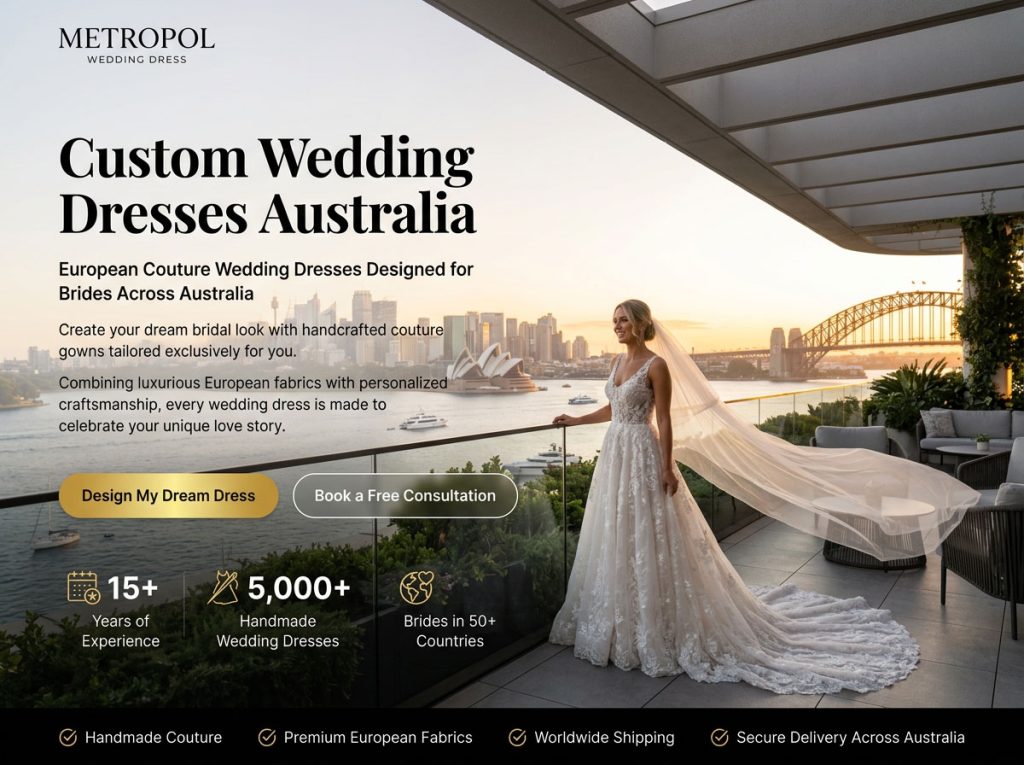
Australian brides seeking affordable custom wedding dresses no longer need to choose between a generic off-the-rack gown and a $5,000–$15,000 local couture bill. Metropol Wedding Dress, a specialist Turkish atelier with over two decades of experience, delivers fully custom, made-to-measure bridal gowns using European fabrics, hand-finished details and precise sizing for a fraction of typical Australian custom prices.
This guide examines real 2026 Australian market costs, the production and shipping realities of working with an international manufacturer, fabric and construction quality benchmarks, common pitfalls that inflate local prices, and a practical decision framework so you can secure a unique, perfectly fitted dress that stays within a realistic budget. The focus is value engineering, not compromise.
Detailed Article
The Real Cost Landscape for Australian Brides in 2026
Australian wedding dress spending currently averages around $2,500–$2,600 AUD nationally, with Sydney and Melbourne brides often spending closer to $2,650–$2,900. These figures include everything from simple ready-to-wear pieces under $1,000 to mid-range designer and made-to-measure options. Fully custom local atelier work commonly starts at $3,000–$3,500 for cleaner silhouettes and climbs quickly once lace, beading or complex structure enters the picture. High-end couture routinely exceeds $6,000–$10,000+.
The gap between “nice enough” and “exactly what I imagined” is where most budget pressure appears. Off-the-rack or sample-sale dresses solve the price problem but rarely solve the fit or uniqueness problem. Local custom solves uniqueness and fit but frequently destroys the budget. An alternative path—commissioning a custom gown from a high-volume, specialised bridal manufacturer that already serves international markets—has become viable for Australian brides who understand lead times, measurements and quality verification.
Metropol Wedding Dress operates from a substantial production facility in İzmir, Turkey. The company has manufactured bridal wear since the early 2000s, producing both wholesale collections for boutiques and fully custom individual gowns. Pricing for custom work is typically positioned well below equivalent Australian atelier rates while still using French lace, Italian silk, quality satin and hand-applied embellishment. Worldwide shipping, including to Australia, is part of the standard service.
Why Local Custom Pricing Sits Higher
Several structural factors push Australian custom prices upward:
- High studio and labour overheads in major cities.
- Lower production volume (most local ateliers make far fewer gowns per year).
- Import duties and mark-ups already embedded in the fabric and lace they purchase.
- The expectation of multiple in-person fittings and a highly personalised design consultation process.
None of these factors automatically equal superior construction. A skilled pattern-maker and experienced sewers working at scale can achieve comparable or better technical quality when the design brief is clear and measurements are accurate.
Production Process at a Specialist Manufacturer
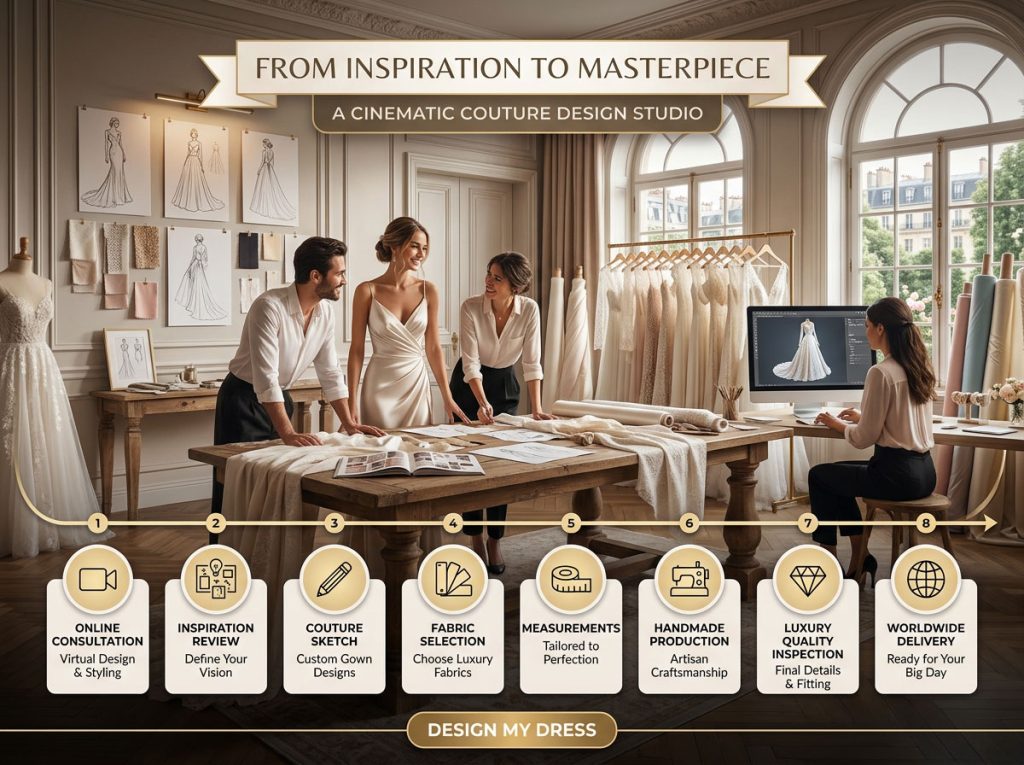
A typical custom order with Metropol follows a structured sequence:
- Initial design consultation (photos, sketches, Pinterest boards, fabric preferences, silhouette, neckline, train length, any cultural or religious requirements).
- Detailed measurement submission using a standardised chart (bust, waist, hips, hollow-to-hem, arm circumference, etc.). Video calls or photo references help refine the brief.
- Pattern development and toile (muslin mock-up) stage in many cases, with photos or digital feedback shared before final fabric is cut.
- Cutting and construction using the chosen fabrics and laces.
- Hand embroidery, beading or appliqué where specified.
- Final quality checks, packaging and international shipping.
Lead times are generally 3–6 months depending on complexity and current order volume. This is comparable to many Australian custom timelines and still allows buffer for shipping and any minor local alterations.
Material and Construction Reality Check
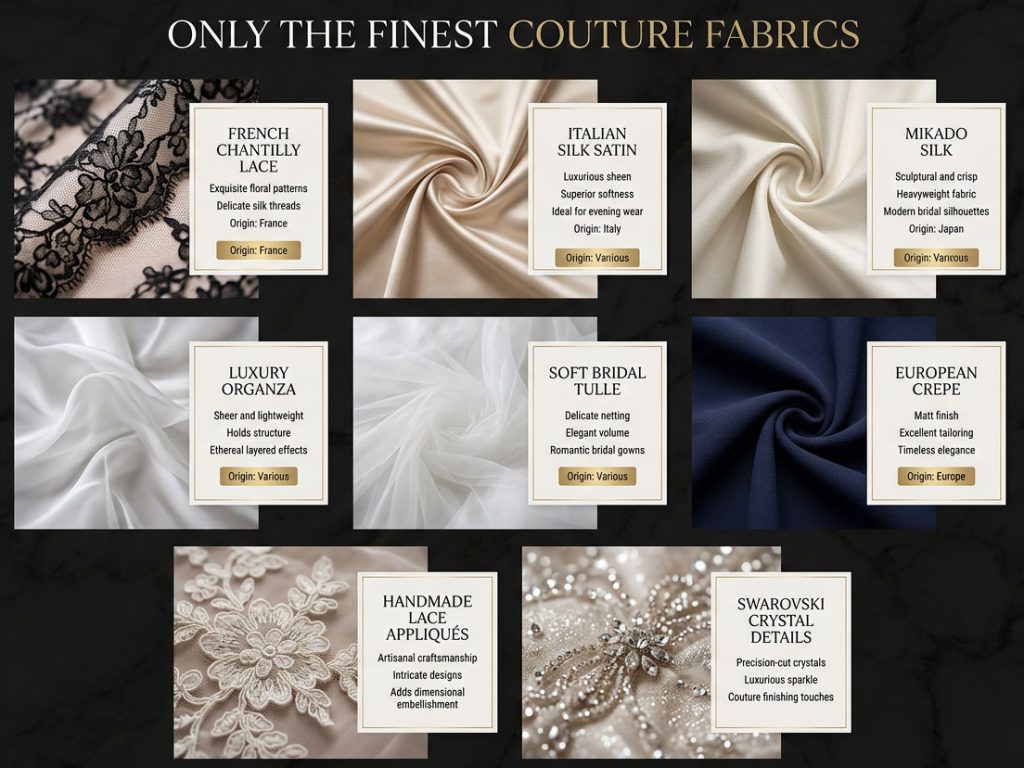
Premium bridal fabrics are global commodities. French Chantilly or Alençon lace, Italian silk satin, high-grade tulle and structured underlining travel the same supply chains whether they end up in a Melbourne atelier or an İzmir production floor. What differs is the labour cost of applying them and the number of hands that touch the garment.
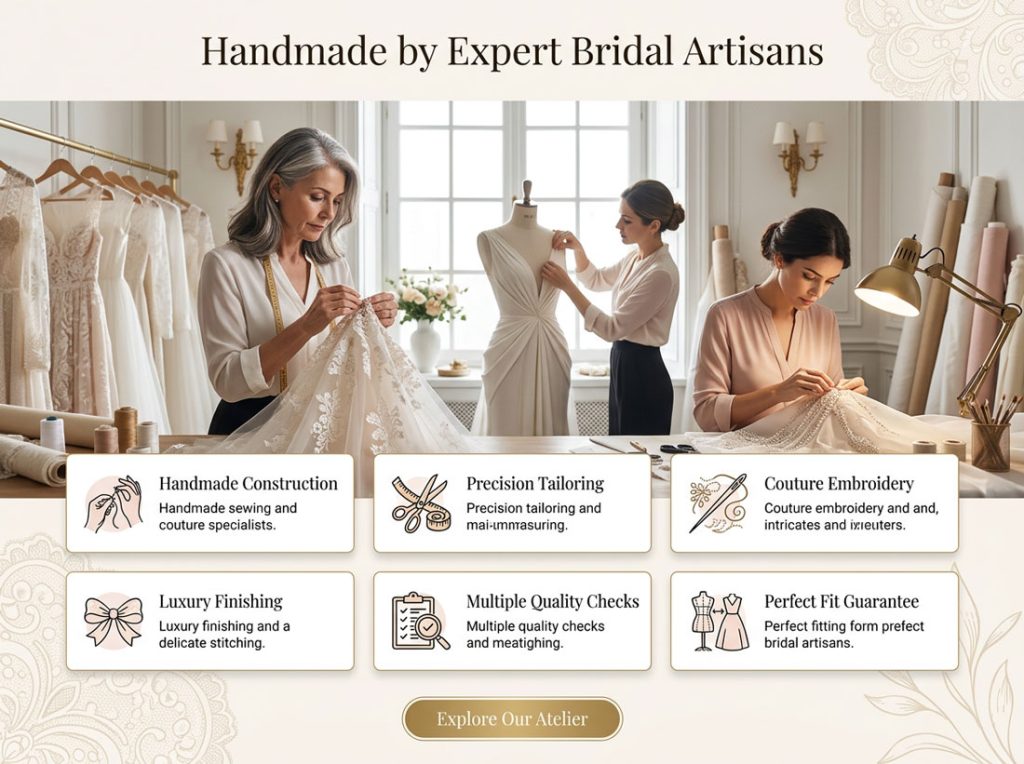
Metropol’s stated approach emphasises hand-finished seams, proper bust support, internal boning where required, and careful finishing of lace edges. Brides should still request clear fabric specifications, composition details and close-up photos of construction techniques before finalising an order. Ask specifically about:
- Whether the lace is Guipure, Chantilly, or embroidered tulle.
- Lining and understructure materials.
- How the train and bustle are engineered.
- Zipper or button quality and placement.
These questions separate marketing language from actual product.
Australia-Specific Practical Considerations
Shipping and duties. Most bridal gowns fall under clothing classifications. Australian import processes for personal use are generally straightforward for items of this value, but brides should confirm current GST and duty treatment with the supplier and, if necessary, a customs broker. Shipping times from Turkey to major Australian cities typically range from 7–21 days depending on the service chosen. Tracking and insurance are essential.
Fit reliability. Accurate measurements are non-negotiable. Many brides engage a local seamstress for the measurement session and for final hem or minor adjustments after the gown arrives. This hybrid model—custom manufacture overseas + local finishing—often delivers the best cost-to-result ratio.
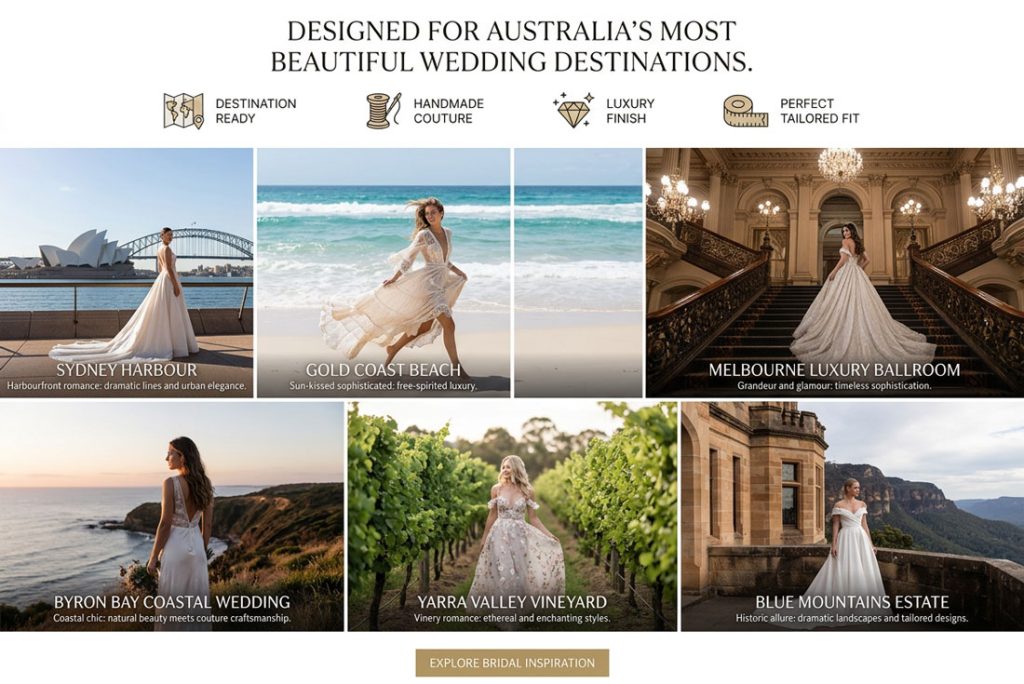
Climate and venue. Australian weddings span tropical Queensland beaches, temperate Melbourne gardens, dry Perth landscapes and cooler southern venues. Lightweight silk blends, breathable linings and removable sleeves or overskirts become practical considerations rather than pure aesthetics. A manufacturer experienced with international clients can accommodate these requests.
Currency and payment. Orders are typically quoted in USD or EUR and paid via bank transfer or secure international platforms. Exchange-rate movement and payment security should be factored into the total budget.
Cost Comparison Framework (Illustrative 2026 Ranges)
| Option | Approximate Price Range (AUD equivalent) | Fit Level | Uniqueness | Lead Time | Risk Profile |
|---|---|---|---|---|---|
| High-street / online RTW | $300–$1,000 | Standard sizes + alterations | Low–medium | Immediate–weeks | Low |
| Mid-range Australian designer / made-to-order | $1,500–$3,500 | Good (size ordered) | Medium | 3–6 months | Medium |
| Local full custom atelier | $3,000–$8,000+ | Excellent | High | 4–8 months | Medium–high (budget) |
| Specialist international custom (e.g. Metropol) | Often $1,500–$5,500 range depending on complexity | Excellent (when measured correctly) | High | 3–6 months + shipping | Medium (communication & shipping) |
The international custom column becomes attractive when the bride prioritises a specific design, fabric quality and precise fit while keeping the total under typical local custom thresholds.
Common Mistakes That Destroy Value
- Starting the process too late (under 5–6 months before the wedding).
- Providing incomplete or incorrect measurements.
- Choosing the most expensive lace and embellishment package without considering the overall silhouette balance.
- Failing to request fabric samples or high-resolution construction photos.
- Ignoring the need for a local seamstress for final adjustments.
- Focusing only on the dress price and overlooking total landed cost (shipping, possible duties, alterations).
Decision Checklist for Australian Brides
- Confirm your absolute maximum dress budget including alterations and accessories.
- Decide how important a completely unique design is versus a modified existing style.
- Gather accurate measurements with professional help if possible.
- Request a detailed quote that itemises fabric, labour, embellishment and shipping.
- Ask for recent client photos (preferably Australian or similar body types and climates).
- Clarify revision policy, payment schedule and cancellation terms.
- Plan a local alteration contingency of $200–$600.
- Build in at least two weeks of buffer after expected delivery for any final tweaks.
Expert Perspective on Value Engineering
A well-executed custom gown from a high-volume specialist manufacturer is not “cheap.” It is the result of different cost structures. Labour rates, facility scale and direct access to European textile mills allow the same or better materials and construction techniques to reach the bride at a lower total price. The trade-off is reduced face-to-face interaction and the need for clear remote communication. Brides who are organised, decisive and willing to invest time in precise measurement and feedback tend to achieve excellent outcomes.
For many Australian couples facing average wedding costs that now exceed $38,000, reallocating even $1,000–$2,000 from the dress budget into photography, food or experience without sacrificing the emotional impact of the gown is a rational choice.
How Metropol Positions Itself in This Landscape
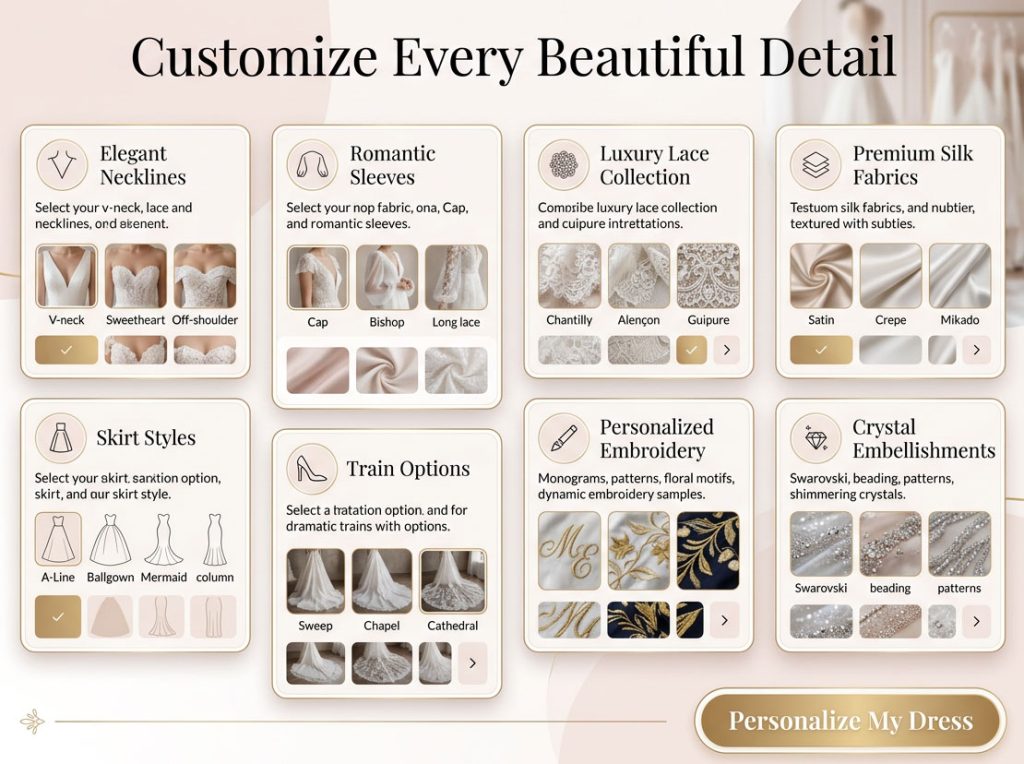
Metropol emphasises made-to-measure construction, use of quality European textiles, and the ability to incorporate personal details (family lace, specific embroidery motifs, cultural requirements). The company serves both individual brides and wholesale boutique partners across multiple continents, which supports consistent production standards. Pricing transparency and the absence of heavy designer-name mark-ups are repeatedly highlighted in their materials.
Australian brides can treat the relationship as a professional manufacturing partnership rather than a pure retail experience. Clear briefs, documented measurements and staged approvals produce the best results.
Practical Next Steps
- Define your non-negotiable design elements and your firm budget ceiling.
- Collect inspiration images and note fabric preferences.
- Contact the manufacturer with your timeline, approximate measurements and design direction.
- Request a formal quote and production timeline.
- Arrange professional measurements.
- Proceed only when the landed cost, lead time and communication style feel reliable.
The goal is not the cheapest possible dress. The goal is the highest emotional and aesthetic return per dollar spent, delivered on time and fitting correctly on the day.
This approach—combining specialist international manufacturing with local finishing—gives Australian brides a realistic path to custom quality at prices that leave room for the rest of the wedding.
FAQ – 30 Targeted Questions
1. How much should an Australian bride realistically budget for a custom wedding dress in 2026? National averages sit near $2,500–$2,600. Fully custom local work often starts higher. International specialist custom can sit comfortably in the mid-range while delivering higher uniqueness.
2. Is shipping a custom gown from Turkey to Australia reliable? Yes, when tracked and insured. Typical transit is 1–3 weeks. Build buffer time into the schedule.
3. Do I need a local seamstress if I order from overseas? Strongly recommended for final hem, bustle and any minor fit tweaks after the gown arrives.
4. What measurements are critical for a remote custom order? Bust, waist, hips, hollow-to-hem, arm circumference, shoulder-to-bust, and back length are the core set. Professional measurement is ideal.
5. How long does a typical Metropol custom order take? Usually 3–6 months depending on complexity and current workload, plus shipping.
6. Can I send my own lace or family fabric? Many manufacturers accommodate this; confirm in advance and allow extra time for integration.
7. Are the fabrics actually European quality? Reputable manufacturers source French lace and Italian silks. Request specific fibre content and origin details.
8. What happens if the dress needs major changes after it arrives? Most issues are minor. Major redesigns are difficult and costly once the gown is finished. Prevention through clear communication is essential.
9. How do payment schedules usually work? Deposit to begin, progress payments at key stages, balance before shipping. Confirm exact terms.
10. Is GST or duty payable on a personal wedding dress import? Rules can change; check current Australian Border Force guidance for clothing of this value. Many personal imports fall under thresholds or specific treatments—verify.
11. Can plus-size or petite brides order successfully? Yes, provided measurements are accurate. Custom production has no standard-size limitations.
12. What silhouettes work best for Australian outdoor or beach weddings? Lighter fabrics, A-line or column shapes, removable sleeves or overlays, and practical train lengths.
13. How do I compare quotes fairly? Itemise fabric quality, labour, embellishment density, understructure, shipping and any extras. Avoid pure headline-price comparisons.
14. What is a realistic alteration budget after an international custom gown arrives? $200–$600 covers most hems, bustles and minor side adjustments.
15. Can I request a toile or muslin mock-up? Many manufacturers offer this stage, especially for complex designs. It adds time and some cost but reduces risk.
16. How important is the understructure of the gown? Critical for support, shape and comfort. Ask specifically about boning, cups and lining quality.
17. Are there cultural or religious design adaptations available? Experienced international manufacturers regularly handle modest necklines, sleeves, hijab-compatible styles and colour variations.
18. What red flags should make me walk away from a quote? Vague fabric descriptions, no clear timeline, pressure for full payment upfront, or refusal to provide construction photos.
19. How does weather affect fabric choice in Australia? Humidity and heat favour breathable silks, chiffons and light linings. Structured heavy satins suit cooler or indoor venues better.
20. Can I change the design after the order is placed? Minor changes early are usually possible. Major changes after cutting become expensive or impossible.
21. What documentation should I keep? All quotes, measurement charts, design approvals, payment receipts and shipping tracking numbers.
22. Is insurance during shipping necessary? Yes. The gown is a high-value, irreplaceable item for the wedding date.
23. How do I handle a dress that arrives with a visible flaw? Document immediately with photos and contact the manufacturer. Reputable makers will address genuine production issues.
24. Can bridesmaids or mothers also order coordinating pieces? Some manufacturers offer this service; ask about concurrent production.
25. What is the difference between “made-to-measure” and “fully custom”? Made-to-measure adjusts an existing design to your measurements. Fully custom starts from a new design or significant redesign.
26. How much detail should I put in my initial brief? As much as possible: photos, preferred silhouettes, must-have and must-avoid elements, fabric preferences, and venue type.
27. Are sample or previous client photos useful? Yes, especially when they show real body types and similar lighting conditions to your wedding.
28. What is a sensible contingency if the dress is delayed? Have a secondary simple dress or rental option as emergency backup. Start the process early enough that this risk is low.
29. Does ordering internationally affect the emotional experience of “saying yes to the dress”? It replaces the boutique moment with a collaborative design process. Many brides find the final reveal equally or more meaningful because the gown is uniquely theirs.
30. Where should an Australian bride begin if interested in Metropol? Visit the official website, prepare measurements and inspiration images, and open a conversation about timeline, budget range and design direction. Request a formal quote before committing.
Five Distinct CTAs
- Ready to explore what a true custom gown can look like within a realistic Australian budget? Share your timeline and inspiration with Metropol Wedding Dress today.
- Stop choosing between fit, uniqueness and affordability. Start a design conversation and receive a clear, itemised quote.
- Your measurements + your vision + specialist manufacturing = a dress that actually belongs to you. Begin the process now.
- Australian brides are already securing high-quality custom gowns without the traditional price premium. Join them—request your consultation.
- The difference between an ordinary wedding dress and the one you still love in twenty years is usually clarity and craftsmanship, not the highest price tag. Take the first practical step.
Sydney brides face a concentrated, high-cost custom wedding dress market. Local ateliers and boutiques deliver excellent in-person service and craftsmanship, yet true custom work routinely starts at $3,000–$5,000 and climbs rapidly, with lead times of 6–12 months. Metropol Wedding Dress, a specialist Turkish manufacturer with over twenty years of experience, offers fully custom, made-to-measure gowns using European fabrics and precise sizing, shipped directly to Sydney. This guide maps the real operational differences—timeline, measurement protocols, fabric performance in Sydney’s climate and venues, total landed cost, and risk management—so brides can decide whether a pure local path, a hybrid model (remote manufacture + local finishing), or a combination best serves their design, budget and schedule.
Detailed Article
Sydney’s Custom Gown Ecosystem in 2026
New South Wales records the highest average wedding dress spend in Australia at approximately $2,900. Within Sydney the upper end of the market is densely populated: Paddington, Woollahra, Alexandria and the Northern Beaches host numerous ateliers offering made-to-measure and full couture. Entry-level designer made-to-order gowns commonly begin around $2,800–$3,500. True bespoke or high-customisation work frequently starts at $5,000 and can exceed $10,000–$15,000 once intricate lace, hand-beading or complex structure is specified.
The density of options creates both opportunity and friction. Appointment books fill quickly during peak seasons (March–May and September–November). Multiple fittings require travel across the city. Design revisions are possible but often priced as extras. For brides who already know the silhouette, neckline and fabric direction they want, the premium paid for repeated face-to-face consultation can become the largest single cost driver.
An alternative pathway—commissioning a fully custom gown from a high-volume specialist manufacturer that already serves international clients—has matured into a practical option. Metropol Wedding Dress operates a substantial production facility in İzmir and supplies both individual brides and wholesale partners worldwide. The model is remote collaboration rather than boutique experience. The output is still a one-off, measurement-driven gown.
“You may also want to take a look at this article.” Custom Wedding Dresses Saudi Arabia
Operational Comparison: Local Atelier versus Specialist Remote Manufacture
| Factor | Typical Sydney Local Atelier / Boutique | Specialist Remote Manufacturer (Metropol model) |
|---|---|---|
| Starting custom price | $3,000–$5,000+ | Frequently positioned lower for equivalent complexity |
| Lead time | 6–12 months | 3–6 months production + shipping |
| Number of in-person fittings | 3–6 | 0 during production; local finishing fittings after arrival |
| Design input method | Sketch + fabric samples in studio | Digital brief, photos, video calls, measurement chart |
| Fabric sourcing | European mills (imported) | Direct access to same European mills |
| Ability to incorporate family lace or heirloom fabric | Usually yes | Usually yes (confirm logistics) |
| Final fit responsibility | Designer / in-house | Bride + local Sydney seamstress |
| Risk concentration | Higher cost, lower shipping risk | Lower base cost, shipping + communication risk |
The hybrid approach—remote custom manufacture followed by professional local alterations—has become the most frequently successful route for Sydney brides who want uniqueness without the full local custom premium.
Sydney-Specific Design and Fabric Considerations
Sydney weddings span harbour-side venues with strong afternoon winds, coastal beaches with humidity and salt air, city rooftops, and cooler Blue Mountains or Southern Highlands locations. Fabric choice is therefore functional as well as aesthetic.
Harbour and waterfront ceremonies Lightweight silk blends, soft crepe and carefully structured tulle perform better than heavy duchess satin that can billow or retain heat. A well-engineered bustle is essential for movement between ceremony and reception.
Beach or outdoor coastal settings Breathable linings, minimal internal layering and fabrics that resist creasing under humidity are preferable. Avoid pure silk that can water-spot easily in sea air.
City or evening formal Structured bodices, subtle beading and richer satins remain viable because temperature control is higher and movement distances shorter.
Metropol’s production process allows the bride to specify fabric weight, lining type and understructure density at the briefing stage. Requesting fabric swatches or high-resolution close-ups of construction details before final approval is standard practice.
Measurement Protocol That Actually Works Remotely
Accurate measurements are the single highest-leverage action a Sydney bride can take. The recommended sequence:
- Engage a professional bridal seamstress or experienced tailor for a full measurement session (not a department-store assistant).
- Record measurements in centimetres using a consistent, relaxed posture.
- Photograph the measurement process or the measuring tape in position for key dimensions (bust, waist, hips, hollow-to-hem).
- Supply both the numerical chart and the photos to the manufacturer.
- Confirm the manufacturer’s own measurement guide and any additional points they require (arm circumference, shoulder slope, etc.).
Once the gown arrives, the same local seamstress becomes the finishing partner for hem, bustle, and any minor side adjustments. This division of labour—remote construction + local final fit—produces reliable results when both parties understand their roles.
Timeline Engineering for Sydney Brides
A realistic critical path for a remote custom order:
- 9–10 months out: Design brief, measurement session, quote approval, deposit.
- 8–4 months out: Pattern development, any toile feedback, fabric cutting and construction.
- 3–2 months out: Final quality check, shipping, arrival in Sydney.
- 6–4 weeks out: Local fitting and alterations.
- 2 weeks out: Final try-on and steam/press.
Starting earlier than nine months removes pressure. Starting later than six months requires explicit confirmation of production capacity and possible rush fees.
Cost Architecture – Where the Money Actually Goes
Local Sydney custom pricing embeds:
- Studio rent and overhead in high-value suburbs
- Designer time across multiple consultations
- Lower production volume
- Imported fabric already carrying freight and margin
Remote specialist pricing embeds:
- Higher production volume and specialised labour
- Direct mill relationships
- Lower physical overhead per gown
- Shipping and any applicable duties as separate line items
When a bride compares only the headline dress price she often under-estimates total cost on the local side (alterations, multiple travel appointments, possible design-change fees) and over-estimates risk on the remote side. A full landed-cost calculation—gown + shipping + insurance + local alterations—usually reveals the economic rationale for the hybrid model.
Risk Matrix and Mitigation
| Risk | Likelihood (Remote) | Mitigation |
|---|---|---|
| Measurement error | Medium | Professional local measurement + photos |
| Shipping delay | Low–medium | Early start + tracked, insured courier |
| Construction quality shortfall | Low (reputable maker) | Request process photos and fabric specs |
| Design misunderstanding | Medium | Written brief + visual references + staged approvals |
| Need for major post-arrival changes | Low | Clear early communication of non-negotiables |
Brides who treat the relationship as a manufacturing partnership rather than a retail experience manage these risks effectively.
“You may also want to take a look at this article.” Custom Wedding Dresses Austria
Expert Observation on Value
The highest-cost element in many Sydney custom gowns is not the fabric or the hand-finishing; it is the repeated transfer of design intent through multiple in-person sessions and the associated studio overhead. When a bride already possesses a clear vision, that transfer cost can be reduced dramatically without reducing the quality of the finished garment. The remaining value of the local market is then concentrated where it is strongest: final fit, steam, and day-of support.
Practical Decision Framework for Sydney Brides
- If you value the ritual of multiple boutique appointments and have budget flexibility above $5,000–$6,000 for the gown alone → local atelier remains the natural path.
- If you have a defined design direction, want precise fit, and prefer to allocate more of the overall wedding budget to venue, photography or experience → remote specialist manufacture plus local finishing is frequently the higher-value route.
- If timeline is under six months → prioritise local ready-to-wear or sample options first; remote custom becomes higher risk.
Metropol Wedding Dress fits the second category. The company produces custom gowns to individual measurements, works with European textiles, and ships internationally. Sydney brides who approach the process with professional measurements, a clear brief and a local finishing partner consistently report outcomes that match or exceed their original design intent at a total cost below equivalent local custom work.
Maintenance and Aftercare in the Sydney Climate
Humidity and occasional sudden rain require practical aftercare. After the wedding, professional cleaning by a specialist bridal cleaner is recommended before storage. Avoid plastic covers; use a breathable garment bag and a cool, dry location. For destination or multi-event use, a well-designed bustle and possible removable sleeves or overskirt increase versatility.
FAQ – 32 Sydney-Specific Questions
1. How much does a true custom wedding dress typically cost in Sydney in 2026? Made-to-order designer work often starts around $3,000–$4,500. Full bespoke or high-customisation couture commonly begins at $5,000 and rises with complexity.
2. What is the realistic lead time for a local Sydney custom gown? Most ateliers request 6–12 months. Peak seasons fill faster.
3. Can a gown made overseas still fit perfectly for a Sydney wedding? Yes, when professional measurements are taken and a local seamstress handles final hem and bustle.
4. How long does shipping from Turkey to Sydney usually take? Typically 7–21 days depending on the courier service chosen. Tracking and insurance are essential.
5. Do I need to pay GST or duty on a personal wedding dress imported into Australia? Rules can change; check current Australian Border Force guidance for clothing of this value. Many personal imports are straightforward, but confirm with the supplier.
6. What measurements matter most for a remote order? Bust, waist, hips, hollow-to-hem, arm circumference and back length form the core set. Professional measurement is strongly preferred.
7. Is it possible to incorporate family lace or heirloom fabric into a Metropol gown? Usually yes. Confirm logistics and extra time requirements early.
8. How does Sydney’s climate affect fabric choice? Harbour and beach venues favour lighter, breathable fabrics. Structured satins suit formal city or evening settings better.
9. What is a realistic budget for local alterations after an international custom gown arrives? $250–$700 covers most hems, bustles and minor adjustments in Sydney.
10. Can I still have multiple fittings if I order remotely? You will have fittings with your local seamstress after the gown arrives, not during production.
11. How early should a Sydney bride start the remote custom process? Ideally 9–10 months before the wedding date to allow comfortable buffer.
12. What happens if the gown arrives with a construction issue? Document immediately with photos and contact the manufacturer. Reputable makers address genuine production defects.
13. Are plus-size or petite custom options available? Yes. Custom production has no standard-size constraints when measurements are accurate.
14. How do I protect against design misunderstandings? Supply a written brief, multiple visual references, and request staged photo approvals during production.
15. Is a toile (muslin mock-up) available with remote manufacturers? Many offer this stage, especially for complex designs. It adds time and modest cost but reduces risk.
16. What is the difference between “made-to-measure” and “fully custom” in practice? Made-to-measure adjusts an existing style to your body. Fully custom starts from a new or significantly redesigned concept.
17. Can bridesmaids or the mother of the bride order coordinating pieces at the same time? Some manufacturers accommodate concurrent production; ask early.
18. How should I store the gown in Sydney’s humidity after the wedding? Professional clean first, then breathable garment bag in a cool, dry place. Avoid plastic.
19. What is the biggest practical advantage of the hybrid model for Sydney brides? Access to custom construction quality at a lower total cost while retaining local control over final fit.
20. What is the biggest practical disadvantage? Absence of in-person design sessions during the making process. Clear written communication compensates.
21. Do Sydney venues have any specific dress-code or train-length restrictions? Most do not, but windy harbour locations and stairs make practical train management important.
22. Can I change the design after the order is confirmed? Minor early changes are often possible. Major changes after cutting are difficult and costly.
23. How do payment schedules usually work with international manufacturers? Deposit to start, progress payments at key stages, balance before shipping. Confirm exact terms in writing.
24. Is insurance during international shipping necessary? Yes. The gown is a high-value, date-critical item.
25. What red flags should make me pause before placing a remote order? Vague fabric descriptions, pressure for full payment upfront, refusal to provide process photos, or unclear timeline.
26. How does the total landed cost of a remote custom gown usually compare with a mid-range Sydney custom gown? When fabric quality and construction complexity are matched, the remote + local finishing route is frequently lower.
27. Can I request specific understructure (boning, cups, support) for comfort during a long Sydney wedding day? Yes. Specify support requirements clearly in the brief.
28. What if my wedding is in the Blue Mountains or Southern Highlands rather than the city? Cooler temperatures allow richer fabrics; still confirm practical train and movement needs for the specific venue.
29. How many process photos should I request during production? At minimum: after pattern approval, after major construction, and before final packing.
30. Is the hybrid model suitable for very short engagement timelines (under 5 months)? Only if the manufacturer confirms capacity and a local ready-to-wear backup plan is in place.
31. Where should a Sydney bride begin if exploring the Metropol option? Prepare professional measurements and a clear design brief, then request a detailed quote and production timeline.
32. Does ordering remotely reduce the emotional experience of the dress? Many brides report that the final reveal, after seeing the gown constructed to their exact specifications, carries equal or greater emotional weight.
Five Distinct CTAs
- Map your design vision against real Sydney timelines and costs. Request a clear, itemised quote from Metropol Wedding Dress and compare it with local options.
- Stop paying for repeated studio hours when you already know the gown you want. Start a precise remote custom conversation today.
- Professional measurements + specialist manufacture + local finishing = custom quality engineered for Sydney conditions. Begin the process.
- Your budget, your silhouette, your timeline. Obtain a transparent production plan and landed-cost estimate before another boutique appointment.
- The highest-value custom gown is the one that fits, feels right, and leaves budget for the rest of the day. Take the practical next step with Metropol.
Melbourne’s bridal market rewards design clarity and material intelligence. Local custom work from established ateliers typically begins around $2,500–$4,000 for cleaner constructions and rises quickly once lace density, hand-beading or complex structure is added. Higher couture pathways routinely sit between $6,000 and $12,000+. Metropol Wedding Dress provides a parallel route: fully custom, measurement-driven gowns produced by a specialist manufacturer using European textiles, then shipped to Melbourne for local finishing. This guide examines design autonomy, fabric performance under Melbourne’s variable climate and venue conditions, construction decision trees, realistic landed-cost modelling, and the operational protocols that allow brides to keep creative control while achieving high technical quality at a more efficient total cost.
Detailed Article
Melbourne’s Design Culture and the Custom Gown Equation
Victoria’s average wedding dress spend sits near $2,650. Within Melbourne the custom segment is creative and competitive. Designers and ateliers such as d’Italia (custom from approximately $2,500–$4,000 depending on lace and detail), Anna Campbell, Mariana Hardwick, Jason Grech and others offer strong local craftsmanship and collaborative studio experiences. The city’s aesthetic often favours tailored lines, thoughtful fabric choice and a balance between romance and modernity rather than pure volume or extreme embellishment.
The challenge for many brides is not scarcity of talent but the cost of transferring a clear vision through repeated studio hours and the overhead of lower-volume production. When the design direction is already defined, the premium paid for iterative in-person refinement can become the dominant expense. A specialist manufacturing partnership changes the cost structure without removing creative authority.
Design Autonomy Model: How Creative Control Actually Works Remotely
A high-functioning remote custom process treats the manufacturer as a technical executor rather than a design authority. The bride (or the bride together with a local stylist) retains ownership of:
- Silhouette and proportion
- Neckline and sleeve architecture
- Fabric family and weight
- Embellishment density and placement
- Train length and bustle engineering
- Support and understructure requirements
The manufacturer contributes pattern precision, construction consistency and access to textile mills. Communication occurs through written briefs, annotated images, measurement charts and staged photographic approvals. This model works particularly well for Melbourne brides who already possess strong visual references and prefer decisive rather than exploratory design sessions.
Material Decision Tree for Melbourne Conditions
Melbourne weather is variable. Garden weddings in the Yarra Valley, city rooftops, laneway venues and cooler winter ceremonies each impose different performance requirements.
Cooler or indoor formal settings Structured silk satin, medium-weight crepe and controlled lace placement perform well. Internal support can be more substantial without overheating risk.
Garden or outdoor daytime Lighter silk blends, soft tulle and breathable linings reduce discomfort. Avoid heavy multi-layer petticoats unless the design specifically requires volume.
Windy or exposed locations Well-engineered bustles, moderate train lengths and fabrics that do not catch excessive air movement become practical priorities.
Humidity-sensitive periods Fabrics with good drape recovery and linings that manage moisture improve comfort across a long day.
Metropol’s production process allows these parameters to be specified at the briefing stage. Requesting fabric composition details, weight information and close-up construction photography before final approval is standard and recommended.
Construction Quality Benchmarks Worth Verifying
Regardless of whether the gown is made in Melbourne or overseas, the same technical questions apply:
- How is the lace edge finished (hand-applied, cleanly overlocked, or left raw)?
- What internal structure supports the bodice (boning type, cup integration, power-net or coutil)?
- Are seams pressed and graded correctly under lace or beading?
- How is the train integrated into the skirt and how is the bustle engineered?
- What is the quality of the zipper or button closure and its reinforcement?
A specialist manufacturer that produces at scale for international clients typically maintains consistent standards across these points because volume rewards process discipline. The bride’s role is to request evidence rather than assume.
Process Map: Hybrid Custom Pathway for Melbourne Brides
- Design brief and visual references prepared.
- Professional measurements taken by a Melbourne seamstress or experienced tailor.
- Quote and production timeline obtained, including shipping estimate.
- Deposit and order confirmation.
- Pattern development and any toile/feedback stage.
- Construction with staged photographic updates.
- Final quality check and insured shipping to Melbourne.
- Local fitting and finishing (hem, bustle, minor side adjustments).
- Final press and day-of readiness.
This sequence places creative and measurement control in Melbourne while locating the bulk of construction labour where specialist capacity and cost structures are more efficient.
Landed-Cost Modelling
A realistic comparison includes:
- Base gown construction and materials
- Shipping and insurance
- Any applicable import considerations
- Local alteration and finishing fees
- Opportunity cost of multiple studio appointments (time and travel)
When fabric quality and construction complexity are held constant, the hybrid pathway frequently delivers a lower total figure than equivalent local full-custom work while still producing a unique, measurement-accurate garment.
Common Failure Modes and Prevention
- Incomplete or inconsistent measurements → Engage a professional for the measurement session and supply photographs.
- Vague design brief → Annotate images and list non-negotiable versus flexible elements.
- Insufficient buffer for shipping → Start 8–10 months before the wedding date.
- Expecting zero local work → Budget for professional finishing after arrival.
- Focusing only on headline price → Calculate full landed cost including alterations.
Practical Checklist for Melbourne Brides Evaluating Remote Custom
- Clear silhouette and fabric preferences documented
- Professional measurement chart completed
- Written quote itemising materials, labour, shipping
- Confirmation of revision policy and payment schedule
- Local seamstress identified for finishing
- Buffer built into the timeline
- Insurance and tracking arranged for shipment
- Fabric performance matched to venue and season
Expert Perspective on Creative and Economic Efficiency
Melbourne’s strongest bridal work combines design intelligence with technical execution. When a bride already holds the design intelligence, the remaining task is precise, high-quality construction. Locating that construction with a specialist manufacturer that works at scale and has direct textile relationships often improves both the economic outcome and the consistency of finish. The local market remains valuable for final fit, steam, and day-of support. The hybrid model simply allocates each task to the party best positioned to deliver it.
Metropol Wedding Dress operates within this framework. The company produces custom gowns to individual measurements, works with European fabrics, and ships internationally. Melbourne brides who approach the relationship with clear briefs, accurate measurements and a local finishing partner achieve gowns that meet their design intent at a total cost that frequently undercuts pure local custom pathways of similar technical ambition.
Aftercare in Melbourne Conditions
Variable humidity and occasional cool snaps make professional post-wedding cleaning advisable before long-term storage. Use a breathable garment bag in a stable, dry environment. Avoid plastic covers that trap moisture.
FAQ – 30 Melbourne-Focused Questions
1. What is a realistic starting price for a custom wedding dress in Melbourne? Cleaner constructions without heavy lace or beading often begin around $2,500–$3,500 locally. More intricate work rises from there.
2. How does Metropol’s pricing typically compare for equivalent complexity? It is frequently positioned lower for comparable fabric and construction quality once full landed cost is calculated.
3. How long should a Melbourne bride allow for a remote custom order? Ideally 8–10 months to include production, shipping and local finishing.
4. Can Melbourne’s cooler climate influence fabric choice? Yes. Structured satins and denser fabrics are more comfortable in cooler months; lighter blends suit warmer outdoor ceremonies.
5. Is a local seamstress still necessary with a remote order? Strongly recommended for final hem, bustle and any minor adjustments after arrival.
6. What measurements are most critical? Bust, waist, hips, hollow-to-hem, arm circumference and back length form the core set. Professional measurement is preferred.
7. Can family lace or heirloom fabric be incorporated? Usually yes. Confirm logistics and extra time early.
8. How does shipping from Turkey to Melbourne work in practice? Tracked and insured courier service; typical transit 7–21 days. Build buffer into the schedule.
9. Are import duties or GST usually payable on a personal wedding dress? Check current Australian Border Force rules for clothing of this value. Many personal imports are straightforward; confirm with the supplier.
10. What is a sensible local alteration budget after arrival? $250–$700 covers most standard finishing work in Melbourne.
11. How do I maintain creative control when ordering remotely? Supply a detailed written brief, annotated images and staged approval points. Treat the manufacturer as technical executor.
12. What construction details should I request photographs of? Lace application, internal structure, seam finishing under embellishment, and the train/bustle integration.
13. Is a toile stage available? Many manufacturers offer it for complex designs. It adds time and modest cost but reduces risk.
14. How does Melbourne’s design aesthetic affect the brief? Clear lines, considered fabric choice and balanced proportion are often preferred. Communicate these priorities explicitly.
15. Can plus-size or petite proportions be accommodated accurately? Yes. Custom production has no standard-size limitation when measurements are precise.
16. What happens if the gown arrives with a visible construction issue? Document with photographs immediately and contact the manufacturer. Reputable makers address genuine production defects.
17. How should payment be structured? Deposit to begin, progress payments at defined stages, balance before shipping. Confirm terms in writing.
18. Is insurance during shipping essential? Yes. The gown is a high-value, date-critical item.
19. What is the biggest practical advantage of the hybrid model in Melbourne? Retention of design authority and high construction quality at a more efficient total cost, with local control over final fit.
20. What is the biggest practical disadvantage? Absence of repeated in-person design sessions. Clear documentation compensates.
21. How does venue type (Yarra Valley garden vs city rooftop) change fabric recommendations? Outdoor gardens favour lighter, breathable fabrics; formal indoor or evening settings allow more structure and richer textiles.
22. Can design changes be made after the order is confirmed? Minor early changes are often possible. Major changes after cutting become difficult and costly.
23. How many process updates should I expect? Request photographs after pattern approval, after major construction stages, and before final packing.
24. Is the hybrid model suitable for timelines under six months? Only with explicit confirmation of capacity and a local ready-to-wear contingency plan.
25. What red flags should pause an order? Vague fabric descriptions, pressure for full upfront payment, refusal to provide process photography, or unclear timelines.
26. How does total landed cost usually compare with mid-range Melbourne custom? When complexity and fabric quality are matched, the remote + local finishing route is often lower.
27. Can support requirements (boning, cups) be specified precisely? Yes. Include them clearly in the brief for comfort across a full wedding day.
28. What storage advice applies in Melbourne’s variable humidity? Professional clean after the wedding, then breathable garment bag in a cool, dry location. Avoid plastic.
29. Where should a Melbourne bride start if exploring Metropol? Prepare professional measurements and a clear design brief, then request a detailed quote and production timeline.
30. Does ordering remotely reduce the emotional value of the gown? Many brides find the final reveal of a gown built exactly to their specifications carries equal or greater significance.
Five Distinct CTAs
- Define your silhouette, fabric priorities and timeline, then request a transparent production plan and landed-cost estimate from Metropol Wedding Dress.
- Keep full creative direction while locating construction where specialist capacity delivers consistency and efficiency. Begin the technical conversation today.
- Professional measurements + precise brief + specialist manufacture + Melbourne finishing = custom quality engineered for your conditions. Take the first step.
- Compare the true cost of repeated studio hours against a clear manufacturing pathway. Obtain the numbers before your next appointment.
- The gown that fits your vision, your body and your budget is achievable through disciplined process rather than the highest local premium. Start with a detailed quote.