
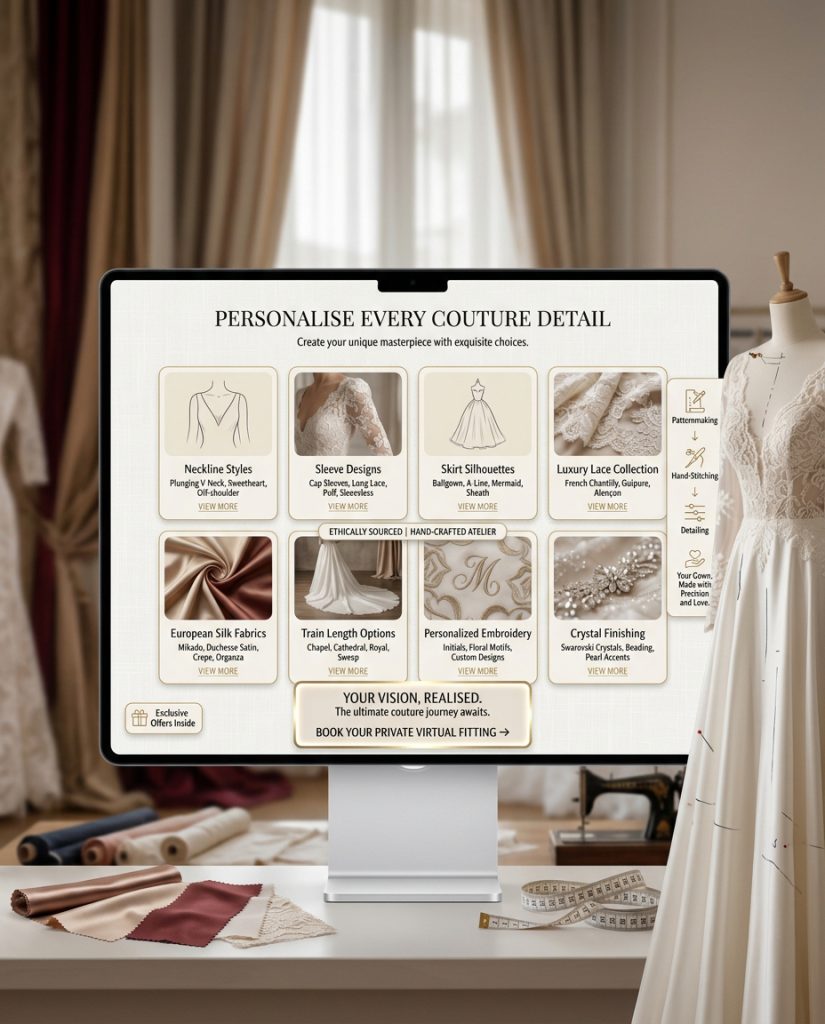
Best Wedding Dresses Mermaid The mermaid wedding dress remains one of the most sculptural and photographed bridal silhouettes of 2025–2026: body-hugging from bust through knee, then flaring into a dramatic train. When executed by a true specialist manufacturer, the style delivers cinematic curves, modern drama, and lasting structure without sacrificing wearability. Metropol Wedding Dress, a Turkish atelier with two decades of experience, produces these gowns as a Custom Wedding Dress Manufacturer, Bespoke Bridal Gown Manufacturer, and Wholesale Custom Bridal Gowns partner for brides and boutiques worldwide. This guide examines the silhouette’s architecture, fabrics, fit science, production realities, cost drivers, common mistakes, and how to commission the best version for your body and venue.
The mermaid silhouette does not simply “fit and then flare.” It is an engineered system of internal structure, fabric memory, seam placement, and proportion that turns the body into a continuous, intentional line. In the current bridal market the style has moved far beyond the rigid, restrictive versions of the early 2010s. Designers and manufacturers now treat it as architectural couture: lighter yet still supportive, convertible where needed, and adaptable across body types when the construction is correct.
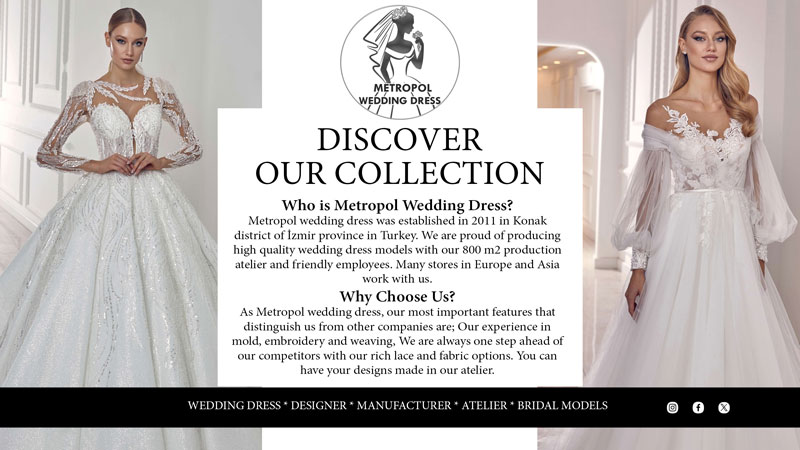
Metropol Wedding Dress operates from a substantial workshop in İzmir as a Custom Bridal Gown Manufacturer and OEM Wedding Dress Manufacturer. The company produces made-to-measure and private-label pieces that serve both individual brides seeking a one-of-a-kind result and bridal shops that require consistent wholesale supply. Because the mermaid demands precision more than almost any other silhouette, working with a manufacturer who controls the entire process—from pattern to final steam—makes a measurable difference in both appearance and comfort.
Why the Mermaid Continues to Dominate Searches and Red Carpets
Recent fashion weeks and red-carpet seasons have reinforced the silhouette’s relevance. Structured mermaid and trumpet gowns appear repeatedly in collections that emphasize corsetry, basque waists, 3D florals, and clean modern crepe. Search data consistently places mermaid styles among the highest-volume bridal queries. Brides respond to the combination of sensuality and formality: the dress photographs like high fashion yet still reads as bridal.
The visual power comes from three simultaneous effects. First, the continuous fitted line elongates the torso and legs. Second, the controlled flare at or just below the knee creates movement and drama without the bulk of a full ball gown. Third, the silhouette forces deliberate posture; most wearers stand taller and move with more intention. When the internal construction is sound, these effects appear effortless rather than forced.
Anatomy of a Well-Built Mermaid
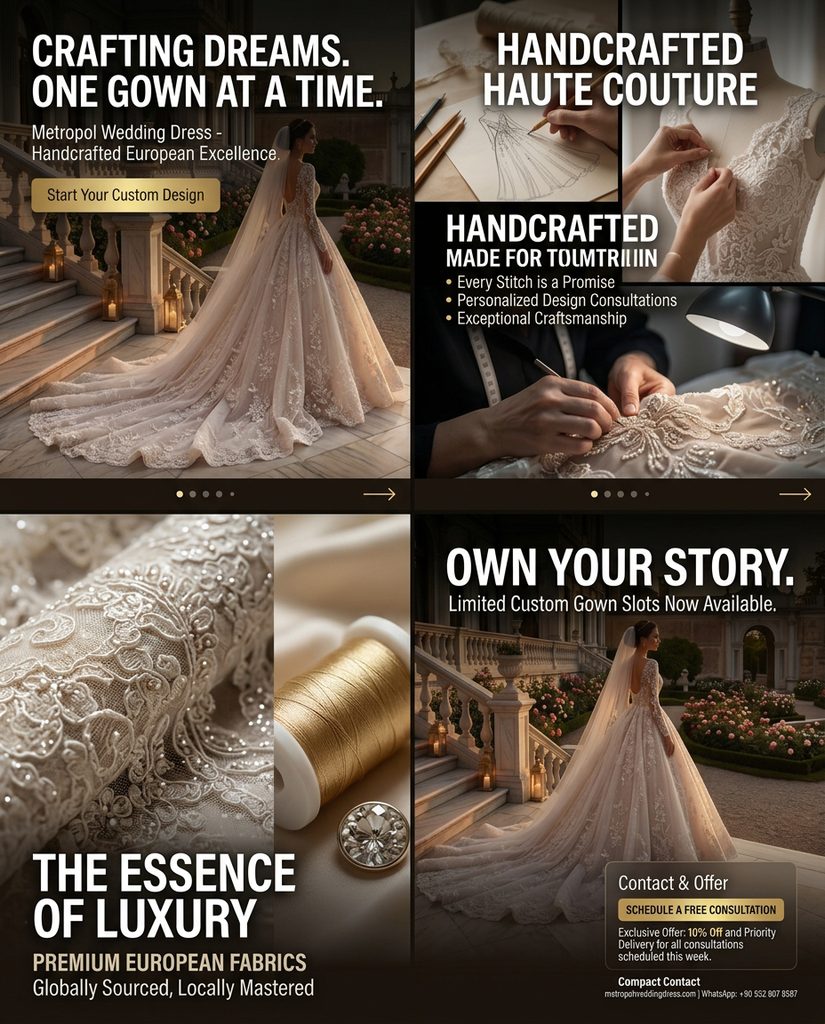
A true mermaid begins with a supportive bodice. Spiral steel or flexible boning, power-mesh panels, and a carefully shaped lining create a smooth canvas. The side seams and princess seams must follow the body’s actual curves rather than a standardized block. From the high hip through the mid-thigh the fabric remains close; any excess ease here collapses the line. The release into the flare is the critical engineering moment. Too high and the dress becomes a trumpet or fit-and-flare; too low and walking becomes restricted. The best manufacturers place the flare according to the wearer’s leg length and preferred stride.
Train length and weight distribution matter equally. A cathedral train on a heavy mikado can pull the fitted section backward if the bustle and internal supports are inadequate. Lightweight yet structured fabrics—stretch crepe, mikado with controlled body, lace over a supportive base—solve many of these issues. Metropol, functioning as a Couture Wedding Dress Manufacturer and Handcrafted Bridal Gown Manufacturer, builds these internal systems as standard rather than as costly add-ons.
Fabric Choices That Actually Support the Silhouette
Fabric is not decoration; it is the architecture.
- Crepe and stretch crepe: Matte or subtle sheen, excellent recovery, modern appearance. Ideal for minimalist and destination mermaids.
- Mikado and structured satin: Crisp memory, strong light reflection, formal presence. Best for ballroom and winter ceremonies.
- Lace over lined base: Texture and romance without sacrificing shape. Appliqué placement must follow the body’s contours rather than a flat pattern.
- Tulle and organza layers: Used primarily in the flare for volume and movement while the fitted zone stays controlled.
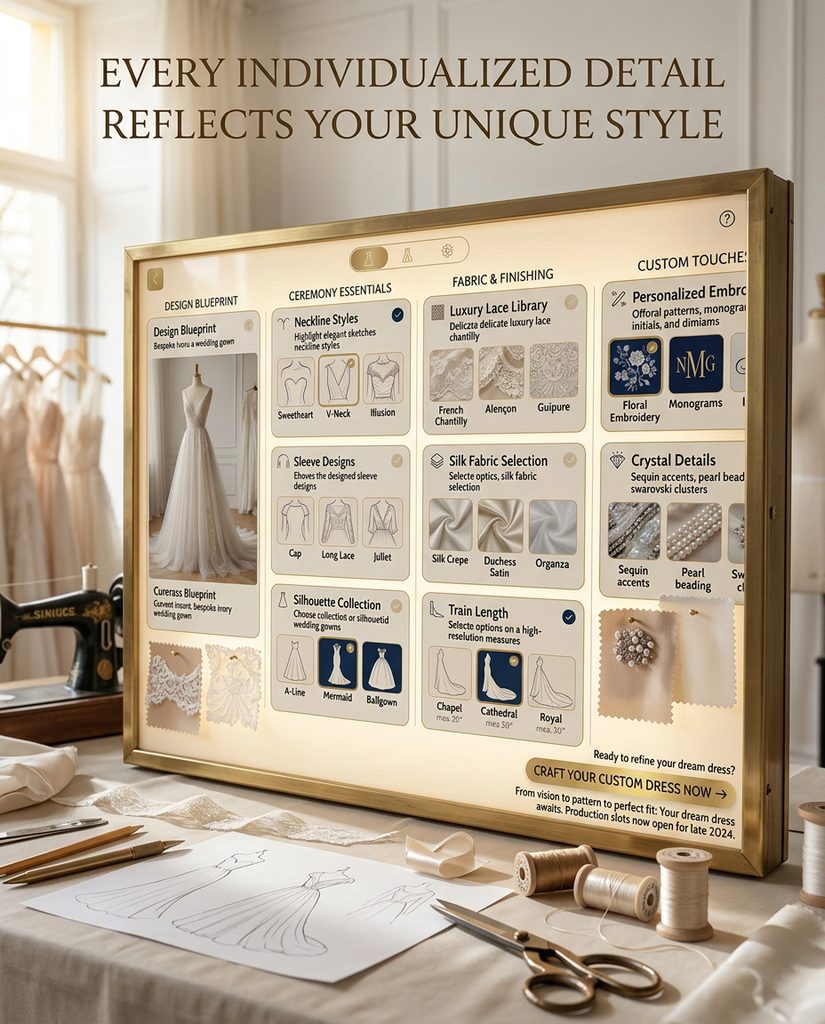
Heavy beading or dense embroidery on the fitted section can restrict movement and create drag lines. Strategic placement—concentrated on the bodice or the upper flare—preserves both comfort and visual impact. As a Luxury Bridal Gown Manufacturer and Premium Wedding Dress Manufacturer, Metropol selects European and Turkish specialty fabrics that balance drape, recovery, and durability under real wedding-day conditions.
Fit Science: Beyond “Hourglass Only”
The outdated advice that mermaids suit only hourglass figures ignores modern pattern-making. What matters is the relationship between three zones: upper torso balance, waist-to-hip transition, and the length from high hip to knee. A skilled Custom Wedding Dress Factory or Made to Measure Wedding Dress Manufacturer adjusts these zones rather than forcing the body into a fixed mold.
Petite frames benefit from a slightly higher flare and lighter train. Longer torsos can carry a lower flare and more dramatic volume. Curvy hips require adequate ease through the seat and careful placement of vertical seams so the fabric does not strain. Athletic or straighter figures gain definition through corsetry, strategic seaming, and the optical effect of the flare itself. Inclusive sizing works when the manufacturer starts from individual measurements rather than grading a sample size up or down.
Production Realities: What Happens Inside a Specialist Atelier
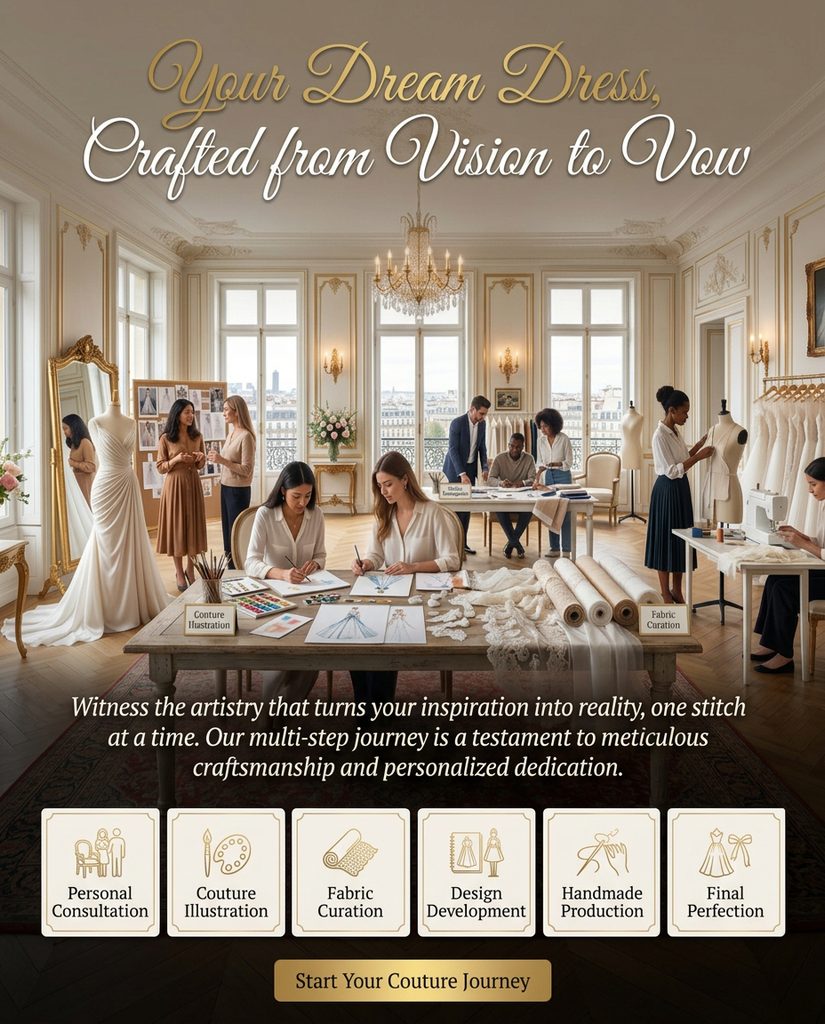
Turning a sketch or inspiration photo into a wearable mermaid involves sequential stages that cannot be rushed. Pattern development and muslin fittings establish the exact contour. Once the shell is approved, lace or embellishment is applied, often by hand. The internal structure is installed, the lining finished, and the train balanced. Final steaming and quality control check every seam under tension.
Metropol functions as a Bespoke Wedding Dress Manufacturer, Private Label Wedding Dress Manufacturer, and Wedding Dress Manufacturer for Boutiques. The workshop handles both single custom orders and larger wholesale runs while maintaining the same construction standards. Clients receive progress photographs and can request adjustments before final assembly. This transparency is especially valuable for international brides and for shops ordering private-label collections.
For boutiques, the advantage of partnering with a Bridal Gown Manufacturer for Bridal Shops and Custom Bridal Collection Manufacturer is consistency of quality across sizes and the ability to offer exclusive or limited designs. OEM and private-label arrangements allow retailers to present the gowns under their own branding while relying on a proven production partner.
Cost Drivers and Realistic Budgeting
Price ranges for quality mermaid gowns typically span from accessible mid-market to true couture. Fabric type, amount of handwork, train length, and degree of customization drive the final figure. A clean crepe mermaid with moderate train costs less than a heavily appliquéd lace version with cathedral train and detachable sleeves. Working directly with a manufacturer rather than through multiple mark-ups often improves the value equation.
Metropol positions itself as an International Wedding Dress Manufacturer and Bridal Gown Exporter with price points that remain competitive for both retail clients and wholesale partners. Because production occurs in a controlled Turkish facility with established supply chains for lace and specialty fabrics, the company can deliver high construction standards without the overhead of certain European or North American couture houses.
Movement, Comfort, and Practical Wedding-Day Considerations
A well-made mermaid allows walking, sitting, and moderate dancing when the flare is correctly placed and the fabric has recovery. Practice sessions in the finished gown (or a close muslin) reveal any needed adjustments. Stair navigation, car entry, and first-dance mobility should be tested. Many modern designs incorporate strategic stretch panels or slightly softer construction through the upper thigh to improve comfort without sacrificing the clean line.
Detachable trains, convertible sleeves, and modular elements have become popular solutions. A bride can wear the full dramatic version for the ceremony and simplify for the reception. Manufacturers experienced in 2-in-1 or transformer designs build these features into the structure from the beginning rather than adding them later.
Common Mistakes and How to Avoid Them
Ordering a sample size and hoping alterations will fix everything is the most frequent error. Mermaids have less tolerance for major size changes than A-line or ball-gown silhouettes. Choosing fabric solely for visual effect without considering climate or venue leads to discomfort. Ignoring the weight of the train until the final fitting creates last-minute stress. Selecting a manufacturer who outsources critical stages risks inconsistent quality.
The corrective approach is straightforward: provide accurate measurements, request a muslin or intermediate fitting when possible, prioritize construction over surface decoration in the first decision, and work with a manufacturer who controls the full process. Metropol’s model as a Direct Wedding Dress Manufacturer and Tailor Made Bridal Gown Manufacturer reduces many of these risks by keeping design, pattern, and sewing under one roof.
Working with a Manufacturer Versus Traditional Retail
Bridal shops offer convenience and local fittings. Direct manufacturer relationships offer greater customization, often better value, and the ability to influence design details. Hybrid models—ordering from a manufacturer through a boutique—combine both. For brides seeking a truly unique piece or for retailers building exclusive collections, the manufacturer route frequently delivers superior results.
Metropol serves both paths: individual custom orders and wholesale or private-label supply. The company has shipped to markets across Europe, the Middle East, North America, and beyond, establishing itself as a reliable Wedding Dress OEM Supplier and Bridal Gown OEM Supplier.
Real-World Scenarios
A bride planning a formal ballroom wedding selects a structured mikado mermaid with cathedral train and illusion back. The manufacturer adjusts the flare point for her stride and builds a secure bustle system. Another bride for a destination beach ceremony chooses stretch crepe with a lighter train and detachable sleeves. A boutique orders a private-label collection of lace mermaids in a controlled color palette, receiving consistent sizing and quality across the run. In each case the same underlying principles apply: precise pattern work, appropriate fabric, and controlled construction.
Expert Recommendations for 2026 and Beyond
Current direction favors cleaner lines mixed with selective texture—3D florals concentrated rather than allover, corsetry that feels supportive rather than restrictive, and fabrics that photograph cleanly under both natural and artificial light. Sustainability considerations appear in fabric sourcing and longevity of construction. Convertible and modular designs continue to grow because they solve real practical problems.
Brides and buyers who prioritize the internal architecture over surface trends end up with gowns that still look intentional years later. Working with a manufacturer that understands both the technical and aesthetic requirements of the mermaid silhouette produces the most reliable outcome.
Checklist Before Commissioning or Purchasing
- Accurate current measurements taken by a professional or carefully self-measured
- Clear decision on fabric category and climate suitability
- Preferred flare point and train length tested in motion
- Confirmation of internal structure (boning type, lining, support)
- Understanding of alteration limits and timeline
- Progress communication plan if working with a remote manufacturer
- Final fitting protocol and bustle method
Closing Perspective
The best mermaid wedding dresses succeed because they are engineered rather than merely styled. When a manufacturer treats the silhouette as a technical and artistic challenge—controlling pattern, fabric behavior, internal support, and finishing—the result is a gown that feels as intentional on the body as it looks in photographs. Metropol Wedding Dress, operating as a Custom Wedding Dress Manufacturer, Bespoke Bridal Gown Manufacturer, Made to Order Wedding Dress Manufacturer, Personalized Wedding Dress Manufacturer, Customized Bridal Gown Manufacturer, Private Label Wedding Dress Manufacturer, OEM Wedding Dress Manufacturer, Couture Wedding Dress Manufacturer, Luxury Bridal Gown Manufacturer, Custom Wedding Dress Factory, Custom Bridal Gown Factory, Wedding Dress Manufacturer for Boutiques, Bridal Gown Manufacturer for Bridal Shops, Custom Wedding Dress Wholesale, Custom Bridal Gown Wholesale, Wholesale Custom Wedding Dresses, Wholesale Custom Bridal Gowns, Custom Bridal Wear Manufacturer, Bespoke Bridal Wear Manufacturer, Bridal Couture Manufacturer, Handmade Wedding Dress Manufacturer, Handcrafted Bridal Gown Manufacturer, Tailor Made Wedding Dress Manufacturer, Tailor Made Bridal Gown Manufacturer, One of a Kind Wedding Dress Manufacturer, Exclusive Bridal Gown Manufacturer, Direct Wedding Dress Manufacturer, Direct Bridal Gown Manufacturer, Wedding Dress OEM Supplier, Bridal Gown OEM Supplier, Custom Bridal Collection Manufacturer, Custom Bridal Dress Manufacturer, Premium Wedding Dress Manufacturer, Premium Bridal Gown Manufacturer, International Wedding Dress Manufacturer, Wedding Dress Exporter, and Bridal Gown Exporter, applies these principles daily for brides and partners around the world.
Whether you are a bride seeking a single extraordinary gown or a boutique building a distinctive collection, the path to the strongest mermaid begins with understanding the architecture and choosing a partner capable of executing it.
Frequently Asked Questions
1. What exactly defines a true mermaid silhouette versus a trumpet or fit-and-flare?
A true mermaid remains closely fitted through the hips and upper thighs, with the flare beginning at or just below the knee. Trumpet styles release higher, usually mid-thigh. Fit-and-flare is even softer and less dramatic.
2. Can mermaid dresses work for non-hourglass figures?
Yes, when the pattern is adjusted for the individual’s proportions. Vertical seams, corsetry, and precise flare placement create balance for a wide range of body types.
3. How important is fabric choice for comfort in a mermaid gown?
Extremely important. Stretch crepe and well-constructed lace over lining usually feel more wearable for long days than heavy non-stretch mikado, especially in warmer climates.
4. Will I be able to sit and dance in a mermaid dress?
A correctly fitted mermaid with appropriate fabric recovery allows sitting and moderate dancing. Extremely low flares or very stiff fabrics require more practice and possible adjustments.
5. What is the typical timeline for a custom mermaid from a manufacturer?
Most reputable manufacturers require 4–6 months for full custom production, plus time for shipping and final alterations. Rush options exist but limit design complexity.
6. How do I take accurate measurements for a remote custom order?
Use a professional soft measuring tape, follow a detailed guide provided by the manufacturer, and preferably have a second person assist. Photograph the measuring process if requested.
7. Are detachable trains and sleeves practical on mermaid gowns?
Yes, when engineered from the start. They allow ceremony drama and reception ease without compromising the fitted silhouette.
8. What internal construction should I look for?
Flexible spiral boning, supportive power mesh or lining, and secure attachment of the train to prevent pulling.
9. How much does a quality custom mermaid typically cost when ordered from a manufacturer?
Prices vary widely by fabric, handwork, and complexity. Direct manufacturer pricing often ranges more accessibly than multi-tier retail while maintaining high construction standards.
10. Can boutiques order private-label mermaid collections?
Yes. Many manufacturers, including those specializing in private label, produce exclusive or limited runs under the boutique’s branding.
11. What are the most common alteration issues with mermaid dresses?
Taking in or letting out through the hips and thighs, adjusting flare height, and balancing train weight. Major size changes are more limited than with looser silhouettes.
12. Is lace or crepe better for photography?
Both photograph well. Crepe offers clean modern lines and soft light absorption; lace provides texture and romantic detail that catches light differently.
13. How do I choose train length?
Consider venue floor type, ceremony style, and whether you want a dramatic aisle walk or easier movement. Cathedral trains make strong statements but require secure bustling.
14. Can mermaid gowns be made modest or with coverage options?
Absolutely. Higher necklines, sleeves, illusion panels, and longer coverage can be incorporated without losing the silhouette’s definition.
15. What happens if the dress arrives and needs adjustments?
Plan for local alterations after arrival. Provide the manufacturer with clear feedback if construction issues arise so future orders improve.
16. Are there sustainable fabric options for mermaid dresses?
Some manufacturers offer lower-impact lace, recycled or responsibly sourced base fabrics, and construction methods that increase garment longevity.
17. How does climate affect fabric choice?
Hot or humid environments favor breathable, lighter fabrics with recovery. Cold or air-conditioned venues can support more structured materials.
18. Should I order a size based on my current weight or projected wedding weight?
Order to current accurate measurements and plan alterations closer to the date. Dramatic projected changes are risky with fitted silhouettes.
19. What role does posture play in how a mermaid looks?
Significant. The silhouette rewards upright posture and confident carriage. Many brides find they naturally stand taller once wearing it.
20. Can I incorporate cultural or personal design elements into a custom mermaid?
Yes. Skilled manufacturers can integrate specific embroidery, symbolic details, or family heirloom lace while preserving the structural integrity of the silhouette.
21. How do wholesale orders differ from single custom orders?
Wholesale usually involves standardized size runs or limited customization across multiple pieces, with negotiated pricing and delivery schedules. Custom single orders allow full personalization.
22. What quality markers indicate a well-made mermaid?
Even tension in seams under stretch, smooth transitions at the flare, secure internal supports, clean finishing on the lining, and balanced train weight.
23. Is it possible to convert an existing dress into a mermaid?
Major silhouette conversion is rarely successful. It is almost always better to start with a proper mermaid pattern.
24. How should I care for the gown after the wedding?
Professional cleaning and preservation recommended, especially for structured and embellished pieces. Store in a breathable garment bag away from light and moisture.
25. What trends are influencing mermaid designs right now?
Cleaner modern crepe, selective 3D texture, corset detailing, convertible elements, and refined rather than excessive embellishment.
26. Can plus-size brides wear mermaid silhouettes successfully?
Yes, when the pattern is developed from the individual’s measurements rather than graded from a smaller sample. Supportive construction is essential.
27. How important is the bustle method?
Critical for reception mobility and protecting the train. Discuss options during fittings so the system is secure and easy for attendants to manage.
28. What information should I prepare before contacting a manufacturer?
Inspiration images, body measurements, preferred fabrics, wedding date and location, budget range, and any non-negotiable design elements.
29. Do manufacturers offer samples for boutiques?
Many do, either as saleable samples or as try-on pieces for the retailer’s showroom.
30. How does working with a Turkish manufacturer compare to local options?
Advantages often include specialized bridal expertise, competitive pricing for high construction quality, and established export processes. Communication clarity and timeline planning are essential for remote collaboration.
31. What is the difference between OEM and private-label production?
OEM typically means producing to the client’s exact specifications, sometimes under the client’s brand. Private label usually involves the manufacturer’s designs produced exclusively for the client’s branding.
32. Can I request progress photos during production?
Reputable manufacturers provide them at key stages—muslin or shell, lace application, and near-final—so the client can approve before completion.
33. Are there restrictions on shipping wedding dresses internationally?
Most experienced exporters handle customs documentation and recommended shipping methods. Clients should confirm duties and taxes in their destination country.
34. How do I evaluate a manufacturer’s experience with mermaid construction specifically?
Ask for examples of previous mermaid work, details on internal construction methods, and references or reviews from similar projects.
35. What final advice would you give a bride choosing this silhouette?
Prioritize fit and construction over pure visual drama. A well-engineered mermaid that moves with you will look more beautiful throughout the entire day than a restrictive showpiece that limits your experience.
For brides and retailers ready to explore custom or wholesale mermaid options, direct conversation with a specialized manufacturer remains the most effective next step.
The Mermaid as Industrial Design Object
Most bridal content treats the mermaid as pure aesthetics. Treat it instead as a functional industrial design problem. The gown must:
- Maintain continuous tension along a curved body surface for 8–14 hours
- Release volume at a precise anatomical point without creating drag lines
- Support its own train weight without shifting the fitted zone
- Allow controlled mobility (walking, sitting, limited dancing) while preserving visual architecture
- Survive humidity, temperature changes, photography lighting, and physical contact with the partner
Only manufacturers who approach the silhouette as both fashion and engineering consistently solve these constraints. A Custom Wedding Dress Manufacturer that controls pattern engineering, fabric behavior testing, and internal architecture produces measurably different results from one that simply copies surface trends.
Metropol Wedding Dress, operating as a Bespoke Wedding Dress Manufacturer and Custom Bridal Gown Factory, builds every mermaid from this dual perspective. The pattern is never a static block; it is a three-dimensional tension map adjusted to the individual body before any fabric is cut.
Fabric Memory & Recovery Testing (Manufacturer Reality)
Professional production includes practical tests rarely discussed in consumer articles:
| Fabric Category | Stretch Recovery | Memory (Shape Holding) | Heat Sensitivity | Best Use Case | Risk if Misused |
|---|---|---|---|---|---|
| Stretch Crepe | High | Medium-High | Low | Destination / long wear | Can lose crispness if overstretched |
| Mikado | Low | Very High | Medium | Formal indoor | Restrictive if flare too low |
| Structured Satin | Low-Medium | High | Medium-High | Ballroom / evening | Shows every fit imperfection |
| Lace over lined base | Medium | Medium | Low-Medium | Romantic / traditional | Appliqué can shift if base unstable |
| Lightweight organza layers (flare only) | High | Low | Low | Volume without weight | Collapses if used in fitted zone |
A Luxury Bridal Gown Manufacturer tests these properties under simulated wedding conditions—repeated sitting, temperature cycling, and controlled tension—before approving a fabric for mermaid production. This is one reason direct work with a Premium Wedding Dress Manufacturer or Handcrafted Bridal Gown Manufacturer often yields superior long-term wearability compared with off-the-rack options.
The Flare Point Decision Matrix
The exact centimeter where the skirt begins to open determines both visual drama and physical comfort. There is no universal “correct” point.
Decision factors a skilled Tailor Made Wedding Dress Manufacturer evaluates:
- Knee-to-floor measurement of the bride
- Preferred stride length (observed during fitting or via video)
- Venue floor type (carpet, wood, grass, sand)
- Presence of stairs or elevation changes
- Whether a second look or bustle will be used
- Train length and fabric weight
A higher flare creates easier movement and a softer silhouette. A lower flare maximises the continuous fitted line and photographic impact but demands more precise engineering and practice. The best One of a Kind Wedding Dress Manufacturer or Exclusive Bridal Gown Manufacturer treats this as a collaborative technical decision rather than a stylistic preference alone.
Internal Architecture: What You Cannot See but Will Feel
The difference between a gown that looks sculpted and one that feels sculpted lies in the invisible layers:
- Spiral steel or flexible plastic boning channels placed to follow muscle movement rather than rigid vertical lines
- Power-mesh or compressive lining panels that smooth without restricting breathing
- Strategic seam reinforcement at the high hip and under-bust to prevent migration
- Train weight distribution systems (internal ties, balanced bustle points, or modular attachment)
- Moisture-management linings in warmer-climate versions
A Couture Wedding Dress Manufacturer and Bridal Couture Manufacturer invests significant labour hours in these elements because they determine whether the bride still looks intentional at the end of the night. Surface decoration is secondary.
Commercial Pathways: Bride, Boutique, and Private Label
Three distinct commercial models exist for acquiring a high-quality mermaid:
- Individual Custom Order
Full personalisation. Ideal for brides who want a genuine One of a Kind Wedding Dress Manufacturer experience. Measurements, design development, multiple approval stages, and direct communication. - Boutique Wholesale / Stock Orders
Bridal shops order proven styles in a size range. The manufacturer acts as Wedding Dress Manufacturer for Boutiques and Bridal Gown Manufacturer for Bridal Shops, delivering consistent quality and reliable lead times. - Private Label / OEM Production
The retailer or designer supplies concepts or branding; the manufacturer produces under that label. This is the domain of the Private Label Wedding Dress Manufacturer, OEM Wedding Dress Manufacturer, Wedding Dress OEM Supplier, and Bridal Gown OEM Supplier. It allows boutiques to offer exclusive collections without owning a full atelier.
Metropol serves all three models from the same production base, which is why it functions simultaneously as a Custom Wedding Dress Wholesale partner, Wholesale Custom Bridal Gowns supplier, and Direct Bridal Gown Manufacturer.
Real Production Timeline Breakdown (Typical Custom Order)
| Stage | Duration | Client Involvement | Output |
|---|---|---|---|
| Measurement & design brief | 1–2 weeks | High | Approved design direction |
| Pattern & muslin development | 2–3 weeks | Medium (photo or video approval) | Fitted toile |
| Shell construction & first fitting adjustments | 2–3 weeks | Medium | Approved fitted shell |
| Lace / embellishment application | 2–4 weeks | Low–Medium | Progress photos |
| Final assembly, train balancing, quality control | 2–3 weeks | Low | Finished gown |
| Shipping & local alterations buffer | Variable | High on arrival | Wearable result |
A Made to Order Wedding Dress Manufacturer or Made to Measure Wedding Dress Manufacturer who communicates clearly at each gate reduces risk dramatically. Remote international clients particularly benefit from structured progress documentation.
Cost Architecture – Where the Money Actually Goes
Understanding cost drivers prevents both under-budgeting and overpaying for unnecessary elements:
- Pattern engineering and multiple toiles (highest impact on final fit)
- Fabric and specialised lace (quality variance is large)
- Hand application of lace or 3D elements
- Internal structure labour
- Train construction and balancing
- Quality control and finishing
- International logistics and documentation
Surface sparkle is often the least expensive and least important component for long-term satisfaction. A Premium Bridal Gown Manufacturer or Luxury Bridal Gown Manufacturer who prioritises the structural layers delivers better value than one who maximises visible decoration at the expense of engineering.
Movement Protocol – Preparing the Body for the Silhouette
Even a perfectly made mermaid requires adaptation. Recommended preparation sequence used by experienced brides and recommended by technical consultants:
- Walk the full aisle length in the finished (or very close) gown at least three times.
- Practise sitting and rising from a chair of similar height to the reception seating.
- Navigate stairs if the venue has them.
- Rehearse the first dance hold and basic turns.
- Test car entry and exit if transportation is involved.
- Confirm bustle method with the person who will assist on the day.
These steps turn a potentially restrictive silhouette into a confident one. A manufacturer who understands this practical reality designs with realistic mobility in mind rather than pure static beauty.
Extended Scenario Library
Scenario A – Formal Evening Ballroom
Structured mikado, low flare, cathedral train, illusion back with strategic boning. Emphasis on photographic impact under low light and formal posture. Manufacturer focus: train weight management and bustle security.
Scenario B – Destination Coastal Ceremony
Stretch crepe or lightweight lace, higher flare, chapel or sweep train, optional detachable sleeves. Emphasis on breathability, sand/grass mobility, and heat management. Manufacturer focus: fabric recovery and simplified internal structure.
Scenario C – Boutique Private-Label Collection
Series of five to eight mermaid variations in a controlled colour and fabric palette. Consistent grading, branded labels, and packaging. Manufacturer acts as Custom Bridal Collection Manufacturer and Wholesale Custom Wedding Dresses partner.
Scenario D – Cultural Hybrid Design
Mermaid base with integrated traditional embroidery, specific sleeve or neckline requirements, or modest coverage options. Manufacturer capability as Personalized Wedding Dress Manufacturer and Customized Bridal Gown Manufacturer becomes essential.
Scenario E – Second-Look Conversion
Primary mermaid with engineered detachable overskirt or train that transforms the silhouette for the reception. Requires advanced pattern engineering from the outset.
Quality Control Checkpoints Used by Serious Manufacturers
- Seam tension under simulated body movement
- Flare transition smoothness (no puckering or collapse)
- Train balance when suspended
- Boning channel security after repeated flexing
- Lace or appliqué adhesion after gentle stress testing
- Lining finish and comfort against skin
- Overall proportion in motion (not only static)
A Handmade Wedding Dress Manufacturer or Handcrafted Bridal Gown Manufacturer who documents these checkpoints produces more reliable gowns than one that relies solely on visual inspection.
Long-Term Value & Preservation
A well-constructed mermaid has higher preservation potential than many other silhouettes because the structure itself is part of the design intent. After professional cleaning, proper storage (breathable, dark, temperature-stable) maintains both fabric and internal architecture for future generations or possible redesign. This is one reason investment in proper construction pays dividends beyond the wedding day.
Final Operational Recommendations
For individual brides:
Prioritise manufacturers who treat pattern and internal structure as primary design elements. Request clear communication protocols and realistic timelines. Provide accurate measurements and honest information about venue and climate.
For boutiques and retailers:
Evaluate partners on consistency across sizes, ability to execute private-label requirements, and reliability of wholesale delivery. A proven Wedding Dress Manufacturer for Boutiques and Bridal Gown Manufacturer for Bridal Shops reduces inventory risk and strengthens brand positioning.
For designers seeking production partners:
Look for OEM capability, technical pattern expertise in fitted silhouettes, and willingness to collaborate on construction solutions. The strongest relationships are with manufacturers who understand both the creative brief and the physical constraints of the mermaid form.
The mermaid silhouette rewards precision. When that precision is delivered by a manufacturer that controls the full process—from measurement interpretation through final quality control—the result is a gown that functions as both personal statement and engineered object. Metropol Wedding Dress continues to operate across the full spectrum of these requirements as Custom Wedding Dress Manufacturer, Bespoke Bridal Gown Manufacturer, Made to Measure Wedding Dress Manufacturer, Made to Order Wedding Dress Manufacturer, Personalized Wedding Dress Manufacturer, Customized Bridal Gown Manufacturer, Private Label Wedding Dress Manufacturer, OEM Wedding Dress Manufacturer, Couture Wedding Dress Manufacturer, Luxury Bridal Gown Manufacturer, Custom Wedding Dress Factory, Custom Bridal Gown Factory, Wedding Dress Manufacturer for Boutiques, Bridal Gown Manufacturer for Bridal Shops, Custom Wedding Dress Wholesale, Custom Bridal Gown Wholesale, Wholesale Custom Wedding Dresses, Wholesale Custom Bridal Gowns, Custom Bridal Wear Manufacturer, Bespoke Bridal Wear Manufacturer, Bridal Couture Manufacturer, Handmade Wedding Dress Manufacturer, Handcrafted Bridal Gown Manufacturer, Tailor Made Wedding Dress Manufacturer, Tailor Made Bridal Gown Manufacturer, One of a Kind Wedding Dress Manufacturer, Exclusive Bridal Gown Manufacturer, Direct Wedding Dress Manufacturer, Direct Bridal Gown Manufacturer, Wedding Dress OEM Supplier, Bridal Gown OEM Supplier, Custom Bridal Collection Manufacturer, Custom Bridal Dress Manufacturer, Premium Wedding Dress Manufacturer, Premium Bridal Gown Manufacturer, International Wedding Dress Manufacturer, Wedding Dress Exporter, and Bridal Gown Exporter.
Related Topics

04.01.2024
Searching for an affordable wedding dress online can be a rewarding and budget-friendly option for brides-to-be. Numerous online platforms offer a wide range of stunning dresses at reasonable prices, allowing you to find the perfect...
03.01.2024
Los Angeles is home to numerous wholesale wedding dresses los angeles that cater to businesses in the wedding industry. These wholesale suppliers specialize in providing bridal gowns, bridesmaid dresses, accessories, and other wedding-related attire to...

15.01.2024
Wholesale wedding dresses near me refer to a type of wedding dress that is sold in bulk to retailers or bridal shops at a discounted price. These dresses are typically purchased by bridal shops or...
22.08.2022
Wedding dresses manufacturers are responsible for designing, producing, and distributing wedding dresses to bridal shops and retailers worldwide. Wedding dresses are one of the most important purchases for a bride-to-be. They are the centerpiece of...
13.08.2022
Creating an exhaustive list of the veil top 10 models by wedding dress can be challenging due to the subjective nature of fashion preferences and the vast array of veil styles available. However, I can...
13.01.2024
Metropol Wedding Dress Company is a wedding dress wholesalers company that offers a unique selection of bridal gowns at discounted prices. Their collection includes both traditional and modern styles, with options for both A-line and...
Comments