
Wedding Dress Supplier for Bridal Boutiques in the USA Finding a wedding dress supplier for bridal boutiques in the USA is not simply a matter of finding beautiful gowns at a lower wholesale price.
For a bridal boutique, the real supplier decision sits at the intersection of design, fit, production consistency, lead time, customization, quality control, communication, shipping, labeling, and commercial risk.
A gown can look exceptional in a photograph and still become a poor business decision if its construction is difficult to alter, its sizing is inconsistent, its delivery schedule is unreliable, or its wholesale economics leave too little room for retail costs.
This is why American bridal boutiques increasingly need to evaluate suppliers as long-term production partners, rather than treating wedding dresses as ordinary fashion inventory.
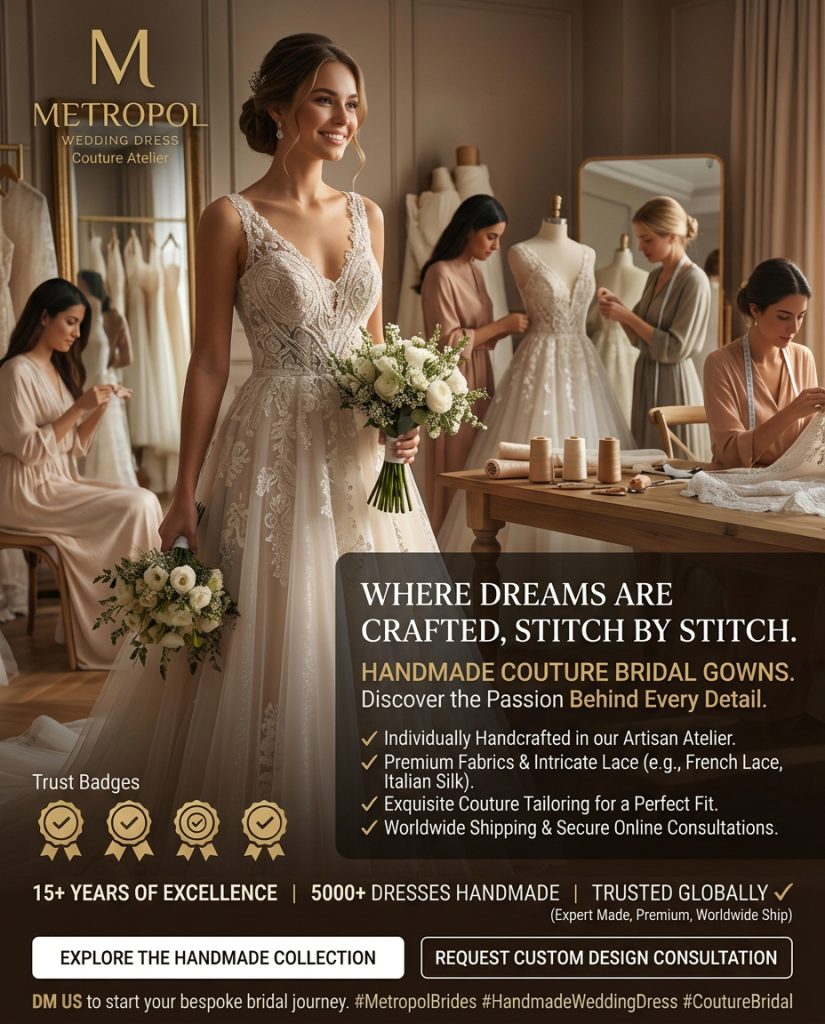
Metropol Wedding Dress is a Turkey-based wholesale wedding dress manufacturer serving boutiques and retailers internationally. The company identifies itself as a wholesale manufacturer and offers custom-made wedding dress solutions; its published company information places its operations in İzmir, Turkey.
For a U.S. boutique buyer, the most important question is therefore not:
“Who sells the cheapest wedding dress?”
It is:
“Which supplier can help my boutique sell the right gowns, at the right margin, with predictable quality and dependable fulfillment?”
That distinction changes the entire buying process.
Wedding Dress Sourcing Is a Retail Strategy, Not Just a Purchasing Task
A bridal boutique does not sell fabric, lace, satin, tulle, boning or embroidery.
It sells confidence.
The bride who walks into a boutique is purchasing much more than a garment. She is purchasing an experience, professional guidance, fit expertise, emotional reassurance and the expectation that the gown she chooses will perform beautifully on one of the most photographed days of her life.
That means a boutique’s supplier becomes indirectly involved in its customer experience.
A poorly constructed gown can create:
- additional alteration costs;
- fitting delays;
- disappointed brides;
- emergency corrections;
- negative reviews;
- lost referral opportunities;
- additional staff workload;
- shipping complications;
- cash-flow pressure.
A well-selected supplier can have the opposite effect.
The boutique can build a more distinctive collection, maintain better control over its purchasing decisions, reduce unnecessary inventory risk and create a stronger customer experience.
This is particularly important because bridal buying is structurally different from conventional fashion retail.
A bridal boutique may purchase sample gowns for appointments, then place production orders after a bride selects a particular style. Industry guidance on bridal buying highlights this sample-and-order model as one of the fundamental differences between bridal and ordinary wholesale fashion.
That means your supplier relationship should be evaluated around the entire lifecycle of a gown:
sample → appointment → sale → measurements → production → quality control → shipment → alteration → wedding day
Not simply:
catalog → price → order.
What Should a U.S. Bridal Boutique Expect From a Wedding Dress Supplier?
A serious supplier relationship should answer seven commercial questions before a buyer commits.
| Buying question | What the boutique needs to know |
|---|---|
| Design | Does the collection fit the boutique’s customer? |
| Fit | Are measurements and grading consistent? |
| Construction | Can the gown tolerate professional alterations? |
| Production | Can the supplier reproduce the approved sample? |
| Customization | Can specifications be adapted when commercially necessary? |
| Fulfillment | Are production and shipping expectations clearly communicated? |
| Business terms | Are pricing, minimums, payment and defect policies transparent? |
The supplier that performs well across all seven categories can be considerably more valuable than a supplier that wins on wholesale price alone.
Why Turkey Can Be an Interesting Sourcing Base for American Bridal Boutiques
For U.S. bridal retailers exploring international sourcing, Turkey occupies an interesting position between European fashion influence and large-scale global apparel production.
İzmir, in particular, has a long textile and apparel manufacturing ecosystem, and Metropol Wedding Dress identifies İzmir as its company base. Its published materials describe wholesale manufacturing, custom wedding dress production and international retailer service.
For a boutique buyer, the potential advantage is not simply geographical.
It is the possibility of combining:
- fashion-oriented design;
- specialized bridal craftsmanship;
- flexible production;
- customization;
- direct manufacturer communication;
- international shipping;
- smaller or more controlled buying programs.
But an American boutique should never assume that “made in Turkey” automatically means better.
Origin is only one variable.
The supplier still needs to demonstrate consistency.
That is why the buyer’s evaluation should move from country-based assumptions to supplier-specific evidence.
The Boutique Buyer’s First Decision: Manufacturer, Wholesaler or Distributor?
Before comparing wedding dresses, determine who actually stands behind the product.
There are three common models.
1. Direct Manufacturer
A direct manufacturer produces the gowns or controls the production process.
Potential advantages include:
- closer communication;
- customization possibilities;
- direct quality discussions;
- better understanding of production constraints;
- potentially stronger wholesale economics;
- private-label opportunities where offered.
Metropol Wedding Dress publicly describes itself as a wholesale wedding dress manufacturer and states that it provides custom-made wedding dress solutions.
2. Wholesale Distributor
A distributor purchases from manufacturers and resells to retailers.
The benefit can be convenience.
A distributor may consolidate several brands or provide access to ready inventory.
The trade-off is that another commercial layer exists between the boutique and production.
3. Sourcing Agent
An agent may connect a boutique with factories and coordinate communication.
This can be useful when a buyer needs local representation or sourcing support, but the boutique should understand exactly:
- who owns the design;
- who manufactures the gown;
- who controls quality;
- who receives payment;
- who handles defects;
- who is responsible for shipping documentation.
The buyer’s rule
Never evaluate a supplier solely from its website photographs.
Ask:
“Who physically produces the gown I will receive?”
That single question can reveal a great deal about the supply chain.
The Sample Is Your Most Important Purchasing Tool
If a supplier offers a sample program, treat the sample as a production audit disguised as a dress.
Do not inspect only the front of the gown.
Turn it inside out.
Look at:
- seam construction;
- lining;
- boning;
- cups;
- zipper installation;
- hooks and eyes;
- waist finishing;
- hem construction;
- lace placement;
- appliqué attachment;
- bead security;
- internal structure;
- train construction;
- bustle points where applicable.
Then ask a more important question:
“Could my alterations professional work on this gown without fighting the construction?”
That matters because bridal alterations are not an afterthought.
A gown can be visually spectacular yet commercially inconvenient if:
- seams have insufficient adjustment allowance;
- lace cannot be repositioned cleanly;
- boning is poorly positioned;
- zipper construction is difficult to modify;
- layers are excessively difficult to shorten;
- the bodice structure does not support the intended fit.
A sample therefore tells you more than a catalog ever can.
A 30-Minute Sample Inspection for Boutique Buyers
When a sample arrives, do not immediately ask your staff:
“Do we like it?”
Ask:
“What could go wrong?”
Inspection sequence
Minute 1–5: Visual examination
Check whether the actual gown resembles the approved imagery.
Minute 5–10: Construction
Inspect seams, lining, closures and structural components.
Minute 10–15: Fit
Put the gown on an appropriate model or mannequin and examine:
- bust;
- waist;
- hip;
- neckline;
- armhole;
- sleeve;
- train;
- proportions.
Minute 15–20: Movement
Walk.
Sit.
Turn.
Raise the arms.
Observe where tension appears.
Minute 20–25: Alteration assessment
Ask your seamstress what she would change and how difficult those changes would be.
Minute 25–30: Commercial assessment
Ask:
- Would a bride choose this?
- Is it sufficiently different from current inventory?
- Does it photograph well?
- Does it fill a gap?
- Can the boutique sell it at its target retail position?
This final stage is crucial.
A beautiful gown that duplicates three existing samples may have less commercial value than a slightly less dramatic gown that fills an important assortment gap.
The Real Meaning of “Quality” in a Wedding Dress
Quality is often used as a vague marketing word.
For a buyer, it should be measurable.
Think of bridal quality as five separate dimensions.
1. Visual quality
Does the gown look premium?
2. Structural quality
Does the internal construction support the silhouette?
3. Material quality
Do the selected fabrics and trims behave appropriately?
4. Reproducibility
Can the supplier make another gown that matches the approved sample?
5. Service quality
Can the supplier communicate effectively when something changes?
The fifth category is frequently underestimated.
A production issue is not necessarily evidence of a bad supplier.
A supplier’s response to the production issue may tell you much more.
Material Selection: What the Buyer Should Actually Ask
A bridal boutique does not need every supplier to use the most expensive fabric.
It needs the supplier to use the right material for the intended gown.
For example, satin, crepe, chiffon, tulle, organza, lace and various blends can produce very different results in:
- drape;
- weight;
- opacity;
- structure;
- movement;
- photography;
- comfort;
- alteration behavior.
Instead of asking:
“Is this premium fabric?”
ask:
“Why is this fabric appropriate for this silhouette?”
That question produces a much better buying conversation.
Lace: The Detail That Can Make or Break a Gown
Lace is one of the first areas where a boutique buyer should slow down.
A low-quality lace can make an otherwise attractive gown appear inexpensive.
Look at:
- motif scale;
- edge finishing;
- symmetry;
- placement;
- density;
- transparency;
- appliqué attachment;
- transition between lace sections.
A sophisticated gown may depend less on the quantity of lace and more on where the lace is placed.
A supplier with a strong lace and embellishment capability can therefore give a boutique more design flexibility.
Metropol’s published company information specifically highlights experience with molds, embroidery and weaving, together with a broad selection of lace and fabrics. These are company-reported capabilities and should be validated through samples before commercial commitment.
Fit Should Be Evaluated as a System
One of the most expensive mistakes a bridal boutique can make is thinking that a size label equals fit.
It does not.
Bridal sizing can differ substantially between manufacturers and collections. Therefore, the buyer should work from actual measurement charts and production specifications, not assumptions about U.S. street sizes.
A useful supplier conversation includes:
- bust measurements;
- waist measurements;
- hip measurements;
- hollow-to-hem;
- shoulder;
- armhole;
- sleeve;
- train length;
- grading rules;
- available size range.
The boutique should also establish how measurement discrepancies are handled.
A good question to ask
“If our bride’s measurements fall between your standard sizes, what is the recommended ordering procedure?”
The answer can reveal how mature the supplier’s production system is.
Customization Is More Valuable Than It First Appears
Customization is sometimes associated only with luxury bridal couture.
For a boutique, it can also be a commercial differentiation tool.
Imagine two boutiques selling similar bridal gowns.
Boutique A carries exactly what several competitors carry.
Boutique B can request controlled variations such as:
- neckline modification;
- sleeve variation;
- color variation;
- fabric substitution;
- modesty panel;
- train adjustment;
- embellishment adjustment;
- personalized detailing.
Boutique B may be able to create a more distinctive customer experience.
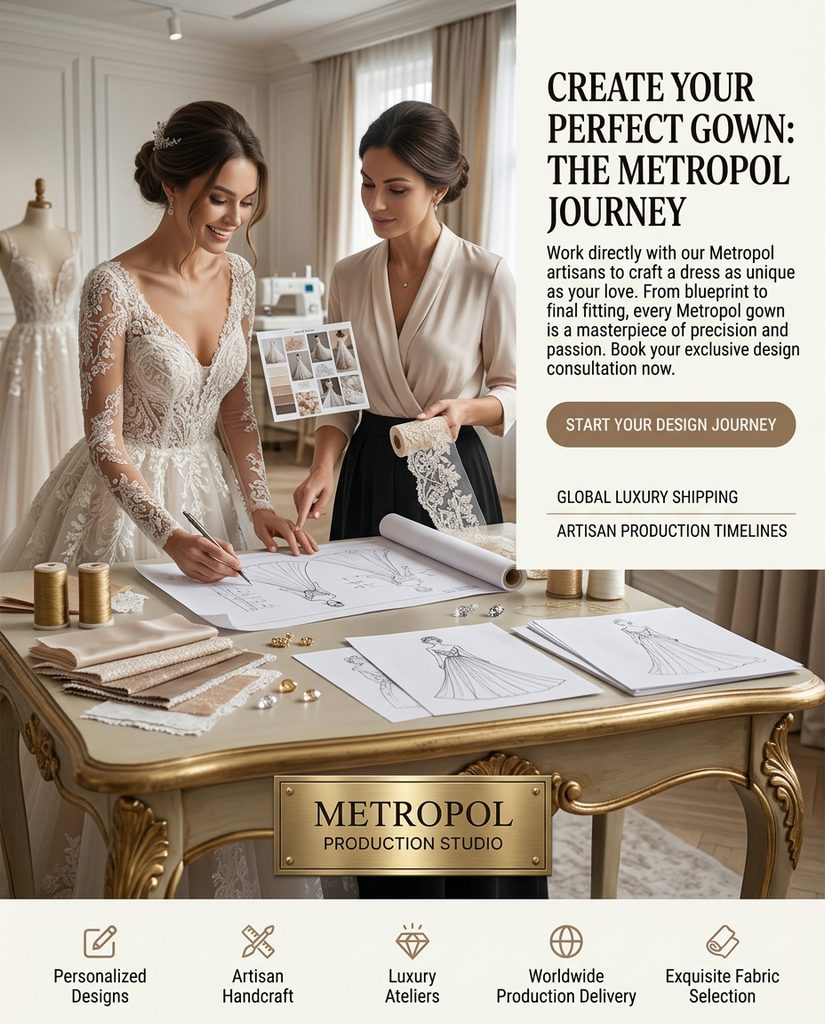
Metropol publicly promotes custom-made wedding dress production and states that boutiques can work with its production capabilities on individualized designs.
However, customization should be controlled.
Too many custom options can increase:
- production complexity;
- communication errors;
- sample requirements;
- lead times;
- costs;
- alteration uncertainty.
The best boutique customization strategy is therefore selective, repeatable and commercially justified.
Build a Collection, Not a Pile of Dresses
This is one of the most important principles for a bridal buyer.
A collection should answer different customer needs.
Instead of purchasing ten gowns simply because you like them, give every gown a commercial role.
For example:
| Collection role | Possible gown direction |
|---|---|
| Classic anchor | Clean A-line |
| Romantic | Lace and soft tulle |
| Fashion-forward | Structured modern silhouette |
| Figure-focused | Fit-and-flare |
| Statement | Dramatic ballgown |
| Minimalist | Clean crepe or satin |
| Destination | Lightweight flowing gown |
| Modest | Higher neckline / sleeve |
| Curve-conscious | Supportive structured construction |
| Editorial | Distinctive detail or silhouette |
The exact mix should depend on your customer base.
The principle is simple:
Every sample should have a job.
The 80/20 Bridal Inventory Principle
A boutique does not necessarily need dozens of unrelated styles.
It needs enough variety to create discovery without creating unnecessary inventory complexity.
A practical approach is to divide the assortment into:
Core styles
Gowns that address predictable customer demand.
Differentiators
Gowns that make the boutique memorable.
Experimental styles
A smaller number of fashion-forward pieces used to test demand.
This allows the buyer to manage risk.
If an experimental silhouette performs well, it can become part of the next buying cycle.
If it fails, the financial exposure remains controlled.
How to Evaluate Wholesale Pricing Without Fooling Yourself
Wholesale price is only the beginning of the calculation.
The real figure is landed cost.
A simplified model is:
Landed Cost = Wholesale Price + Freight + Insurance + Duties/Taxes Where Applicable + Brokerage/Handling + Other Import Costs
Then add operational costs such as:
- receiving;
- inspection;
- storage;
- steaming;
- alterations;
- packaging;
- payment processing;
- returns or defect handling;
- marketing;
- appointment labor.
The result is the amount the boutique actually has invested before the gown becomes a profitable retail sale.
Example
Suppose a hypothetical gown has:
- wholesale cost: $400
- international freight allocation: $45
- import-related costs: $35
- receiving/inspection: $15
- preparation: $20
The illustrative landed and preparation cost is:
$515
If the boutique sells it for $1,500, the difference is:
$985
But that is not automatically $985 profit.
The boutique still has:
- rent;
- payroll;
- utilities;
- marketing;
- alterations;
- appointment costs;
- merchant fees;
- administrative expenses;
- unsold inventory risk.
This is why the correct question is not:
“What is the wholesale price?”
It is:
“What does this gown contribute to the boutique after all relevant costs?”
A Better Supplier Scorecard
Use a weighted scorecard rather than making decisions emotionally.
| Category | Suggested importance |
|---|---|
| Product quality | 20% |
| Fit consistency | 15% |
| Design relevance | 15% |
| Production reliability | 15% |
| Communication | 10% |
| Customization | 10% |
| Commercial terms | 10% |
| Shipping/logistics support | 5% |
Score each supplier from 1 to 10.
Then calculate the weighted result.
This method has one major advantage:
It prevents an attractive catalog from hiding operational weaknesses.
What American Boutique Buyers Should Ask Before the First Purchase
Use this checklist during supplier conversations.
Product
- Can I purchase samples?
- Are samples representative of production?
- Can I request material information?
- What construction methods are used?
- How are delicate embellishments secured?
Fit
- Do you provide a detailed measurement chart?
- How is grading performed?
- Can measurements be customized?
- What is the recommended process for between-size brides?
Production
- What is the normal production timeline?
- What can affect that timeline?
- How are urgent orders handled?
- Is the approved sample used as the production reference?
Quality
- What happens if the delivered gown differs materially from the approved sample?
- How are defects documented?
- Who pays return shipping for confirmed production defects?
Commercial
- Is there a minimum order?
- Is the minimum per style or per order?
- Can styles be mixed?
- What payment terms are available?
- Is there a private-label option?
Logistics
- Where does the order ship from?
- Which shipping methods are available?
- What documentation accompanies the shipment?
- Who is responsible for import clearance?
The U.S. Import and Labeling Question
International bridal sourcing requires more than selecting the dress.
The boutique should understand its responsibilities as an importer and retailer.
For textile and apparel products covered by the applicable U.S. rules, the FTC explains that country-of-origin information is required, and imported textile products generally must identify the country where the product was processed or manufactured. The FTC also maintains requirements concerning fiber content and manufacturer/dealer identification.
Care instructions are another important consideration.
The FTC’s Care Labeling Rule requires manufacturers and importers to provide care instructions for covered garments.
This is an area where a boutique should verify its specific compliance obligations rather than relying on generic supplier statements.
Practical buyer rule
Before the first shipment, ask the supplier:
“Can you provide the complete labeling and commercial documentation for this product, and what information will appear on the garment?”
Then independently confirm requirements applicable to your business and shipment.
For complex imports, professional customs or compliance advice may be appropriate.
Country of Origin Is Not a Quality Score
This deserves emphasis.
A Turkish gown is not automatically better than an American gown.
A Chinese gown is not automatically worse than a European gown.
A European label is not automatically evidence of superior manufacturing.
The correct evaluation is:
supplier + factory + materials + construction + quality control + communication + consistency.
Origin tells you where a product was manufactured.
It does not, by itself, tell you how well it was manufactured.
Lead Time: The Hidden Cost of Bridal Buying
A bridal gown has a deadline.
That deadline may be months away, but the business consequence begins immediately.
If a gown arrives late, the boutique may face:
- rescheduling;
- accelerated shipping;
- customer anxiety;
- alteration compression;
- staff overtime;
- reputational damage.
Therefore, lead time should never be discussed only as:
“How many days?”
Ask:
“What exactly does that number include?”
Does it mean:
- production only?
- production plus inspection?
- production plus international shipping?
- business days or calendar days?
- from deposit?
- from final measurements?
- from sample approval?
The more precisely the timeline is defined, the easier it becomes to manage customer expectations.
Never Promise a Bride a Date You Cannot Control
A professional boutique should create a buffer.
If a supplier says an order can be produced within a particular timeframe, that does not necessarily mean the boutique should promise the bride the same date.
Allow room for:
- production variation;
- international transportation;
- customs;
- inspection;
- alterations;
- unexpected corrections.
The supplier’s timeline and the boutique’s customer promise are two different timelines.
That distinction can protect the business.
Communication Is Part of Product Quality
Imagine a production issue occurs.
Supplier A takes two days to answer.
Supplier B responds quickly, explains the problem, provides photographs, proposes a solution and confirms the revised schedule.
Even if both suppliers eventually deliver the same product, Supplier B has created less operational risk.
For international B2B relationships, evaluate:
- response speed;
- clarity;
- technical vocabulary;
- measurement communication;
- willingness to document decisions;
- ability to understand reference images;
- escalation process.
One simple test
Before ordering, send a detailed technical question.
Do not evaluate only the answer.
Evaluate how they answer.
The “Everything Is Possible” Warning Sign
Customization sounds attractive.
But beware of suppliers who promise everything without explaining limitations.
A serious manufacturer should be able to say:
- yes;
- no;
- yes, but with additional cost;
- yes, but with additional lead time;
- yes, after sample approval.
That is more useful than unlimited promises.
Manufacturing has constraints.
A professional supplier understands them.
Private Label: When It Makes Sense for a U.S. Boutique
Private label can be attractive to established boutiques that want to develop a proprietary identity.
Instead of selling another manufacturer’s visible brand, the boutique may create a collection under its own name, subject to the supplier’s capabilities and contractual terms.
Potential benefits include:
- brand differentiation;
- greater control over positioning;
- exclusivity opportunities;
- stronger customer recognition;
- potentially higher perceived brand equity.
But private label also increases responsibility.
The boutique now needs to think about:
- labeling;
- product descriptions;
- photography;
- sizing;
- warranty/defect procedures;
- customer service;
- brand consistency;
- intellectual property;
- packaging.
Metropol publicly advertises custom and private-label-oriented wholesale capabilities, but the exact commercial scope should be confirmed directly before any agreement.
When a Boutique Should NOT Choose the Cheapest Supplier
Price becomes dangerous when it replaces analysis.
A $250 gown that requires extensive corrections may be more expensive than a $350 gown that consistently arrives ready for professional alterations.
Consider a hypothetical comparison:
| Cost factor | Supplier A | Supplier B |
|---|---|---|
| Wholesale gown | $250 | $350 |
| Freight/import allocation | $50 | $45 |
| Preparation | $25 | $15 |
| Extra alteration labor | $100 | $40 |
| Defect allowance/risk | $35 | $10 |
| Approx. operational cost | $460 | $445 |
Supplier B has the higher wholesale price.
Yet the hypothetical total is lower.
This is why purchasing departments should compare total cost of ownership, not just unit cost.
A Boutique’s Supplier Should Reduce Complexity, Not Create It
Every new supplier introduces administrative work.
You may have:
- another catalog;
- another size chart;
- another order form;
- another payment process;
- another shipping workflow;
- another quality standard.
The supplier should therefore bring enough value to justify that complexity.
A strong partnership should make the buyer’s job easier over time.
After several orders, the process should become:
clearer, faster and more predictable.
If every order feels like starting from zero, the relationship may not be scalable.
Real Scenario: The Boutique That Needs a Faster Core Collection
Imagine a mid-sized American bridal boutique.
Its current collection contains:
- several ornate ballgowns;
- multiple similar lace fit-and-flare gowns;
- limited minimalist options;
- no strong destination-wedding selection;
- limited modern satin.
The buyer initially wants to order five new gowns.
Instead of asking:
“Which five dresses are prettiest?”
the buyer asks:
“Which five dresses correct the commercial gaps?”
The final selection might therefore include:
- minimalist satin;
- lightweight destination gown;
- contemporary A-line;
- modern lace;
- structured statement gown.
The supplier has now become part of an assortment strategy, not merely a source of dresses.
That is a much more sophisticated way to buy.
Real Scenario: A Boutique Wants Exclusivity
Another boutique may already have strong sales but faces a different problem:
Several local competitors stock visually similar gowns.
The buyer’s objective is not simply lower cost.
It is differentiation.
The buyer can investigate:
- exclusive designs;
- modified designs;
- private label;
- limited distribution;
- custom details;
- unique fabrics;
- exclusive colorways.
The commercial objective becomes:
“Give my bride a reason to visit my boutique instead of the one five miles away.”
This is where customization can become strategically valuable.
Real Scenario: The Small Boutique With Limited Cash Flow
A smaller boutique has a different problem.
It cannot afford a large collection of samples.
For this business, the supplier should be evaluated on:
- sample flexibility;
- minimums;
- mixed-style ordering;
- production reliability;
- reorder capability;
- communication;
- willingness to support smaller accounts.
Current wholesale bridal guidance commonly emphasizes the importance of understanding minimum order quantities and whether suppliers permit smaller or mixed-style orders.
The correct buying strategy is not necessarily:
“Buy less.”
It is:
“Buy fewer gowns that each perform a clearly defined function.”
What Information Should Be on Your Bridal Supplier Brief?
Before contacting a manufacturer, prepare a one-page buying brief.
Include:
Boutique profile
- location;
- store type;
- target customer;
- average retail price position;
- appointment model.
Collection direction
- romantic;
- minimalist;
- modern;
- classic;
- couture-inspired;
- destination;
- modest;
- curve-conscious.
Commercial targets
- target wholesale range;
- target retail range;
- expected margin;
- sample budget.
Product requirements
- preferred silhouettes;
- fabrics;
- sleeve preferences;
- train lengths;
- embellishment level;
- color options.
Operational requirements
- production window;
- shipping destination;
- labeling;
- documentation;
- packaging;
- customization.
This document makes supplier conversations dramatically more efficient.
The Five Numbers Every Buyer Should Know
Before negotiating with a wedding dress supplier, know these five numbers:
1. Average target retail price
What does your customer normally spend?
2. Target landed cost
What can you afford after freight and import-related costs?
3. Maximum sample budget
How much can you invest in discovery?
4. Minimum acceptable gross margin
What commercial result does the boutique require?
5. Maximum acceptable lead time
What timeline can your customers realistically tolerate?
Without these numbers, negotiation becomes guesswork.
What Makes a Wholesale Gown “Retail Ready”?
A retail-ready gown should not require the boutique to solve manufacturing problems.
Look for:
- clean finishing;
- reliable closures;
- consistent measurements;
- secure embellishment;
- appropriate lining;
- professional packaging;
- clear labeling;
- consistent color;
- predictable construction.
The closer the gown is to retail-ready when received, the more efficiently the boutique can allocate its staff time.
The Alteration-Friendly Supplier Advantage
Alterations are part of bridal retail.
Therefore, a supplier should be evaluated partly on how intelligently the gown has been engineered for professional adjustment.
Ask your seamstress to inspect:
- side seams;
- center back;
- hem;
- neckline;
- sleeve seams;
- bust area;
- waist structure.
A gown designed with sensible construction can give an alterations professional more options.
That can translate directly into:
better fit → better bride experience → fewer problems → better reviews.
The Buyer’s “Red Flag” List
Walk carefully if a supplier:
- refuses reasonable product questions;
- cannot explain materials;
- avoids providing measurements;
- refuses samples without a clear reason;
- provides inconsistent information;
- changes prices unexpectedly;
- cannot explain production timelines;
- pressures immediate payment;
- refuses to document important terms;
- cannot explain defect procedures;
- uses photographs that cannot be verified as its own work.
One red flag does not automatically mean “do not buy.”
Several together should trigger a deeper investigation.
A Better Way to Compare Three Suppliers
Suppose you have three potential suppliers.
Supplier A
Excellent design.
Weak communication.
Supplier B
Moderate design.
Excellent production consistency.
Supplier C
Strong design.
Strong customization.
Higher price.
Do not choose immediately.
First determine what your boutique is trying to accomplish.
If your brand depends on differentiation, Supplier C may have greater strategic value.
If your business depends on predictable core styles, Supplier B may be safer.
If your boutique is highly fashion-led and has excellent internal quality control, Supplier A could potentially work.
There is no universal “best supplier.”
There is only:
the supplier that best fits the business model.
A Practical 90-Day Supplier Evaluation Process
Days 1–15: Research
Shortlist suppliers.
Review:
- product range;
- manufacturing claims;
- business model;
- customization;
- wholesale process;
- contact quality.
Days 16–30: Sample
Order representative samples.
Inspect construction.
Test fit.
Photograph internal details.
Ask an alterations professional for an opinion.
Days 31–45: Commercial Review
Calculate:
- wholesale;
- freight;
- landed cost;
- alteration exposure;
- retail potential;
- margin.
Days 46–60: Pilot Order
Place a controlled order.
Do not immediately commit the boutique’s entire collection.
Days 61–90: Measure
Track:
- delivery;
- defects;
- fit;
- staff feedback;
- bride reactions;
- sales appointments;
- conversion;
- alterations.
Then make the supplier decision using evidence.
What a Long-Term Metropol Partnership Could Mean for a Boutique
Metropol Wedding Dress publicly positions itself as a wholesale manufacturer serving bridal boutiques and retailers internationally, rather than only as a consumer-facing dress seller. The company also promotes custom-made production and wholesale bridal solutions.
For a U.S. boutique, the relevant question is therefore not simply whether a Metropol gown looks attractive.
The more useful questions are:
- Does the collection fit my customer?
- Can the production team reproduce approved designs?
- Can the sizing work within my fitting process?
- Can customization solve specific assortment gaps?
- Can communication support international B2B orders?
- Can the supplier meet my required commercial timelines?
- Can the total landed economics work for my retail model?
Those are the questions worth answering before scaling an account.
Why Direct Communication Matters When Buying From Overseas
International sourcing can feel complicated until communication is structured.
A good purchase order should remove ambiguity.
Instead of writing:
“Make it like the picture.”
Use:
Style reference: XXXXX
Color: Ivory
Size: XXXXX
Sleeve: XXXXX
Neckline: XXXXX
Lace: XXXXX
Special modification: XXXXX
Required delivery window: XXXXX
When a buyer communicates technically, the manufacturer has a much better chance of producing exactly what is expected.
This is especially important with customized bridal gowns.
Photography Is Not a Production Specification
A photograph can show:
- silhouette;
- color;
- visual texture;
- embellishment;
- overall proportions.
It cannot reliably communicate every construction detail.
For important customizations, use:
- measurements;
- marked-up images;
- sketches;
- fabric references;
- written instructions.
The more expensive the order, the more important documentation becomes.
The Boutique’s Internal Quality-Control Checklist
Before putting a newly received gown on the sales floor, inspect:
Exterior
☐ Color matches approved specification
☐ Lace is correctly positioned
☐ Embellishments are secure
☐ No visible stains
☐ No loose threads
☐ No obvious fabric damage
Interior
☐ Lining is secure
☐ Seams are clean
☐ Boning is correctly positioned
☐ Cups are correctly installed
☐ Closure functions correctly
☐ Labels are present and correct
☐ Care information is available
Fit
☐ Bust
☐ Waist
☐ Hip
☐ Length
☐ Train
☐ Sleeves
☐ Neckline
Commercial
☐ Matches sample
☐ Correct style
☐ Correct size
☐ Correct color
☐ Correct modifications
☐ Correct quantity
Only after this inspection should the gown be released for bridal appointments.
A Smarter Approach to Wholesale Wedding Dress Buying in the USA
The best bridal buyers think in layers.
Layer 1 — Bride
Will she love it?
Layer 2 — Consultant
Can I sell it effectively?
Layer 3 — Seamstress
Can I fit and alter it?
Layer 4 — Buyer
Does it make commercial sense?
Layer 5 — Operations
Can we receive and manage it reliably?
Layer 6 — Brand
Does it strengthen our boutique identity?
A gown that passes all six layers is a much stronger purchase than one that simply receives compliments.
12 Questions to Ask Yourself Before Adding Any Gown
- What customer problem does this gown solve?
- What existing gown does it complement?
- What existing gown does it replace, if any?
- What is its target retail position?
- What is its expected landed cost?
- How difficult is it to alter?
- Does the silhouette photograph well?
- Does it look different enough from competing inventory?
- Can the supplier reproduce it consistently?
- What happens if the bride needs a modification?
- How quickly can it be reordered?
- Would I buy this gown again after seeing the real sample?
If the answer to the last question is no, do not ignore that feeling.
How Metropol Wedding Dress Fits the Direct-Manufacturer Model
Based on its published business information, Metropol Wedding Dress presents itself as a wholesale wedding dress manufacturer in İzmir, Turkey, offering wholesale gowns and custom-made wedding dress solutions for boutiques and retailers.
Its public materials also describe experience in bridal manufacturing and highlight customization, lace/fabric options and wholesale service.
For a U.S. buyer, this creates a potentially useful sourcing proposition:
direct manufacturer communication + wholesale bridal production + customization + international supply.
But responsible procurement still requires verification.
The best next step is not to make an immediate large purchase.
It is to start a structured supplier conversation and sample evaluation.
From First Contact to First Shipment
A professional wholesale relationship can follow this sequence:
Step 1 — Introduce the boutique
Explain who you are and what type of customer you serve.
Step 2 — Explain the collection
Identify the silhouettes and price positioning you need.
Step 3 — Request the wholesale catalog
Review the collection as a buyer rather than as a bride.
Step 4 — Identify samples
Select gowns that fill actual assortment gaps.
Step 5 — Confirm measurements
Make sure the measurement system works for your fitting team.
Step 6 — Discuss customization
Ask what can and cannot be changed.
Step 7 — Confirm commercial terms
Discuss minimums, payment, production, defects and shipping.
Step 8 — Place a controlled order
Start with a manageable commitment.
Step 9 — Inspect
Compare received gowns with approved samples.
Step 10 — Scale
Only increase volume after performance has been demonstrated.
This is how a supplier becomes a partner.
FAQ: Wedding Dress Supplier for Bridal Boutiques in the USA
1. What should a U.S. bridal boutique look for in a wedding dress supplier?
Look beyond wholesale price. Evaluate design relevance, construction, sizing consistency, customization, production reliability, communication, shipping, labeling, defect procedures and landed cost.
2. Is buying wedding dresses directly from a manufacturer better than using a wholesaler?
Not automatically. A direct manufacturer may offer closer communication and customization, while a distributor may offer broader ready-stock selection. The right choice depends on your business model.
3. Why should a bridal boutique order samples before placing a larger order?
A sample allows the buyer to evaluate actual construction, fit, materials, finishing and alteration potential. Product photography cannot answer all of these questions.
4. How can I tell whether a wedding dress is genuinely high quality?
Inspect both the outside and inside. Look at seams, lining, closures, boning, lace placement, embellishment security and overall structural integrity.
5. Should a bridal boutique prioritize fabric or construction?
Both matter, but construction determines how the selected materials perform as a finished gown. A beautiful fabric cannot compensate for poor structural engineering.
6. What measurements should I request from a wholesale bridal supplier?
At minimum, request a detailed size chart covering bust, waist, hip and length. Depending on the design, also consider shoulder, armhole, sleeve and other construction-specific measurements.
7. Can a Turkish wedding dress manufacturer supply American bridal boutiques?
Yes, international manufacturers can supply U.S. retailers, but the buyer should evaluate shipping, customs, documentation, labeling and product compliance requirements before ordering.
8. What makes Turkey interesting for bridal sourcing?
Turkey has an established textile and apparel manufacturing ecosystem and can offer a combination of European-influenced design, specialized craftsmanship and manufacturing flexibility. Individual suppliers should still be evaluated on their own evidence.
9. Does country of origin guarantee quality?
No. Country of origin should never replace supplier-specific quality evaluation.
10. How important is customization for a bridal boutique?
It can be extremely useful when a boutique wants differentiation, private-label development or specific modifications. However, customization should be controlled to avoid unnecessary cost and production complexity.
11. What is the difference between wholesale price and landed cost?
Wholesale price is the supplier’s product price. Landed cost can include freight, insurance, duties or taxes where applicable, brokerage, handling and other import-related expenses.
12. Should I choose the cheapest wedding dress supplier?
Not necessarily. A lower unit price can become expensive if it causes defects, excessive alterations, late delivery or additional staff work.
13. How should a boutique evaluate a supplier’s production lead time?
Ask what the stated lead time includes, when the clock starts, whether it means business or calendar days, and how delays are handled.
14. Should I promise my bride the same delivery date given by the manufacturer?
No. The boutique should maintain a reasonable buffer for international shipping, customs, inspection and alterations.
15. How important is supplier communication?
Extremely important. International bridal sourcing involves measurements, specifications, modifications and deadlines. Clear communication directly reduces operational risk.
16. Can a supplier offer private-label wedding dresses?
Some manufacturers offer private-label services. Metropol Wedding Dress publicly promotes custom and private-label-oriented wholesale solutions, but the exact terms, labeling arrangements and exclusivity should be confirmed directly.
17. What should I ask about defective wedding dresses?
Ask how defects must be documented, how quickly they must be reported, whether replacement or credit is available and who pays associated shipping costs.
18. Is a minimum order quantity always bad for a small boutique?
No. What matters is whether the minimum is commercially manageable. A small boutique should understand whether minimums apply per style, per size, per order or across a mixed collection.
19. How many wedding dress samples should a new boutique buy?
There is no universal number. Start with a focused assortment in which every sample serves a clear customer or commercial purpose.
20. Should every gown in a boutique collection be unique?
Not necessarily. Core silhouettes create commercial stability. The goal is a balanced collection combining dependable sellers with distinctive pieces.
21. What makes a gown alteration-friendly?
Sensible seam construction, appropriate adjustment allowances, accessible internal structure and construction that allows a professional seamstress to modify the garment without damaging the design.
22. Why should I show samples to my alterations professional?
Because a gown that looks excellent visually may be difficult or expensive to alter. Your seamstress can identify technical risks before you commit to larger orders.
23. What U.S. labeling issues should international apparel buyers investigate?
The FTC states that covered textile products generally have country-of-origin and fiber-content labeling requirements, while care instructions are also subject to applicable rules. Buyers should verify requirements for their specific products and importing arrangements.
24. Does a wedding dress need a care label?
Covered garments generally fall under the FTC’s Care Labeling Rule, which requires manufacturers and importers to provide care instructions.
25. How can I reduce the risk of international bridal sourcing?
Use samples, written specifications, controlled pilot orders, documented quality checks and clearly defined commercial terms before scaling the relationship.
26. What should be included in a wholesale purchase specification?
Include style reference, size, color, materials, modifications, measurements, delivery requirements, labeling expectations and any special construction instructions.
27. How can a boutique determine whether a supplier fits its brand?
Compare the supplier’s actual gowns with your customer profile, retail price point, aesthetic, alteration capabilities and competitive positioning.
28. Is direct manufacturer communication useful for custom gowns?
Yes. Direct communication can reduce information loss between the boutique and production team, particularly when measurements or design modifications are involved.
29. What is the biggest mistake boutique buyers make?
Buying based primarily on photographs and price without testing the physical product and calculating the complete commercial cost.
30. What is the most important question to ask a potential supplier?
Ask:
“What happens if the gown we receive does not match the approved specification?”
The answer tells you a great deal about quality control, accountability and the maturity of the supplier relationship.
Final Buyer Checklist
Before signing off on a new wedding dress supplier, confirm:
PRODUCT
☐ Samples evaluated
☐ Construction inspected
☐ Materials confirmed
☐ Size chart received
☐ Alteration suitability assessed
COMMERCIAL
☐ Wholesale pricing confirmed
☐ Landed-cost estimate completed
☐ Minimum order understood
☐ Payment terms documented
☐ Defect policy documented
PRODUCTION
☐ Production timeline defined
☐ Customization limits understood
☐ Sample approval process established
☐ Reorder process understood
LOGISTICS
☐ Shipping method confirmed
☐ Documentation discussed
☐ Import responsibilities understood
☐ U.S. labeling requirements reviewed
BRAND
☐ Collection fits customer
☐ Styles fill assortment gaps
☐ Designs are sufficiently differentiated
☐ Retail positioning makes sense
If these boxes are checked, you are no longer simply buying wedding dresses.
You are building a bridal supply system.
5 Ways to Start a Conversation With Metropol Wedding Dress
CTA 1 — For the Established Boutique
Build your next bridal collection around gowns your customers can actually sell.
If your boutique is ready to review wholesale wedding dress options, discuss collection requirements, explore custom production or request current supplier information, contact Metropol Wedding Dress and tell the team what your store is looking for.
Explore Metropol Wedding Dress
CTA 2 — For the Buyer Who Wants to Test First
Don’t begin with a large order. Begin with evidence.
Request the catalog, identify the styles that fit your customer profile, evaluate samples and calculate the real landed economics before scaling your relationship.
CTA 3 — For a Boutique Seeking Differentiation
Your boutique does not need another copy of what everyone else is selling.
Ask about custom wedding dress production and discover whether your next collection can be adapted around the identity of your store.
CTA 4 — For Private-Label Buyers
Build a bridal identity that belongs to your boutique.
If private-label or custom production is part of your growth strategy, discuss your desired aesthetic, labeling requirements, collection size and production expectations with the manufacturer.
CTA 5 — Direct and Commercial
Ready to evaluate a new wedding dress manufacturing partner?
Send Metropol Wedding Dress your boutique profile, preferred styles, approximate order requirements and target market. A focused brief creates a much more productive wholesale conversation than a generic request for “prices.”
Contact Metropol Wedding Dress
The Bottom Line
A successful wedding dress supplier for bridal boutiques in the USA should do more than provide attractive gowns.
The right supplier should fit into the boutique’s entire commercial ecosystem.
That means:
beautiful enough to sell,
well constructed enough to alter,
consistent enough to reorder,
flexible enough to differentiate,
reliable enough to plan around,
and commercially sensible enough to support the business.
For U.S. bridal boutiques considering international sourcing, Metropol Wedding Dress offers a manufacturer-based model from İzmir, Turkey, with publicly stated wholesale and custom-production capabilities for international retailers.
The smartest next step is not to ask only for a price list.
Ask for the information that lets you make a buyer-level decision:
What can you produce?
How consistently can you produce it?
How can it fit my collection?
What can be customized?
What will it really cost me landed?
And what happens when something goes wrong?
Those questions transform bridal sourcing from a search for a dress supplier into the creation of a dependable supply partnership.
Related Topics

01.09.2025
Bridal Dress Prototyping Company Turkey When it comes to creating the perfect wedding dress, bridal dress prototyping companies in Turkey have emerged as global leaders, blending rich cultural craftsmanship with modern design innovation. Turkey, particularly...

16.03.2026
Brautkleid nach Foto anfertigen lassen In der Welt der Hochzeitsmode gibt es kaum etwas Persönlicheres und Emotionaleres als das perfekte Brautkleid. Viele Bräute träumen davon, ein Kleid zu tragen, das exakt zu ihrem Stil, ihrer...
04.07.2025
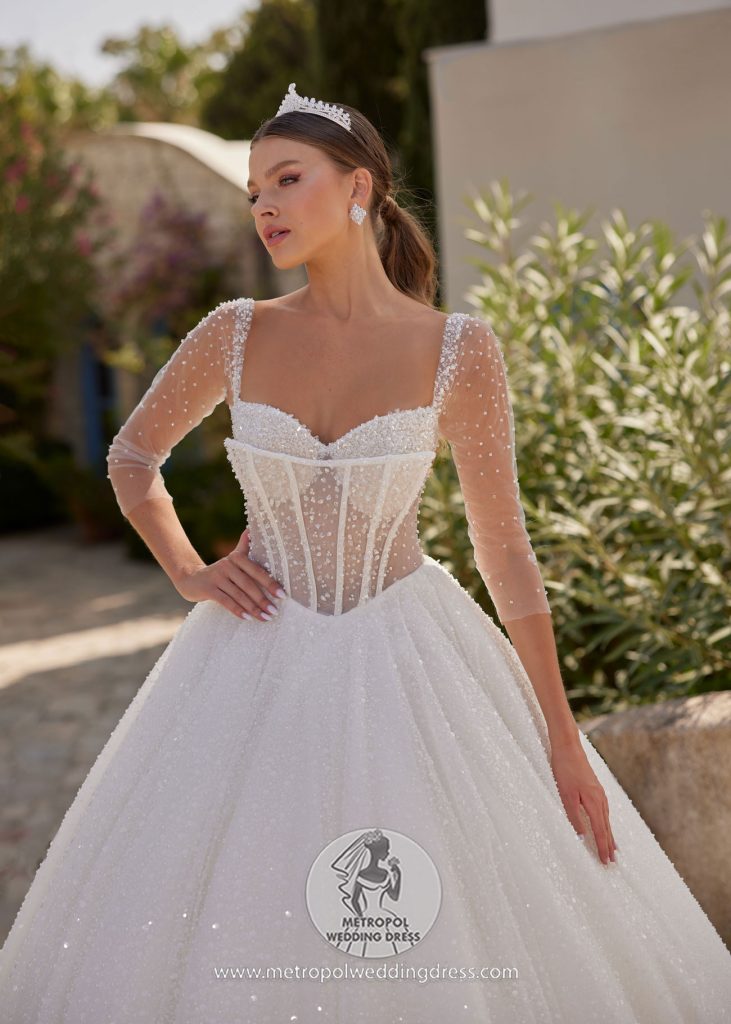
Affordable Turkish Bridal Collection The world of bridal fashion is ever-evolving, with trends that reflect cultural heritage, modern aesthetics, and affordability. Among the diverse styles, the Affordable Turkish Bridal Collection stands out for its exquisite...

08.06.2024
Alamour The Label Türkiye Best 4 Buying a wedding dress a size bigger can be a good idea for a few reasons. Firstly, it allows for alterations to achieve a perfect fit closer to the...
10.10.2025
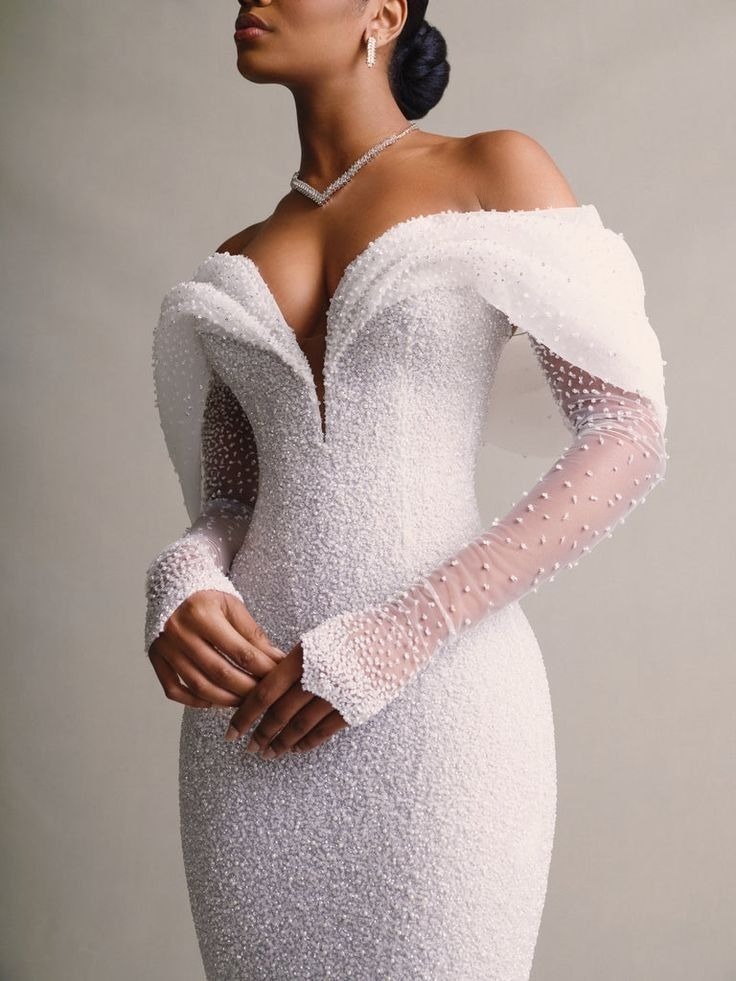
Del Boceto al Altar El Proceso Creativo de un Vestido de Novia Hecho a Medida En el mundo de la moda nupcial Turquía España, donde la elegancia se fusiona con la tradición y la innovación,...
18.10.2025
Handcrafted Luxury from İzmir Buy Your Dream Wedding Dress Online Today In the bustling heart of Turkey’s Aegean coast lies İzmir, a city where ancient history meets modern elegance. Known as the “Pearl of the...
Comments