
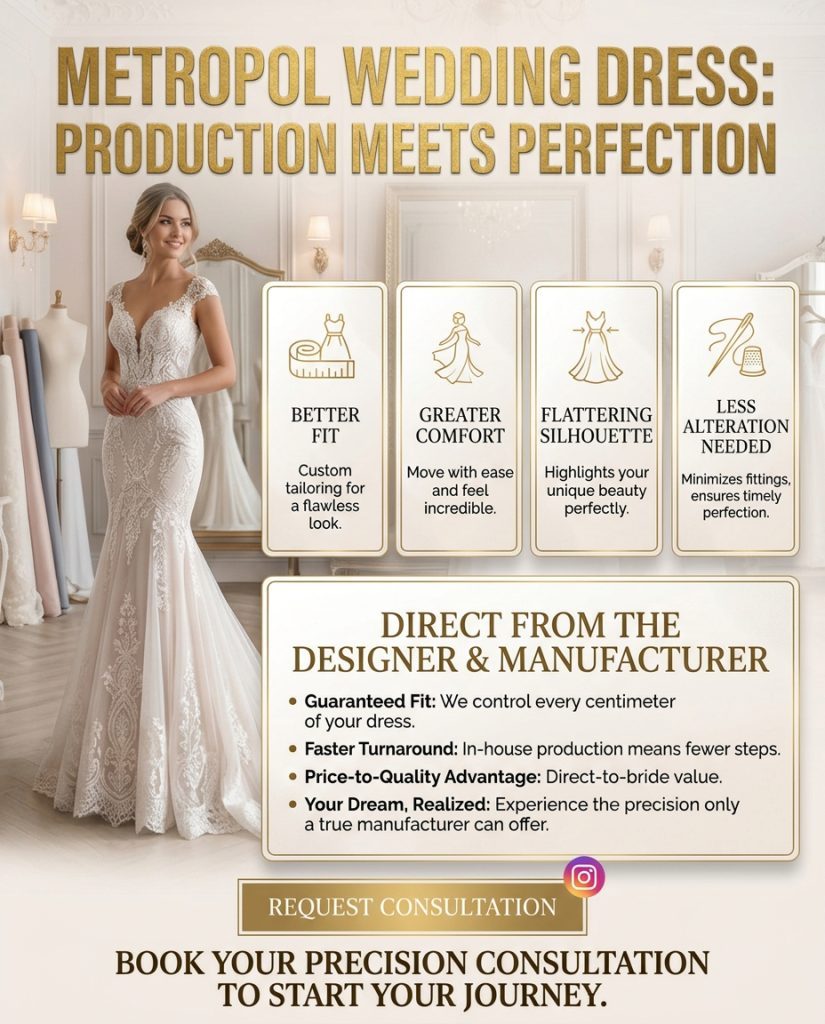
Made-to-Order Wedding Dress Manufacturer for US Bridal Boutiques For a US bridal boutique, choosing a wedding dress manufacturer is not simply a question of finding beautiful gowns at a competitive wholesale price.
The more important question is:
Can your manufacturing partner help you sell more dresses without forcing you to carry unnecessary inventory, sacrifice design identity, or create avoidable operational problems?
That distinction matters.
Traditional bridal wholesale often asks retailers to predict demand months in advance, purchase samples and inventory, accept predetermined silhouettes, and compete with other stores carrying similar collections. A made-to-order manufacturing model approaches the problem differently.
Instead of treating every gown as a stock item, the boutique can use carefully selected samples as the showroom experience while the manufacturing partner produces customer orders according to the approved design, measurements, modifications, and production specifications.
For an independent US bridal boutique, this can create a more flexible business model.
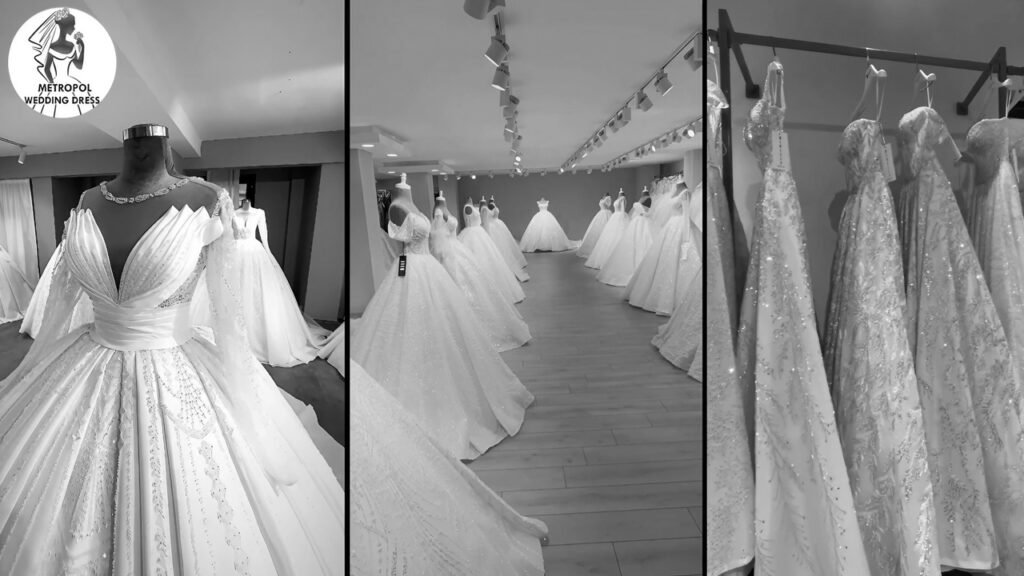
Metropol Wedding Dress is a Turkey-based bridal manufacturer serving boutiques and retailers internationally. The company states that it combines wholesale production with custom-made wedding dress capabilities and operates from an İzmir production operation. Its published company information describes experience in pattern making, embroidery, lace and fabric selection, custom production, and international wholesale service.
The real opportunity for a boutique, however, is not simply “buying from Turkey.”
It is building a controlled bridal supply system in which:
- samples generate appointments and sales,
- customer orders trigger production,
- measurements are handled systematically,
- design modifications are agreed before cutting,
- quality checkpoints reduce surprises,
- production capacity supports growth,
- and the boutique retains control over its customer relationship.
This guide explains how that model works, what US bridal buyers should evaluate before choosing a manufacturer, how made-to-order differs from wholesale stock purchasing, what should be included in a supplier conversation, and how to reduce the risks associated with international bridal production.
The Bridal Buyer’s Problem Is Not Lack of Dresses
A bridal boutique rarely struggles because there are too few wedding dresses in the world.
The problem is which dresses deserve valuable showroom space.
A boutique may have hundreds of styles available from manufacturers, yet only a fraction will become productive showroom assets. Every sample occupies:
- floor space,
- working capital,
- visual merchandising space,
- fitting-room time,
- cleaning and steaming resources,
- insurance value,
- and sales staff attention.
The wrong inventory decision therefore costs more than the wholesale price of one gown.
It can also create an opportunity cost.
A $1,000 sample that never contributes to a sale is not merely a $1,000 purchase. It represents the sales opportunities that could have been generated by a better-performing sample.
This is where the made-to-order model becomes commercially interesting.
Instead of asking:
“How many gowns should we buy?”
the buyer begins asking:
“Which designs should we show, and which orders should we produce?”
That is a very different purchasing philosophy.
Why Made-to-Order Changes the Boutique Economics
A made-to-order gown is not simply a custom dress.
The distinction is important.
A fully bespoke gown may begin with a blank sheet of paper and require an entirely new design, pattern, development process, fittings, and production plan.
A made-to-measure gown generally starts from an established design and adapts the pattern to the customer’s measurements.
A made-to-order gown can refer to production triggered by a confirmed customer order rather than by speculative inventory purchasing.
These models can overlap, but they should not be treated as identical.
Metropol describes its made-to-measure process as starting with an existing design framework that can then be adjusted around the bride’s measurements and selected design requirements. The company also describes fully personalized wedding dresses in which silhouette, neckline, sleeves, train, fabric, lace placement and embellishment can be customized.
For a bridal retailer, that distinction creates an important commercial ladder:
| Production Model | Boutique Purpose | Inventory Exposure | Customization |
|---|---|---|---|
| Ready stock | Immediate sale | High | Low |
| Wholesale sample | Showroom selling | Medium | Limited |
| Made-to-order | Customer order fulfillment | Lower | Medium–High |
| Made-to-measure | Individual fit | Lower | High |
| Fully bespoke | Signature/custom work | Very low | Very high |
| Private label/OEM | Boutique brand building | Depends on program | Very high |
The strongest boutique strategy may not be choosing only one.
It may be combining them.
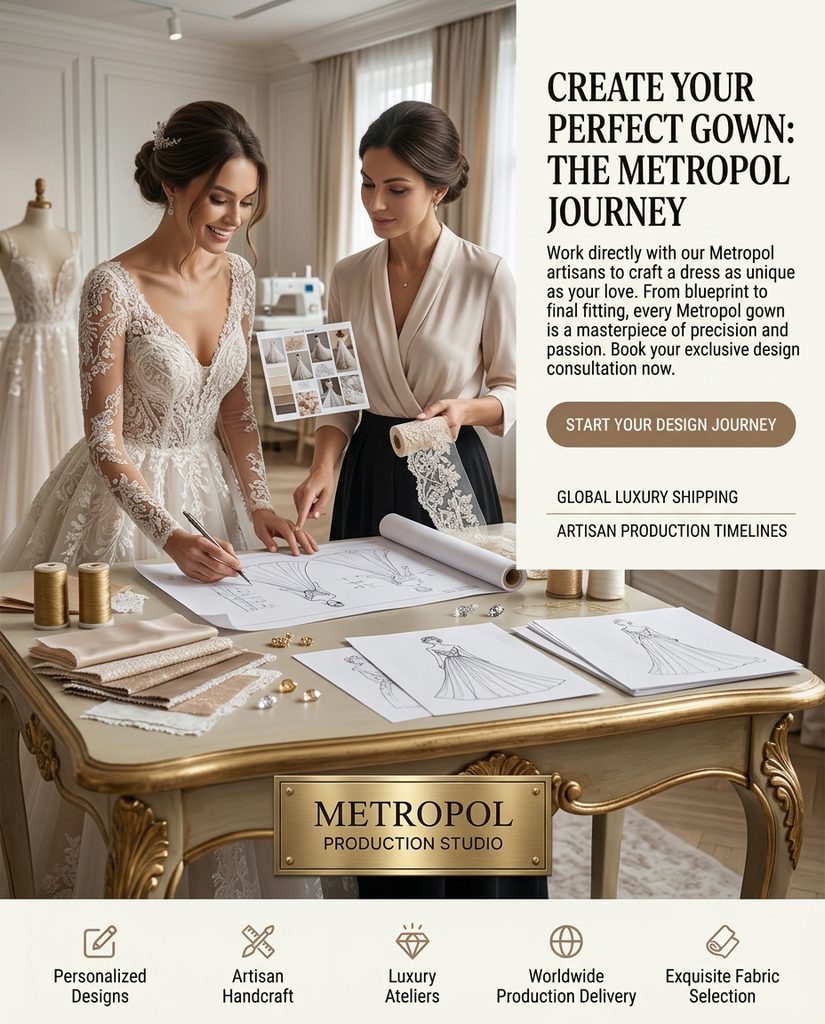
The “Sample-to-Order” Model
Imagine a bridal boutique with 60 showroom gowns.
Instead of keeping every possible size, color and variation in stock, the store uses those gowns primarily as selling tools.
The bride tries on a sample.
She selects:
- silhouette,
- neckline,
- sleeve configuration,
- train,
- lace,
- fabric,
- color,
- embellishment,
- and sizing/measurement specifications.
The boutique then submits a production order.
The manufacturer produces the gown according to the agreed specification.
This turns the showroom into something more valuable than a warehouse.
It becomes a decision-making environment.
The sample does the selling.
The factory does the production.
The boutique manages the relationship.
That separation is one of the most useful concepts for a growing bridal business.
What US Bridal Boutiques Should Actually Buy From a Manufacturer
A sophisticated purchasing manager should not evaluate a manufacturer by catalog size alone.
A catalog with 2,000 dresses can be less useful than a manufacturer capable of producing 100 commercially relevant designs consistently.
The better question is:
What operational capabilities sit behind the catalog?
A serious supplier evaluation should cover at least eight areas.
1. Design development
Can the manufacturer reproduce an existing design accurately?
Can it make controlled modifications?
Can it work from:
- reference photographs,
- sketches,
- measurement sheets,
- fabric specifications,
- lace references,
- or technical instructions?
2. Pattern development
Bridal fit depends heavily on pattern quality.
A beautiful fabric cannot compensate for a poorly engineered bodice.
Ask how the manufacturer handles:
- grading,
- bust proportion,
- waist placement,
- hip proportion,
- neckline balance,
- sleeve movement,
- corsetry,
- train weight,
- and structural support.
3. Materials
“Premium fabric” is not a sufficiently useful purchasing specification.
A buyer needs to know what the material actually is.
For example:
- polyester satin,
- silk satin,
- mikado,
- crepe,
- tulle,
- organza,
- lace,
- beaded lace,
- embroidered tulle,
- or blended construction.
The difference affects:
- drape,
- weight,
- movement,
- wrinkle behavior,
- photography,
- steaming,
- shipping,
- alterations,
- and perceived retail value.
4. Embellishment
A bridal gown can contain thousands of individual visual decisions.
Ask how the manufacturer manages:
- lace placement,
- appliqué positioning,
- bead density,
- sequins,
- crystals,
- embroidery,
- pearls,
- dimensional flowers,
- and hand finishing.
5. Quality control
Quality control should not mean checking the gown only after it is finished.
A better process includes checkpoints.
6. Production timing
A supplier should be able to explain:
- sample lead time,
- standard production lead time,
- rush possibilities,
- shipping time,
- holiday closures,
- approval stages,
- and what happens when a deadline changes.
7. Communication
For international production, communication is part of the product.
A boutique needs predictable communication around:
- order confirmation,
- measurement clarification,
- material availability,
- production progress,
- photographs,
- dispatch,
- tracking,
- and exceptions.
8. Commercial flexibility
Finally, the buyer should understand:
- minimum order quantities,
- sample policies,
- wholesale pricing,
- customization charges,
- rush fees,
- payment terms,
- packaging,
- private labeling,
- and repeat-order procedures.
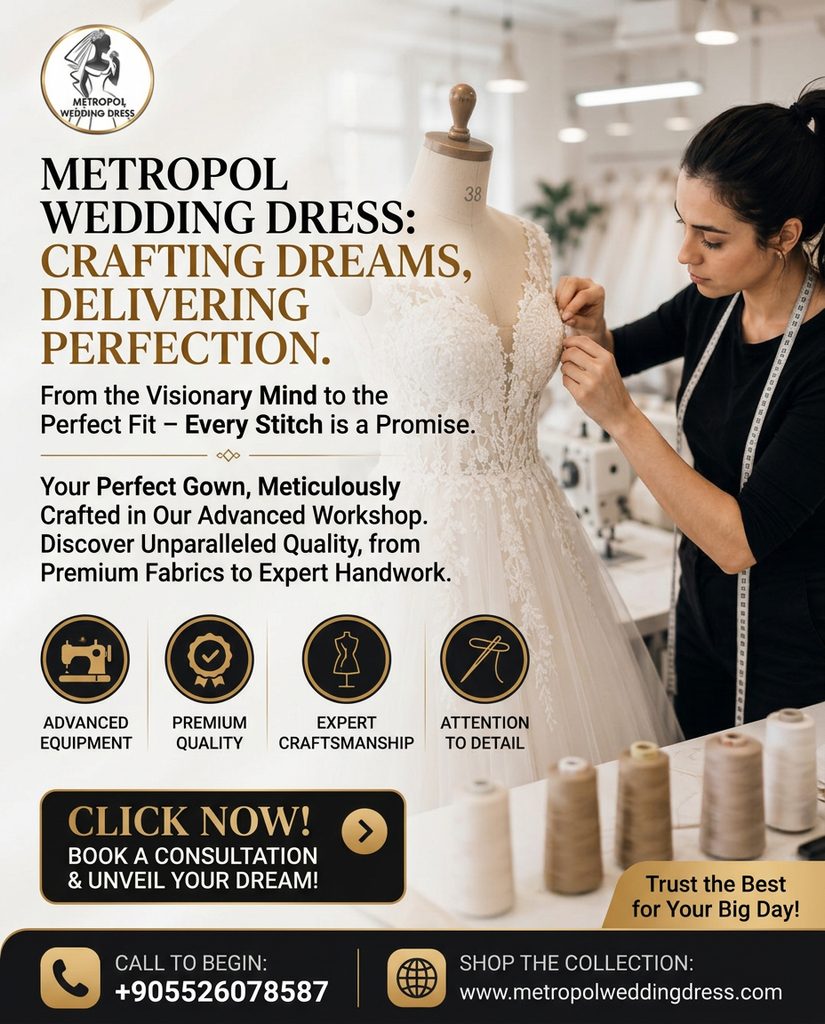
Metropol Wedding Dress: What the Published Company Information Shows
Metropol Wedding Dress identifies itself as a Turkish wholesale wedding dress manufacturer based in İzmir and states that it supplies boutiques and retailers worldwide while offering custom-made wedding dress production.
Its published company information describes a history in bridal production extending back to the 2000s, with the company also stating that it developed international business after receiving demand from overseas retailers. It reports an average production level of around 100 wedding dresses per month and describes a production workshop in Turkey.
Its production description is particularly relevant to boutiques ordering customized gowns.
The company explains a workflow in which the customer’s requested design and reference information are reviewed, a pattern is prepared, the initial construction is completed, photographs are sent for approval, and lace work follows after approval.
That staged concept is important.
A manufacturer that simply says:
“Send us the picture. We make it.”
is not providing enough operational information.
A better manufacturing relationship creates checkpoints.
The boutique should know what has been approved before the next irreversible production stage begins.
The Bridal Manufacturing Workflow: From Screenshot to Finished Gown
One of the biggest misconceptions about custom bridal production is that customization means improvisation.
Professional production should be the opposite.
It should create more structure, not less.
A practical workflow looks like this:
Stage 1 — Design Brief
The boutique provides:
- reference images,
- desired silhouette,
- fabric preferences,
- neckline,
- sleeve,
- train,
- lace,
- embellishment,
- color,
- measurements,
- and deadline.
The manufacturer reviews whether the requested design is technically achievable.
Stage 2 — Technical Interpretation
The design is translated into production decisions.
This is where the manufacturer determines:
- pattern architecture,
- internal support,
- seam construction,
- fabric requirements,
- lace positioning,
- closures,
- boning,
- cups,
- lining,
- and finishing.
Stage 3 — Pattern Development
The pattern becomes the technical foundation of the gown.
This stage is often invisible to the bride.
It should not be invisible to the buyer.
A purchasing manager should understand that pattern work affects:
- fit,
- production consistency,
- alteration requirements,
- comfort,
- movement,
- and visual proportion.
Stage 4 — Base Construction
The structural elements are assembled.
Depending on the design, this can include:
- bodice,
- corset structure,
- lining,
- skirt,
- sleeves,
- train,
- closures,
- and internal support.
Stage 5 — Approval Checkpoint
A photograph or sample-stage approval can be used to confirm that the construction is progressing according to the agreed design.
This is particularly valuable for international orders.
Stage 6 — Lace and Embellishment
Once the foundation is approved, decorative work can be applied.
This is where visual precision becomes critical.
A lace motif can look completely different when moved only a few inches.
Stage 7 — Final Construction
The gown receives:
- finishing,
- closures,
- hems,
- pressing,
- inspection,
- packaging,
- and dispatch preparation.
Stage 8 — Final Quality Review
The finished gown should be checked against the order.
The goal is not simply:
“Does it look beautiful?”
The goal is:
“Does it match what was ordered?”
The Most Important Purchasing Question: What Happens Before Cutting?
If there is one question a bridal buyer should ask a new manufacturer, it is this:
What information do you require and what do you confirm before fabric is cut?
The answer reveals how mature the supplier’s production system is.
Before cutting, the manufacturer should ideally have a clear record of:
- style reference,
- measurements,
- size,
- fabric,
- color,
- neckline,
- sleeve,
- train,
- embellishment,
- lining,
- closure,
- special modifications,
- delivery deadline,
- and commercial terms.
If any of these remain ambiguous, the order should not move forward casually.
This is especially important when working internationally.
Why Measurements Are a Manufacturing Specification, Not a Customer Detail
In bridal retail, measurements are often treated as something the seamstress handles later.
For made-to-order production, that mindset can create unnecessary problems.
Measurements become part of the manufacturing specification.
A boutique should therefore establish a repeatable measurement protocol.
The exact measurement list will vary by design, but may include:
- bust,
- underbust,
- waist,
- high hip,
- full hip,
- shoulder-to-waist,
- hollow-to-waist,
- hollow-to-hem,
- waist-to-floor,
- shoulder width,
- armhole,
- biceps,
- sleeve length,
- and other design-specific dimensions.
For structured gowns, additional information about posture and body proportion may be important.
The critical point is consistency.
If three different sales consultants take measurements three different ways, the manufacturer is receiving three different technical languages.
A boutique should therefore create an internal measurement SOP.
A Boutique Measurement SOP Should Include
Before measuring
- Confirm whether the bride is wearing bridal undergarments.
- Confirm footwear or intended heel height where relevant.
- Confirm whether the gown will include shapewear.
- Identify asymmetry or posture considerations.
- Review the gown’s construction.
During measuring
- Use the same measuring tools.
- Record measurements in one unit system.
- Double-check critical dimensions.
- Avoid estimating.
- Record unusual body proportions.
Before submitting
- Have a second person verify the measurement sheet.
- Compare against the selected sample.
- Confirm desired hem length.
- Confirm train preference.
- Confirm cup/lining requirements.
- Confirm any modifications.
This may appear bureaucratic.
It is actually a margin-protection exercise.
Made-to-Order vs. Traditional Wholesale
The difference becomes clearer when viewed from the buyer’s desk.
| Factor | Traditional Stock Wholesale | Made-to-Order |
|---|---|---|
| Initial inventory | Higher | Potentially lower |
| Showroom samples | Important | Still important |
| Customer customization | Usually limited | Greater |
| Cash tied in finished inventory | Higher | Potentially lower |
| Fit flexibility | Depends on stock sizes | Higher |
| Design exclusivity | Depends on agreement | Can be negotiated |
| Production triggered by sale | No | Yes |
| Forecasting requirement | High | Moderate |
| Communication requirement | Moderate | High |
| Operational discipline | Important | Critical |
Neither model is automatically superior.
The right model depends on the boutique.
A high-volume store that needs immediate pickup may need ready inventory.
A boutique specializing in personalized bridal experiences may benefit more from made-to-order production.
Many successful businesses will use both.
The Hidden Advantage: More Design Without More Physical Inventory
Suppose a boutique wants to offer:
- three necklines,
- four sleeves,
- three skirt silhouettes,
- two train lengths,
- several lace options,
- and multiple colors.
If every combination must exist physically in every size, the inventory requirement becomes unreasonable.
A made-to-order system changes the equation.
The boutique can display carefully chosen samples representing the design architecture.
The manufacturer provides the production flexibility behind them.
The result can be a broader perceived assortment without maintaining every possible SKU.
This is particularly valuable for boutiques competing on curation rather than volume.
What Makes a Bridal Sample Worth Buying?
A sample should answer one question:
Will this gown help a bride make a buying decision?
A strong sample demonstrates:
- silhouette,
- fit,
- construction,
- fabric behavior,
- lace quality,
- finishing,
- train,
- neckline,
- and overall visual identity.
A weak sample may look impressive in a catalog but fail during an appointment.
For example, a dress photographed beautifully online may have:
- excessive stiffness,
- uncomfortable structure,
- weak bust support,
- poor movement,
- difficult steaming,
- or a silhouette that works only on a particular model.
The showroom is where these problems become obvious.
That is why sample strategy matters more than catalog size.
Build a Sample Portfolio, Not a Random Collection
A boutique can think of its showroom as a portfolio of customer problems.
Consider a collection organized by buying motivation:
The Classic Bride
- A-line
- structured bodice
- traditional train
- lace
The Modern Minimalist
- clean crepe
- architectural neckline
- minimal embellishment
The Romantic Bride
- floral lace
- soft tulle
- dimensional appliqué
The Fashion Bride
- sculptural silhouette
- dramatic train
- contemporary construction
The Modest Bride
- higher neckline
- sleeves
- greater coverage
- controlled transparency
The Curve Bride
- engineered support
- proportion-aware construction
- appropriate sample representation
This is merchandising logic rather than simply “having lots of dresses.”

The US Boutique Advantage: Local Selling, International Production
An international manufacturing relationship does not mean the boutique should behave like an importer first and retailer second.
The customer should experience the boutique.
The bride should not need to understand the factory’s location.
She needs:
- excellent service,
- honest timing,
- confident fitting,
- beautiful samples,
- reliable communication,
- and a gown that arrives as promised.
The international supply chain should operate behind the experience.
That is why supplier communication matters so much.
Turkey as a Bridal Manufacturing Base
Turkey occupies an interesting position in bridal manufacturing because it combines proximity to European textile supply chains with a long-established garment and textile production ecosystem.
For a US buyer, however, geography alone is not a reason to choose a Turkish manufacturer.
The supplier still needs to prove:
- production capability,
- quality,
- consistency,
- export competence,
- communication,
- lead-time reliability,
- documentation,
- and commercial transparency.
The country of manufacture is not the product.
The manufacturing system is.
The US Import Question: What the Boutique Must Understand
A US bridal boutique importing wedding gowns should not treat customs and labeling as an afterthought.
US textile and apparel imports are subject to specific requirements.
The U.S. Customs and Border Protection guidance states that textile and apparel products require attention to labeling, country of origin, care instructions, and applicable flammability requirements. CBP also notes that textile origin rules can be complicated depending on where materials are processed and where the garment is manufactured.
The Federal Trade Commission’s Textile Fiber Rule requires covered textile products sold in the United States to disclose fiber information, the responsible manufacturer/marketer identification, and country of manufacture or processing as applicable.
Care labeling is separately governed by the FTC’s Care Labeling Rule. Manufacturers and importers covered by the rule must provide care instructions, with labels attached so the information can be found by consumers.
This means a boutique should discuss labeling before production, not after the shipment arrives.
A Practical US Import Checklist
Before the first commercial shipment, confirm:
- Who is the importer of record?
- Who handles customs entry?
- What is the product classification?
- What is the country-of-origin marking?
- What fiber-content information is required?
- Are care instructions compliant?
- Is the manufacturer identification handled correctly?
- What documentation accompanies the shipment?
- Who prepares the commercial invoice?
- Who provides packing information?
- Who pays duties, taxes and brokerage?
- What shipping terms are being used?
- Who is responsible if customs requests additional information?
For legal and customs classification decisions, a US importer should verify the current requirements directly with the appropriate authorities or a qualified customs professional. Regulations and classifications can change.
Don’t Confuse Shipping Speed With Production Speed
This distinction can save a bridal buyer from a serious mistake.
A supplier may say:
“We can ship in four days.”
That does not necessarily mean:
“We can manufacture your gown in four days.”
Shipping time and production lead time are different variables.
Metropol’s published FAQ, for example, describes different delivery timing depending on order size and states that shipping to the USA can be expedited under certain circumstances.
The buyer should therefore request two separate numbers:
Production lead time:
How long does the factory need to make the gown?
Transit time:
How long does the carrier normally need to deliver it?
Then add:
- approval time,
- measurement clarification,
- weekends,
- holidays,
- customs,
- and contingency.
The final customer promise should be based on the entire chain.
The Bridal Deadline Equation
A practical planning formula is:
Wedding date
minus
final fitting window
minus
alteration buffer
minus
transit time
minus
production lead time
minus
approval/communication buffer
=
latest safe order date
The key word is safe.
A bride’s wedding date is not a manufacturing target.
It is a fixed event.
The factory should be given enough time to produce the gown before the boutique needs it.
Why “Fastest Supplier” Is Not Always the Best Supplier
Purchasing managers sometimes over-prioritize speed.
But a fast manufacturer with inconsistent quality can create a slower business.
Consider the chain:
- Gown arrives.
- Boutique discovers construction problem.
- Bride loses confidence.
- Alteration becomes complicated.
- Staff spends additional hours fixing the issue.
- Manufacturer and boutique exchange messages.
- Replacement or correction becomes necessary.
- Wedding deadline approaches.
The original “fast” production cycle has now created a much slower customer experience.
A better metric is:
Reliable lead time + acceptable quality + predictable communication.
How to Evaluate Cost Properly
Wholesale price is only one part of landed cost.
A buyer should calculate:
Product cost
customization cost
packaging
international freight
insurance where applicable
brokerage
duties/taxes where applicable
payment fees
inspection or quality-control cost
expected alteration cost
=
real landed cost
The last item is frequently ignored.
Yet alterations can materially affect profitability.
A gown that appears inexpensive at wholesale may become less attractive if every order requires substantial corrective work.
Gross Margin Is Not the Same as Gross Profit
A boutique may calculate:
Retail price − wholesale price = gross margin
That is incomplete.
A more useful model considers the operational cost of selling the gown.
For example:
Retail price
− landed product cost
− payment processing
− expected alteration subsidy
− sales commission
− packaging
− customer service cost
− sample amortization
=
contribution profit
This is the number a purchasing manager should care about.
Example: A Simple Boutique Economics Model
Consider a hypothetical gown.
Retail selling price: $2,800
Landed production and import cost: $850
Payment and transaction costs: $85
Average boutique alteration support: $180
Sales commission: $140
Allocated selling/handling cost: $100
Estimated contribution:
$2,800 − $850 − $85 − $180 − $140 − $100 = $1,445
The example is illustrative, not a quote or guaranteed margin.
The point is methodological.
A purchasing manager should compare suppliers based on contribution economics, not only factory price.
The Real Cost of Excess Inventory
Inventory creates several forms of risk.
Capital risk
Money is invested before the sale occurs.
Fashion risk
A silhouette can lose relevance.
Size risk
The store may own the wrong size distribution.
Damage risk
Samples can experience:
- makeup marks,
- floor wear,
- snags,
- missing embellishments,
- broken closures,
- or steaming damage.
Space risk
Physical inventory occupies valuable retail space.
Discount risk
Slow-moving gowns may eventually require markdowns.
Made-to-order production can reduce some of these risks, although it introduces other risks such as lead-time management and international logistics.
The correct question is not:
“Does made-to-order eliminate inventory risk?”
It does not.
The better question is:
“Can made-to-order move some inventory risk from the retailer’s balance sheet into a controlled production process?”
Often, that is the more commercially useful question.
A Purchasing Manager’s Supplier Scorecard
Before signing a long-term relationship, score the manufacturer.
| Category | Weight |
|---|---|
| Construction quality | 20% |
| Fit/pattern capability | 15% |
| Communication | 10% |
| Production reliability | 15% |
| Material transparency | 10% |
| Customization capability | 10% |
| Shipping/export competence | 10% |
| Commercial terms | 5% |
| Documentation/label support | 5% |
Then score each supplier from 1–5.
The exact weighting can be changed for your business.
The important idea is to stop choosing suppliers based on photographs alone.
The 5 Questions That Reveal Manufacturing Maturity
If you only have ten minutes with a prospective supplier, ask:
Question 1
How do you confirm a custom order before production starts?
Question 2
What happens if the measurement information is unclear?
Question 3
At what stages can the boutique approve production?
Question 4
How do you handle a quality issue discovered before shipment?
Question 5
What information do you provide for US import and labeling requirements?
The answers will tell you much more than a catalog.
The “Photo-Only Supplier” Warning Sign
A bridal manufacturer should be able to discuss production in technical terms.
Be cautious if the conversation focuses almost entirely on:
- Instagram photos,
- celebrity-style images,
- vague promises,
- “luxury quality,”
- extremely low prices,
- or unrealistic deadlines.
A professional buyer should be able to move the conversation from:
“Look at this beautiful dress.”
to:
“Here is how we will produce this dress.”
That transition is where supplier credibility begins.
Materials: The Fabric Can Change the Business Case
Two gowns can have visually similar photographs and dramatically different production characteristics.
Consider satin.
One satin may:
- photograph with a strong sheen,
- show wrinkles,
- reveal construction imperfections,
- hold structure strongly,
- and require careful steaming.
Another may:
- be softer,
- drape more fluidly,
- photograph differently,
- and behave differently during shipping.
The boutique therefore needs material specifications, not just color names.
Lace Is Not One Product
“Lace wedding dress” is almost meaningless as a technical description.
Lace can differ by:
- fiber composition,
- motif scale,
- embroidery density,
- backing,
- stretch,
- transparency,
- edge construction,
- beadwork,
- sequins,
- appliqué structure,
- and hand-finishing.
Metropol’s published materials emphasize lace, tulle, fabrics and embellishment options as part of its bridal production offering.
For a boutique, the important question is not merely:
“Do you have lace?”
It is:
“Can we select and consistently reproduce the lace treatment used in our approved sample?”
That is a much better purchasing question.
Why Fit Is a Competitive Advantage
Bridal boutiques often compete on:
- designer selection,
- atmosphere,
- customer service,
- appointment experience,
- exclusivity,
- and styling.
Fit is frequently underestimated.
Yet fit influences almost every stage of the bride’s experience.
A well-fitting gown:
- photographs better,
- requires less corrective alteration,
- feels more comfortable,
- creates more confidence,
- and makes the bride more likely to recommend the boutique.
Metropol’s made-to-measure process specifically describes adapting patterns around actual measurements rather than relying exclusively on standard sizing.
That approach can be particularly useful when a boutique wants to serve customers whose proportions do not align neatly with standard sample sizes.
Plus-Size and Inclusive Bridal Selling
Inclusive bridal retail is not solved simply by adding larger numbers to a size chart.
Construction must also support the body.
Important considerations may include:
- bust support,
- corsetry,
- strap placement,
- waist reinforcement,
- sleeve fit,
- armhole comfort,
- lining,
- seam strength,
- skirt weight,
- and proportion.
A boutique should ask its manufacturer:
“How does your pattern system change as size increases?”
That question is more informative than:
“Do you make plus sizes?”
The Same Principle Applies to Petite Brides
Petite bridal clients may require different proportional adjustments.
A gown can technically fit the measurements while still looking visually wrong if:
- the bodice is too long,
- the waist is misplaced,
- the neckline is too deep,
- the skirt volume overwhelms the frame,
- or the train dominates the bride.
Made-to-measure production can provide a better starting point than buying a standard gown and attempting to correct every proportional issue through alterations.
When Made-to-Order Is a Bad Idea
A credible manufacturer should also be honest about where the model does not work well.
Made-to-order may be less appropriate when:
- the bride needs a gown immediately,
- the boutique has a very short lead-time promise,
- customs delays could threaten the wedding date,
- the customer refuses measurement protocols,
- the design is highly experimental,
- the material is unavailable,
- or the boutique has not established a reliable order-management process.
The solution is not to force every customer into made-to-order.
Use the model where it creates value.
The Best Hybrid Model for Many Boutiques
A sophisticated bridal boutique can operate three layers:
Layer One — Core Samples
A carefully selected showroom collection.
Layer Two — Made-to-Order
The majority of customer gowns produced after confirmed sales.
Layer Three — Strategic Ready Stock
A limited number of urgent or best-selling gowns held locally.
This hybrid system provides:
- customer choice,
- operational flexibility,
- faster solutions for urgent clients,
- and lower exposure to unnecessary inventory.
What Should Be Negotiated With the Manufacturer?
Do not negotiate only price.
Negotiate the operating system.
Discuss:
- sample pricing,
- sample ownership,
- wholesale pricing,
- repeat-order pricing,
- customization fees,
- minimum order quantity,
- payment terms,
- production lead time,
- rush policy,
- quality-control process,
- shipping options,
- packaging,
- labels,
- private labeling,
- photography,
- catalog support,
- replacement policy,
- defect handling,
- and communication channels.
A $50 reduction in gown cost may be less valuable than a better defect-resolution process.
Private Label: When the Boutique Wants More Than a Supplier
Private label changes the relationship.
Instead of selling another manufacturer’s brand, the boutique can build its own identity around a collection manufactured by a production partner.
The model can include:
- boutique branding,
- custom labels,
- packaging,
- selected designs,
- exclusive modifications,
- collection development,
- and coordinated marketing assets.
Metropol describes wholesale and custom production for retailers, while other bridal manufacturers also position private-label manufacturing as a way for boutiques to build their own collections without operating their own factory.
For a growing boutique, private label can create an important distinction:
The manufacturer becomes invisible to the final customer.
The boutique becomes the brand.
But Private Label Requires More Discipline
Private label sounds simple:
“Put my logo on the dress.”
Commercially, it is much more than that.
The boutique should define:
- who owns the design,
- whether the design is exclusive,
- geographic exclusivity,
- duration of exclusivity,
- labeling responsibility,
- packaging,
- product photography,
- marketing rights,
- sample ownership,
- repeat production,
- and what happens if the relationship ends.
These terms should be documented.
Never rely on assumptions.
A Boutique’s First Private-Label Collection Should Be Small
One of the easiest mistakes is launching too many styles.
A better first collection might focus on a coherent commercial identity.
For example:
12–20 core designs
covering:
- A-line,
- fit-and-flare,
- ballgown,
- minimalist,
- romantic lace,
- modern crepe,
- statement gown,
- modest option,
- and curve-friendly construction.
Then measure performance.
Which designs generate:
- appointments,
- try-ons,
- purchase decisions,
- customization requests,
- repeat orders,
- and referrals?
The next collection should be built from evidence.
What a Good Manufacturer Should Tell You About a Gown
A professional product record should answer:
What is it?
How is it made?
What can be changed?
What cannot be changed?
What materials are used?
What measurements are required?
How long does production take?
How much does it cost?
How will it be shipped?
How is it labeled?
What happens if there is a problem?
If the supplier cannot answer these questions clearly, the purchasing relationship is not yet mature.
A Realistic Boutique Scenario
Imagine a bridal store in Texas.
The owner has strong demand for:
- clean A-line gowns,
- modest sleeves,
- detachable trains,
- and custom lace.
The store currently buys finished wholesale dresses.
The owner notices three problems:
- too much money is tied up in slow-moving samples;
- customers frequently request modifications;
- alterations are becoming expensive.
The owner decides to test made-to-order manufacturing.
Rather than replacing the entire collection, she selects eight strong samples.
For each:
- the fit is tested,
- the fabric is evaluated,
- modifications are documented,
- pricing is calculated,
- and the production process is tested.
For three months, the boutique measures:
- number of appointments,
- sample conversion,
- average order value,
- customization requests,
- alteration costs,
- delivery reliability,
- and customer satisfaction.
Only after the pilot works does the store expand.
That is how a purchasing manager should introduce a new supply model.
Not by changing everything.
By testing the system.
The Pilot Order Strategy
A first order should answer questions.
It should not merely generate inventory.
Consider testing:
One classic gown
Tests basic construction.
One lace-heavy gown
Tests material and embellishment quality.
One structured gown
Tests pattern and internal support.
One customized gown
Tests communication and modification accuracy.
One made-to-measure order
Tests measurement execution.
One urgent order
Tests realistic rush capability.
This is far more informative than ordering six visually similar gowns.
Your First 90 Days With a New Manufacturer
Days 1–15: Qualification
Review:
- company history,
- production location,
- sample quality,
- communication,
- pricing,
- lead times,
- customization capability,
- export documentation,
- and references where available.
Days 16–30: Sample Testing
Order a small number of representative samples.
Inspect:
- seams,
- lining,
- structure,
- lace,
- closures,
- hems,
- train,
- finishing,
- and overall fit.
Days 31–60: Pilot Orders
Submit real customer specifications.
Track:
- production timing,
- communication,
- modifications,
- packaging,
- shipping,
- and final quality.
Days 61–90: Commercial Review
Calculate:
- landed cost,
- alteration cost,
- customer satisfaction,
- defect rate,
- on-time percentage,
- gross profit,
- and staff workload.
Then decide whether to scale.
Quality Control: Use a “Before Shipping” Checklist
A finished gown should be checked against the original order.
Design
- Correct silhouette?
- Correct neckline?
- Correct sleeve?
- Correct train?
- Correct lace placement?
Measurements
- Bust?
- Waist?
- Hip?
- Length?
- Sleeve?
- Design-specific dimensions?
Construction
- Seams secure?
- Lining complete?
- Closures functional?
- Boning/support correctly installed?
- Hem clean?
Decoration
- Lace secure?
- Appliqués properly attached?
- Beading secure?
- Missing embellishments?
- Symmetry acceptable?
Presentation
- Pressed?
- Clean?
- Correctly packaged?
- Correct labeling/documentation?
A five-minute checklist can prevent hours of later confusion.
Common Mistake: Comparing Factory Prices Without Comparing Specifications
Supplier A:
$600
Supplier B:
$750
Supplier C:
$900
At first glance, A appears cheapest.
But perhaps:
Supplier A uses a lighter fabric, less lining, fewer embellishments, simpler construction and fewer quality checkpoints.
Supplier C includes higher-grade materials, more labor and stronger internal construction.
The correct comparison is:
price per agreed specification, not price per photograph.
Common Mistake: Ordering From a Photograph
A photograph is not a technical specification.
Two factories can produce a gown that looks similar in a photo but differs in:
- fabric weight,
- internal support,
- lining,
- boning,
- lace quality,
- seam construction,
- finishing,
- and fit.
Whenever possible, evaluate physical samples before making significant purchasing decisions.
Common Mistake: Treating Every Modification as Free
Customization has a cost.
A small change may require:
- new pattern work,
- extra fabric,
- additional labor,
- new lace layout,
- new construction,
- or additional quality control.
The boutique should know in advance which modifications are:
included
versus
charged separately.
That prevents margin surprises.
Common Mistake: Promising the Bride Before Confirming the Factory Date
This is one of the most dangerous operational mistakes.
The boutique tells the bride:
“It will definitely be here in eight weeks.”
Then it asks the manufacturer.
The manufacturer says:
“We can probably do eight weeks.”
“Probably” is not a customer promise.
A better workflow is:
- Customer selects gown.
- Boutique confirms all specifications.
- Manufacturer confirms production slot.
- Boutique calculates shipping and buffer.
- Customer receives the delivery estimate.
Common Mistake: Ignoring Time Zones
International production means the buyer and manufacturer may not operate on the same business day.
This matters when an approval is required.
If the factory needs clarification at 9 a.m. local time and the boutique responds 12 hours later, a single question can consume a full production day.
The solution is simple:
Create a communication protocol.
For example:
- one official email thread per order,
- one order number,
- one measurement sheet,
- one approval document,
- one responsible boutique employee.
Common Mistake: Using WhatsApp as the Entire ERP System
WhatsApp can be useful for quick communication.
It should not necessarily become the only record of an order.
Important information should also exist in structured form.
For each order, maintain:
Order ID
Customer
Style
Measurements
Modifications
Material
Color
Deadline
Price
Payment status
Approval status
Shipping information
Final QC status
This creates an audit trail.
What Metropol’s Production Information Suggests
Metropol’s published production information describes a process involving requested designs, pattern creation, an initial sewn stage, photographic approval, and subsequent lace work.
Its FAQ also states that orders of different sizes can have different delivery timelines and that the company offers international shipping, including expedited options for certain destinations.
For a US boutique, these published claims should be treated as a starting point for commercial discussion.
The buyer should confirm the current:
- lead time,
- shipping service,
- rush policy,
- payment terms,
- labeling arrangement,
- and production capacity
for the specific order.
That is good procurement practice with any international supplier.
How to Ask for a Wholesale Quote
Do not send:
“How much for this dress?”
Send a complete inquiry.
A useful RFQ should include:
Style:
Reference image or style number.
Quantity:
Sample / 1 piece / 5 pieces / collection.
Size:
Standard or made-to-measure.
Material:
Preferred fabric or acceptable alternatives.
Color:
Ivory / white / custom.
Modifications:
Sleeve, neckline, train, lace, etc.
Label:
Manufacturer / boutique / private label.
Destination:
US city/state.
Required date:
Date the boutique needs the gown physically available.
Shipping:
Standard / expedited.
Commercial questions:
MOQ, payment, customization fees, shipping and documentation.
This allows the supplier to quote something meaningful.
A Sample RFQ Structure for US Buyers
Subject: US Bridal Boutique – Made-to-Order Wedding Dress Inquiry
We are a bridal boutique in the United States evaluating a long-term manufacturing partner for made-to-order wedding gowns.
We are interested in:
- wholesale samples,
- made-to-order customer gowns,
- made-to-measure production,
- selected design modifications,
- and potentially private-label development.
For the initial evaluation, we would like information regarding:
- Sample pricing
- Wholesale pricing
- MOQ
- Standard production lead time
- Rush production options
- Shipping options to the United States
- Customization charges
- Fabric and lace options
- Measurement requirements
- Quality-control process
- Labeling/private-label options
- Payment terms
- Defect/replacement policy
- Catalog and photography availability
Please also advise which information you require from us before production begins.
This format produces a much better supplier conversation than a simple request for a price list.
The Boutique’s Internal Decision Matrix
Before placing an order, ask:
| Question | Yes/No |
|---|---|
| Has the sample been physically evaluated? | |
| Is the fabric specification documented? | |
| Are all modifications documented? | |
| Are measurements verified? | |
| Is the production deadline confirmed? | |
| Is shipping time understood? | |
| Is customs responsibility clear? | |
| Are labels compliant for the intended US sale? | |
| Is the final price documented? | |
| Are payment terms clear? | |
| Is there a written process for defects? | |
| Does the boutique know who owns the design? |
If several answers are “no,” the order is not ready.
A Better Way to Think About Supplier Risk
Supplier risk can be divided into four categories.
Product Risk
The gown is not what the buyer expected.
Timing Risk
The gown arrives too late.
Financial Risk
The true landed cost is higher than expected.
Relationship Risk
Communication breaks down when something goes wrong.
A strong manufacturer reduces all four.
A beautiful catalog only addresses the first one—and not necessarily even that.
Information You Should Request Before Becoming a Regular Buyer
Ask for:
- company profile,
- production capabilities,
- sample policy,
- wholesale catalog,
- price list,
- measurement guide,
- fabric information,
- lead-time policy,
- shipping options,
- payment terms,
- quality policy,
- labeling capabilities,
- private-label capabilities,
- and current production capacity.
You may also ask whether the supplier can provide references or examples of comparable wholesale relationships where appropriate.
What EEAT Means for a Manufacturer Landing Page
A manufacturer landing page should not simply say:
“We make the best wedding dresses.”
That statement contains almost no useful information.
A credible page should demonstrate expertise through specifics.
For example:
- where production takes place,
- how long the company has operated,
- what production stages exist,
- what can be customized,
- what materials are available,
- how measurements are handled,
- how quality is checked,
- how international orders are managed,
- and what the buyer should expect.
That is more persuasive than exaggerated adjectives.
Metropol publicly identifies its production base in Turkey and provides information about its company history, production workflow, custom manufacturing and international wholesale service.
Information Gain: What a Better Manufacturer Page Should Answer
A buyer searching:
“made-to-order wedding dress manufacturer USA bridal boutiques”
is unlikely to need another generic paragraph about how beautiful weddings are.
They need answers to practical questions.
Can I order one gown?
Can I order a small collection?
Can you work from my design?
Can I change the neckline?
Can I adjust the train?
Can you make the gown to measurements?
How do you handle samples?
How long does production take?
How long does shipping take?
What happens if there is a problem?
Can I use my own label?
Can you support a growing boutique?
These are commercial search questions.
A high-quality landing page should answer them directly.
The Semantic Topic Cluster Around Made-to-Order Bridal Manufacturing
A strong content strategy should naturally cover the wider entity network around the primary topic.
That includes:
Wedding dress manufacturer
Bridal gown manufacturer
Made-to-order wedding dresses
Made-to-measure bridal gowns
Wholesale wedding dresses
Private label wedding dresses
OEM wedding dress manufacturer
ODM bridal manufacturer
Custom bridal gowns
Bridal boutique supplier
Wedding dress factory
Bridal manufacturer Turkey
Wedding dress exporter
Custom wedding dress production
Bridal gown sourcing
Bridal inventory management
US bridal boutique wholesale
These topics should support one another without turning the page into a keyword list.
The Buyer Journey
A US boutique typically moves through several mental stages.
Stage 1 — Discovery
“I need a new bridal supplier.”
Stage 2 — Comparison
“Which manufacturer is actually reliable?”
Stage 3 — Qualification
“Can they make what I sell?”
Stage 4 — Risk assessment
“What happens if something goes wrong?”
Stage 5 — Trial
“Let’s order samples.”
Stage 6 — Validation
“Can they produce real customer orders?”
Stage 7 — Scaling
“Can I increase volume without losing quality?”
Stage 8 — Brand development
“Can they manufacture my own collection?”
A landing page that addresses only Stage 1 is incomplete.
The best page supports the entire journey.
The Manufacturer Should Become an Extension of the Boutique
The ideal relationship is not:
Buyer → factory
It is:
Boutique → production partner
The difference is strategic.
A transactional factory waits for orders.
A production partner understands:
- the boutique’s customer,
- preferred silhouettes,
- quality expectations,
- delivery calendar,
- target retail positioning,
- and growth plans.
That relationship takes time to develop.
It begins with a good first order.
What “Reliable” Actually Means
Reliable does not mean:
“Nothing ever goes wrong.”
Manufacturing is complex.
Reliable means:
- problems are identified quickly,
- communication is transparent,
- corrective action is defined,
- deadlines are realistic,
- specifications are documented,
- and the supplier does not disappear when a problem occurs.
That is the standard purchasing managers should look for.
The Role of Technology in Traditional Bridal Manufacturing
Technology does not replace craftsmanship.
It can make craftsmanship more manageable.
Useful tools include:
- digital measurement forms,
- shared order sheets,
- digital approvals,
- photo checkpoints,
- standardized style codes,
- inventory dashboards,
- customer order tracking,
- and production calendars.
The most effective model combines:
digital communication + structured production + human craftsmanship.
Why Photographic Approval Matters
For international production, photographs can reduce ambiguity.
A manufacturer can document:
- neckline construction,
- lace placement,
- bodice structure,
- train shape,
- sleeve construction,
- and other visible production stages.
This does not replace physical inspection.
But it can create a useful communication checkpoint.
Metropol’s published production workflow specifically describes sending a photograph after the initial mold/pattern construction stage before proceeding to lace work.
For a boutique buyer, this kind of staged confirmation is worth discussing.
A Practical Bridal Manufacturer Audit
Before committing significant volume, inspect the supplier against five pillars.
Pillar 1 — Product
Can they make the gown?
Pillar 2 — Process
Can they make it consistently?
Pillar 3 — People
Do skilled workers and technical staff support production?
Pillar 4 — Paperwork
Can they handle international commercial requirements?
Pillar 5 — Problem Solving
What happens when the order is not perfect?
The fifth pillar is often overlooked.
It should not be.
When the Gown Arrives: The Boutique Receiving Procedure
The receiving process should be standardized.
Step 1
Inspect the outer packaging before opening.
Step 2
Photograph any visible shipping damage.
Step 3
Open and inspect immediately.
Step 4
Compare the gown to the order record.
Step 5
Check:
- style,
- color,
- size/measurements,
- modifications,
- lace,
- embellishments,
- closures,
- train,
- lining,
- and finishing.
Step 6
Record discrepancies.
Step 7
Notify the manufacturer promptly if there is an issue.
Do not leave the gown unopened for three weeks.
The longer a discrepancy remains undocumented, the harder it becomes to determine what happened.
The Boutique’s “Red Flag” List
Be cautious when a manufacturer:
- refuses to provide basic company information,
- cannot explain production stages,
- avoids written specifications,
- offers dramatically unrealistic lead times,
- changes prices repeatedly without explanation,
- cannot clarify materials,
- refuses sample evaluation,
- insists on large orders immediately,
- avoids discussing defects,
- or cannot explain shipping responsibilities.
One red flag may not be decisive.
Several together are significant.
The “Green Flag” List
Positive indicators include:
- clear production workflow,
- sample availability,
- transparent specifications,
- experienced pattern-making,
- consistent communication,
- realistic timelines,
- documented approvals,
- flexible but controlled customization,
- clear commercial terms,
- and willingness to begin with a pilot.
A supplier that asks good questions about your requirements is often more valuable than one that immediately says “yes” to everything.
Why Saying “Yes” to Everything Can Be Dangerous
Suppose a boutique asks:
“Can you change the neckline, add sleeves, move the lace, change the fabric, shorten the train and make it in a completely different silhouette?”
A weak supplier says:
“Yes, no problem.”
A strong supplier may say:
“Yes, but these three changes require a new pattern, this material is unsuitable for that structure, and the train modification changes the production time.”
The second answer sounds less effortless.
It is actually more professional.
Build a Shared Vocabulary
Long-term supplier relationships become easier when both sides use the same terms.
Create standardized style terminology.
For example:
NL-01: Sweetheart neckline
NL-02: Straight neckline
SL-01: Off-shoulder sleeve
TR-01: Chapel train
TR-02: Cathedral train
EM-01: Light beading
EM-02: Heavy crystal application
The actual codes can be whatever the boutique chooses.
The principle is to eliminate ambiguity.
A Boutique Collection Is a Product System
The strongest bridal businesses do not merely sell individual dresses.
They sell a coherent aesthetic.
That means manufacturers should understand:
- brand positioning,
- customer demographic,
- price point,
- silhouettes,
- fabrics,
- level of embellishment,
- and desired exclusivity.
A manufacturer capable of producing individual custom gowns is useful.
A manufacturer capable of helping a boutique build a coherent collection is considerably more valuable.
From Wholesale Supplier to Strategic Manufacturing Partner
The relationship can evolve.
Phase 1
Buy existing samples.
Phase 2
Order made-to-order versions.
Phase 3
Request controlled modifications.
Phase 4
Develop exclusive variations.
Phase 5
Develop a capsule collection.
Phase 6
Launch private label.
Phase 7
Use sales data to develop future collections.
This is how manufacturing becomes part of the boutique’s competitive strategy.
Five Metrics to Track After Launch
Do not judge the supplier only by how the gowns look.
Track:
1. Sample Conversion Rate
How often does a sample appointment result in an order?
2. On-Time Delivery Rate
How often does the gown arrive within the agreed window?
3. First-Pass Quality Rate
How many gowns arrive without significant corrective work?
4. Alteration Cost
How much additional fitting expense does each gown generate?
5. Gross Contribution
How much profit remains after the true selling costs?
These five metrics provide a far more useful picture than wholesale price alone.
The Ultimate Purchasing Question
A bridal buyer should eventually be able to answer:
“If our sales double next year, can this manufacturer help us grow without compromising the customer experience?”
If the answer is yes, the relationship has strategic potential.
If the answer is:
“We can make anything, but only if you order huge quantities six months ahead,”
then the supplier may not fit the boutique’s operating model.
Five CTA Directions for US Bridal Boutiques
CTA 1 — Buyer-Focused
Build a bridal collection around the way your boutique actually sells.
Share your preferred silhouettes, target price range, customization requirements and expected order volume with Metropol Wedding Dress. Request a wholesale conversation designed around your business rather than a generic catalog.
CTA 2 — Made-to-Order Focus
Show more. Stock less.
Explore a made-to-order approach for customer gowns and build your showroom around samples that sell—not inventory that sits.
CTA 3 — Private Label Focus
Your boutique. Your label. Your collection.
If you are ready to move beyond carrying generic wholesale collections, discuss a private-label or custom manufacturing program with Metropol.
CTA 4 — Purchasing Manager Focus
Start with a supplier qualification conversation.
Ask for the information you need to evaluate production capability, lead time, customization, shipping and commercial terms before committing to volume.
CTA 5 — Design Focus
Have a gown in mind that does not exist in your current collection?
Send the reference, explain what you would change, and start a conversation about whether the design can be developed for your boutique.
Before You Contact a Manufacturer: Prepare This Information
Have the following ready:
Boutique name
Website
Location
Target retail price
Current number of bridal appointments
Approximate monthly gown volume
Preferred silhouettes
Desired sample quantity
Expected made-to-order quantity
Customization requirements
Private-label interest
Target delivery markets
Desired launch date
This makes the first conversation much more productive.
A 15-Minute Supplier Qualification Call
A short first call can cover:
Minutes 1–3
Who are you and what type of bridal business do you operate?
Minutes 4–6
What type of production are you looking for?
Minutes 7–9
What does the manufacturer produce internally?
Minutes 10–12
What are the production, customization and shipping expectations?
Minutes 13–15
What should happen next—sample, catalog, quote or pilot order?
The goal is not to close the entire relationship in one call.
The goal is to decide whether a deeper evaluation makes sense.
What Metropol Can Mean for the Right Boutique
Metropol Wedding Dress positions itself as a Turkish wholesale and custom wedding dress manufacturer serving international boutiques and retailers. Its published materials describe custom production, made-to-measure work, pattern development, lace and fabric selection, and a production workflow based in Turkey.
For a US bridal boutique, the potential fit is strongest when the business wants a combination of:
- boutique-focused wholesale production,
- made-to-order capability,
- customization,
- made-to-measure options,
- international sourcing,
- and a manufacturing relationship that can develop beyond one-off purchases.
But the correct way to establish that fit is through a sample-and-pilot process, not a promise on a webpage.
That is how professional procurement works.
The Final Buyer’s Checklist
Before choosing a made-to-order wedding dress manufacturer, confirm all of the following:
Manufacturing
- Production location verified
- Manufacturing capability understood
- Pattern-making capability confirmed
- Sample process understood
- Customization capability verified
- Quality-control process explained
Product
- Fabrics specified
- Lace options understood
- Embellishment options documented
- Construction evaluated
- Sample physically inspected
Fit
- Measurement protocol established
- Standard sizes understood
- Made-to-measure process understood
- Plus-size construction discussed
- Alteration expectations established
Commercial
- Wholesale price confirmed
- Sample price confirmed
- MOQ confirmed
- Customization charges confirmed
- Payment terms confirmed
- Defect policy confirmed
Logistics
- Production lead time confirmed
- Transit time confirmed
- Rush options confirmed
- Shipping responsibility confirmed
- Customs responsibility confirmed
US Compliance
- Fiber information addressed
- Country-of-origin requirements addressed
- Care labeling addressed
- Manufacturer/importer identification addressed
- Customs documentation discussed
US textile and apparel requirements can be technical, and CBP and FTC guidance should be checked for the current requirements applicable to the specific product and transaction.
FAQ: 30 Questions US Bridal Boutiques Ask About Made-to-Order Wedding Dress Manufacturing
1. What is a made-to-order wedding dress manufacturer?
A made-to-order manufacturer produces a gown after a boutique or customer places a confirmed order rather than requiring the retailer to hold every finished gown in inventory. The exact production model varies by manufacturer, so buyers should confirm whether “made-to-order” means standard-size production, made-to-measure production, customization, or a combination.
2. Is made-to-order the same as made-to-measure?
No. Made-to-order describes when production happens; made-to-measure describes how the garment is fitted. A gown can be both made-to-order and made-to-measure.
3. Is made-to-order better than buying wholesale inventory?
Not automatically. It can reduce inventory exposure and increase customization, but it requires better order management and planning. Boutiques that need immediate pickup may still need ready stock.
4. Can a US bridal boutique order wedding dresses from Turkey?
Yes, international sourcing is a common commercial model, but the boutique should understand customs, shipping, labeling, documentation, duties and importer responsibilities before placing commercial orders.
5. Why might a boutique work with a Turkish wedding dress manufacturer?
The attraction can include bridal craftsmanship, textile production expertise, customization capability, geographic access to European materials, and international manufacturing experience. The individual supplier’s capabilities still need to be evaluated independently.
6. Can Metropol Wedding Dress make custom wedding gowns?
Metropol publicly describes custom-made wedding dress production and made-to-measure services, including adjustments to design and fit.
7. Can a manufacturer work from a reference photograph?
A capable manufacturer may be able to use a reference photograph as part of the design brief, but a photograph alone is not a complete technical specification. The buyer should provide measurements, materials, modifications and other relevant details.
8. Can a boutique change the neckline of an existing gown?
Potentially. Whether the change is simple or requires new pattern work depends on the original construction. Always confirm customization scope and additional charges before production.
9. Can sleeves be added to an existing wedding dress design?
Often, yes, but sleeve changes can affect armhole construction, bodice balance, neckline, lining and overall pattern architecture. The manufacturer should confirm technical feasibility before accepting the modification.
10. Can the train be shortened?
Usually this can be evaluated, but the impact depends on the train’s construction and lace/embellishment placement. A simple hem change is different from redesigning a cathedral train.
11. Can a gown be produced using the bride’s measurements?
Metropol describes a made-to-measure process based on actual body measurements and adjustment of an established design framework.
12. Does made-to-measure eliminate alterations?
No. It can improve the starting fit, but professional bridal alterations may still be necessary for final personalization, posture, footwear, undergarments and last-mile fitting.
13. How early should a boutique place an international bridal order?
There is no universal number because production schedules, modifications, shipping and wedding dates differ. A boutique should calculate backward from the wedding date and include production, transit, customs, fitting and contingency time.
14. Can a manufacturer handle rush wedding dress orders?
Some manufacturers offer expedited production or shipping, but “rush” should never be assumed. Confirm whether the rush applies to production, shipping, or both. Metropol’s published FAQ describes expedited shipping options for certain urgent orders.
15. Should a boutique keep samples if orders are made to order?
Usually yes. The customer needs to see, touch and try the product. The sample becomes the selling instrument while the production order becomes the fulfillment mechanism.
16. How many samples should a new boutique order?
There is no universal number. A small pilot covering different silhouettes, construction types and customer profiles is generally more informative than purchasing a large random collection.
17. What should be inspected on a wedding dress sample?
Inspect construction, lining, fabric, lace, embellishment, seams, closures, internal support, train, finishing, pressing and fit. Also test how the gown moves and photographs under realistic boutique conditions.
18. What should be included in a bridal manufacturer RFQ?
Include the style reference, quantity, size or measurements, materials, modifications, color, label requirements, destination, deadline, shipping preference and commercial questions.
19. What is private-label wedding dress manufacturing?
Private-label manufacturing allows a retailer or bridal brand to sell gowns under its own brand while an external manufacturer handles production. Terms vary and should cover branding, exclusivity, design ownership and production rights.
20. Can a bridal boutique develop its own collection without owning a factory?
Yes. A private-label or OEM relationship can allow a boutique to outsource manufacturing while concentrating internally on design direction, merchandising, sales, marketing and customer experience.
21. What is OEM bridal manufacturing?
OEM generally refers to manufacturing based on a customer’s specifications or product requirements. In bridal, the precise scope can include custom designs, patterns, materials, labels and production specifications.
22. What is ODM bridal manufacturing?
ODM generally involves a manufacturer contributing existing design and development capabilities that can be adapted for the buyer. Exact terminology varies between suppliers, so the actual commercial scope should be documented.
23. What US labeling requirements matter for imported wedding gowns?
Covered textile products generally require appropriate fiber-content, manufacturer/marketer identification and country-of-origin information, while care labeling is governed separately. CBP also highlights country-of-origin and other requirements for imported textile products.
24. Who is responsible for US import compliance?
The answer depends on the transaction structure and who acts as importer of record. The boutique should clarify this before shipping and consult qualified customs professionals when necessary.
25. Why does country of origin matter?
US customs and consumer-labeling requirements can depend on the product’s country of origin and manufacturing history. CBP notes that textile origin can involve detailed rules.
26. Should a boutique compare suppliers only by wholesale price?
No. Compare landed cost, quality, alteration requirements, lead time, communication, customization, defect handling and contribution margin.
27. What is the biggest risk in made-to-order bridal production?
Poor process control. If measurements, design modifications, deadlines and approvals are unclear, a small communication error can become a major customer problem.
28. What is the biggest advantage of a good made-to-order supplier?
The ability to convert showroom demand into production without requiring the boutique to carry every size, color and variation as finished inventory.
29. How can a boutique test a new manufacturer safely?
Start with samples, then run a small pilot of real customer orders. Track quality, timing, communication, landed cost and alteration requirements before increasing volume.
30. What should a boutique look for in a long-term bridal manufacturing partner?
Look for consistent quality, strong pattern-making, realistic production schedules, transparent communication, customization capability, export competence, clear commercial terms and a mature process for resolving problems.
Final Perspective: The Factory Should Solve a Business Problem
The future of bridal retail will not be won simply by the boutique carrying the largest number of wedding dresses.
It will be won by businesses that understand what deserves to be stocked, what should be produced after the sale, and what customers are willing to pay for when the experience is genuinely personalized.
A made-to-order manufacturing strategy can support that shift.
The showroom becomes curated.
The manufacturer becomes responsive.
The customer receives a gown produced around an agreed specification.
The boutique reduces unnecessary inventory exposure.
And the business gains the possibility of offering more design variation without physically carrying every variation.
But the model only works when the manufacturing relationship is disciplined.
Measurements must be accurate.
Specifications must be clear.
Materials must be understood.
Approvals must be documented.
Lead times must be realistic.
Shipping must be planned.
US import and labeling responsibilities must be addressed.
Quality must be inspected.
And commercial decisions must be based on total economics rather than the factory price alone.
That is the difference between simply buying wedding dresses internationally and building a professional bridal supply chain.
For a US bridal boutique considering a new manufacturing partner, the smartest first step is not a large purchase.
It is a conversation followed by a sample.
Then a controlled pilot.
Then data.
Then scale.
Metropol Wedding Dress is positioned for boutiques and retailers looking for wholesale, custom and made-to-measure bridal production from its Turkish manufacturing operation. Its published materials provide a starting point for evaluating that capability; the appropriate next step for any serious buyer is to request current production, pricing, customization, shipping and commercial details for the specific collection or order requirements.
The goal is not simply to find a factory.
The goal is to find a production partner capable of helping your boutique sell beautiful gowns, manage risk and grow with confidence.
Related Topics
03.09.2025
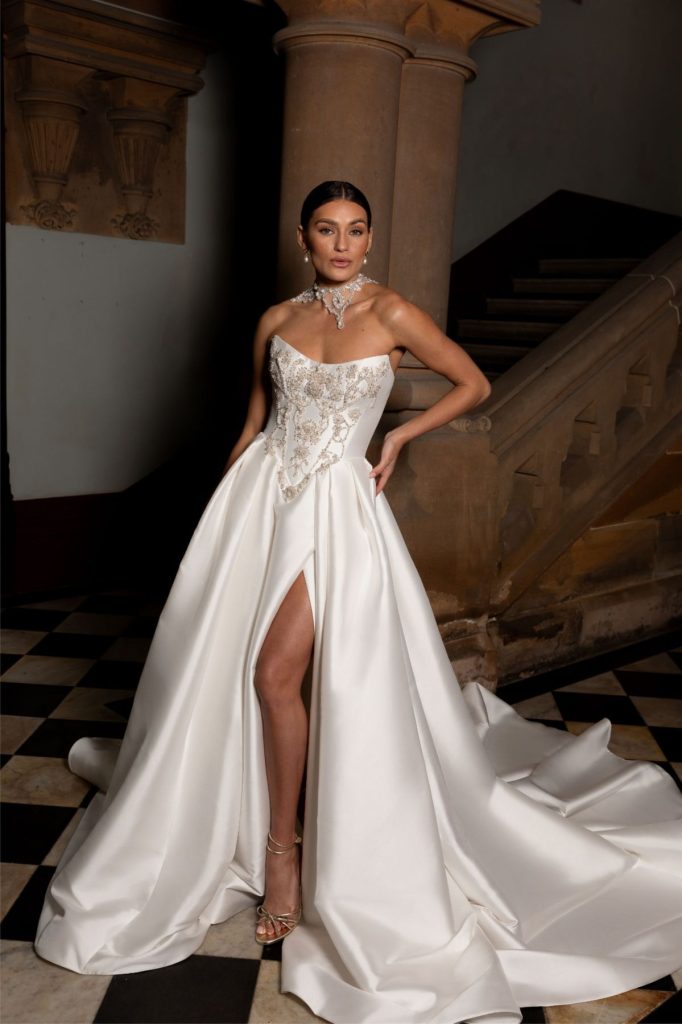
Boho Open Back Wedding Dress Turkey Online draws inspiration from the bohemian lifestyle, emphasizing natural beauty, comfort, and individuality. Originating from the 19th-century artistic movements in Europe, boho fashion celebrates free-spirited elements like flowing fabrics,...

18.01.2024
Wholesale Wedding Dresses Makers is a company that specializes in producing high-quality wedding dresses at affordable prices. Unlike traditional bridal boutiques, Wholesale Wedding Dresses Makers sells their dresses directly to customers in bulk, allowing them...
18.06.2024
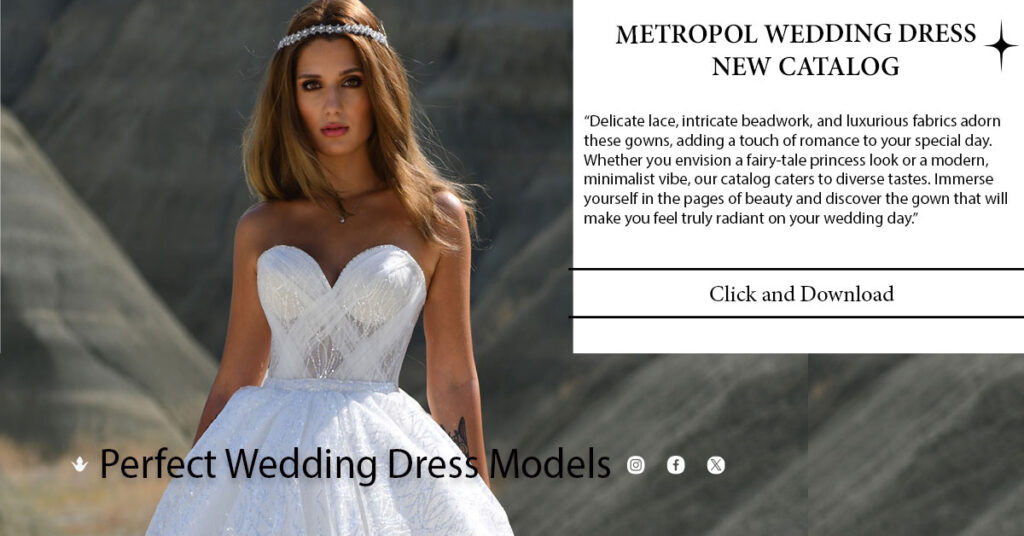
Plus Size Prom Dresses Wholesale Best 5 Comfort: A lining can provide a smooth and soft layer against the skin, making the dress more comfortable to wear, especially if the outer fabric is rough or...

05.12.2025
Turkish Tailoring for British Brides Budget Turkish Tailoring for British Brides Budget Why Turkish Tailoring Is the Best Choice for British Brides on a Budget In an era where the average UK wedding now costs...
27.09.2026
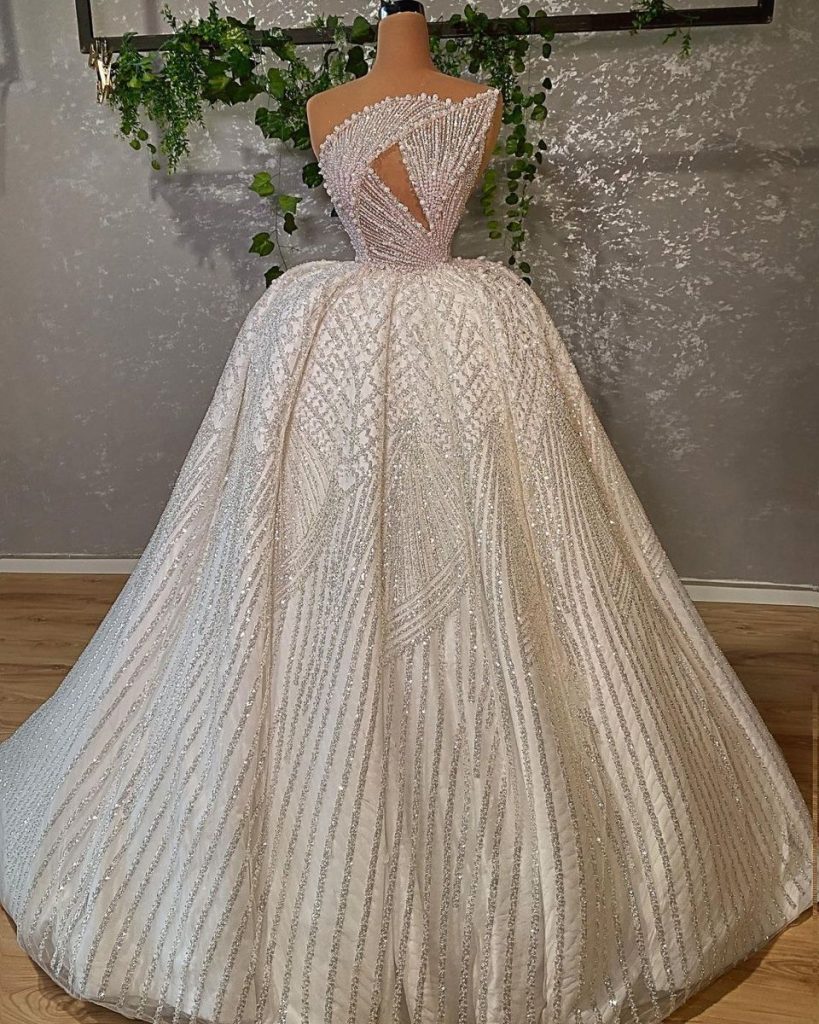
A Linie Prinzessin oder Fit and Flare Welcher Brautkleid Die Wahl des richtigen Brautkleid-Stils entscheidet über Ausstrahlung, Komfort und Erinnerungen am Hochzeitstag. A-Linie, Prinzessin und Fit and Flare gehören zu den beliebtesten Silhouetten – und...
26.04.2025
At Metropol Wedding Dress, we believe that every bride deserves a wedding gown that is as unique as her love story. That’s why we specialize in creating made to order wedding dresses that are meticulously...
Comments