
Made to Measure Mermaid Wedding Dresses for a Sculpted Silhouette A wedding dress should do more than look beautiful on a hanger. It should complement your proportions, move comfortably with your body, and reflect the way you want to feel on one of the most memorable days of your life.
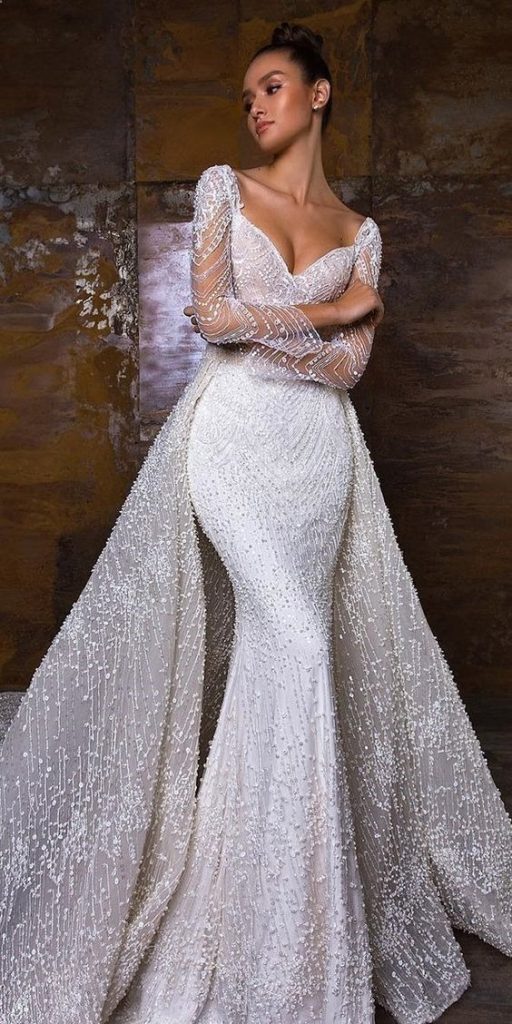
Made-to-measure mermaid wedding dresses offer a considered approach to bridalwear, combining the dramatic outline of the mermaid silhouette with measurements and fitting adjustments tailored to the individual bride. Characterized by a close-fitting bodice, a defined waist, a contoured hip line, and a skirt that flares toward the lower leg, this design creates a distinctive, sculptural appearance.
At Metropol Wedding Dress, the journey toward your ideal mermaid wedding dress begins with understanding the relationship between silhouette, fabric, construction, and personal style. Whether you envision a minimalist satin gown, a romantic lace design, a contemporary crepe dress, or an embellished statement piece, the right approach balances appearance with comfort, proportion, and practical wearability.
What makes made-to-measure mermaid wedding dresses different?
- Individualized fit: Measurements provide a starting point for shaping the bodice, waist, hips, and other key areas.
- Silhouette control: Skirt flare, train length, neckline, and bodice structure influence the final visual effect.
- Fabric-led design: Materials behave differently when fitted closely to the body.
- Personal expression: Necklines, sleeves, lace placement, embellishments, and back details can help create a distinctive bridal look, subject to the design and production options available.
- A more informed purchase: Planning for fittings, alterations, movement, and the wedding-day setting helps reduce avoidable surprises.
A successful mermaid wedding dress is not simply a tight dress with a flared skirt. It is a coordinated design in which every seam, fabric choice, and structural detail contributes to a balanced result.
Explore the possibilities with Metropol Wedding Dress and approach your bridal appointment with a clearer understanding of what your ideal gown needs to achieve.
Made-to-Measure Mermaid Wedding Dresses: Designing a Sculpted Silhouette Around You
1. The Silhouette Is Only the Beginning
Imagine walking into your wedding ceremony wearing a gown that follows the natural lines of your body before opening into a graceful, flowing skirt. The bodice feels secure, the waist sits where it should, and the skirt creates a striking outline without making every step a challenge.
This is the appeal of a mermaid wedding dress.
Unlike an A-line gown, which gradually widens from the waist, a mermaid dress follows the body through the waist and hips before flaring more noticeably around the lower skirt. The result is a dramatic transition between a streamlined upper silhouette and a fuller hem.
Yet the silhouette alone does not determine whether a dress feels right.
Two mermaid gowns can look similar in photographs but behave very differently when worn. One may have a structured bodice and a relatively firm skirt. Another may use flexible crepe, stretch lining, or carefully placed seams to create a softer contour. A third may incorporate layered tulle, lace appliqués, and a long train.
Each version produces a different combination of visual impact, movement, support, and maintenance requirements.
This is why made-to-measure design deserves a closer look.
Rather than treating every bride as a variation of a standard size, a made-to-measure approach uses individual measurements to guide the garment’s proportions and fit. Depending on the dressmaker’s process, the design may also allow selected adjustments to the neckline, sleeve length, train, skirt flare, and other details.
The aim is not to change the bride to fit the dress. It is to develop a dress whose design and construction work with her measurements and preferences.
For Metropol Wedding Dress, the most useful starting point is a simple question: What should your wedding dress look like, and what must it allow you to do?
Your answers will help shape decisions about structure, material, silhouette, and customization.
2. What Makes a Mermaid Wedding Dress So Distinctive?
The mermaid silhouette is defined by contrast. Its upper section follows the body, while its lower section introduces volume and movement.
That contrast creates visual direction. The eye travels from the neckline to the waist, follows the hip line, and then moves toward the flare of the skirt.
The effect can be dramatic, understated, romantic, or architectural depending on the details.
The bodice: establishing the foundation
The bodice influences how the entire gown sits. Its neckline, seams, lining, and internal support help determine the shape of the upper garment.
A well-considered bodice should accommodate the bust, sit comfortably against the torso, and remain stable during normal movement. Its precise construction depends on the chosen design and the level of support required.
Possible styles include a sweetheart neckline, a straight neckline, a square neckline, or a more structured strapless design. Some gowns use shoulder straps or sleeves to change the appearance and distribution of support.
The important distinction is between a bodice that looks secure in a static photograph and one that remains comfortable when the bride sits, reaches, embraces guests, and dances.
The waist: creating visual continuity
The waistline connects the bodice to the hip section. Its position influences the overall proportions of the gown.
A waist seam may be clearly defined, concealed within the construction, or emphasized by a belt, lace detail, or decorative embroidery.
For a clean, contemporary appearance, a designer may use uninterrupted fabric and discreet seams. For a more ornamental gown, the waist may become a focal point through appliqués, beadwork, or a change in texture.
Made-to-measure measurements can help the dressmaker assess where this transition should sit on the individual wearer. They do not automatically guarantee an ideal result, however; seam placement, pattern development, and fitting adjustments remain important.
The hip line: contour without unnecessary restriction
The hip section is central to the mermaid silhouette. It needs to follow the intended shape without creating unwanted pulling, diagonal wrinkles, or excessive tension.
The appropriate amount of ease depends on the material and construction. A fabric with mechanical stretch behaves differently from a firm woven satin or a heavily embellished lace.
A close fit should not be confused with compression. The gown should be designed around the movement and support required for the wedding day.
The flare: where the silhouette comes alive
The flare determines how the fitted upper section transitions into the skirt.
A high flare may create a pronounced, theatrical shape. A lower flare can produce a longer, more elongated visual line. A soft flare may feel romantic, while a structured flare can create a more architectural appearance.
The exact position of the flare affects walking, sitting, dancing, and the way the gown appears in photographs.
A dress with an impressive outline but insufficient room for a natural stride may require reconsideration of the skirt pattern, slit, train arrangement, or fabric choice.
The best mermaid wedding dresses bring these four elements together rather than optimizing one at the expense of the others.
3. Made-to-Measure vs. Standard Sizing: Understanding the Difference
Choosing a bridal gown is not only a style decision. It is also a decision about how the garment will be developed, fitted, and adjusted.
The terms used by bridal retailers can vary, so it is worth confirming exactly what each service includes before purchasing.
| Feature | Standard-size gown | Made-to-measure gown | Fully bespoke gown |
|---|---|---|---|
| Starting point | A predetermined size and pattern | An existing design or pattern adjusted using individual measurements | A design developed around the client’s requirements |
| Measurement approach | Size chart and selected measurements | Individual measurements guide fit and proportions | Measurements and design development are integrated |
| Design flexibility | Usually limited to available options | Depends on the maker’s customization policy | Potentially broader, subject to feasibility |
| Pattern development | Existing production pattern | Existing pattern may be adapted | A new or substantially individualized pattern may be developed |
| Fitting process | Alterations may be required | Fittings depend on the service and production method | Fittings depend on the bespoke process |
| Price | Varies by brand and design | Depends on construction and customization | Often higher because of additional design and development work |
| Best suited to | Buyers who find a suitable standard fit | Buyers seeking a more individualized fit within an established design | Buyers prioritizing a highly individualized design |
Important: Made-to-measure and bespoke are not interchangeable terms. Some businesses use them differently. Ask the supplier to explain its measurement process, pattern adjustments, fitting schedule, and customization limits.
A made-to-measure mermaid wedding dress may be particularly appealing when the bride loves an established silhouette but wants the garment’s proportions to reflect her individual measurements.
For example, a bride may prefer the neckline of one design, the softer flare of another, and a train length suited to her venue. Whether these elements can be combined depends on the maker’s design and production capabilities.
The purchase should therefore begin with a clear understanding of what is included, rather than an assumption that every detail can be changed.
4. The Sculpted Silhouette: How Fit, Proportion, and Construction Work Together
A sculpted silhouette is not produced by tightness alone. It depends on how the garment is patterned, assembled, supported, and fitted.
Understanding the main construction considerations makes it easier to evaluate a gown beyond its appearance on a mannequin.
Bodice balance
Bodice balance describes how the front and back sections of the garment relate to one another in length, shape, and position.
If the balance is unsuitable, the gown may ride up, pull across the bust, wrinkle at the waist, or shift during movement.
Individual measurements help identify relevant dimensions, but the relationship between those measurements also matters. Two people with similar bust and waist measurements may require different pattern adjustments because their torso lengths, shoulder positions, or posture differ.
Seam placement
Princess seams, side seams, and other shaping seams influence the way fabric follows the body’s contours.
Their position can change the visual direction of the gown. Curved seams may emphasize a continuous line, while strategically placed panels can support a cleaner appearance.
Seam placement also affects construction complexity and the amount of alteration that remains practical after assembly.
Ease and tension
Ease is the difference between the garment’s dimensions and the corresponding body measurements.
A mermaid dress requires enough room for its intended use, but excessive ease may reduce the clean outline that defines the silhouette. Too little ease can cause discomfort, visible stress lines, seam strain, or restricted movement.
There is no single ease allowance appropriate for every mermaid dress. The correct approach depends on the fabric’s stretch, lining, construction, and intended fit.
Internal structure
Some designs use boning, cups, interfacing, waist stays, or other internal components. Others rely on a softer construction.
These features are not universally necessary. Their suitability depends on the neckline, fabric weight, bust support requirements, and overall design.
A structured gown should provide support without relying on painful tightness. If the bodice feels unstable during the fitting, ask whether the issue relates to the pattern, internal support, or an adjustment that can realistically be made.
The flare-to-hip relationship
The flare must work with the fitted section above it.
If the transition is too abrupt for the selected fabric, the skirt may appear bulky or form unwanted folds. If the transition is too restrained, the intended mermaid effect may be lost.
A skilled fitting process considers the complete silhouette in motion, not just the waist and hip measurements in isolation.
Practical takeaway: When evaluating a made-to-measure mermaid gown, assess the entire garment as a system. The bodice, waist, hips, flare, lining, and train must work together.
5. Choosing the Right Fabric: The Material Determines the Character
Fabric is one of the most influential decisions in mermaid bridalwear because the silhouette depends on both contour and movement.
The same pattern can produce a noticeably different result when made in satin, crepe, lace, mikado, or layered tulle.
5.1 Satin: polished, elegant, and reflective
Satin is valued for its smooth surface and characteristic sheen. Depending on the fiber content, weave, weight, and finish, it can produce anything from a fluid drape to a relatively structured shape.
In a mermaid gown, satin can emphasize clean lines and give the skirt a luxurious visual presence.
However, reflective surfaces can make creases, seam irregularities, and fitting issues more visible under direct lighting. A satin gown therefore benefits from careful pattern development, pressing, and quality control.
Questions to ask:
- What is the satin’s fiber composition?
- How does its weight affect the flare?
- Does the lining alter the way it moves?
- How will the fabric look under daylight and evening lighting?
- What pressing and storage precautions are recommended?
Satin is worth considering when the goal is a refined silhouette with a smooth, uninterrupted surface.
5.2 Crepe: modern and understated
Crepe fabrics are available in many compositions and weights. Their surface may be matte, subtly textured, or slightly pebbled.
A suitable crepe can follow the body’s lines without the pronounced shine of satin. It is often considered for minimalist wedding gowns in which the cut and proportions carry much of the visual impact.
The main consideration is the specific fabric’s behavior. Some crepes have useful stretch; others are relatively firm. Lightweight versions may require careful lining, while heavier versions may create a more controlled drape.
For a sleek mermaid wedding dress, confirm that the chosen crepe offers the right combination of opacity, recovery, drape, and seam stability.
5.3 Lace: texture, romance, and detail
Lace introduces dimension through pattern, transparency, and texture.
Floral lace can create a romantic appearance, while geometric lace may suit a more contemporary design. Beaded lace introduces additional visual weight and can change how the skirt falls.
The placement of lace matters as much as the lace itself. Motifs may be arranged to emphasize the bodice, extend across the hips, frame the back, or flow toward the train.
A successful lace design should look intentional at the seams and transitions. Ask how motifs will align, whether raw edges will be visible, and how embellishments may affect sitting or movement.
Lace can also make alterations more labor-intensive, especially when individual motifs must be repositioned or reattached.
5.4 Mikado: structure with presence
Mikado is commonly used in structured bridalwear and is often selected for its substantial feel and refined finish.
Its precise composition and properties vary, but a suitable mikado can help maintain a defined silhouette and support a more architectural skirt.
In a mermaid design, it may create a pronounced flare that holds its shape rather than collapsing into soft folds.
Because structured fabrics can have limited flexibility, movement testing is particularly important. The gown should provide enough room through the hips and knees for the intended walking and sitting positions.
5.5 Tulle: softness, volume, and movement
Tulle is a lightweight netting used in veils, overlays, layered skirts, and decorative details.
In a mermaid gown, tulle can soften the transition from the fitted hip section to the skirt flare. Multiple layers may add volume, while a lighter application can create an airy finish.
The number and arrangement of layers affect weight, transparency, and movement. Additional volume is not automatically better; too many layers can change the proportions of the silhouette or make the train more difficult to manage.
5.6 Comparing common mermaid wedding dress fabrics
| Fabric | Typical visual effect | Main fitting consideration | Potential challenge |
|---|---|---|---|
| Satin | Smooth, polished, sometimes glossy | Clean seam lines and controlled shaping | Creases or irregularities may be conspicuous |
| Crepe | Minimal, refined, often matte | Drape, opacity, and appropriate ease | Properties vary considerably between fabrics |
| Lace | Romantic, textured, decorative | Motif placement and edge finishing | Alterations may be labor-intensive |
| Mikado | Structured, defined, substantial | Adequate movement through fitted sections | May feel restrictive if poorly fitted |
| Tulle | Light, layered, airy | Layer distribution and flare balance | Can snag or require careful handling |
| Chiffon | Soft, fluid, lightweight | Support and appropriate underlayers | May not provide the structure required alone |
| Organza | Crisp, lightweight volume | Managing stiffness and layered construction | Can feel firm or create unwanted bulk |
Fabric names alone are not sufficient to determine quality. Fiber content, weave, finish, weight, lining, and manufacturing quality all influence performance.
Before committing to a material, request a swatch if available. Examine it in natural light, handle it, and ask how it will behave in the proposed construction.
6. Customization: Turning a Recognizable Style into Your Bridal Look
A made-to-measure mermaid dress can begin with a familiar silhouette and become distinctive through carefully chosen details.
The most effective customization usually starts with a clear design direction. Rather than changing every element, identify the features that matter most and assess how they work together.
Necklines and shoulder details
The neckline frames the face, neck, shoulders, and upper torso.
A sweetheart neckline can introduce a romantic curve. A square neckline may create a more geometric effect. A straight strapless neckline can look contemporary, while sleeves or straps may change both the visual balance and the practical support of the gown.
The right option depends on personal preference, the bodice design, the desired coverage, and the construction possibilities.
Back design
The back of the gown is especially important during the ceremony, when guests may see the bride from behind.
Possible features include buttons, a low back, a covered back, lace panels, decorative straps, or a train that extends the line of the gown.
Back details should be evaluated alongside the bodice’s stability. A very low back, for example, may limit the types of internal support that can be incorporated.
Sleeves and detachable elements
Long sleeves, short sleeves, cap sleeves, and detachable sleeves offer different levels of coverage and visual emphasis.
Detachable overskirts, removable sleeves, or other convertible features may also allow a bride to change her look between the ceremony and reception.
These additions require careful consideration of attachment points, weight, and ease of removal. Ask whether the components are designed to remain secure during movement and whether the change can be managed without assistance.
Trains and hems
A train can extend the silhouette and create a dramatic entrance. A shorter train or sweep train may be more practical for an informal ceremony or a crowded reception space.
The train’s length should be considered in relation to the venue, aisle, flooring, footwear, and the time spent moving around.
A bustle or another train-management solution may be appropriate, depending on the design. Confirm whether it is included, how it works, and whether someone will need to assist with it on the wedding day.
Embellishments and surface design
Beading, sequins, embroidery, lace appliqués, and decorative buttons can change the character of a mermaid gown.
However, embellishment adds more than visual detail. It may increase weight, influence drape, complicate alterations, and require specialized cleaning or storage.
A restrained design can be just as distinctive as an elaborate one when the fabric, proportions, and construction are well considered.
A useful design rule: Choose customization details according to their contribution to the overall gown. Each addition should support the intended silhouette, rather than compete with it.
7. The Measurement Appointment: Preparing for an Accurate Starting Point
Measurements are a critical part of made-to-measure bridalwear, but taking measurements is not the same as completing a fitting.
A measurement record provides information about the body at a particular moment. The dressmaker then uses that information, together with the design and material specifications, to guide pattern selection or adjustment.
The quality of the outcome depends on the measurement method, interpretation, construction, and any subsequent fitting process.
What may be measured?
Depending on the design, the measurement record may include:
- Bust circumference
- Underbust circumference
- Waist circumference
- Hip circumference at the specified measurement point
- Shoulder width
- Front and back bodice lengths
- Torso or waist-to-hip length
- Desired skirt length
- Height and relevant proportions
- Sleeve length, if applicable
- Additional dimensions required by the chosen pattern
Not every measurement is necessary for every dress. The supplier should explain which measurements are required and how they should be taken.
Why measurement definitions matter
A waist measurement taken at the narrowest point may differ from a measurement taken at the intended waist seam. Hip measurements can also vary depending on the exact position and method used.
This is why measurements should follow the dressmaker’s instructions rather than a generic online chart.
If measurements are being taken remotely, ask whether the supplier provides a measurement guide, video instructions, or professional assistance. Confirm whether the dressmaker will review the submitted measurements before production.
Clothing and footwear considerations
Measurements should be taken in the clothing or undergarments specified by the supplier. Bulky garments can affect accuracy.
The shoes planned for the wedding can influence the required skirt length, so footwear height should be communicated before finalizing the hem.
If the dress is designed around particular shapewear, cups, or a specific bra, those details should also be discussed. Changes in undergarments may alter how the bodice sits.
Weight and body changes
Bodies can change between measurement, production, and the wedding date. That possibility should be handled through realistic planning rather than pressure to maintain an exact number.
Ask the supplier how it handles fitting adjustments, when updated measurements should be submitted, and which alterations are included in the price.
Avoid making unnecessary last-minute changes to a gown’s intended fit. The objective is a comfortable, well-fitting garment, not a restrictive one.
8. From Design Brief to Finished Gown: The Production Journey
A made-to-measure wedding dress typically involves several decisions that influence one another. Understanding the sequence helps buyers identify where clarification is needed.
The exact workflow varies by supplier. The following stages describe a practical framework rather than a guarantee of any specific production process.
Stage 1: Establish the design brief
The buyer and dressmaker identify the preferred silhouette, neckline, fabric, train, embellishments, and relevant practical requirements.
Reference images can be useful, but they should be accompanied by clear priorities. A photograph may show a particular fabric, lighting effect, corset structure, or body position that cannot be replicated exactly in another garment.
Separate the non-negotiable elements from optional preferences.
For example, a bride may consider a supportive bodice and a comfortable walking stride essential, while treating the precise placement of lace as a secondary preference.
Stage 2: Confirm feasibility
The supplier assesses whether the desired features can work together.
A low back, heavy embellishment, a fitted hip section, and a dramatic train may each be possible individually, but combining them can create construction and support challenges.
This is the time to discuss compromises, material alternatives, and cost implications.
Stage 3: Record measurements and specifications
The required dimensions are collected and documented. The design specification should also identify the selected fabric, color, lining, closures, and other agreed details.
Clear documentation reduces the risk of misunderstandings, especially when a customer and manufacturer are working remotely.
Stage 4: Develop or adapt the pattern
The pattern provides the structural basis for the gown. Depending on the production model, the supplier may adjust an existing pattern or develop a more individualized one.
Pattern work should account for the intended fit, fabric characteristics, seam placement, and flare.
Stage 5: Cut and assemble
Fabric is cut according to the pattern and assembled into the garment. Depending on the design, the process may include lining, internal support, lace placement, embellishment, and other construction work.
Precision matters particularly in fitted sections and on materials that make seam irregularities more visible.
Stage 6: Review fit and construction
If fittings or sample reviews are part of the service, they provide an opportunity to identify issues before the gown is finalized.
The review should cover more than circumference measurements. Bodice stability, seam tension, hem position, and movement are also relevant.
For remote production, ask what evidence the supplier provides, whether changes are possible at this stage, and who bears the cost of corrective work when an agreed specification has not been met.
Stage 7: Complete finishing and quality control
The finished garment should be checked against the agreed specification.
Depending on the gown, this may involve seam inspection, closure checks, embellishment checks, pressing, and confirmation of the hem and train.
The buyer should also receive appropriate guidance on storage, transport, and any final fitting needs.
Stage 8: Prepare for delivery and the wedding
The final stage includes delivery planning, inspection, and any necessary local alterations.
The gown should be tried on with the intended footwear and undergarments, allowing enough time to address any genuine fit or construction issues.
A clear production schedule should include a contingency period rather than assuming that every stage will proceed without delay.
9. Comfort Is a Design Requirement, Not an Afterthought
A wedding dress may be worn for many hours. It must accommodate the activities that matter to the bride, including walking, sitting, standing, hugging, and dancing.
The mermaid silhouette can be elegant and expressive, but its fitted lower section deserves particular attention.
The walking test
Walk at your normal pace, then take a few longer steps. Turn gently and walk up a small step if the venue requires it.
Notice whether the skirt pulls across the hips or knees, whether the flare moves naturally, and whether the hem interferes with your stride.
A gown that permits only tiny steps may need a design adjustment.
The sitting test
Sit on a chair with the posture you would normally use. Check whether the waist seam shifts, the bodice digs in, or the skirt creates excessive tension.
A wedding dress does not need to feel identical in every position, but discomfort should not be dismissed as an unavoidable feature of the silhouette.
The movement test
Raise your arms, embrace someone, and make the movements you expect to repeat throughout the day.
If the gown has sleeves, assess their range of motion. If it has a strapless bodice, check whether it remains stable without constant adjustment.
For a dress with heavy embellishment or a long train, consider how the weight affects movement and how the train will be managed.
The breathing and support test
The bodice should feel secure without making normal breathing difficult.
If you experience pain, numbness, significant pressure, or difficulty breathing, the fit requires attention. Do not assume that a tighter gown is inherently more flattering or better constructed.
The all-day test
Try the dress for a meaningful period during the final fitting, following the supplier’s advice.
Pay attention to pressure points, slipping, rubbing, and the way the garment feels after standing and sitting repeatedly.
Comfort is individual, but it can be assessed systematically. The goal is to identify avoidable problems before the wedding day.
10. How to Choose the Mermaid Variation That Suits Your Vision
Not every mermaid dress creates the same visual effect. The shape of the flare, degree of structure, neckline, and fabric can change the overall character of the gown.
The following options provide a starting point for discussing your preferences with Metropol Wedding Dress.
The classic mermaid
The classic version follows the body through the torso and hips before opening into a clearly defined flare.
It is a strong option for brides who want a recognizable mermaid silhouette with a pronounced transition between the fitted section and the skirt.
The key decision is how much flare to introduce and where it should begin.
The soft mermaid
A softer version uses a more gradual transition or a fabric with a fluid drape.
It may suit brides who prefer the mermaid outline without an especially rigid or theatrical skirt.
The finished effect depends on the fabric, lining, and pattern, so reference images should be evaluated in context.
The dramatic mermaid
A dramatic mermaid dress emphasizes the contrast between the fitted upper section and the fuller lower skirt.
It may incorporate a long train, sculptural fabric, or substantial embellishment.
Because the skirt can carry more volume and weight, walking clearance and train management should be included in the design discussion.
The minimalist mermaid
Minimalist gowns rely on proportion, surface quality, and clean construction rather than extensive decoration.
Crepe or satin may be suitable, depending on the intended finish.
In this style, small construction details can become especially noticeable, making fabric selection and seam finishing important considerations.
The lace mermaid
A lace mermaid gown introduces texture and decorative pattern into the silhouette.
The design can be delicate or elaborate depending on motif scale, transparency, lining, and embellishment.
Consider how the lace transitions across the bodice, waist, hips, and skirt. A consistent visual flow can make the finished gown feel more cohesive.
The contemporary convertible mermaid
Some designs incorporate removable sleeves, detachable overskirts, or other changeable elements.
These features can create different looks for the ceremony and reception without requiring a completely separate dress.
The added components should be evaluated for attachment security, weight, ease of removal, and storage.
The right variation is the one that fits your preferred aesthetic and the practical conditions of your wedding, not simply the one that appears most dramatic in a photograph.
11. Matching the Dress to the Wedding Setting
The wedding environment affects which design features are practical.
A gown suited to a formal indoor ceremony may require adjustments for a beach wedding, an outdoor garden, or a reception with extensive dancing.
Formal indoor venues
A structured mermaid gown can work well in a formal setting where a defined silhouette and train complement the atmosphere.
Consider the aisle length, flooring, stairs, and space available for turning. Reflective fabrics may look different under artificial lighting than in a showroom.
Outdoor ceremonies
Grass, gravel, sand, and uneven surfaces can affect the hem and train.
For an outdoor wedding, discuss whether a shorter train, manageable hem length, or simpler skirt construction would make the gown easier to wear.
Wind can also affect lightweight overlays and veils. A design that looks controlled indoors may behave differently in an exposed outdoor location.
Beach weddings
A beach setting often favors practical movement and careful management of the hem.
Heavy layers may be less convenient on sand, while lightweight materials can catch the wind. The most appropriate option depends on the venue, climate, and intended styling.
If the ceremony takes place directly on sand, test the gown with the planned footwear and walking route.
Ballroom and evening receptions
A dramatic train may create a striking entrance, but the reception usually involves different movement requirements.
Ask how the train can be secured, whether the gown has a bustle or another practical solution, and whether the skirt will remain manageable on the dance floor.
Destination weddings
Destination weddings add transport and environmental considerations.
The gown may need to travel in protective packaging and be unpacked at the destination. Humidity, temperature, luggage handling, and access to local alterations can all affect planning.
Request specific packing, hanging, steaming, and care instructions for the chosen fabric rather than assuming that every wedding dress can be handled in the same way.
12. A Realistic Timeline for Ordering a Made-to-Measure Mermaid Gown
A successful purchase requires enough time for design confirmation, production, delivery, inspection, and any necessary alterations.
There is no universal production timeline. It depends on the supplier, design complexity, material availability, order volume, shipping method, and fitting arrangements.
For that reason, a wedding date should be treated as a firm planning constraint rather than a detail to discuss after the design has been selected.
Work backward from the wedding
Start by identifying the date by which the gown must be ready for the final fitting.
Then work backward through the expected stages:
- Design and quotation approval
- Measurement submission and verification
- Material sourcing and production
- Any planned fitting or review
- Finishing and quality checks
- Shipping or collection
- Final fitting and local alterations
- Contingency time for unexpected issues
The supplier should provide an estimated schedule based on the actual order rather than an unsupported generic promise.
What can delay production?
Common risks include fabric shortages, unavailable trims, incomplete measurements, late design changes, fitting adjustments, production backlogs, and shipping disruptions.
Complex lace placement or heavy embellishment may require more labor than a relatively simple gown.
Changes requested after production has begun may also affect the schedule and price.
Why the contingency period matters
A gown that arrives on the wedding date is not a successful delivery if it still requires adjustments.
The schedule should leave time to inspect the dress, try it on with the intended shoes and undergarments, and arrange any necessary alterations.
For international purchases, allow for shipping variability and any applicable customs procedures.
Buyer recommendation: Obtain a written production estimate, confirm the expected dispatch date, and clarify what happens if the gown arrives with a documented discrepancy or requires corrective work.
13. Understanding the Cost of a Made-to-Measure Mermaid Wedding Dress
The price of a bridal gown reflects more than the amount of fabric used.
A fitted mermaid design may involve specialized pattern work, careful seam construction, internal support, intricate finishing, and substantial handwork. Additional features can increase both material consumption and production time.
A useful comparison separates the base gown price from the total cost of preparing the dress for the wedding.
The main cost components
| Cost component | What may influence the price | What to confirm |
|---|---|---|
| Base design | Silhouette, construction, and design complexity | Which features are included in the quoted price |
| Fabric | Fiber composition, quality, weight, and availability | Exact material specification and any approved substitutions |
| Lining and support | Cups, boning, interfacing, waist stays, or additional layers | Which internal components are included |
| Lace and embellishment | Motif complexity, beads, embroidery, and handwork | Whether placement and finishing are included |
| Customization | Changes to neckline, sleeves, train, or skirt | Which modifications are possible and how they are priced |
| Measurement and fittings | Remote support, in-person appointments, and pattern adjustments | Number and type of fittings included |
| Alterations | Hemming, fit corrections, and finishing changes | Included services and exclusions |
| Packaging and shipping | Protective packaging, transport method, and destination | Shipping charges, insurance, and delivery estimates |
| Import charges | Destination-specific taxes, duties, or fees where applicable | Who is responsible for each charge |
| Accessories | Veil, overskirt, sleeves, or other separate pieces | Whether each item is included or priced separately |
| Care | Cleaning, preservation, or specialist treatment | Recommended service and likely requirements |
Calculate the total purchase cost
Rather than comparing two dresses using their advertised prices alone, use a total-cost approach:
Total estimated cost = gown price + customization + fittings and alterations + shipping and insurance + applicable import charges + separately purchased accessories.
This is a planning formula, not a quotation. Some items may already be included in the supplier’s price, and others may not apply.
The purpose is to make the comparison consistent.
For example, a lower-priced gown may require extensive local alterations or a separate train-management solution. A more expensive gown may include some of those services. Neither is automatically the better purchase; the answer depends on the final scope and quality.
How to evaluate value
A practical buying decision should consider:
- Fit and construction quality
- Accuracy of the product specification
- Suitability of the fabric
- Level of customization
- Communication and measurement support
- Delivery reliability
- Alteration arrangements
- Clear payment and refund terms
- Available recourse if the gown differs materially from the agreed specification
Avoid treating the highest price as proof of superior quality or the lowest price as proof of poor quality.
Value comes from the relationship between the delivered product, the agreed service, and the buyer’s needs.
14. Buying from an International Bridal Supplier: What to Verify
For customers purchasing a made-to-measure wedding dress across borders, product selection is only one part of the decision.
Communication, documentation, delivery, payment terms, and responsibility for corrective work also matter.
This is especially relevant when the customer cannot visit the production facility or attend an in-person fitting.
Confirm the seller and contracting entity
Identify the legal business responsible for the order and confirm which entity will receive payment, produce the gown, and handle any complaint.
Review the available business information, contact details, written policies, and transaction documents.
If you are purchasing for a boutique or bridal retailer, clarify whether the relationship is a retail purchase, wholesale order, or another commercial arrangement.
Request a written specification
The order should describe the agreed garment in enough detail to reduce ambiguity.
Depending on the purchase, this may include:
- Style or design reference
- Fabric and color
- Neckline and sleeve design
- Measurement record
- Train and hem specifications
- Lining and internal support
- Lace or embellishment details
- Included accessories
- Agreed price and payment schedule
- Production and delivery estimates
- Inspection and alteration arrangements
A written specification is more useful than a collection of unannotated inspiration images.
Clarify payment and order changes
Ask which payment methods are accepted and whether the transaction provides any dispute-resolution options.
Confirm the deposit, balance payment, cancellation policy, and consequences of changes requested after production begins.
Made-to-measure goods may be treated differently from standard stock under applicable consumer law. Do not assume that a generic return policy applies to every custom order, or that a supplier’s policy overrides mandatory legal rights.
Understand delivery responsibilities
For international orders, confirm the shipping method, tracking arrangements, insurance, expected dispatch date, and responsibility for customs-related charges.
Where applicable, ask whether the quoted shipping arrangement includes import clearance or whether the buyer must handle it.
For a bridal boutique purchasing commercially, clarify the agreed delivery terms, documentation, and allocation of transport responsibilities in the contract.
Agree on an inspection process
Before placing the order, ask how the delivered gown should be inspected and how quickly a discrepancy must be reported.
Document the condition of the package and garment on arrival. Keep photographs, the invoice, the approved specification, and the relevant correspondence.
If a problem occurs, communicate it promptly and factually, following the supplier’s documented process and any applicable legal requirements.
A reliable purchase process does not eliminate all risk. It makes responsibilities and available remedies clearer.
15. Quality Control: Inspecting the Gown Beyond the First Impression
A wedding dress can look beautiful at first glance and still have problems that become apparent during a fitting.
A structured inspection helps identify issues while there is still time to address them.
Visual and construction checks
Inspect the gown in good lighting.
Look at the symmetry of the design, the alignment of the seams, the quality of the visible stitching, the placement of lace motifs, and the consistency of decorative elements.
For satin or other reflective fabrics, examine the surface from different angles. For lace gowns, look closely at motif transitions and exposed edges.
These checks should reflect the agreed design; minor variations may be inherent in certain handmade or textured materials.
Fit checks
Try on the dress using the intended undergarments and footwear.
Check the bodice, waist, hips, and flare while standing naturally. Look for unusual pulling, persistent twisting, or seams that appear to be under excessive strain.
Confirm that the hem works with the planned shoes and that the train can be managed appropriately.
Closure and support checks
Open and close zippers, buttons, hooks, and other closures gently.
If the gown has cups, boning, straps, or internal support, check that these components are secure and positioned as intended.
Do not force a closure that appears stuck or place excessive tension on a delicate fastener.
Movement checks
Walk, sit, turn, and raise your arms.
If the gown includes detachable elements, test their attachment and removal according to the supplier’s instructions.
Movement checks are particularly important for a mermaid dress because the fitted hip and lower skirt can affect stride length.
Documentation checks
Compare the gown with the approved order specification.
Confirm the agreed fabric, color, neckline, sleeves, train, and accessories. If something differs, document the discrepancy and contact the supplier before arranging unauthorized modifications that might complicate the resolution.
Keep the packaging and purchase documents until the inspection is complete.
16. Common Purchasing Mistakes and How to Avoid Them
The most expensive bridalwear mistakes are not always caused by poor craftsmanship. Many begin with unclear expectations, incomplete specifications, or decisions made too late.
Mistake 1: Choosing a dress solely from a photograph
Photography can alter the appearance of fabric, color, proportions, and flare.
Better approach: Use photographs to communicate the intended style, then ask for material information, construction details, and clarification about what can be reproduced.
Mistake 2: Assuming made-to-measure means unlimited customization
A supplier may adjust an established pattern while offering only a defined set of design options.
Better approach: Request a written list of included and optional modifications before paying a deposit.
Mistake 3: Treating measurements as a guarantee of perfect fit
Accurate measurements are important, but they do not replace pattern development, fitting, or quality control.
Better approach: Confirm how measurements are reviewed and whether fitting adjustments are available.
Mistake 4: Selecting a fabric without considering movement
A material that looks elegant on a mannequin may behave differently when the wearer sits, walks, or dances.
Better approach: Ask about fabric weight, stretch, lining, drape, and the intended fit. Test movement during fittings.
Mistake 5: Overlooking the train and hem
A dramatic train may be appropriate for the ceremony but inconvenient for the reception.
Better approach: Discuss the full wedding-day schedule, flooring, footwear, and train-management options.
Mistake 6: Ignoring alteration costs
A quoted gown price may not include every adjustment needed before the wedding.
Better approach: Request a breakdown of included services and estimate any additional local tailoring.
Mistake 7: Ordering too close to the wedding date
A short schedule reduces the time available for delivery, inspection, and corrections.
Better approach: Confirm the production plan early and preserve a realistic contingency period.
Mistake 8: Approving unclear design details
Words such as “ivory,” “long train,” or “fitted bodice” may be interpreted differently by different people.
Better approach: Use reference images, written descriptions, specific measurements, and documented approvals.
Mistake 9: Changing the design repeatedly during production
Late changes can increase costs and delay delivery.
Better approach: Finalize priorities before production and ask for the cost and schedule impact of any proposed revision.
Mistake 10: Assuming every international purchase has the same return rights
Custom orders may be subject to different contractual and legal rules depending on the seller, buyer, and destination.
Better approach: Read the applicable terms before paying and verify the mandatory legal protections relevant to the transaction.
17. Five Questions to Ask Before You Commit
A focused conversation with the supplier can reveal more than a long list of general product features.
1. What exactly does your made-to-measure service include?
Ask whether individual measurements influence the pattern, what customization is available, and whether fittings or alterations are included.
2. Which fabric and construction details will my gown use?
Request clear information about the material, lining, support, closures, embellishments, and any approved alternatives.
3. How will you assess fit and movement?
Find out how measurements are reviewed, what fitting opportunities are available, and how the gown is checked for walking, sitting, and comfort.
4. What is the complete cost and delivery plan?
Confirm the price, optional additions, shipping charges, expected dispatch, payment schedule, and responsibility for any applicable import charges.
5. What happens if the finished dress differs from the approved specification?
Ask about inspection, documentation, corrective work, alteration responsibility, and the relevant contractual terms.
These questions help establish whether the supplier’s process matches the level of individualization you expect.
18. Why Consider Metropol Wedding Dress for Your Bridal Search?
Choosing a wedding dress is a personal decision, but the purchasing process should still be clear and well organized.
For brides considering made-to-measure mermaid wedding dresses, Metropol Wedding Dress can be approached as the starting point for discussing silhouette preferences, fabric choices, measurements, and customization requirements.
The right next step is to identify the design that reflects your vision and establish which features are available for your order.
Begin with your silhouette
Decide whether you prefer a classic, soft, dramatic, minimalist, or lace-focused mermaid gown.
Reference photographs can help communicate your preferences, especially when you identify the features you like in each image.
Define your priorities
Separate essential requirements from optional details.
For example, you may prioritize a comfortable bodice, a particular neckline, and a manageable train while remaining flexible about embellishment.
A short, clear brief makes the discussion more productive.
Confirm the available options
Ask Metropol Wedding Dress about the specific fabrics, customization possibilities, measurement requirements, fitting arrangements, production schedule, and pricing applicable to your chosen design.
Availability and service details should be confirmed directly rather than assumed.
Make the purchase with clear expectations
Before approving the order, ensure that the specifications, payment terms, timeline, and relevant policies are documented.
This creates a more reliable foundation for both the buyer and the supplier.
A beautiful mermaid gown begins with a design vision. A successful purchase brings that vision together with practical decisions about fit, construction, delivery, and comfort.
Five Ways to Take the Next Step with Metropol Wedding Dress
Choose the approach that best matches where you are in your bridal journey.
CTA 1 — For brides exploring styles
Find the Mermaid Silhouette That Reflects Your Vision
Explore the possibilities of made-to-measure bridalwear and identify the neckline, fabric, and skirt shape that best express your personal style.
CTA 2 — For brides ready to discuss a design
Let’s Talk About Your Ideal Wedding Dress
Share your preferred silhouette, inspiration images, wedding date, and customization priorities with Metropol Wedding Dress to discuss the options available for your gown.
CTA 3 — For detail-focused buyers
Get Clear on Fit, Fabric, and Customization
Before choosing your gown, ask about measurement requirements, material options, construction details, and the fitting process. Make your decision with a clearer understanding of what your order includes.
CTA 4 — For international customers
Planning Your Bridal Purchase from Abroad?
Discuss production estimates, shipping arrangements, documentation, and customization possibilities with Metropol Wedding Dress before confirming your order.
CTA 5 — For brides ready to move forward
Take the First Step Toward Your Made-to-Measure Gown
Contact Metropol Wedding Dress to discuss your design preferences, confirm available options, and establish the next steps toward your wedding-day look.
Final Thoughts: A Mermaid Wedding Dress Should Be Designed for Real Life
The appeal of a mermaid wedding dress lies in its distinctive relationship between contour and movement. The fitted bodice, defined waist, shaped hip section, and flared skirt create a silhouette that can be elegant, modern, romantic, or dramatic.
Made-to-measure construction offers a way to approach that silhouette through individual measurements and, depending on the service, selected design adjustments. However, measurements alone do not guarantee an ideal result. Pattern development, fabric behavior, seam placement, internal support, fitting, and finishing all contribute to the finished garment.
The most useful buying decision is therefore not simply a choice between two beautiful dresses. It is a decision about which design, materials, and production process best meet your requirements.
Start with the features that matter most to you. Evaluate the gown in motion as well as in photographs. Confirm the complete cost, timeline, and customization terms. Allow time for inspection and any necessary alterations.
With a clear brief and realistic expectations, the search for your ideal gown becomes more manageable and more personal.
Metropol Wedding Dress invites you to begin with your vision: the silhouette you love, the details that matter, and the way you want to experience your wedding day. Discuss your requirements, explore the available options, and take an informed next step toward a mermaid wedding dress designed around your bridal preferences.
Frequently Asked Questions About Made-to-Measure Mermaid Wedding Dresses
1. What is a made-to-measure mermaid wedding dress?
A made-to-measure mermaid wedding dress is a gown developed using the wearer’s individual measurements to guide its fit and proportions. It follows the body through the bodice, waist, and hips before flaring toward the lower skirt. The extent of design customization depends on the dressmaker’s service.
2. How is made-to-measure different from bespoke bridalwear?
Made-to-measure generally involves adapting a design or pattern using individual measurements. Bespoke bridalwear may involve more extensive design development and pattern creation around the individual client. Because businesses use these terms differently, confirm the exact process before ordering.
3. Does a made-to-measure dress guarantee a perfect fit?
No. Individual measurements can improve the basis for fitting, but the result also depends on measurement accuracy, pattern development, fabric behavior, construction, and fitting adjustments. Ask the supplier how fit is evaluated and what corrective services are available.
4. Can a mermaid wedding dress be customized with a different neckline?
Potentially, yes. Neckline changes depend on the existing design, bodice structure, fabric, support requirements, and production capabilities. Confirm feasibility before ordering, especially if the proposed neckline significantly changes the original pattern.
5. Which fabrics work well for a sculpted mermaid silhouette?
Satin, crepe, mikado, and lace are commonly considered for mermaid bridalwear. Satin can provide a polished finish, crepe can create a restrained contemporary look, mikado can support structure, and lace adds texture. The most appropriate choice depends on the specific fabric and construction.
6. Is satin or crepe better for a mermaid wedding dress?
Neither is universally better. Satin may offer a polished surface and a more substantial appearance, depending on its weight. Crepe may provide a matte finish and fluid drape. Compare the actual fabric’s composition, weight, stretch, opacity, and intended construction before deciding.
7. Can lace be added to a minimalist mermaid gown?
Additional lace may be possible, depending on the design and supplier. The placement, weight, attachment method, and relationship with the underlying fabric should be considered. Request confirmation of the proposed changes and their cost before production begins.
8. What measurements are usually required for a made-to-measure bridal gown?
Common measurements include the bust, underbust, waist, hips, torso lengths, shoulder width, height, and desired skirt length. Sleeve and other measurements may be required for particular designs. Follow the supplier’s specific instructions because measurement points can vary.
9. Can I measure myself at home?
Some suppliers accept customer-submitted measurements and provide instructions. However, self-measurement can introduce errors, particularly for back measurements and difficult-to-reach points. Ask whether a professional tailor or an assistant should help and whether the supplier reviews the measurements before production.
10. Should I take measurements while wearing shapewear?
Follow the dressmaker’s instructions. If particular shapewear or undergarments will be worn with the gown, explain this during the measurement process. The objective is to ensure that the measurements and intended wearing conditions are consistent.
11. How tightly should a mermaid wedding dress fit?
It should follow the intended silhouette without creating excessive pressure, painful tightness, or significant movement restrictions. The correct fit depends on the fabric, lining, design, and support structure. Normal breathing and the movements required for the wedding should remain possible.
12. Can I sit and dance comfortably in a mermaid dress?
That depends on the pattern, flare position, fabric, and fit. Test sitting, walking, turning, and dancing during a fitting. If the skirt restricts your stride or creates excessive tension, discuss potential adjustments with the dressmaker.
13. Can a mermaid wedding dress include a long train?
Yes, many mermaid designs incorporate trains, although the available options depend on the specific design. Train length affects the overall silhouette, weight, transport, and movement. Discuss how the train will be managed during the reception and whether a bustle or another solution is available.
14. Can the train be shortened after the gown is made?
Sometimes. The feasibility depends on the construction, lace placement, embellishments, hem design, and amount of fabric available. Shortening an elaborate train can require substantial work, so it is better to choose the intended length before production where possible.
15. Can sleeves be added to a strapless mermaid dress?
Possibly, but the answer depends on the neckline, bodice construction, fabric, and desired sleeve style. Sleeves can affect movement and the balance of the upper garment. Ask whether the change is compatible with the existing design.
16. Can a mermaid wedding dress have a modest neckline or more coverage?
Yes, depending on the design and available customization options. Higher necklines, sleeves, additional lining, or changes to the back may be possible. Each modification should be evaluated for visual balance, comfort, and construction feasibility.
17. Is a mermaid wedding dress suitable for an outdoor wedding?
It can be, provided the design is appropriate for the location. Consider the ground surface, wind, temperature, footwear, and train length. A manageable hem and a practical train arrangement can be particularly useful for grass, gravel, or sand.
18. What should I consider when choosing a mermaid gown for a beach wedding?
Think about sand, wind, humidity, walking conditions, and the weight of the skirt. Lightweight materials may move more in the wind, while elaborate trains can be harder to manage. Try the gown with the intended footwear and discuss practical adjustments.
19. How far in advance should I order a made-to-measure mermaid wedding dress?
Order according to the supplier’s confirmed production and delivery schedule, leaving time for inspection and alterations. Design complexity, material availability, fittings, and shipping all affect the timeline. Ask for a schedule specific to your order rather than relying on a universal estimate.
20. What can delay the production of a made-to-measure gown?
Possible delays include incomplete measurements, late design changes, fabric shortages, production backlogs, complex embellishments, fitting adjustments, and shipping disruptions. Confirm the expected production stages and retain a contingency period before the wedding.
21. What is usually included in the price?
The base price may cover the gown and specified construction details, but fittings, alterations, accessories, shipping, and import charges may be separate. Request a written quotation identifying what is included, what is optional, and what additional costs may arise.
22. Why might two visually similar mermaid dresses have different prices?
Differences may reflect fabric quality, construction complexity, internal support, lace placement, handwork, customization, and the services included. Compare written specifications and the complete expected purchase cost rather than relying on photographs or advertised prices alone.
23. Are alterations always included in a made-to-measure order?
No. Alteration policies vary by supplier and contract. Confirm whether fitting adjustments, hemming, corrective work, and local tailoring are included. Clarify the distinction between an agreed customization and a correction for a discrepancy from the approved specification.
24. What should international buyers check before placing an order?
Confirm the seller’s identity, written specifications, payment terms, production schedule, shipping method, insurance, customs responsibilities, and applicable policies. Understand the procedure for reporting discrepancies and determine which legal protections apply to your transaction.
25. What if the finished dress differs from the approved design?
Document the discrepancy with photographs and compare it with the agreed specification. Contact the supplier promptly and follow the contractual inspection or complaint process. Keep the invoice and correspondence, and clarify responsibility for corrective work before arranging substantial independent alterations.
26. Can I order a made-to-measure gown without visiting the dressmaker?
Some suppliers support remote ordering using measurement guides and online communication. However, remote purchasing requires particularly clear specifications and a reliable process for reviewing measurements, assessing the finished garment, and handling alterations. Confirm which services are available before committing.
27. How can I assess the quality of a gown before buying it online?
Request clear photographs, fabric details, construction information, and written specifications. If possible, review material swatches and ask about seams, lining, closures, and embellishments. Also assess the supplier’s communication, documented policies, and inspection arrangements.
28. What should I do if the gown feels uncomfortable during the final fitting?
Identify where the discomfort occurs and when it appears. Check the bodice, seams, hip section, hem, and internal support. Ask the dressmaker to assess whether an adjustment is possible. Painful pressure, restricted breathing, or significant movement limitations should not be accepted as normal features of a fitted gown.
29. How should I transport a mermaid wedding dress?
Use the supplier’s recommended protective packaging and transport method. Depending on the fabric and embellishments, the gown may require hanging, careful folding, or specialist packing. Request specific instructions, especially if the dress will travel internationally or be carried to a destination wedding.
30. How should I store the gown before the wedding?
Follow the care instructions for the specific fabric and construction. Store the dress in a clean, dry environment away from direct sunlight, excessive moisture, and potential stains. Heavy gowns may require appropriate support to prevent unnecessary strain on delicate straps or seams.
31. Can a mermaid wedding dress be cleaned after the wedding?
Often, professional cleaning is possible, but the appropriate method depends on the fabric, embellishments, lining, and stains. Ask a specialist bridal cleaner to assess the garment before treatment. Be particularly careful with delicate lace, beads, and materials that may be sensitive to moisture or solvents.
32. What should I send Metropol Wedding Dress when requesting information?
A useful initial inquiry includes your wedding date, preferred mermaid silhouette, inspiration images, desired fabric, neckline preferences, approximate customization requirements, and delivery destination. Ask which options are available, what measurements are needed, and how pricing and production timelines are determined.
33. Can I request a combination of details from different wedding dress designs?
You can ask whether a combination is possible, but not every feature will work with every pattern. Differences in structure, fabric, support, and construction may limit the options. Identify your most important details first and ask the dressmaker to evaluate their compatibility.
34. How do I compare two made-to-measure bridal suppliers fairly?
Compare the written specifications, fabric details, customization scope, measurement process, fittings, production estimates, delivery arrangements, payment terms, and policies for discrepancies. Evaluate the total cost and the clarity of communication, not simply the advertised gown price.
35. What is the most important factor when choosing a made-to-measure mermaid wedding dress?
The most important factor is the overall suitability of the design and production process for your needs. A beautiful silhouette must be supported by appropriate construction, accurate measurements, suitable fabric, comfortable movement, and realistic delivery planning. The best purchase is one that brings these elements together within your budget and timeline.
Related Topics
17.07.2025
Cheap eco friendly bridal gown in Turkey combines affordability, sustainability, and stunning design, making it an ideal choice for environmentally conscious brides. Turkey’s vibrant bridal market, especially in cities like Antalya and Istanbul, offers a...

21.09.2025
Choisir la Robe de Mariée Selon Votre Silhouette Conseils Pratiques pour les Mariées Françaises Le jour de votre mariage est l’un des moments les plus mémorables de votre vie. Pour les mariées françaises, choisir la...

15.05.2025
Wedding Dress İmport From İstanbul The wedding dress industry is a vibrant and ever-evolving sector, with Istanbul, Turkey, emerging as a significant hub for high-quality, affordable, and stylish wedding dresses. Known for its rich textile...

01.05.2026
Robe de mariée princesse Paris incarne l’élégance intemporelle, le romantisme absolu et le rêve de nombreuses futures mariées à travers le monde. Paris, capitale mondiale de la mode, est depuis toujours une source d’inspiration incontournable...

12.04.2025
Karşıyaka Gelinlik Mağazası: 2025’te Hayalinizdeki Gelinliği Bulma Rehberi Düğün hazırlıkları, bir çiftin hayatındaki en heyecan verici ve özel süreçlerden biridir. Bu süreçte gelinlik seçimi, pek çok gelin adayı için hem duygusal hem de estetik açıdan...

23.12.2025
Sicher und schnell geliefert Türkische Brautkleider auf dem Weg nach Deutschland In den letzten Jahren ist die Nachfrage nach türkischen Brautkleidern in Deutschland deutlich gestiegen. Immer mehr Bräute, nicht nur mit türkischen Wurzeln, entscheiden sich...
Comments