
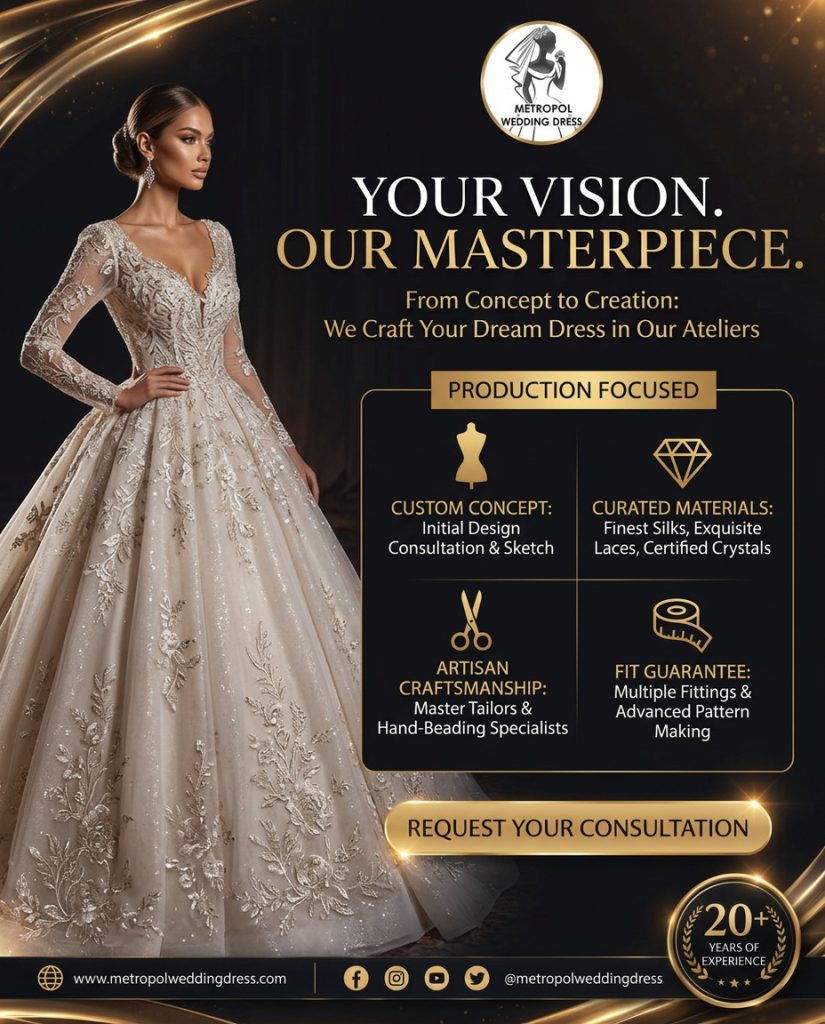
Exclusive wedding dresses represent the highest expression of bridal craftsmanship—gowns built around a specific bride’s measurements, story, and silhouette rather than stock sizes or seasonal catalogs. For bridal boutiques, retailers, and private-label brands, partnering with a specialized manufacturer transforms inventory risk into high-margin exclusivity.
Metropol Wedding Dress operates as a Custom Wedding Dress Manufacturer, Custom Bridal Gown Manufacturer, Bespoke Wedding Dress Manufacturer, and full-service OEM and private-label partner based in İzmir, Turkey. The company delivers Made to Measure Wedding Dress Manufacturer capabilities, Couture Wedding Dress Manufacturer finishes, and reliable wholesale volumes while protecting design exclusivity. This guide examines materials, production architecture, cost structures, sourcing criteria, and practical decision frameworks that purchasing managers and boutique owners use when selecting a Premium Wedding Dress Manufacturer or Luxury Bridal Gown Manufacturer capable of true one-of-a-kind and small-batch work.
Exclusive bridal gowns succeed when every decision—from fabric hand to seam allowance—serves a single purpose: creating a garment that cannot be replicated on another rack. Mass-produced dresses optimize for average body types and average price points. Exclusive dresses optimize for presence, movement, photography, and emotional ownership.
The difference begins long before scissors touch fabric. It starts with the relationship between the retailer and the manufacturer. A Direct Wedding Dress Manufacturer or Direct Bridal Gown Manufacturer eliminates intermediary mark-ups and communication layers. When that manufacturer also functions as a Private Label Wedding Dress Manufacturer and Bridal Gown OEM Supplier, the boutique gains control over silhouette language, labeling, and regional exclusivity.
The Architecture of Exclusivity
Exclusivity is engineered, not declared. Three production models dominate high-end bridal:
- Fully bespoke (one-of-a-kind, client measurements only)
- Made-to-order from an approved master sample with client-specific adjustments
- Private-label small-batch production of protected styles
A Bespoke Bridal Gown Manufacturer and Tailor Made Wedding Dress Manufacturer typically handle the first two. An OEM Wedding Dress Manufacturer and Custom Bridal Collection Manufacturer manage the third while still offering individual customization. Metropol Wedding Dress operates across all three, functioning simultaneously as a Custom Wedding Dress Factory, Custom Bridal Gown Factory, and Wedding Dress Manufacturer for Boutiques.
Comparison Table: Production Models for Boutique Partners
| Model | MOQ Flexibility | Design Control | Lead Time (typical) | Best For | Margin Potential |
|---|---|---|---|---|---|
| Fully Bespoke / One of a Kind | 1 piece | Complete | 8–16 weeks | High-ticket individual clients | Highest |
| Made to Measure / Made to Order | 1–5 | High (adjustments to master) | 6–12 weeks | Semi-custom showroom pieces | Very high |
| Private Label / OEM Small Batch | 5–30 | Shared or full | 8–14 weeks | Boutique signature collections | High + volume |
| Standard Wholesale Stock | 20+ | Low | 4–8 weeks | Entry price points | Moderate |
A Bridal Couture Manufacturer and Handcrafted Bridal Gown Manufacturer lean toward the left side of the table. A Wedding Dress Exporter and Bridal Gown Exporter capable of consistent quality across regions must master the middle and right columns without losing the handwork that defines luxury.
Material Reality Check
The hand of the fabric determines whether a gown photographs as couture or merely expensive. Purchasing managers evaluate three layers: face fabric, understructure, and embellishment substrate.
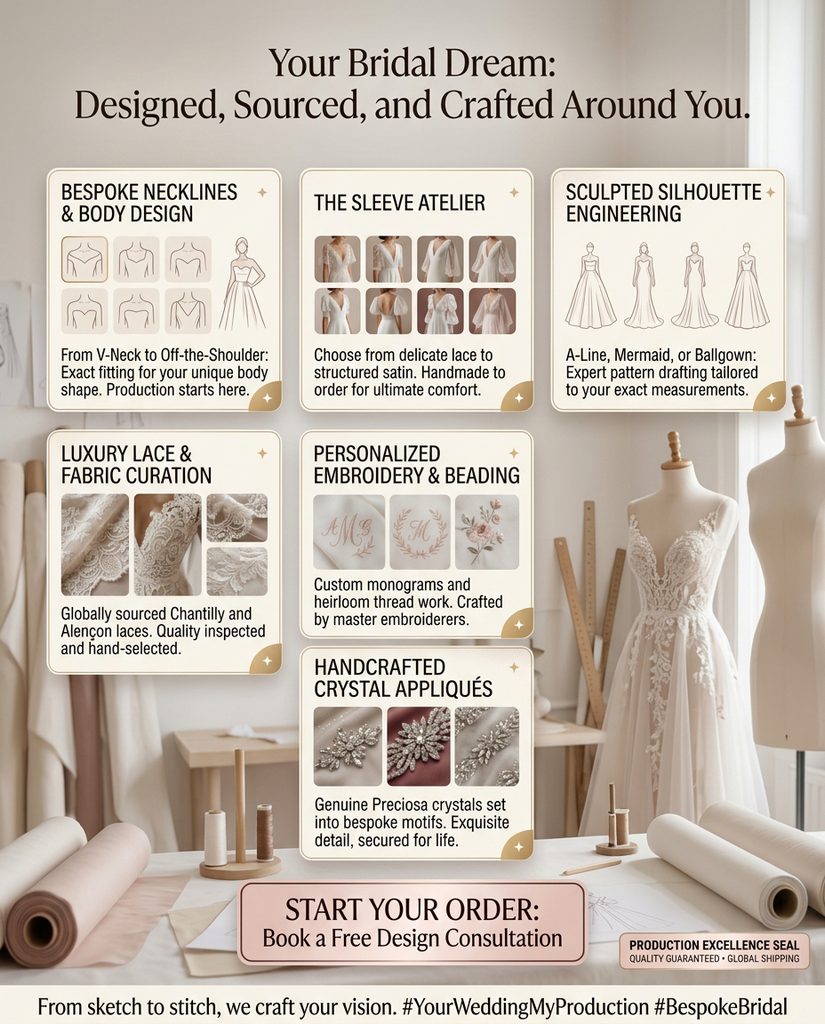
- Silk mikado and heavy duchess satin for structured modern silhouettes
- French and Swiss lace (Alençon, Chantilly, Guipure) applied by hand rather than heat-bonded
- Silk organza, chiffon, and soft tulle for movement and layering
- Stretch crepe and bi-stretch satin for contemporary body-conscious cuts
- Hand-beaded or embroidered panels that can be relocated or extended during fittings
A Handmade Wedding Dress Manufacturer and Handcrafted Bridal Gown Manufacturer invests in these materials because machine substitutes show under professional lighting and close-up photography. A Personalized Wedding Dress Manufacturer further allows substitution of lining weights or train lengths without restarting the entire pattern.
Expert Insight Box
“The most expensive fabric is the one that fails the movement test. If the skirt does not recover after the bride sits, or if the lace stretches unevenly across the bust, the gown loses perceived value regardless of label.” — Industrial pattern specialist working with European bridal ateliers
Production Sequence from Sketch to Shipment
Understanding the sequence prevents costly surprises. A typical flow at a Custom Bridal Dress Manufacturer and International Wedding Dress Manufacturer looks like this:
- Design brief or tech-pack submission (or selection from protected private-label library)
- Pattern development and digital or physical sample
- Client or boutique approval of fit, lace placement, and embellishment density
- Fabric and trim procurement with lot-matching for multi-piece orders
- Cutting (laser or precision manual for lace matching)
- Construction of understructure (boning channels, bust cups, horsehair if required)
- Application of lace, beading, and embroidery—predominantly hand work for couture levels
- Final assembly, pressing, quality inspection against master sample
- Branding (woven labels, hang tags, garment bags) under private-label agreement
- Packaging and export documentation
A Made to Order Wedding Dress Manufacturer and Tailor Made Bridal Gown Manufacturer compresses steps 1–3 for repeat clients. An Exclusive Bridal Gown Manufacturer adds an extra inspection layer when the piece is destined for a specific high-profile client.
Checklist: What Boutique Owners Should Demand Before First Order
- Written NDA and design exclusivity clause for the agreed territory
- Ability to view or receive video of the production floor
- Clear policy on sample costs and whether they are credited against bulk
- Measurement protocol that accommodates real body variation rather than pure size charts
- Photography and update schedule during production
- Export experience and preferred logistics partners
Cost Structures and Margin Reality
Boutique owners frequently underestimate total landed cost. A realistic breakdown for a mid-to-high exclusive gown:
- Fabric and trims: 25–40 %
- Labor (especially hand embroidery and beading): 30–45 %
- Pattern development and sampling amortization: 5–10 %
- Overhead, quality control, packaging: 10–15 %
- Shipping, duties, insurance: variable by destination
When a boutique works with a Wholesale Custom Wedding Dresses supplier or Wholesale Custom Bridal Gowns partner that also offers private labeling, the retail markup can reach 3.5–5× on exclusive pieces because competition is eliminated. Standard designer wholesale often restricts pricing and forces the boutique into price wars with online discounters. A Private Label Wedding Dress Manufacturer removes that constraint.
Practical Scenario
A European boutique orders five protected styles from a Custom Bridal Wear Manufacturer at an average wholesale of €380–520. After private labeling and local fittings, the same gowns retail between €1,600 and €2,400. Sell-through of three pieces covers the investment and generates stronger absolute profit than eight mid-tier stock dresses sold at lower margins.
Common Failure Points and How Strong Manufacturers Prevent Them
- Lace mismatch between sample and bulk → lot reservation and photographic confirmation
- Fit drift across sizes → graded patterns validated on multiple body types
- Bead loss or yellowing → thread-sewn rather than glued application
- Late delivery for wedding dates → realistic capacity planning and buffer weeks
- Design leakage → contractual exclusivity and separate production tracking
A Wedding Dress OEM Supplier and Bridal Gown OEM Supplier that treats these risks as process design rather than after-the-fact fixes becomes a long-term asset rather than a vendor.
2026 Market Context for Exclusive Lines
Current demand favors personalization over pure volume. Brides request non-traditional colorways (champagne, bone, soft sage, ice blue), convertible elements, and heirloom-level detailing. Corsetry with visible or internal structure, basque waistlines, and three-dimensional floral appliqué appear repeatedly in high-end work. A Couture Wedding Dress Manufacturer and Luxury Bridal Gown Manufacturer must therefore maintain both technical capacity for structure and artistic capacity for surface embellishment.
Boutiques that position themselves as destinations for exclusive pieces rather than showrooms of widely available styles capture higher average transaction values and stronger client loyalty. Partnering with a Bespoke Bridal Wear Manufacturer or One of a Kind Wedding Dress Manufacturer supplies the product foundation for that positioning.
Decision Framework for Selecting a Partner
Ask these questions of any potential Custom Wedding Dress Manufacturer or Custom Bridal Gown Manufacturer:
- Can you protect a style exclusively within my city or country for a defined period?
- What is the actual process when a bride needs a 4 cm bust adjustment and a longer train after the sample is approved?
- How do you document and archive patterns so reorders remain identical years later?
- What percentage of construction is hand versus machine on a typical exclusive gown?
- Can you provide references from boutiques operating in markets similar to mine?
Answers that remain vague usually indicate a trading company rather than a true factory. A genuine Custom Wedding Dress Factory and Custom Bridal Gown Factory can walk through each stage with photographs or video.
Long-Term Partnership Value
The strongest relationships evolve beyond transactional orders. A reliable manufacturer begins to anticipate regional preferences, suggests fabric alternatives when supply tightens, and collaborates on seasonal capsules that remain exclusive to the partner. Over time the boutique builds a recognizable signature aesthetic without the overhead of owning a full atelier.
Metropol Wedding Dress, operating as both a Wedding Dress Manufacturer for Boutiques and Bridal Gown Manufacturer for Bridal Shops, has structured its operations around this partnership model—combining atelier-level craftsmanship with export-ready systems. The result is a supply chain that supports exclusive positioning rather than competing on the same open-market dresses available to every competitor.
Purchasing managers who treat manufacturer selection as a strategic rather than purely cost-driven decision consistently report higher sell-through of exclusive pieces, stronger brand differentiation, and improved client retention. The gowns themselves become proof of the boutique’s curation ability.
Frequently Asked Questions
1. What distinguishes a true Custom Wedding Dress Manufacturer from a standard wholesale supplier?
A true Custom Wedding Dress Manufacturer develops or adapts patterns for individual or small-group orders, maintains hand-finishing capacity, and offers measurement-driven adjustments rather than forcing stock sizes.
2. How does a Bespoke Wedding Dress Manufacturer handle a bride with significant asymmetry or posture differences?
Pattern makers create a base from the provided measurements and then adjust balance points, shoulder slope, and skirt hang during the sample or first fitting stage.
3. What is the realistic minimum order for a Private Label Wedding Dress Manufacturer?
Many specialized partners accept 1–5 pieces per style for true exclusive work; larger factories may require higher volumes unless the relationship is established.
4. Can a Made to Measure Wedding Dress Manufacturer also supply wholesale volumes of the same silhouette?
Yes. Once a master pattern is approved, the same manufacturer can produce both individual made-to-measure pieces and small wholesale runs under private label.
5. How does an OEM Wedding Dress Manufacturer protect client designs?
Through signed NDAs, separate production tracking, and contractual territorial exclusivity so the same style is not sold to competing boutiques in the agreed region.
6. What lead times should boutiques expect from a Couture Wedding Dress Manufacturer?
Fully bespoke pieces typically require 10–16 weeks; made-to-order from an existing master sample can be 6–10 weeks depending on embellishment complexity.
7. Why choose a Handmade Wedding Dress Manufacturer over high-volume factories for exclusive lines?
Hand application of lace and beads produces superior drape, longevity, and photographic quality that machine-only processes cannot match at the luxury level.
8. How does a Custom Bridal Gown Factory manage fabric lot consistency across multiple orders?
By reserving specific dye lots and maintaining photographic and physical swatch archives for every style.
9. What documentation does a Wedding Dress Exporter provide for international shipments?
Commercial invoice, packing list, certificate of origin when required, and any preferential trade documents applicable to the destination country.
10. Can a Bridal Gown OEM Supplier produce both classic ball gowns and modern minimalist crepe styles?
Yes, provided the technical team has experience across construction methods—structured corsetry and soft bias techniques.
11. How important is in-house pattern making for a Premium Wedding Dress Manufacturer?
Critical. External pattern services introduce communication delays and interpretation errors that compound across fittings.
12. What happens if a client needs last-minute train length or sleeve changes with a Tailor Made Wedding Dress Manufacturer?
Most professional partners accommodate minor adjustments if capacity and fabric remain available; major changes may require a new sample.
13. Does a Luxury Bridal Gown Manufacturer typically offer private labeling from the first order?
Reputable partners do, including woven labels, hang tags, and branded packaging once the commercial relationship is established.
14. How does a Direct Bridal Gown Manufacturer reduce total cost compared with multi-tier distribution?
By eliminating distributor and agent margins and allowing the boutique to negotiate directly on volume and exclusivity.
15. What quality controls does a Handcrafted Bridal Gown Manufacturer apply before shipment?
Multi-stage inspection: fabric upon receipt, in-process construction checks, final measurement against the approved sample, and visual review under different lighting.
16. Can a Customized Bridal Gown Manufacturer work from a bride’s own sketch or inspiration images?
Yes. The design team translates the visual brief into a workable pattern and technical specifications.
17. What is the difference between a Bespoke Bridal Wear Manufacturer and a standard made-to-order service?
Bespoke usually begins with a blank page and original pattern; made-to-order starts from an existing approved style with client-specific modifications.
18. How does a Wedding Dress Manufacturer for Boutiques support seasonal planning?
By offering protected capsule collections, advance fabric booking, and staggered production slots that align with the boutique’s appointment calendar.
19. Are there advantages to working with an International Wedding Dress Manufacturer based in Turkey for European and Asian markets?
Proximity, established export infrastructure, skilled labor pool for lace and embroidery, and competitive cost structure relative to Western Europe or North America.
20. What should a boutique ask about reorders from a Custom Bridal Collection Manufacturer?
Whether patterns and specifications are permanently archived and whether the same fabric lots or equivalents can be sourced years later.
21. How does a One of a Kind Wedding Dress Manufacturer price unique pieces?
Based on fabric cost, estimated hand-labor hours, complexity of construction, and development time rather than a fixed wholesale grid.
22. Can a Bridal Couture Manufacturer also function as a reliable Wholesale Custom Bridal Gowns partner?
Yes, when the operation maintains both atelier capacity for special pieces and scalable production lines for protected styles.
23. What role does a Personalized Wedding Dress Manufacturer play in inclusive sizing?
True made-to-measure work starts from individual measurements rather than grading up or down from a sample size, producing better fit across body types.
24. How transparent should a Custom Wedding Dress Factory be about production progress?
Leading partners provide scheduled photo or video updates at key milestones so the boutique can manage client expectations.
25. What logistics options does a Bridal Gown Exporter typically offer?
Express courier for samples and urgent pieces, consolidated air or sea freight for larger wholesale shipments, with full tracking and insurance.
26. Why might a boutique prefer a Tailor Made Bridal Gown Manufacturer over buying finished designer stock?
Greater design control, higher margins, regional exclusivity, and the ability to respond to individual client requests without inventory risk.
27. How does a Premium Bridal Gown Manufacturer approach sustainable or lower-impact materials?
By offering certified or lower-impact alternatives where they meet performance and aesthetic standards, while remaining transparent about current limitations in lace and silk supply.
28. What is the typical sampling process with a Bespoke Bridal Gown Manufacturer?
Initial sample or toile, fit review (in person or via detailed measurements and photos), refinement sample if needed, then production of the final gown.
29. Can an Exclusive Bridal Gown Manufacturer guarantee that a style will not appear in competing local boutiques?
Through contractual territorial exclusivity clauses that are actively enforced.
30. How does a Wedding Dress OEM Supplier handle branding for private-label clients?
By producing and applying client-specific woven labels, care labels, hang tags, and often custom garment bags.
31. What technical capabilities separate a true Couture Wedding Dress Manufacturer from mid-market producers?
In-house corsetry expertise, hand-sewing of complex lace motifs, ability to engineer multi-layer skirts with proper weight distribution, and archival pattern systems.
32. Is it realistic for a small boutique to begin with a Custom Bridal Wear Manufacturer on very low volumes?
Yes. Many specialized partners designed their model precisely for boutique-scale orders rather than mass-market minimums.
33. How does a Direct Wedding Dress Manufacturer support after-sales issues such as minor alterations or repairs?
By providing detailed construction notes and, in some cases, spare lace or bead packages so local alterations can match the original work.
34. What market positioning advantage does partnering with a Luxury Bridal Gown Manufacturer create for a boutique?
It allows the boutique to offer genuine exclusivity and higher perceived value, differentiating it from competitors selling widely distributed styles.
35. How frequently should a boutique review its collection with a Custom Wedding Dress Manufacturer?
At least seasonally, to refresh protected styles, introduce new silhouettes aligned with emerging demand, and retire slower movers.
These questions reflect the practical concerns of purchasing managers and boutique owners who treat exclusive wedding dresses as both product and strategic asset. Clear answers from a capable manufacturer turn uncertainty into a reliable supply partnership.
Exclusive Wedding Dresses Manufacturer in Turkey
Finding the right exclusive wedding dresses manufacturer in Turkey can be an important step for bridal boutiques, fashion brands, wholesalers, and designers looking to build a distinctive wedding dress collection. In today’s competitive bridal market, customers are no longer satisfied with ordinary designs that look similar from one boutique to another. Brides increasingly want individuality, refined craftsmanship, beautiful fabrics, and gowns that express their personal style.
For bridal businesses, this creates both an opportunity and a challenge. A boutique needs wedding dresses that attract attention, but it also needs a manufacturing partner capable of delivering consistent quality, flexible production, customization, and professional communication.
Turkey has become an attractive destination for bridal fashion production because of its established textile industry, experienced garment professionals, skilled artisans, and strong tradition of fashion manufacturing. Turkish bridal manufacturers can combine modern production techniques with detailed craftsmanship, creating wedding dresses suitable for both luxury retail and international wholesale markets.
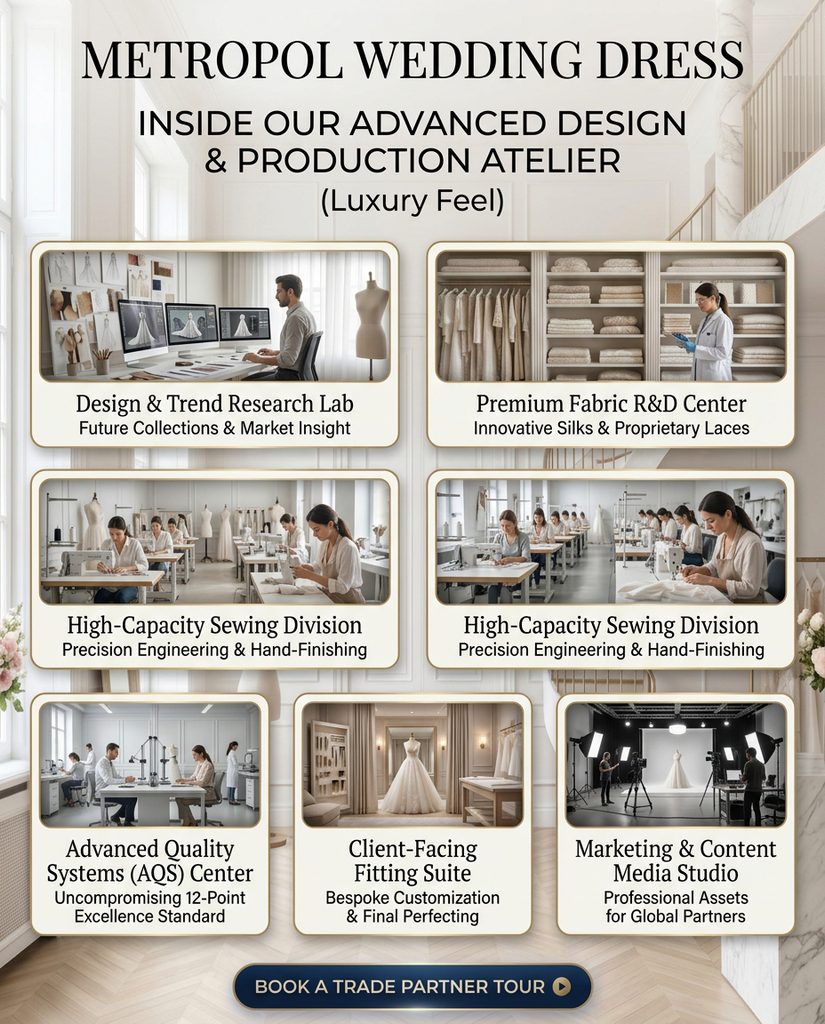
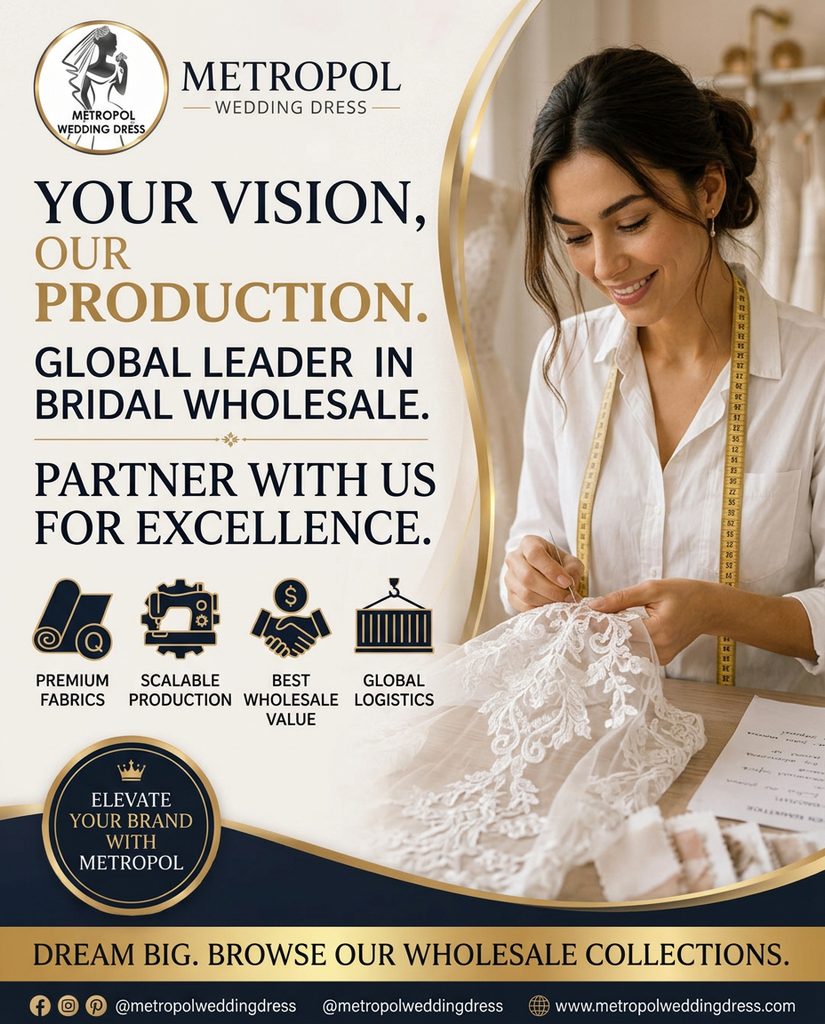
Metropol Wedding Dress is a Turkish bridal atelier offering custom bridal gown production, private-label adaptations, and wholesale cooperation for bridal businesses. Its atelier model brings design development, pattern making, construction, embellishment, fitting, and finishing together within the production process.
What Are Exclusive Wedding Dresses?
Exclusive wedding dresses are designed to offer something beyond a standard bridal collection.
The word “exclusive” can refer to several characteristics. It may describe a unique design, a limited-production gown, a customized silhouette, a private-label collection, special fabric selection, handcrafted embellishment, or a combination of these elements.
An exclusive gown should create a sense of individuality.
It may feature an unusual neckline, a dramatic train, sophisticated lace placement, three-dimensional floral details, hand-applied crystals, delicate embroidery, or an unexpected combination of fabrics.
However, exclusivity is not simply about adding more decoration.
A sophisticated bridal gown can be completely minimalist and still feel exclusive because of its exceptional cut, fabric quality, proportions, and construction.
For this reason, a professional exclusive wedding dresses manufacturer in Turkey should understand both aesthetics and technical garment construction.
Why Turkey Is a Strong Destination for Bridal Manufacturing
Turkey has a long-established textile and apparel industry serving both domestic and international markets.
Its manufacturing ecosystem includes fabric suppliers, embroidery specialists, lace producers, pattern makers, tailors, embellishment artisans, and garment manufacturers.
This infrastructure creates significant advantages for bridal production.
A bridal manufacturer can access a wide range of materials and production expertise while maintaining close control over development and manufacturing.
Turkey’s location also provides practical advantages for international businesses serving European, Middle Eastern, North African, and other global markets.
For bridal boutiques, the combination of design flexibility, manufacturing experience, and international accessibility makes Turkish production particularly interesting.
The country is also known for combining traditional craftsmanship with contemporary fashion.
This is important in bridalwear because a modern wedding dress may require both highly technical construction and delicate hand-finishing.
The Difference Between Exclusive and Mass-Market Wedding Dresses
Mass-market wedding dresses are generally developed for standardized production.
The objective is to manufacture a design efficiently at a larger scale.
This model can be effective for businesses focused primarily on volume, but it may not provide the level of differentiation that premium bridal boutiques need.
Exclusive bridal gowns take a different approach.
The design can be developed around a specific aesthetic, target customer, or brand identity.
Details can be modified.
Materials can be selected according to the desired look.
Embellishments can be adjusted.
The silhouette can be refined.
Production can be organized around smaller or more specialized collections.
For a bridal boutique, this can make a major difference.
When customers see a distinctive gown that they cannot easily find elsewhere, the boutique has an opportunity to create a stronger emotional connection and a more memorable shopping experience.
Design Is the Foundation of an Exclusive Bridal Collection
A successful bridal collection begins with a clear design direction.
Before production starts, the manufacturer and brand should understand the intended customer.
Is the collection romantic?
Minimalist?
Modern?
Traditional?
Luxury?
Bohemian?
Dramatic?
Modest?
Destination-focused?
A clearly defined identity makes it easier to create a coherent collection.
For example, a luxury bridal brand might focus on structured silhouettes, premium satin, intricate lace, and sophisticated hand embellishment.
A contemporary label might focus on clean lines, architectural shapes, detachable components, and modern fabrics.
A romantic collection may emphasize soft tulle, floral lace, delicate embroidery, and flowing trains.
An experienced exclusive wedding dresses manufacturer in Turkey can help transform these creative directions into garments that can actually be manufactured consistently.
Custom Wedding Dress Manufacturing
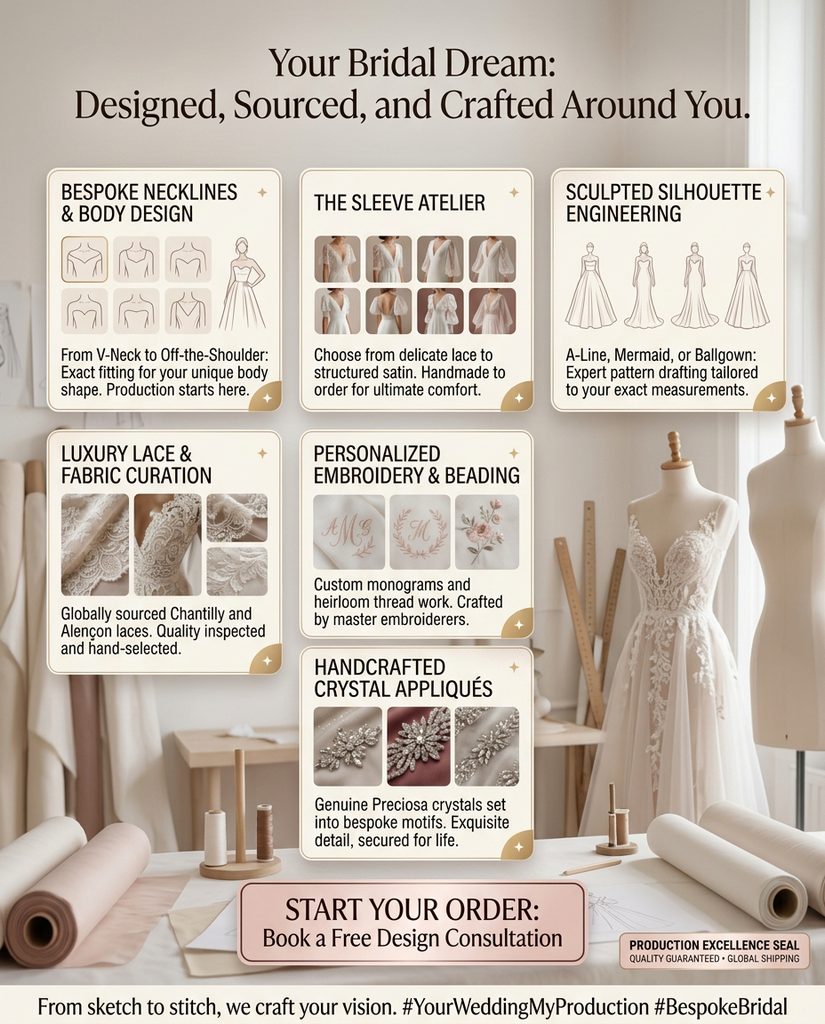
Customization is one of the strongest advantages of working with an atelier.
A customer may love a particular gown but want a different neckline.
Another bride may prefer longer sleeves.
A boutique may want to change the train.
A designer may request different lace.
A private-label brand may want its own embroidery.
These modifications require technical knowledge.
Changing a neckline, for example, can affect the entire bodice construction. Changing the skirt volume can alter the balance of the gown. Adding embellishment changes weight distribution.
Customization should therefore be incorporated into the development process rather than treated as a simple alteration at the end.
A professional atelier can evaluate the requested modification and adapt the pattern and construction accordingly.
Private Label Wedding Dress Production
Private-label manufacturing is increasingly relevant for bridal businesses that want to develop their own identity.
Instead of purchasing a completely generic collection, a retailer can work with a manufacturer to develop gowns under its own brand.
This may involve:
- Custom silhouettes
- Modified existing designs
- Exclusive fabrics
- Brand-specific embellishment
- Custom labels
- Special packaging
- Limited collections
- Exclusive production agreements
Private-label manufacturing allows a boutique to create a stronger market position.
Rather than competing solely on price, the business can compete through design and exclusivity.
A Turkish bridal atelier with customization and manufacturing capabilities can be an effective partner for this type of business model.
Wholesale Exclusive Wedding Dresses
Wholesale does not necessarily have to mean mass-produced or generic.
Modern bridal wholesalers increasingly look for manufacturers that can provide distinctive gowns while maintaining professional production capabilities.
A wholesale collection can include carefully selected exclusive designs intended for a limited group of retailers.
This approach can help boutiques avoid carrying exactly the same dresses as every competitor.
For a manufacturer, wholesale production requires consistency.
Patterns must be reliable.
Measurements must be accurate.
Materials must be controlled.
Embellishment must be repeatable.
Quality must remain consistent across production batches.
Therefore, wholesale bridal manufacturing requires a combination of atelier craftsmanship and structured production management.
The Importance of Fabric in Exclusive Bridal Fashion
Fabric selection can dramatically influence how a wedding dress looks and feels.
Premium bridal fabrics can create structure, softness, movement, texture, or visual depth.
Popular choices include:
- Mikado
- Duchess satin
- Silk-inspired satin
- Crepe
- Tulle
- Organza
- Chantilly lace
- Guipure lace
- Embroidered lace
- Beaded fabrics
A structured mikado gown can create a sophisticated architectural silhouette.
Soft tulle can create an ethereal effect.
Lace can introduce romantic texture.
Crepe can produce a clean, modern appearance.
Organza can create volume while maintaining a lightweight visual effect.
The fabric should always be selected according to the design.
A skilled manufacturer understands how different materials behave during cutting, sewing, pressing, fitting, and finishing.
Couture-Level Embellishment
Embellishment is one of the most recognizable elements of luxury bridalwear.
Hand-applied crystals, pearls, sequins, beads, embroidery, lace appliqué, and three-dimensional flowers can transform a gown.
But sophisticated embellishment requires precision.
The placement must follow the design.
The weight must be distributed correctly.
The attachment must be secure.
The decoration should enhance the body rather than obscure the silhouette.
For example, carefully positioned crystal embroidery can emphasize the waist or neckline.
Lace appliqué can be arranged to create a slimming visual effect.
Three-dimensional floral elements can add drama without requiring excessive sparkle.
These details can turn a beautiful bridal gown into a memorable signature piece.
Pattern Making and Garment Engineering
One of the most important parts of wedding dress manufacturing happens before the fabric becomes the finished gown.
Pattern development determines how the garment will fit and move.
A professional pattern maker considers body proportions, seam placement, ease, structure, support, and fabric behavior.
This becomes especially important for strapless gowns, corseted bodices, mermaid silhouettes, and heavily structured ball gowns.
A gown must remain stable while the bride walks, sits, dances, and moves throughout the wedding day.
Internal construction may include carefully designed boning, supportive layers, waist structures, cups, lining, and other technical elements depending on the design.
The outside may appear delicate and effortless, but a luxury gown often contains significant engineering beneath the surface.
The Importance of Fitting
Fitting is where design and construction meet the body.
A first fitting can reveal issues that are not visible on a flat pattern.
The waist may need adjustment.
The neckline may need refinement.
The shoulder position may need correction.
The skirt may require additional volume.
The train may need balancing.
The manufacturer can then modify the pattern and construction.
For custom wedding dresses, fitting is particularly important because the objective is not merely to create a standard size. The objective is to create a gown that works for a specific wearer.
Metropol Wedding Dress describes a bridal atelier process involving pattern development, initial fitting, construction, subsequent fitting, and final finishing. This approach supports the development of customized bridal gowns rather than treating every dress as a completely fixed product.
Exclusive Wedding Dresses for Bridal Boutiques
A bridal boutique has to offer its customers a reason to visit.
Beautiful interior design is important.
Professional consultants are important.
But the collection itself remains the heart of the business.
Exclusive gowns can help a boutique establish a distinctive identity.
A boutique specializing in luxury bridalwear might choose gowns with sophisticated silhouettes and premium fabrics.
A boutique targeting modern brides may prefer minimalist gowns and contemporary detachable pieces.
A boutique serving destination weddings might focus on lightweight designs.
A boutique serving modest customers may build a collection around elegant coverage and sophisticated sleeve options.
Working with an adaptable manufacturer allows the boutique to shape the collection around its actual market.
Building a Strong International Bridal Collection
International bridal markets differ significantly.
A design that performs exceptionally well in one country may not have the same appeal elsewhere.
Body proportions, cultural preferences, wedding traditions, climate, venue styles, and fashion trends all influence customer preferences.
An international bridal manufacturer should therefore be able to communicate effectively with overseas clients.
Digital consultations can make the process more efficient.
Design references can be exchanged electronically.
Measurements can be reviewed remotely.
Fabric selections can be discussed before production.
Progress can be communicated during development.
This approach allows an international boutique to work with a Turkish manufacturer without needing to travel for every order.
Modest and Elegant Bridal Designs
The global bridal market includes customers with diverse preferences regarding coverage and styling.
Some brides prefer high necklines.
Others want long sleeves.
Some request fully covered backs.
Others want modest silhouettes without sacrificing luxury or contemporary style.
An experienced bridal atelier can incorporate these preferences into the original pattern.
This is more effective than simply adding fabric to an existing gown after construction.
The pattern should be designed around the desired level of coverage from the beginning.
The result can remain elegant, balanced, and sophisticated.
Destination Wedding Dresses
Destination weddings continue to influence bridal fashion.
A bride marrying on a Mediterranean beach has different practical requirements from a bride celebrating in a grand European ballroom.
Destination gowns may need to be lighter and easier to transport.
They may use:
- Lightweight tulle
- Soft lace
- Flexible crepe
- Reduced internal layers
- Detachable trains
- Convertible overskirts
- Lightweight embellishment
A good manufacturer understands that luxury does not necessarily mean heavy.
A lightweight gown can still be highly sophisticated when the design, fabric, cut, and finishing are carefully considered.
Convertible Wedding Dresses
One of the most practical trends in contemporary bridal fashion is the convertible gown.
A bride may want one look for the ceremony and another for the reception.
A detachable train can create a dramatic entrance and then be removed for easier movement.
A removable overskirt can transform a fitted gown into a more relaxed evening silhouette.
Detachable sleeves can change the appearance of a gown.
These features create additional value for customers.
For a bridal business, convertible designs can also become strong selling points because they offer multiple looks within one bridal purchase.
Minimalist Exclusive Wedding Dresses
Exclusive does not always mean highly decorated.
Minimalist bridal gowns can be exceptionally luxurious.
In minimalist design, every detail becomes more visible.
The neckline must be precise.
The seams must be clean.
The fabric must have beautiful movement.
The fit must be exceptional.
The proportions must be balanced.
Premium satin, crepe, or mikado can create an elegant appearance without heavy embellishment.
This is particularly attractive to modern brides who want a timeless gown that will remain visually relevant for years.
A skilled exclusive wedding dresses manufacturer in Turkey can produce minimalist designs where construction quality becomes the primary decorative element.
Romantic Lace Wedding Dresses
Lace remains one of the most enduring materials in bridal fashion.
However, lace can be used in many different ways.
A traditional gown may feature all-over lace.
A modern gown may use lace only around the neckline.
A dramatic design may combine lace with transparent tulle.
A romantic gown may use floral appliqué around the bodice and skirt.
The placement of lace matters as much as the lace itself.
Strategic placement can emphasize curves, create vertical lines, or add visual softness.
An experienced bridal atelier can cut and place lace motifs carefully to achieve the intended effect.
Luxury Ball Gowns
The ball gown remains one of the most iconic bridal silhouettes.
Its appeal comes from drama.
A voluminous skirt creates a strong visual presence, particularly in large wedding venues.
Modern ball gowns, however, do not have to look traditional.
They can incorporate:
- Structured satin
- Sculptural bodices
- Modern square necklines
- Minimalist surfaces
- Three-dimensional flowers
- Dramatic trains
- Detachable overskirts
The result can combine classic bridal romance with contemporary fashion.
Mermaid and Fit-and-Flare Gowns
Mermaid and fit-and-flare gowns remain popular because they create a strong silhouette.
The construction must be precise.
The gown should follow the body’s lines without restricting movement unnecessarily.
The flare needs to begin at the appropriate point.
The train must remain balanced.
The internal structure should support the bodice.
Fabric selection is also critical.
Structured materials can create a dramatic sculptural effect, while softer fabrics can create a more fluid interpretation.
Quality Control in Exclusive Bridal Manufacturing
Luxury customers expect consistency.
A single poorly finished gown can damage the reputation of a boutique.
Quality control should therefore be integrated throughout the production process.
Important checks include:
Fabric Inspection
Fabric should be examined before cutting for defects, color variation, or inconsistencies.
Pattern Accuracy
Patterns should be checked against approved measurements.
Construction
Seams, closures, lining, support structures, and internal components should be inspected.
Embellishment
Crystals, pearls, beads, embroidery, and appliqués should be securely attached.
Fitting
The finished gown should be reviewed for proportion and balance.
Final Finishing
Pressing, hems, train edges, closures, and final details should be checked before packaging.
These procedures help ensure that the finished gown reflects the intended quality.
Why Boutiques Need Reliable Manufacturing Partners
A bridal boutique’s relationship with its manufacturer directly affects its customer experience.
If deliveries are unpredictable, the boutique may struggle to meet wedding deadlines.
If sizing is inconsistent, alterations become more complicated.
If materials change unexpectedly, the collection may lose consistency.
If communication is slow, design modifications can become difficult.
A reliable manufacturing partnership therefore has value beyond the individual gown.
It supports the entire business.
The ideal manufacturer becomes an extension of the boutique’s operation.
Communication With International Buyers
Clear communication is particularly important in international wholesale.
A manufacturer should be comfortable discussing:
- Product specifications
- Measurements
- Fabric requirements
- Color options
- Customization
- Production quantities
- Delivery schedules
- Packaging
- Branding
- Private-label requirements
Digital communication makes many of these processes easier.
Photographs, videos, sketches, measurement charts, and digital approvals can reduce misunderstandings.
For custom gowns, documenting the development process can also give the buyer greater confidence before final production.
How to Select an Exclusive Wedding Dress Manufacturer
Before choosing a supplier, bridal businesses should evaluate several factors.
1. Review the Portfolio
Look for evidence of consistent craftsmanship rather than relying on one impressive photograph.
2. Evaluate Customization
Ask whether designs can be modified.
3. Understand Production
Find out whether the company manufactures in-house or relies heavily on third parties.
4. Examine Materials
Ask about available fabrics, lace, embellishments, and lining options.
5. Discuss Quality Control
Understand how finished gowns are inspected.
6. Ask About Wholesale
Confirm whether the manufacturer works with international boutiques and retailers.
7. Explore Private Label
If building your own brand, determine whether private-label production is available.
8. Test Communication
A professional initial conversation can reveal a great deal about how future cooperation may work.
The Role of Exclusive Collections in Bridal Branding
A bridal brand becomes stronger when customers can recognize its aesthetic.
Exclusive collections can help establish that identity.
A brand may become known for sophisticated minimalist gowns.
Another may specialize in romantic lace.
Another may focus on dramatic couture.
Another may build a reputation for modern modest bridalwear.
The manufacturer plays an important role in translating this identity into consistent products.
For private-label brands, this consistency is particularly important.
Every gown should feel like part of the same brand family.
The Growing Demand for Personalization
Brides increasingly want products that feel personal.
They may have saved hundreds of wedding dress images online before visiting a boutique.
They know what silhouettes they like.
They may have specific fabric preferences.
They may want elements from several different gowns combined into one.
This means bridal manufacturers need to become more flexible.
The ability to adapt a design can become a major competitive advantage.
An atelier environment is naturally suited to this because customization is incorporated into the development process.
Sustainability and Responsible Bridal Production
Sustainability is becoming increasingly relevant across the fashion industry.
Bridalwear presents unique challenges because wedding dresses are often highly detailed garments.
More thoughtful production can include better material planning, reduced unnecessary sampling, durable construction, and designs intended to have long-term value.
Quality itself can contribute to sustainability.
A well-made wedding dress is more likely to be preserved, altered, resold, rented, or passed to another generation.
For luxury bridal businesses, longevity can therefore become part of the value proposition.
The Future of Exclusive Wedding Dress Manufacturing in Turkey
The future of bridal manufacturing will likely combine craftsmanship with technology.
Digital pattern development, improved communication systems, advanced production planning, and digital design tools can support traditional craftsmanship.
At the same time, brides will continue to value human creativity and artisanal finishing.
The most successful manufacturers will likely be those capable of combining both.
They will offer the reliability of professional manufacturing while preserving the individuality associated with atelier production.
This is particularly relevant for international bridal brands that want distinctive collections without creating an entire manufacturing infrastructure themselves.
Metropol Wedding Dress: Bridal Atelier in Turkey
For businesses searching for an exclusive wedding dresses manufacturer in Turkey, Metropol Wedding Dress provides a bridal atelier model focused on custom production and professional bridal manufacturing.
Its atelier approach includes design development, pattern making, fabric selection, fitting, construction, embellishment, and finishing. The company also presents opportunities for wholesale cooperation and private-label bridal production.
This model can be suitable for bridal boutiques, fashion brands, wholesalers, designers, and customers seeking customized wedding dresses.
For international businesses, direct communication with the atelier can help simplify the process of discussing designs, measurements, materials, and production requirements.
The official Bridal Atelier page provides additional information about the company’s approach and bridal production services.
Conclusion
The search for an exclusive wedding dresses manufacturer in Turkey is ultimately a search for more than a supplier.
It is a search for a partner capable of understanding design, quality, craftsmanship, customization, and the commercial realities of the bridal industry.
An exclusive wedding dress should offer individuality.
It should be beautifully constructed.
It should fit correctly.
It should use materials appropriate to the design.
Its embellishment should be carefully considered.
And it should create an emotional response when the bride sees herself wearing it.
For bridal boutiques and international fashion brands, these qualities can also create commercial value.
A distinctive collection can strengthen brand identity, attract customers, differentiate a boutique from competitors, and support a premium positioning.
Turkey offers a strong environment for this type of bridal manufacturing, combining textile expertise, experienced artisans, modern production capabilities, and international accessibility.
For businesses seeking custom bridal gowns, wholesale collections, private-label production, or exclusive designs, working with an experienced Turkish bridal atelier can be a strategic way to develop a stronger and more distinctive collection.
Discover Exclusive Bridal Production in Turkey
Metropol Wedding Dress – Bridal Atelier
Explore the official Bridal Atelier page for information about custom wedding dress production, bridal collections, and business cooperation:
🌐 https://metropolweddingdress.com/bridal-atelier/
📲 WhatsApp: +90 552 607 85 87
Primary keyword:
exclusive wedding dresses manufacturer in Turkey
Secondary keywords:
- exclusive wedding dresses Turkey
- luxury wedding dress manufacturer Turkey
- Turkish bridal gown manufacturer
- custom wedding dresses Turkey
- exclusive bridal gowns wholesale
- private label wedding dress manufacturer
- Turkish bridal atelier
- luxury bridal gown supplier
- wholesale wedding dresses Turkey
- custom bridal gown manufacturer
Related Topics
13.10.2025
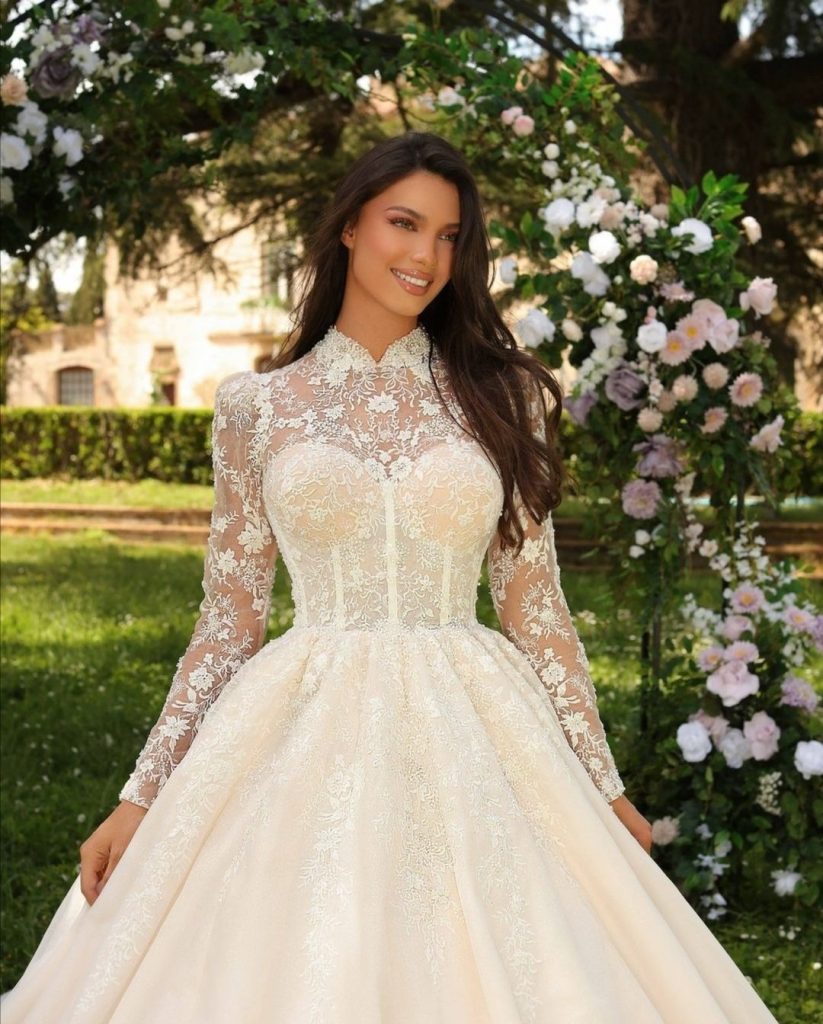
Best Custom Made Dress Designers and Tailors Around the World In the realm of luxury fashion, few experiences rival the artistry and personalization of custom made clothing. Whether you’re envisioning a bespoke wedding gown that...
17.07.2025
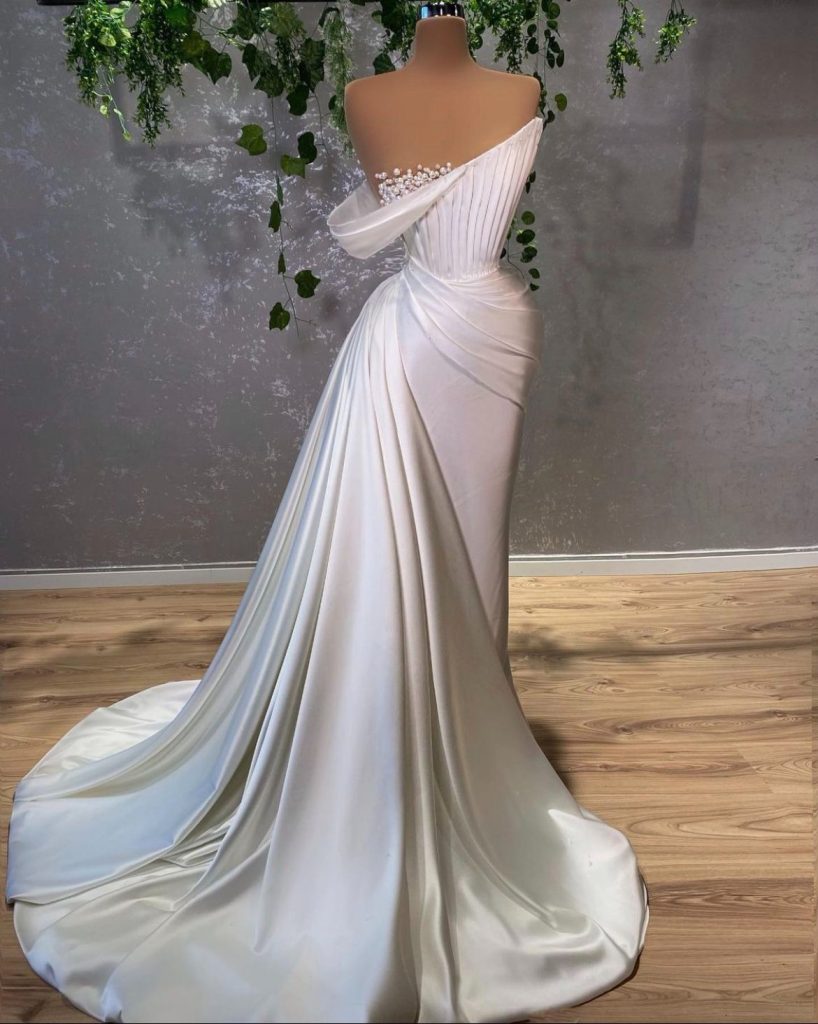
Cheap Custom Wedding Dress with Sleeves Finding the perfect wedding dress is a dream for every bride, but it doesn’t have to come with a hefty price tag. For brides in the USA seeking a...
27.03.2026
Best Places to Shop Custom Wedding Dresses in the USA Custom wedding dresses have become the gold standard for brides seeking a gown that feels truly theirs. In this comprehensive 2026 guide to the best...
16.04.2023
Wedding Dress Manufacturers in İreland The permanence of porcelain make-up is between 10-14 hours on average. This figure is the set time as long as everything is in harmony. The wedding dress manufacturing industry in...
15.07.2025
Cheap Off Shoulder Bridal Dress London Online When it comes to wedding planning, finding the perfect bridal dress is a top priority for many brides. The off-shoulder bridal dress, with its elegant and romantic silhouette,...
09.10.2025
Grossiste en Robes de Mariée sur Mesure Pourquoi Choisir la TurquieDans le monde effervescent de la mode nuptiale, où chaque détail compte pour sublimer le jour J, le choix d’un grossiste fiable et innovant est...
Comments