Custom Wedding Dresses Italy
Custom Wedding Dresses italy Paolo Sebastian’s ethereal, story-driven couture—handcrafted in Adelaide with French Chantilly lace, multi-layered Italian and French tulle, three-dimensional floral and bird appliqués, crystal work, and deeply personal embroidery—sets a global benchmark for romantic custom wedding dresses.
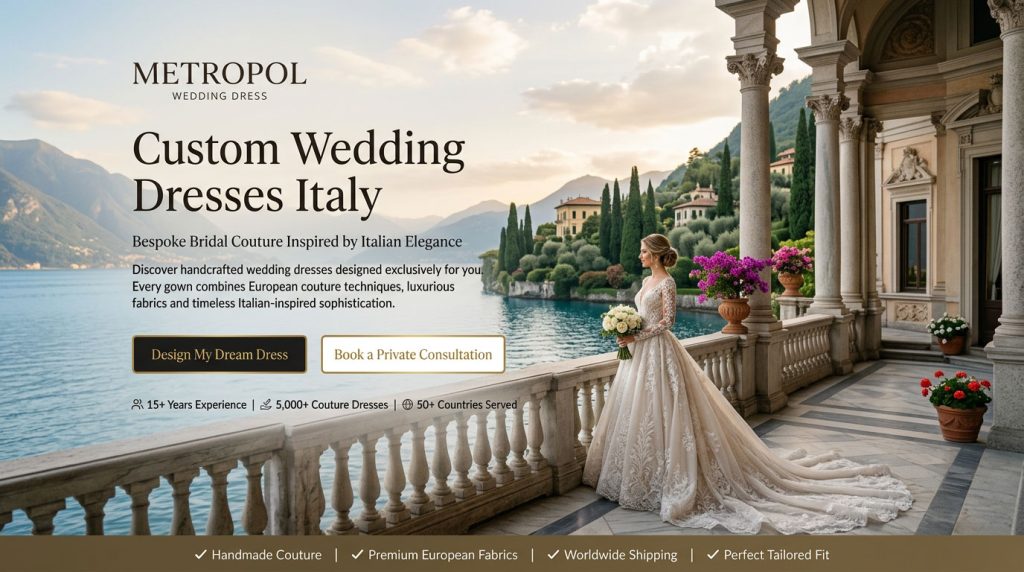
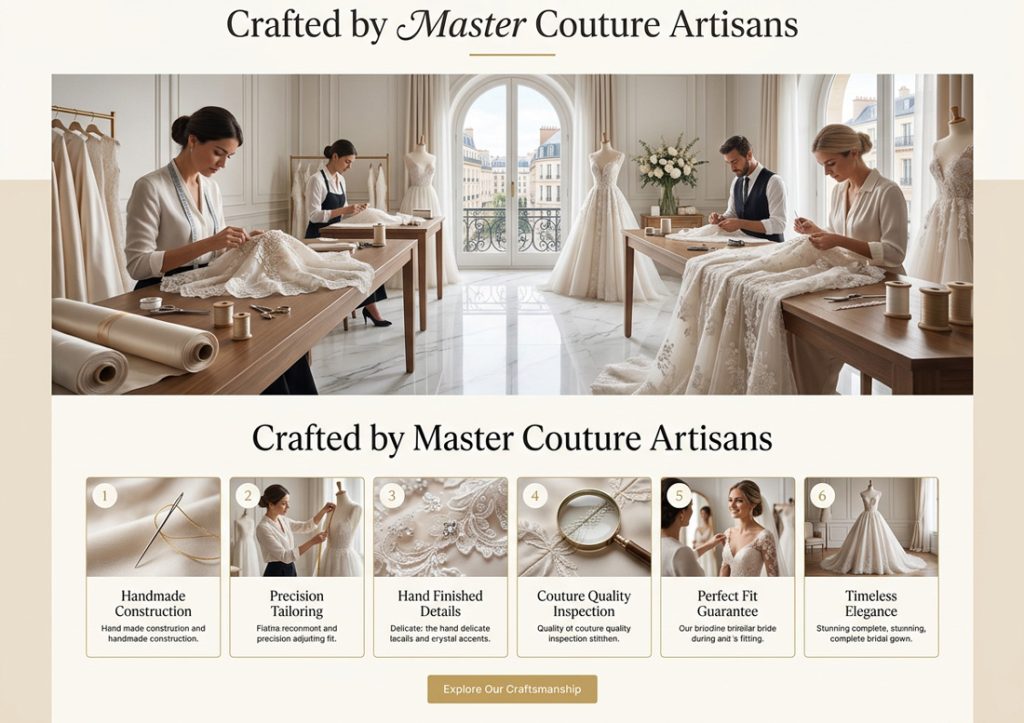
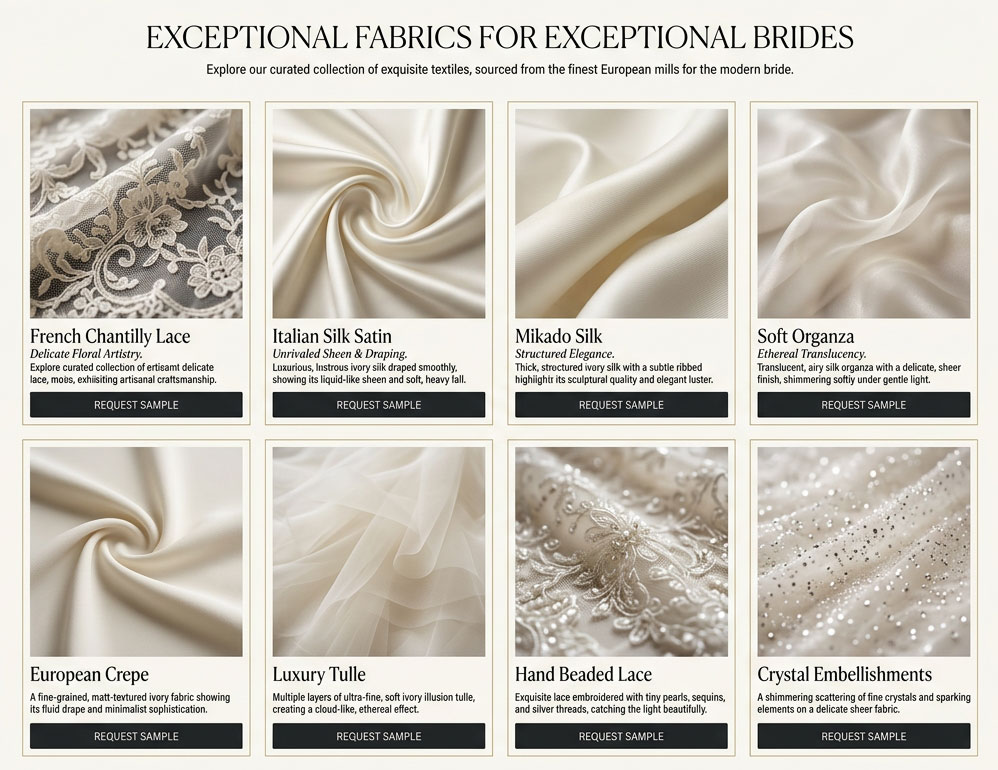
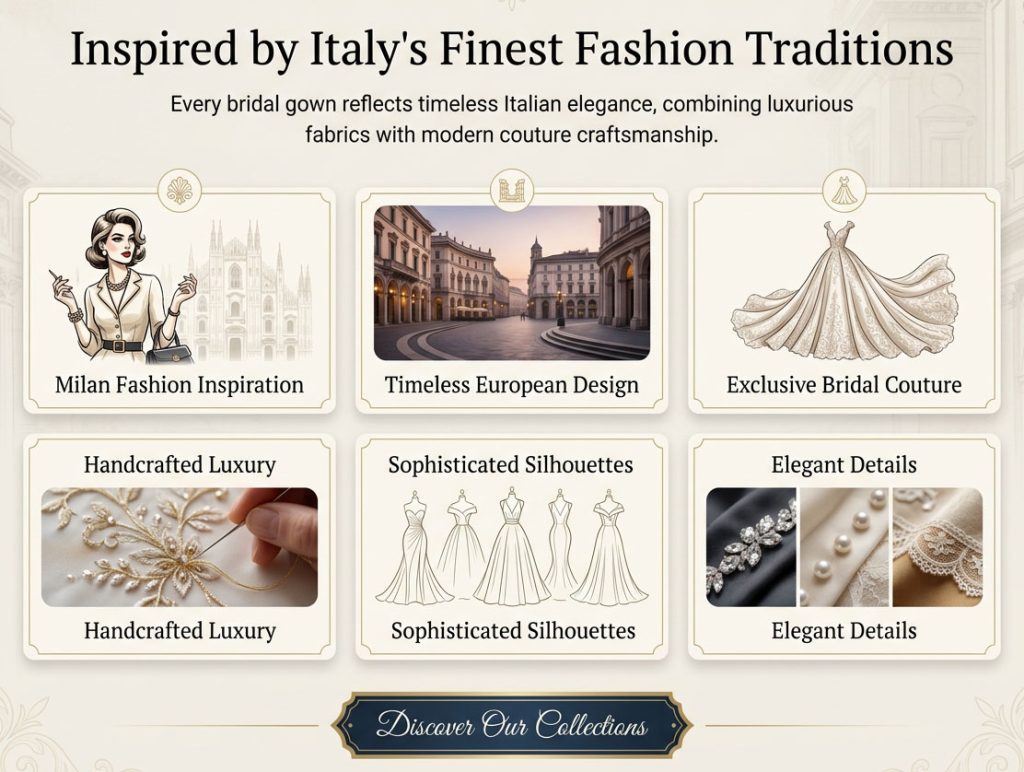
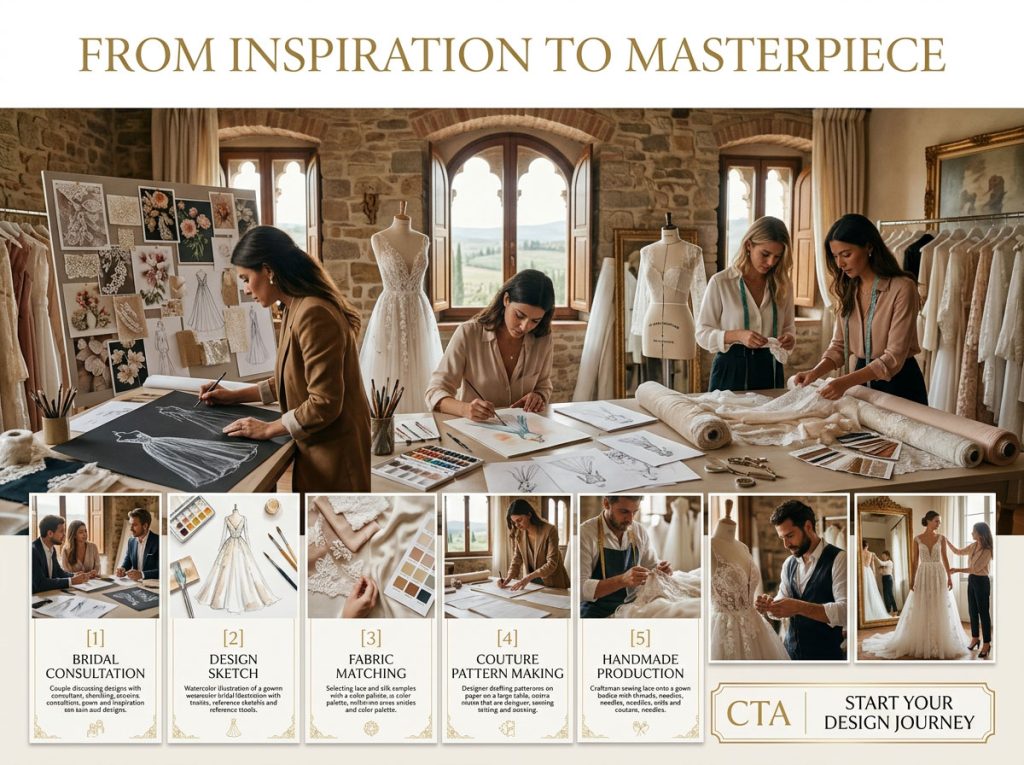
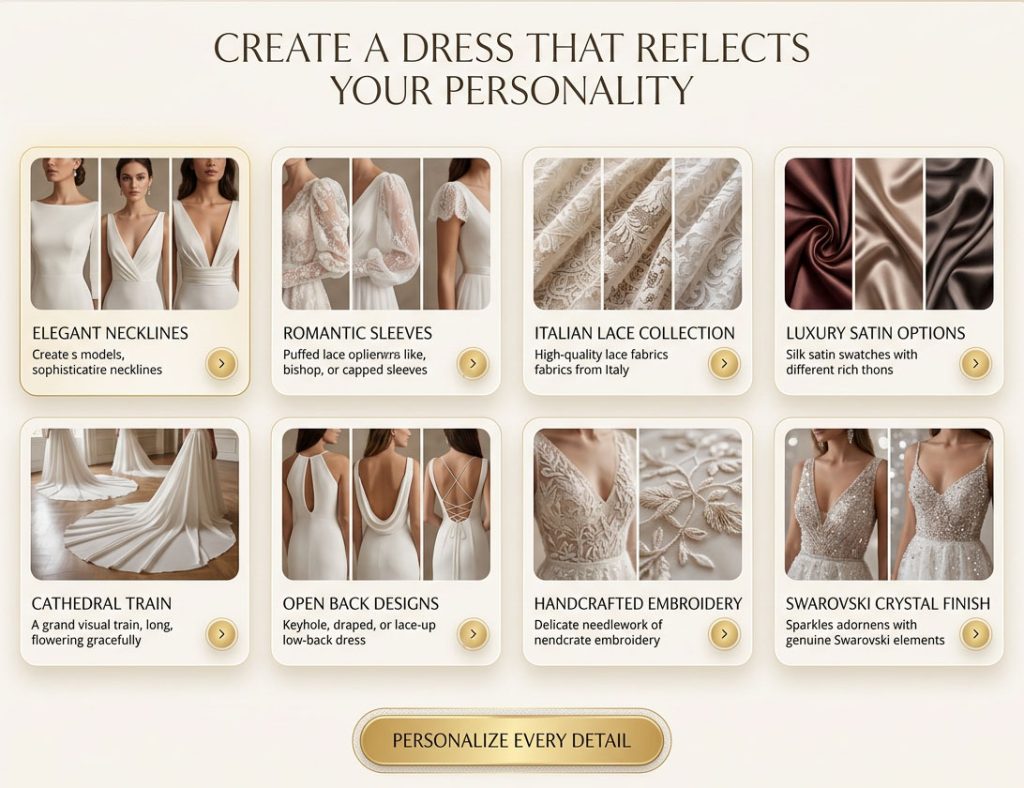
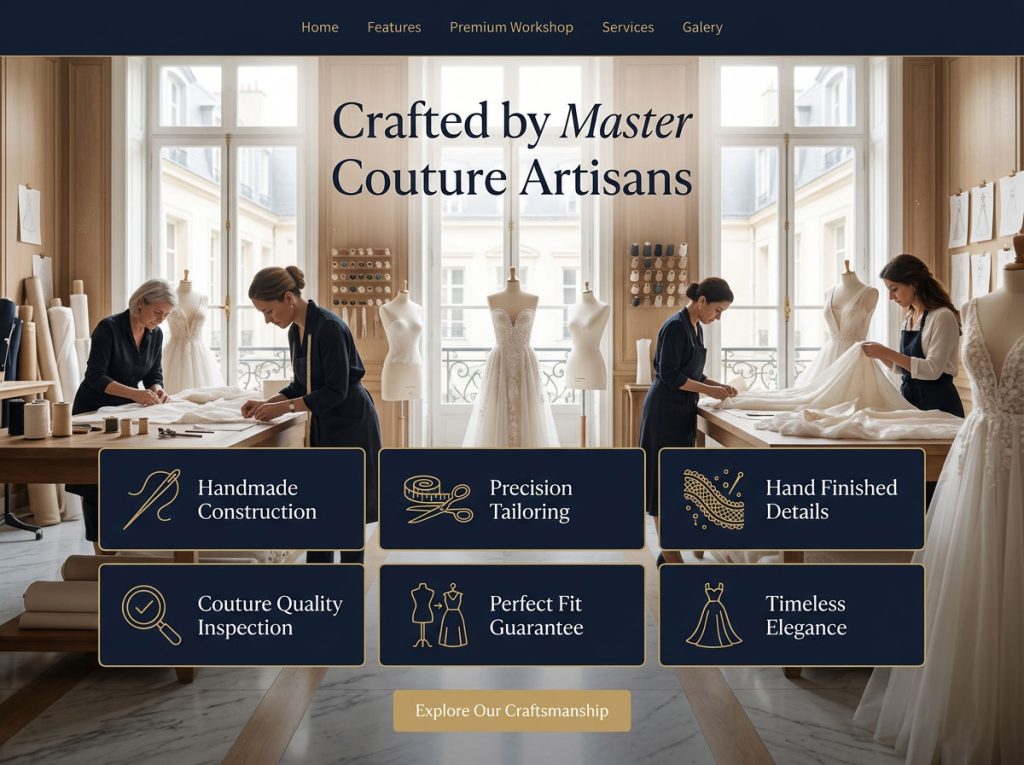
Brides seeking that same sense of narrative romance, volume, lightness, and heirloom detail for an Italian wedding (or an Italian-inspired celebration) often face logistics, lead times, and investment levels that place pure Paolo Sebastian couture out of reach. Metropol Wedding Dress, a Turkish atelier with over two decades of experience, bridges this gap. From its large production facility it delivers fully custom gowns using comparable luxury fabrics, hand embroidery, and silhouette mastery at accessible couture price points, with reliable shipping into Italy and across Europe. This guide explores how the Paolo Sebastian aesthetic translates into practical custom work for Italian venues, materials, production realities, cost structures, fit processes, common pitfalls, and real decision frameworks so that a bride can secure a gown that feels equally magical without compromising on quality or timeline.
Detailed Article
The moment a bride first sees a Paolo Sebastian gown—whether Delta Goodrem’s long-sleeved French tulle ball gown with scalloped lattice, cascading cathedral train, hand-embroidered cherubs and sentimental swans, or the multi-dress suite Paul Vasileff created for his own wife with 25 metres of Chantilly lace, nightingales, and more than twenty layers of tulle—something shifts. The dresses do not merely dress the body; they stage a private fairytale. Volume remains weightless. Embroidery tells a story. Construction is invisible yet structural. For many women planning a wedding in Italy—Tuscany villa, Amalfi cliffside, Venetian palace, Sicilian garden, or a Milanese civil ceremony followed by a countryside reception—this aesthetic feels culturally resonant. Italian light, architecture, and landscape reward exactly that interplay of romance, craft, and quiet drama.
Yet pure Paolo Sebastian couture is made in Adelaide. Consultations, multiple fittings, and international shipping add layers of complexity and cost. Lead times measured in many months become challenging when venue contracts, travel, and Italian bureaucratic timelines already constrain the calendar. This is the practical tension most brides confront: they fall in love with the Paolo Sebastian language of dress, then need a pathway that keeps the poetry while solving geography, budget, and schedule.
Metropol Wedding Dress operates from a substantial production workshop in Turkey and has spent more than twenty years refining exactly this translation. The atelier produces both ready collections and fully custom gowns for individual brides and for European bridal boutiques. It works routinely with Italian clients and retailers, ships into the EU, and specialises in the same vocabulary of materials and techniques—French and Italian laces, multi-layer tulle constructions, hand-applied three-dimensional florals, beading, corsetry, and cathedral trains—that define the high-romance end of the market. The difference is operational: shorter effective lead times for many projects, transparent pricing that typically sits well below pure Australian or Parisian couture, and a process designed for remote and destination-wedding clients.
The Paolo Sebastian Signature Translated
Paul Vasileff’s training included time at Milan’s Istituto Europeo di Design and an apprenticeship with an Italian tailor. His gowns frequently employ Italian tulle alongside French lace. The emotional register—storytelling through motif, extreme lightness under volume, sentimental embroidery (wedding dates, initials, personal symbols)—is therefore already half-Italian in sensibility even though the atelier is Australian. When a bride requests a “Paolo Sebastian-inspired” custom dress from Metropol, the conversation usually centres on four technical pillars:
- Silhouette architecture that creates grand volume without bulk (layered tulle skirts, structured yet soft bodices, illusion elements).
- Surface narrative: three-dimensional appliqués, scattered crystal or beadwork that catches Italian sunlight or candlelight, and optional personal embroidery.
- Fabric hierarchy: Chantilly or similar fine lace, silk or polyester tulle of varying weights and opacities, organza, satin for structure where needed.
- Movement and light interaction: the gown must behave differently in a stone courtyard at noon versus under string lights at dusk.
Metropol’s pattern-makers and embroiderers work from client photographs, mood boards, and detailed measurements. A typical brief might reference a specific Paolo Sebastian look—off-shoulder Chantilly with floral and bird motifs, strapless multi-layer tulle with star embroidery, or a long-sleeved illusion neckline with lattice detailing—then adapt it to the bride’s body, venue constraints (steps, wind on a terrace, narrow church aisles), and climate (summer heat in Sicily versus cooler northern Italy).
Materials and Construction Realities
Luxury bridal fabric is a global market. French Chantilly, Italian tulle, Swiss embroidery grounds, and high-grade sequins or crystals travel between suppliers. Metropol sources comparable grades and applies them with traditional hand techniques: appliqué placement, beadwork, and edge finishing done by specialised seamstresses. The production floor is large enough to handle both individual custom orders and boutique wholesale runs, which creates economies that keep individual custom pricing more accessible.
Construction sequence for a high-romance custom gown typically follows:
- Detailed measurement set and posture analysis (remote or in-person).
- Pattern development and toile (muslin or soft fabric prototype) for fit and proportion.
- Fabric and lace selection with physical swatches when possible.
- Cutting, understructure (boning, cups, petticoat layers), and main body assembly.
- Surface embellishment—often the longest phase.
- Final fittings and any last adjustments.
- Pressing, packing, and shipping with appropriate insurance and customs documentation for Italy.
For Italian clients the shipping leg is straightforward within the EU framework when originating from Turkey under the relevant trade rules; Metropol has established processes for this corridor. Brides should still allow buffer time for any customs formalities and for a final local alteration if desired.
Cost Structure and Value Comparison
Pure Paolo Sebastian couture sits in the high-investment category consistent with fully handmade atelier work in Australia and the associated international service model. Metropol’s custom range is positioned as accessible haute couture. Public information from the brand indicates custom gowns commonly fall in a band that begins substantially lower than top-tier international couture and remains competitive even for complex multi-layer and heavily embroidered pieces. Exact figures depend on fabric meterage, embroidery density, train length, and number of fittings, but the practical outcome for many brides is the ability to secure a gown with comparable visual and tactile impact while preserving budget for the rest of an Italian wedding (venue, travel, photography, hospitality).
A useful decision frame:
- If the priority is absolute ownership of an original Paul Vasileff design and the experience of working directly with that atelier, Paolo Sebastian remains the reference.
- If the priority is the aesthetic language—volume, lightness, narrative surface, heirloom feeling—executed to high technical standard with clearer logistics for an Italy-centred wedding and a more moderate outlay, Metropol is engineered for that brief.
Practical Process for Destination and Remote Brides
Many brides marrying in Italy live elsewhere. Metropol’s workflow accommodates this:
- Initial digital consultation with mood boards and reference images (Paolo Sebastian looks are frequently used as starting points).
- Measurement protocol that can be completed with a local tailor or carefully with a partner.
- Design sketches and fabric proposals.
- Toile or intermediate photos for approval.
- Final production and shipping timed to the wedding calendar, with recommended arrival several weeks before the event for any local steaming or minor tweaks.
Italian venues introduce specific functional requirements. A gown that must navigate cobblestones, climb villa stairs, or withstand coastal wind needs different understructure and hem considerations than a purely indoor ballroom dress. Experienced custom makers factor these in from the first pattern. Brides should supply venue photos, floor plans if available, and notes on expected weather and movement.
Real Scenarios
A northern European bride planning a late-spring ceremony in a Tuscan garden falls in love with the multi-layer tulle and star embroidery of a Paolo Sebastian first-dance gown. She works with Metropol to create a strapless version in graduated soft pinks and ivories, adds a detachable cape for the ceremony, and receives the finished dress six weeks before travel. Local Italian alterations handle the final hem for her shoes.
An Italian bride in Milan wants the long-sleeved French tulle ball-gown drama seen on recent celebrity clients of Paolo Sebastian but needs the dress within a tighter timeline and at a price that leaves room for a second reception look. Metropol produces a version with scalloped detailing, hand-applied florals, and a cathedral train, ships it, and the bride completes one local fitting.
A couple hosting a multi-day celebration on the Amalfi Coast requires both a formal ceremony gown and a lighter dinner dress. The same atelier produces both, ensuring colour and motif continuity so the visual story remains coherent across days.
Common Pitfalls and How to Avoid Them
- Underestimating embroidery time. Dense three-dimensional work cannot be rushed without quality loss. Build buffer.
- Ignoring climate. Heavy lace over many tulle layers can feel warm in southern Italian summer; lighter constructions or strategic layering solve this.
- Vague references. “Like Paolo Sebastian” is a starting point; specific images, notes on preferred neckline, sleeve, and train length produce better results.
- Skipping a toile or intermediate check when working remotely. Fit is non-negotiable.
- Leaving shipping and customs to the last moment. Confirm documentation and insurance early.
- Forgetting the veil and accessories. Coordinated pieces complete the look; many ateliers offer or source matching elements.
Decision Checklist for Brides
- Collect 5–8 clear reference images (Paolo Sebastian or similar high-romance gowns).
- Note venue type, expected weather, and any movement constraints.
- Decide absolute must-haves (sleeve, train length, specific motif) versus flexible elements.
- Obtain current lead-time and pricing range from the chosen atelier.
- Confirm measurement and fitting protocol for remote or destination work.
- Plan arrival date of the finished gown with at least two to three weeks buffer.
- Identify a reliable local seamstress in the wedding region for final tweaks if needed.
- Clarify shipping, insurance, and any duties.
- Agree on revision rounds and approval stages in writing.
- Photograph the finished gown thoroughly upon arrival for any later reference.
Expert Perspective on the Current Market
Italian bridal culture values craftsmanship and personalisation. The rise of destination weddings has increased demand for ateliers that can deliver high visual impact with international logistics competence. Brands that combine strong design interpretation, reliable production scale, and transparent communication occupy a valuable middle ground between pure couture houses and mass-market manufacturers. Metropol’s position—custom capability, European shipping experience, and pricing that makes complex embroidery feasible for a broader range of budgets—aligns with this demand. Brides who treat the process as a collaborative design project rather than a simple purchase consistently report higher satisfaction.
The aesthetic legacy of designers such as Paul Vasileff has expanded the visual vocabulary available to every bride. The practical question is no longer whether such romance is possible; it is how to secure it under the real constraints of an Italian wedding calendar and budget. Custom work through an atelier experienced in both the romantic language and the operational realities provides the answer.
FAQ
1. What makes Paolo Sebastian wedding dresses distinctive? Intricate hand embroidery, multi-layer lightweight tulle constructions, three-dimensional floral and figurative appliqués, narrative personal details, and a consistent fairytale-romantic silhouette language executed to couture standard in the Adelaide atelier.
2. Can I get a custom gown that looks and feels like Paolo Sebastian for an Italian wedding? Yes. Ateliers such as Metropol specialise in interpreting that aesthetic—volume, lightness, surface storytelling—using comparable fabrics and techniques while managing European logistics and more accessible pricing.
3. How long does a custom Metropol wedding dress typically take? Lead times vary with complexity and current order volume; complex embroidered pieces require several months. Early booking and clear communication of the wedding date are essential.
4. What fabrics are commonly used for high-romance custom gowns inspired by this style? French Chantilly or similar fine lace, Italian and French tulle in multiple weights, organza, silk or high-quality satin for structure, and quality crystal or bead embellishment.
5. Is remote design and fitting realistic for a bride living outside Turkey or Italy? Yes. Digital consultations, detailed measurement protocols, progressive photo approvals, and timed shipping make the process workable for destination and international clients.
6. How should I prepare reference images? Select clear, well-lit photographs showing silhouette, neckline, sleeve treatment, train, and surface detail. Note what you love most about each image.
7. Will the dress handle Italian outdoor conditions (wind, heat, steps)? A skilled custom maker will adjust understructure, hem weight, and layering for the specific venue and climate when given accurate information.
8. What is the typical price positioning of Metropol custom work relative to pure Paolo Sebastian couture? Metropol operates in an accessible haute-couture band that is substantially more moderate than top international pure-couture pricing while still delivering complex embroidery and construction.
9. Can personal embroidery (dates, initials, symbols) be included? Yes. Sentimental detailing is a natural part of the high-romance custom process.
10. Do I need a local seamstress in Italy after the dress arrives? Recommended for final steaming, minor hem or bustle adjustments, and peace of mind on the day.
11. How is shipping to Italy handled? Established processes exist for EU-bound shipments; confirm documentation, insurance, and expected transit time at the order stage.
12. What information should I give about my venue? Photos, notes on flooring, stairs, expected weather, and any movement requirements (dancing, outdoor procession).
13. Can I order both a ceremony gown and a lighter reception dress from the same atelier? Yes, and doing so helps maintain visual coherence across the celebration.
14. How important is a toile or intermediate fitting? Critical for fit accuracy, especially with complex structured or multi-layer designs.
15. What are the most common reasons a custom gown disappoints? Insufficient communication of priorities, rushed timelines that compress embroidery quality, and inadequate venue-specific adaptation.
16. Are veils and accessories available to match? Many custom processes include or coordinate matching veils and complementary pieces.
17. How do I know if a particular atelier can truly execute the Paolo Sebastian level of detail? Review finished work photos of similar complexity, ask specifically about embroidery methods and fabric sources, and request clarity on who performs the handwork.
18. Can the dress be made in a non-white or soft colour palette? Yes. Soft ivories, blush, dove grey, and subtle tonal variations are frequently requested within the romantic aesthetic.
19. What happens if my measurements change slightly before the wedding? Build a realistic buffer and discuss alteration policy early; minor changes are often manageable, major ones less so.
20. Is wholesale or boutique partnership available for Italian bridal shops? Metropol works with European retailers; boutiques seeking exclusive or custom-capable inventory can inquire directly.
21. How should I care for a heavily embroidered multi-layer gown after the wedding? Professional cleaning by a specialist experienced with delicate lace and beading, followed by proper archival storage.
22. Can the design incorporate elements from both Paolo Sebastian references and Italian regional traditions? Yes. Collaborative custom work allows blending of inspirations.
23. What is the role of the understructure in achieving weightless volume? Correct boning, cups, and layered petticoat construction create shape and support so the outer layers can remain soft and light.
24. How many revision rounds are typical? This should be agreed in advance; clear early communication reduces the need for extensive changes later.
25. Are there options for modest or long-sleeve versions of dramatic ball gowns? Yes. Long sleeves, higher necklines, and coverage options are routinely engineered within the same romantic language.
26. What documentation should I keep for customs and insurance? Invoices, detailed descriptions, value declarations, and shipping tracking as provided by the atelier.
27. Can the same atelier produce bridesmaid or mother-of-the-bride pieces in coordinating style? Some do; inquire if continuity across the wedding party is important.
28. How does climate affect fabric choice for southern versus northern Italian weddings? Lighter constructions and breathable layers are preferable for heat; additional structure or warmer fabrics may suit cooler northern conditions.
29. Is it possible to see physical fabric swatches before committing? Many ateliers can send swatches; request this early in the process.
30. What is the single most important step a bride can take to ensure success? Clear, early, and ongoing communication of priorities, constraints, and reference details, paired with realistic timeline planning.
CTAs (varied tone)
Begin the conversation with a mood board of the Paolo Sebastian looks that move you and the details of your Italian celebration.
Share your venue photos and preferred silhouette; receive a tailored proposal that respects both romance and practicality.
Secure your place in the production calendar while your preferred date is still open.
Request current lead times and a preliminary range for a gown of the complexity you envision.
Move from inspiration to a finished, wearable heirloom that belongs to your story and your Italian light.
Paolo Sebastian wedding dresses are not stocked for immediate retail sale. They are created as bespoke couture in the Adelaide atelier, so the only pieces “for sale” appear on the secondary market—pre-owned listings on platforms such as Stillwhite and specialist bridal marketplaces—or through ultra-premium resale and rental channels at prices frequently exceeding twenty thousand dollars. For brides or Italian boutiques seeking the same ethereal volume, multi-layer tulle, three-dimensional embroidery and narrative surface detail, the practical route is commissioned custom production. Metropol Wedding Dress supplies exactly that pathway: fully custom and wholesale gowns built with comparable luxury fabrics and hand techniques, priced in an accessible couture band, with established European shipping that serves Italy directly. This guide examines scarcity, secondary-market realities, total acquisition cost, risk, timeline reliability and Italy-specific logistics so decision-makers can secure the desired aesthetic without depending on rare pre-owned finds.
“You may also want to take a look at this article.” Custom Wedding Dresses Canada
The phrase “Paolo Sebastian dresses for sale” triggers an immediate market reality check. The brand does not operate a conventional ready-to-wear bridal inventory. Every gown begins as a private commission or a collection piece that is then made to the client’s measurements in the Adelaide atelier. Consequently, authentic pieces reach the open market only after a bride has worn hers, decided to sell, or through limited high-end consignment and rental programmes. Listings that do appear show original retail values in the high five-figure range and secondary asking prices that still sit well above typical couture alternatives—sometimes discounted 30–70 percent yet still demanding several thousand to more than ten thousand dollars, with occasional resale or rental figures above twenty-four thousand.
For a bride planning an Italian wedding, or for a boutique buyer in Milan, Florence, Rome or the Amalfi region who wants to offer that romantic language to clients, reliance on secondary listings is operationally fragile. Size availability is random, condition varies, authenticity verification requires diligence, and lead time is zero only if the dress happens to fit and ship in time. The more reliable procurement model treats the aesthetic itself as the specification and commissions a new garment engineered to the same visual and technical brief.
Metropol Wedding Dress functions as that specification-driven supplier. Operating from a large production facility, it accepts both individual custom orders and wholesale programmes for European retailers. The atelier works with French and Italian laces, multi-weight tulle constructions, hand-applied three-dimensional florals, crystal and beadwork, and the full range of romantic silhouettes that define the high-romance segment. Pricing remains inside an accessible couture corridor, typically well below pure Australian or Parisian atelier rates, while shipping into Italy is routine.
Custom Wedding Dresses Italy
Primary channel (atelier commission)
- Made-to-order only.
- Full creative control and perfect fit.
- Longest lead time and highest price point.
- Authentic original authorship.
Secondary channel (pre-owned / consignment)
- Occasional listings on Stillwhite, specialist Australian bridal marketplaces and select international resale sites.
- Price range observed: roughly two thousand to fourteen thousand AUD for used pieces, higher for pristine or rare examples; some rental/resale programmes list above twenty thousand USD.
- Risks: size mismatch, prior alterations, incomplete documentation, shipping from Australia or the United States into Italy, no guarantee of structural integrity after one wearing and storage.
Commissioned custom channel (Metropol and similar production ateliers)
- New garment built to the client’s measurements and aesthetic brief.
- Fabric and technique parity with the reference style.
- Predictable timeline once order is confirmed.
- Clear chain of custody and warranty on construction.
- Available for individual brides or as wholesale inventory for Italian boutiques.
Acquisition Cost Comparison (Indicative)
| Element | Pure Atelier Commission | Secondary Market Find | Metropol Custom / Wholesale |
|---|---|---|---|
| Base garment cost | Highest | Variable, often high | Accessible couture band |
| Shipping to Italy | International premium | Variable origin | Established EU corridor |
| Alteration / fit risk | Minimal | High | Built-in to measurements |
| Authenticity verification | Automatic | Required diligence | New production |
| Timeline certainty | Long but known | Zero if available | Contracted lead time |
| Wholesale option for boutiques | Not applicable | Rare | Standard programme |
| Total cost of ownership | Highest | Unpredictable | Lowest risk-adjusted |
A purchasing manager evaluating these options quickly sees that secondary-market “bargains” frequently lose their advantage once alteration, shipping, insurance and the probability of an imperfect fit are added. Commissioned production converts the same aesthetic specification into a controllable line item.
Technical Translation of the Aesthetic
The visual signatures that drive demand—extreme lightness under volume, layered tulle in graduated opacities, three-dimensional floral and figurative appliqués, illusion elements, scattered crystal, and optional sentimental embroidery—are not proprietary to one atelier. They are the product of material choice, pattern engineering and hand labour. Metropol’s production sequence mirrors the required stages:
- Pattern development from client measurements and reference images.
- Toile or intermediate fit check.
- Selection of Chantilly-type lace, multi-weight tulle, organza and supporting structures.
- Hand placement of appliqués and beadwork.
- Final construction, pressing and export packing.
Because the facility handles both single custom orders and boutique wholesale runs, economies of scale keep individual pricing competitive while still supporting high embroidery density.
Italy-Specific Logistics and Compliance
Italian bridal retailers and destination-wedding brides operate inside the European Union customs framework. Metropol’s established shipping routes into Europe simplify documentation, reduce transit uncertainty and allow predictable arrival windows. Boutiques can place wholesale orders with size runs and style variations suited to local clientele; individual brides can commission a single gown timed to their ceremony date. Recommended practice is to schedule arrival at least three to four weeks before the event, creating buffer for any local steaming or micro-adjustment by an Italian seamstress.
“You may also want to take a look at this article.” Custom Wedding Dresses UK
Risk Matrix for Decision Makers
- Availability risk: Secondary market = high; Commissioned = low.
- Fit risk: Secondary = high; Commissioned = low.
- Condition / longevity risk: Secondary = medium to high; Commissioned = low.
- Timeline risk: Secondary = high (depends on listing); Commissioned = managed by contract.
- Authenticity / provenance risk: Secondary = medium; Commissioned = none.
- Budget overrun risk: Secondary = medium (alterations + shipping); Commissioned = low once quote accepted.
Real Procurement Scenarios
An Italian boutique in Florence wants to offer high-romance gowns without carrying the inventory risk of ultra-premium imported couture. It places a wholesale order with Metropol for a small run of multi-layer tulle and lace styles, receives the collection, and markets them as exclusive custom-capable pieces. Clients can further personalise within the existing silhouettes.
A bride based in northern Europe marrying in a Tuscan villa falls in love with a specific Paolo Sebastian reference but finds no secondary listing in her size or timeline. She commissions a Metropol interpretation, supplies detailed measurements and venue constraints, approves progressive photographs, and receives a new gown that arrives with time for one local fitting.
A second-hand listing appears at an attractive discount, yet the measurements are two sizes away and the seller is in Australia. After calculating alteration costs, international shipping, insurance and the residual risk of structural fatigue in the tulle layers, the bride elects to commission new instead.
Maintenance and Aftercare of Acquired Pieces
Whether the gown is pre-owned or newly commissioned, professional cleaning by a specialist experienced with delicate lace, multi-layer tulle and hand embroidery is non-negotiable. Storage should be acid-free, dark and climate-stable. For Italian climate considerations, particularly humid coastal or southern regions, silica and proper hanging or boxed archival methods protect the investment.
Purchasing-Manager Checklist
- Define the non-negotiable visual and technical specifications (silhouette family, embroidery density, fabric hierarchy, train length).
- Map all realistic acquisition channels and assign probability of success within the required timeline.
- Request formal quotes that include fabric grades, labour stages, shipping and any duties.
- Compare total landed cost, not headline price.
- Verify production capacity and current lead times.
- Confirm measurement protocol and revision policy.
- Establish insurance and tracking for transit into Italy.
- Identify a local Italian alteration partner in advance.
- Document every approval stage.
- Build a minimum three-week buffer before the ceremony or boutique launch date.
Expert Note on Market Evolution
Demand for the high-romance, story-driven bridal aesthetic continues to outstrip the limited secondary supply of any single atelier’s work. Production partners capable of translating that aesthetic into reliable, newly made inventory—especially those already serving the European wholesale channel—fill a structural gap. For Italian retailers the wholesale model converts a scarce inspirational reference into sellable stock. For individual brides it converts an often-unobtainable original into a wearable, perfectly fitted reality.
The decision is therefore less about locating a rare listing and more about specifying the desired outcome and selecting the supplier whose process, pricing and logistics align with the constraints of an Italian wedding calendar or boutique business plan.
FAQ
1. Are Paolo Sebastian wedding dresses available for immediate purchase? No. They are made to order. The only pieces currently “for sale” are pre-owned or offered through limited high-end resale and rental programmes.
2. Where do pre-owned Paolo Sebastian dresses typically appear? Specialist platforms such as Stillwhite, Australian bridal marketplaces and occasional international consignment or rental sites.
3. What price range is realistic for secondary-market pieces? Observed listings range from approximately two thousand to fourteen thousand AUD, with some pristine or rare examples and rental programmes significantly higher.
4. Why is relying on the secondary market risky for an Italian wedding? Size availability is random, condition is variable, shipping origin is often distant, and there is no guarantee the gown will arrive or fit in time.
5. Can a new gown be commissioned that captures the same aesthetic? Yes. Production ateliers such as Metropol specialise in interpreting the multi-layer tulle, three-dimensional embroidery and romantic volume that define the look.
6. How does Metropol pricing compare with pure atelier or secondary prices? It occupies an accessible couture band that is generally lower than original commission pricing and more predictable than secondary-market total costs once alterations and shipping are included.
7. Is wholesale available for Italian bridal boutiques? Yes. Metropol operates wholesale programmes that supply European retailers with custom-capable inventory.
8. What is the typical lead time for a commissioned custom gown? Several months depending on embroidery complexity and current capacity; early booking is essential.
9. How is shipping into Italy managed? Established European routes with appropriate documentation and tracking; arrival should be scheduled with buffer time.
10. What information is needed to brief a custom order accurately? Clear reference images, precise measurements, venue and climate notes, and priority ranking of silhouette, surface detail and train length.
11. Can personal embroidery or sentimental details be added? Yes. Hand embroidery of dates, initials or motifs is a standard custom option.
12. What are the main hidden costs of a secondary-market purchase? International shipping, insurance, professional alteration, potential cleaning, and the risk of discovering structural issues after purchase.
13. How should authenticity of a pre-owned piece be verified? Request original documentation, detailed construction photographs, and if possible professional appraisal; absence of clear provenance increases risk.
14. Is a toile or intermediate fit check necessary for remote custom orders? Strongly recommended to lock proportion and silhouette before final embellishment.
15. Can the same supplier produce both a ceremony gown and a lighter reception dress? Yes, allowing visual continuity across the wedding events.
16. What fabric standards should be specified? Fine Chantilly-type lace, multi-weight tulle of appropriate quality, supporting organza or satin, and quality crystal or bead embellishment.
17. How does climate in different Italian regions affect construction? Southern heat favours lighter layering and breathable understructures; northern or evening events may tolerate more volume and structure.
18. What aftercare is required for heavily embroidered multi-layer gowns? Specialist cleaning only, followed by archival storage away from light, humidity and pressure.
19. Can a boutique order a small run with size variation? Wholesale programmes typically accommodate limited runs and size spreads suited to local demand.
20. What is the single largest advantage of commissioning new versus buying pre-owned? Control over fit, condition, timeline and total landed cost.
21. Are there options for modest or long-sleeve interpretations of dramatic ball-gown styles? Yes. Coverage and sleeve treatments are routinely engineered within the same romantic language.
22. How should a purchasing manager calculate true total cost? Add garment price + shipping + insurance + expected alterations + risk contingency + opportunity cost of timeline uncertainty.
23. What documentation should accompany an international shipment into Italy? Commercial invoice, detailed description, value declaration and tracking; the supplier should provide the complete set.
24. Can the design blend Paolo Sebastian references with other inspirations? Yes. Custom work is collaborative and can incorporate multiple references.
25. What happens if measurements change after the order is placed? Minor adjustments may be possible within the production window; major changes usually require a new timeline discussion.
26. Is rental a realistic alternative? Limited high-end rental programmes exist but remain scarce, expensive and size-constrained.
27. How important is a local Italian seamstress after delivery? Valuable for final steaming, bustle setting and day-of confidence, even with a perfectly fitted new gown.
28. What production capacity indicators should a boutique request? Monthly output figures, current lead times, and examples of previous European wholesale deliveries.
29. Can the supplier provide fabric swatches before final commitment? Most production ateliers can supply swatches; request them early.
30. What is the most reliable way to secure the desired aesthetic for an Italian wedding or boutique? Define the technical and visual specification clearly, then commission new production from a supplier with proven European logistics and transparent pricing rather than waiting for a secondary listing that may never appear in the required size and timeframe.
CTAs (distinct tones)
Map your exact aesthetic specification and request a formal production quote with timeline and landed-cost breakdown for Italy.
Submit reference images and measurements; receive a clear proposal that converts inspiration into a controllable order.
Boutique owners: inquire about wholesale programmes sized for the Italian market and current capacity windows.
Secure production capacity while your preferred ceremony or launch date still allows comfortable lead time.
Replace scarcity risk with a contracted, newly made gown that meets the romantic brief and arrives on schedule.
Paolo Sebastian wedding dress prices are not published as a fixed list because every gown is made-to-order couture. Secondary-market evidence and atelier descriptions indicate original investment levels typically sit in the high thousands to low tens of thousands of dollars (AUD/USD), driven by months of specialised hand labour, extensive French lace and multi-layer Italian/French tulle, and dense three-dimensional embroidery. Pre-owned pieces appear at discounts yet still command several thousand dollars once shipping and alterations are added. For brides or Italian boutiques seeking the same romantic volume, lightness and narrative surface at a controlled cost, Metropol Wedding Dress offers custom and wholesale production in the accessible couture band—commonly $1,500–$5,000 for most fully custom pieces, with complex embroidery remaining well below pure atelier rates—while providing transparent European shipping into Italy. This analysis breaks down the cost drivers, landed-cost realities for Italy, and practical value-engineering routes that preserve the aesthetic without the full premium outlay.
Detailed Article
When a bride or boutique buyer types “Paolo Sebastian wedding dress prices,” the search returns atmosphere rather than a price tag. The brand operates as a pure couture atelier: garments are created after consultation, not pulled from stock. Public signals therefore come from three indirect sources—pre-owned listings that reveal original purchase values, high-end resale and rental platforms, and occasional descriptions of labour intensity (six months of atelier work, twenty seamstresses on a single gown, twenty-plus layers of tulle, twenty-five metres of Chantilly lace). These signals consistently place original commissions in a premium band, often five figures, with secondary asking prices still substantial after depreciation.
The economic question for an Italian wedding or an Italian bridal retailer is therefore not “What is the list price?” but “What combination of fabric, labour hours and logistics will deliver the desired visual and emotional result at an acceptable total landed cost?” Metropol Wedding Dress answers that question by treating the romantic specification as a production brief rather than an exclusive authorship claim. Its custom range begins around $1,500 and clusters most fully realised pieces between $2,000 and $5,000, with higher-complexity embroidery remaining competitive against the secondary-market total cost of an authentic pre-owned Paolo Sebastian gown once shipping, insurance and alterations are included.
Cost Drivers in High-Romance Couture
Four variables dominate price formation:
- Fabric meterage and grade French Chantilly, multi-weight Italian and French tulle, organza and supporting satins. A dramatic ball gown can consume 15–30 metres of specialty fabric. Premium lace alone can represent a significant material line item.
- Hand-labour hours Pattern making, toile development, cutting, understructure, and especially surface embroidery. Three-dimensional floral and figurative appliqués, crystal scattering and personal motifs are measured in dozens to hundreds of skilled hours. Atelier accounts of twenty seamstresses working on a single dress illustrate the intensity.
- Structural engineering for “weightless volume” Multiple tulle layers that maintain shape without bulk require precise pattern engineering and supporting petticoat or boning systems. This invisible architecture adds both material and time.
- Service model and geography Multiple in-person or remote fittings, international consultation, and shipping from Australia to Italy introduce cost and timeline friction that pure production ateliers with European logistics avoid.
Indicative Price Bands (Observed and Reported)
| Category | Typical Range (USD/EUR equivalent) | Notes |
|---|---|---|
| Paolo Sebastian original commission | High thousands to low tens of thousands | Made-to-order; no public list |
| Pre-owned Paolo Sebastian | $1,850 – $14,000 AUD observed | Plus shipping & alterations |
| High-end resale / rental | Up to $24,000+ USD | Limited availability |
| Metropol entry custom | From ~$1,500 | Simpler constructions |
| Metropol mid-to-complex custom | $2,000 – $5,000 (most pieces) | Lace, multi-layer, embroidery |
| Metropol higher-complexity / wholesale | $5,000 – $8,000+ or volume pricing | Dense handwork or boutique runs |
These figures are directional. Final Metropol quotes depend on exact fabric selection, embroidery density, train length and number of fittings. The critical insight is the gap: a bride can often secure 70–80 % of the visual impact (volume, lightness, surface narrative) at roughly 30–50 % of the pure-atelier or fully loaded secondary-market cost.
Italy Landed-Cost Considerations
A gown originating in Australia carries long-haul freight, potential duties or VAT treatment, and longer transit risk. A gown produced for the European market and shipped into Italy benefits from shorter routes and established documentation. Additional Italian costs that appear in every scenario include:
- Local steaming and final micro-alteration (almost always advisable).
- Possible temporary import or permanent entry formalities.
- Insurance during transit and storage.
- Currency movement if paying in a non-euro currency.
A simple landed-cost frame for decision makers:
Garment price
- International freight & insurance
- Any duties / VAT
- Local Italian alteration & pressing
- Contingency (5–10 %) = True cost of ownership on the wedding day or boutique floor.
When this frame is applied, many secondary-market “discounts” shrink or disappear, while a transparent custom quote from a European-oriented producer becomes the more predictable line item.
Value-Engineering the Aesthetic
Not every element of a reference gown carries equal visual weight. Prioritising the highest-impact components allows budget control without sacrificing the emotional result:
- Preserve multi-layer tulle volume and lightness.
- Retain three-dimensional floral or motif appliqué in the zones that photograph and catch light (bodice, upper skirt, train edges).
- Simplify or reduce density in less visible areas.
- Choose high-quality but not ultra-rare lace grades where the difference is imperceptible at viewing distance.
- Engineer the understructure once, correctly, rather than correcting fit later.
Metropol’s production model supports exactly this negotiation: the client supplies reference images and a ranked list of must-have versus flexible elements; the atelier responds with a costed proposal that protects the non-negotiables.
Real Cost Scenarios
A bride targeting a late-spring Tuscan ceremony falls in love with a multi-layer star-embroidered tulle look. Secondary listings in her size do not exist. A pure atelier commission sits beyond the dress budget after venue and travel. She commissions a Metropol interpretation focused on graduated tulle layers and selective crystal work, receives a quote inside the $3,000–$4,500 band, adds shipping and one local Italian fitting, and arrives at a total landed cost still comfortably below the secondary-market equivalents she had been tracking.
An Italian boutique wants to offer high-romance gowns without locking capital in ultra-premium imported stock. It places a small wholesale order for lace-and-tulle styles, receives volume pricing, and retails the pieces with healthy margin while still undercutting pure-couture price points. Clients who want further personalisation can be referred back to the same production partner for custom upgrades.
A pre-owned Paolo Sebastian listing appears at an attractive headline price. After adding Australia-to-Italy shipping, insurance, professional cleaning, and the near-certainty of alterations, the total approaches or exceeds a new custom quote that guarantees fit and condition. The bride elects to commission new.
Cost-Control Checklist for Buyers
- Rank every design element by visual impact.
- Request itemised quotes (fabric, labour stages, embroidery hours, shipping).
- Calculate full landed cost to Italy, not garment price alone.
- Build a 10 % contingency.
- Confirm revision policy and what triggers additional charges.
- Schedule production so the gown arrives with three to four weeks buffer.
- Identify a reliable local Italian seamstress before the gown ships.
- Compare at least one secondary-market total cost against one custom quote using the same specification.
- Document every approval stage to avoid scope creep.
- Treat currency and transit insurance as non-optional line items.
Expert Perspective on Pricing Transparency
In true couture the absence of a public price list is normal; the garment is a commission, not a SKU. The secondary market provides the only visible price discovery, and that discovery is noisy—condition, size, provenance and seller location all distort the signal. Production partners that publish clear custom ranges and operate inside European logistics give buyers a second, more controllable price discovery mechanism. For Italian destination weddings and for boutiques building assortment, that controllability often outweighs the prestige differential of an original atelier label once the full cost of ownership is calculated.
The romantic language pioneered and refined by designers such as Paul Vasileff has become a shared visual vocabulary. The economic task is to translate that vocabulary into a gown whose total cost fits the real constraints of an Italian celebration or retail business plan. Transparent custom production supplies the most reliable instrument for that translation.
FAQ
1. Why are there no official Paolo Sebastian price lists? Because every gown is made to order; price is determined by the specific design, materials and labour after consultation.
2. What do secondary-market listings suggest about original prices? Pre-owned pieces are frequently listed against original values in the high thousands to low tens of thousands, with asking prices still substantial after discount.
3. What is a realistic total cost for a pre-owned Paolo Sebastian gown delivered to Italy? Headline price plus international shipping, insurance, possible duties, professional cleaning and almost certain alterations—often eroding much of the apparent discount.
4. What price range does Metropol typically quote for custom work? Entry custom from approximately $1,500; most fully realised romantic gowns fall between $2,000 and $5,000; higher-complexity pieces and wholesale arrangements vary accordingly.
5. Which cost components rise fastest with complexity? Hand embroidery density, specialty lace meterage, and the number of tulle layers required for volume without weight.
6. How many labour hours can a heavily embroidered gown require? Dozens to hundreds of skilled hours, depending on motif coverage and three-dimensional work; atelier accounts of large teams working for months illustrate the upper end.
7. Does shipping from Australia versus a European-oriented producer change landed cost significantly? Yes. Longer routes, higher freight and greater transit risk increase both cost and uncertainty for Australian-origin pieces.
8. What Italian costs should always be added to any quote? Local steaming/pressing, final micro-alteration, insurance, and any applicable entry formalities or VAT treatment.
9. Can embroidery density be adjusted to control price without losing the look? Yes. Concentrating high-impact work on photographically important zones while simplifying less visible areas is a standard value-engineering method.
10. Is a lower-priced custom gown structurally inferior? Not when the understructure, fabric grades and construction sequence are specified correctly; the difference is usually in labour hours and material rarity rather than fundamental integrity.
11. How should a boutique calculate margin on wholesale romantic gowns? Landed cost (garment + freight + any duties) plus local finishing, then apply the target retail margin while remaining competitive with pure-couture alternatives.
12. What is the single largest hidden cost in secondary-market purchases? Alterations required to achieve a secure, flattering fit, frequently compounded by shipping delays.
13. Do more fittings always increase price? Additional fittings add labour and logistics cost; remote progressive approvals can reduce the need for multiple physical sessions.
14. How does train length affect price? Longer cathedral or chapel trains increase fabric consumption and finishing labour, particularly when edged with lace or embroidery.
15. Can personal embroidery (dates, initials) be included at modest extra cost? Yes; the incremental cost is usually limited to the additional hand-labour hours required.
16. What currency risks exist for international orders? Fluctuation between the payment currency and the euro; locking the quote or paying a deposit in the production currency mitigates exposure.
17. Is rental economically rational at the observed high-end prices? Only for very short wear windows and when size and condition align perfectly; most brides find ownership of a new custom piece more cost-effective.
18. How much buffer should be built into the budget? A minimum 10 % contingency for transit, local finishing and minor scope adjustments is prudent.
19. Does ordering earlier reduce price? Early booking primarily secures capacity and preferred lead time; some ateliers offer modest incentives for off-peak production slots.
20. What documentation should accompany a formal quote? Itemised fabric and labour stages, embroidery description, shipping method, insurance inclusion, revision policy and estimated arrival window.
21. Can two gowns (ceremony + reception) be produced more economically together? Yes; shared pattern development, fabric purchasing and shipping often reduce the combined cost.
22. How does climate in Italy influence material cost? Southern heat may favour lighter constructions that use less dense layering, potentially lowering material volume while preserving the silhouette.
23. Are there volume discounts for boutiques? Wholesale programmes typically offer lower per-unit pricing once minimum quantities or style commitments are met.
24. What is the cost impact of illusion elements and sheer panels? They require precise pattern cutting and careful finishing but do not always dominate the budget compared with dense surface embroidery.
25. Should insurance be purchased separately? Yes for high-value shipments; confirm whether the producer’s policy covers door-to-door or only to the port of entry.
26. How do pre-owned prices behave over time? They are highly variable and depend on condition, size desirability and current demand for that specific silhouette; they are not a reliable downward trend.
27. What is the most effective way to compare a pure-atelier quote with a production-atelier quote? Normalise both to the same visual specification and calculate full landed cost to the Italian venue or boutique, including all secondary expenses.
28. Can fabric substitutions achieve meaningful savings? Yes when the substitute maintains the required hand, drape and light interaction; the atelier should supply swatches for approval.
29. How much of the final price is typically labour versus materials? In heavily embroidered romantic gowns labour often exceeds materials; in simpler constructions the ratio can reverse.
30. What is the most reliable method to control total cost while securing the desired aesthetic for an Italian wedding? Define the non-negotiable visual elements, obtain itemised custom quotes from production partners with European logistics, calculate true landed cost, and commission new rather than waiting for a secondary listing whose total cost is unpredictable.
CTAs (distinct tones)
Submit your reference images and ranked priorities; receive an itemised custom quote with clear landed-cost estimate for Italy.
Request a side-by-side cost comparison of a pure-atelier pathway versus a production-atelier interpretation of the same specification.
Boutique buyers: ask for current wholesale tiers and capacity windows sized to the Italian market.
Lock production capacity while your preferred date still allows comfortable lead time and optimal pricing.
Convert an open-ended price search into a controlled, transparent investment that delivers the romantic result on schedule and on budget.