
Custom Wedding Dresses Ireland
Custom Wedding Dresses Ireland Irish brides seeking unique wedding dresses navigate a landscape shaped by castle and country-house venues, changeable weather, strong family traditions and a growing appetite for personal storytelling through clothing.
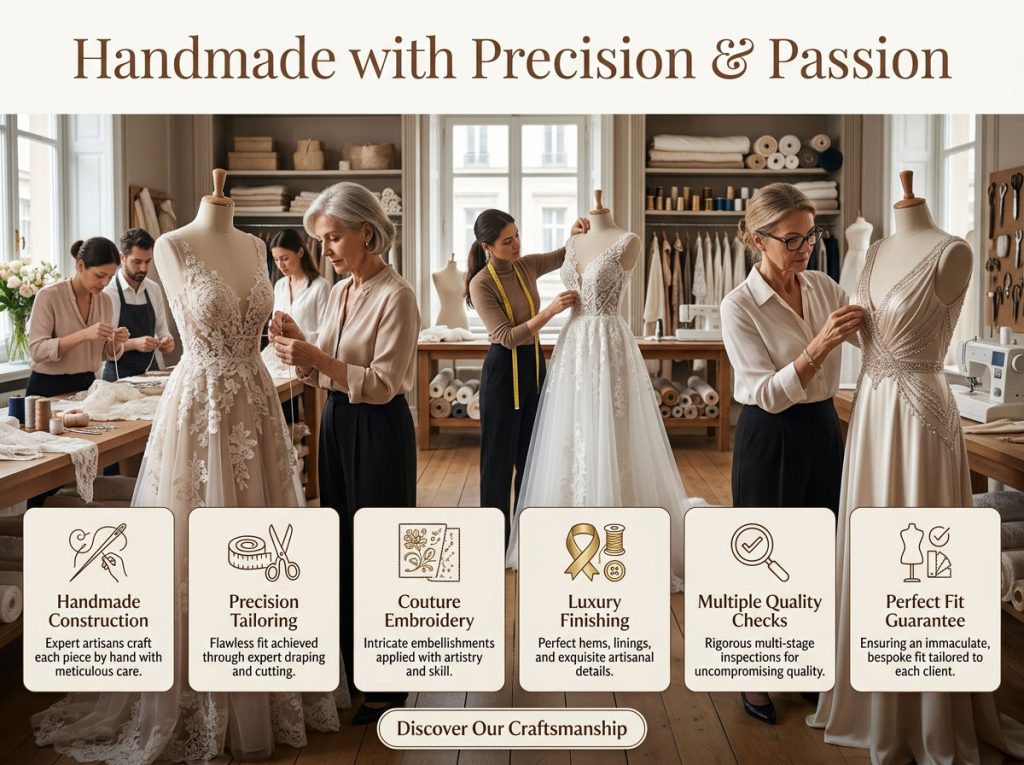
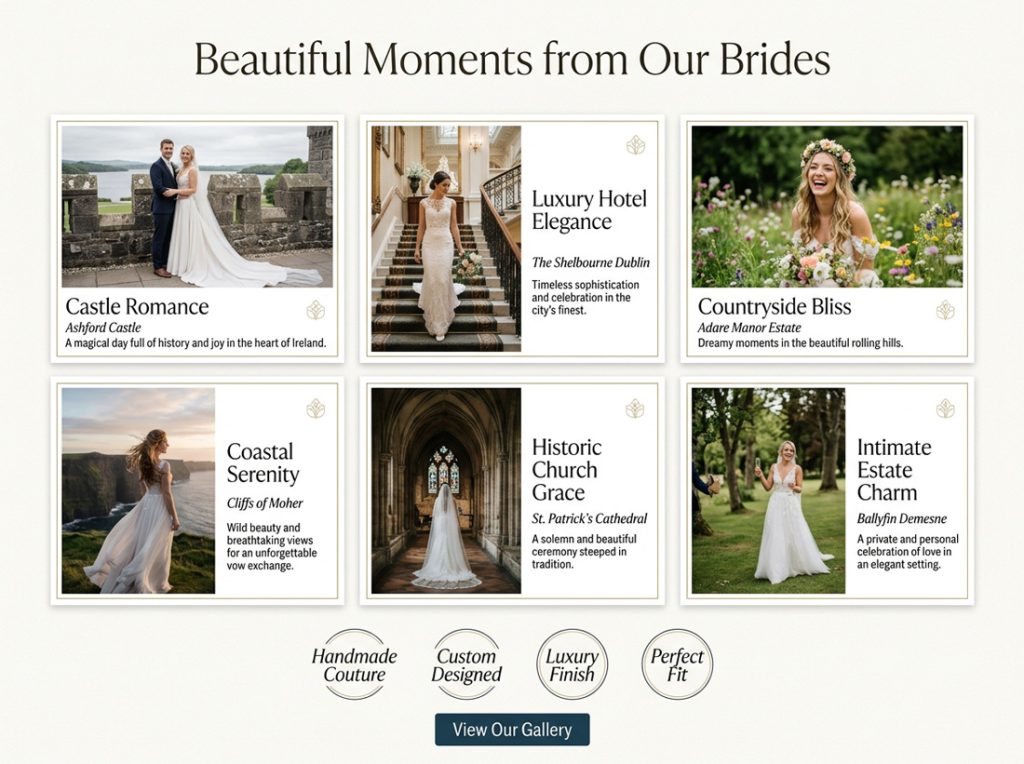
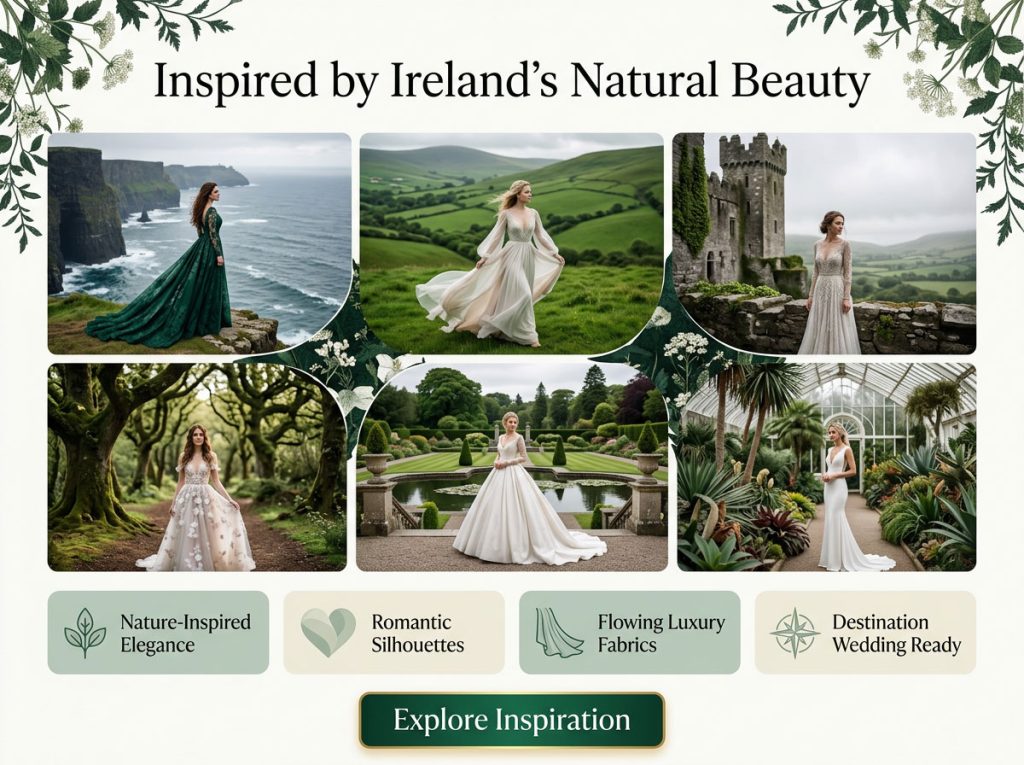
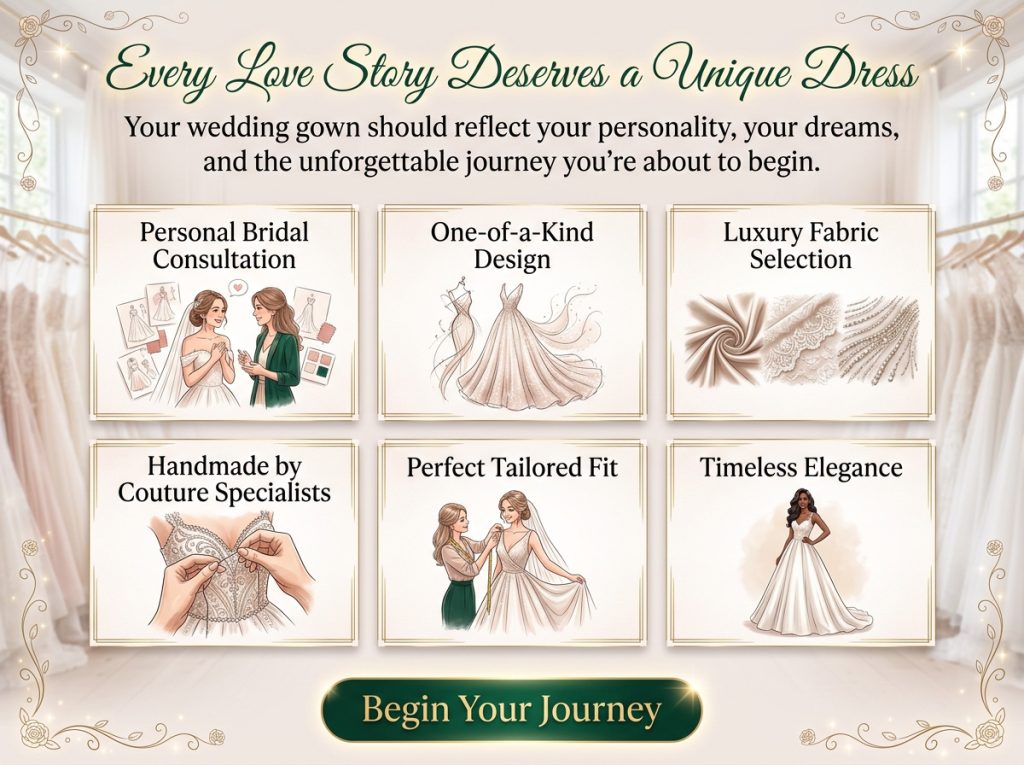
Local designers in Dublin, Cork and beyond create highly individual pieces, while specialised custom producers such as Metropol Wedding Dress translate those same values—romance tempered by practicality, heirloom potential and precise fit—into made-to-measure gowns that remain accessible in both timeline and cost. The result is uniqueness that works on Irish ground.
Detailed Article
Uniqueness in an Irish wedding dress is rarely pure spectacle. It is the quiet accumulation of personal references—family lace, a silhouette that moves easily across wet grass, a modular design that survives a church ceremony followed by a barn reception, or a colour that photographs against grey stone and green fields. The Irish market rewards garments that feel inevitable rather than theatrical.
The Cultural Filter on Uniqueness
Irish wedding culture still carries traces of older customs: the preference for something “new” that can later become heirloom, the practical awareness of rain, the multi-generational guest list that expects a certain formality, and the visual drama of castle courtyards or coastal settings. Modern brides add their own layer—editorial silhouettes, sustainable materials, or the desire never to see the same dress on another guest. Local designers such as Olwen Bourke, Sarah Foy, Niamh Lynch of Bespoke Bridal, Alice Halliday and others answer this by working one-to-one, often incorporating client-supplied lace or motifs.
Specialised production partners extend the same principle. Metropol Wedding Dress receives detailed briefs that include venue photographs, weather considerations, family textile samples and movement requirements, then builds a unique pattern and construction sequence around them. The uniqueness is engineered rather than accidental.
Cost Reality in the Irish Context
Average spend on a wedding dress in Ireland sits near €2,000 according to recent surveys, with many brides landing between €1,000 and €3,000 once alterations are included. High-end local bespoke work commonly begins around €2,000–€3,500 and rises with complexity. Specialist custom production frequently delivers comparable individuality and fit inside or below that band because pattern-making and construction occur in a dedicated workshop rather than under high-street overheads.
Comparative cost snapshot (approximate)
| Pathway | Typical Range | Fit Accuracy | Design Freedom | Practical Irish Suitability |
|---|---|---|---|---|
| Multi-brand boutique sample | €1,000–€3,500 + alterations | Good after work | Limited to stock | Variable |
| Irish designer atelier | €2,000–€6,000+ | Excellent | Full | High |
| Specialist custom producer | €300–€2,000 | Excellent | Full | High when briefed correctly |
| Pre-loved / sample sale | €80–€1,100 | Variable | Low | Depends on original construction |
Material and Construction Priorities for Irish Conditions
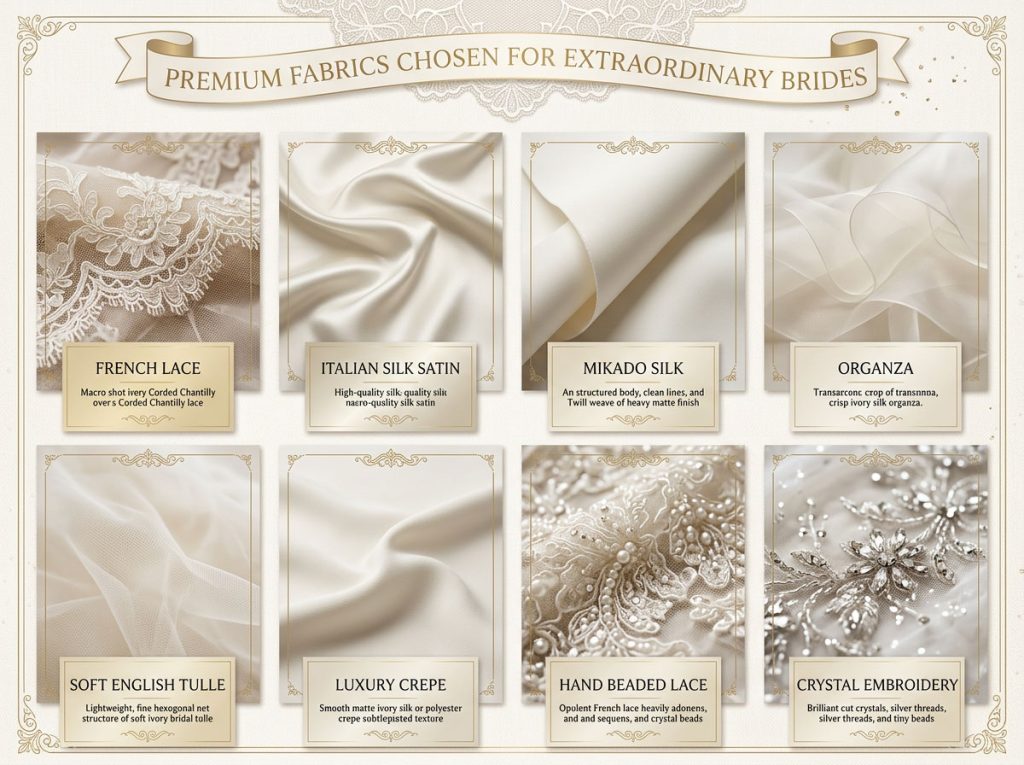
Irish weather and venues impose quiet technical demands. Fabrics must hold shape in damp air, resist creasing during outdoor photographs, and allow movement across uneven ground. Silk mikado, crepe, fine lace and carefully layered organza remain popular because they photograph well against stone and landscape while remaining wearable for long celebrations. Internal structure is equally important: soft support that does not dig, bustles that function on stairs or grass, and linings that breathe.
Many Irish brides also value the possibility of incorporating existing family textiles—Irish lace, embroidered handkerchiefs or vintage trims. Specialist producers who can integrate these elements without compromising structural integrity expand the definition of uniqueness beyond pure new design.
Production Sequence That Protects Uniqueness
A reliable custom pathway begins with a precise brief rather than a catalogue. Venue type, season, ceremony format, mobility needs and any heirloom materials are recorded first. Measurements follow, taken with posture and intended undergarments noted. Pattern makers draft a unique block. Fabric is cut only after confirmation. Construction proceeds with staged documentation so the client can verify progress. The finished gown travels under tracked, insured conditions, with a local Irish seamstress available for final hem and bustle setting if required.
Metropol’s workshop model follows this logic, treating each order as a discrete project rather than a stock variation. Lead times of 6–12 weeks fit the typical Irish planning horizon when the process starts early enough.
Real Irish Scenarios
A bride marrying at a coastal castle wanted a gown that photographed against grey stone yet remained practical in wind. The brief specified a structured bodice, soft skirt volume and a detachable cape. Production delivered the pieces separately so each could be adjusted independently on the day.
A Dublin couple sought to incorporate grandmother’s lace into a modern column silhouette. The lace was stabilised and applied as controlled panels rather than all-over decoration, preserving both heritage and contemporary line.
A boutique in Cork expanded its unique offering by commissioning a small series of modular designs from a production partner. The pieces retained the romantic yet wearable aesthetic expected by local clients while reducing sample-inventory risk.
Decision Checklist for Unique Irish Dresses
- Define the single strongest non-negotiable (heirloom element, weather resilience, photographic impact, movement).
- Collect venue photographs and note typical weather patterns for the date.
- Decide whether uniqueness will come from design originality, material history, or both.
- Establish total cost of ownership including any local finishing.
- Confirm measurement protocol and revision limits before deposit.
- Plan a buffer for final local adjustment after the gown arrives.
- Clarify aftercare so the dress can become an heirloom if desired.
Friction Points Specific to the Irish Search
Ordering too late for true custom work. Choosing pure volume that becomes impractical on grass or in wind. Treating uniqueness as pure visual novelty rather than functional storytelling. Underestimating the value of modular elements for multi-location Irish days. Ignoring the cumulative cost of multiple boutique alterations.
Longevity Perspective
Irish brides frequently speak of the dress becoming part of family history. Construction quality, fabric stability and careful finishing determine whether that hope is realistic. Professional cleaning followed by acid-free storage in a cool, dark environment preserves both structure and any integrated heirloom textiles for future generations.
Sector Observation
The Irish market continues to reward personal narrative over pure trend. Designers and producers who can translate that narrative into garments that perform under real Irish conditions—variable weather, historic venues, long celebrations—occupy a durable position. Specialised workshops that accept detailed cultural and practical briefs expand the practical reach of uniqueness beyond the capacity of any single local atelier.
Uniqueness that cannot be worn comfortably across an Irish wedding day is incomplete. The most successful outcomes align personal storytelling with technical realism.
FAQ – Unique Wedding Dresses in Ireland
1. What does “unique” typically mean for Irish brides? A combination of personal references (family textiles, specific silhouette, modular function) and a garment that has never been worn by another guest in the same circle.
2. How much do Irish brides usually spend on a wedding dress? Recent averages sit near €2,000, with most falling between €1,000 and €3,000 once finishing is included.
3. Are local Irish designers the only route to uniqueness? No. Specialist custom producers can execute highly individual briefs while local designers remain the purest one-to-one creative partnership.
4. Can family lace or vintage textiles be incorporated? Yes—when the material is stabilised and applied with structural integrity in mind.
5. How does Irish weather influence design? Fabrics and construction must hold shape in damp conditions, resist creasing outdoors and allow movement on uneven ground.
6. What is a realistic timeline for a truly custom gown? Eight to ten months is comfortable; six to twelve weeks of pure production is common among specialised workshops when the brief is clear.
7. Do castle or country-house venues require specific silhouettes? Not rigidly, but volume, train length and modular elements are often adjusted for stairs, grass and photographic backgrounds of stone and landscape.
8. Are coloured accents accepted in Ireland? Soft blush, champagne and subtle metallics appear more often; pure white and ivory remain dominant.
9. How important is modular design for Irish weddings? High—many celebrations move between church, outdoor photographs and reception spaces that benefit from adaptable pieces.
10. Can a specialist producer match the romantic aesthetic preferred by many Irish brides? Yes, when the brief includes clear references to desired mood, fabric behaviour and detailing intensity.
11. What measurements are critical? Bust, waist, hips, hollow-to-hem, posture notes and intended undergarments.
12. Is a toile always used? For complex or highly individual designs yes; experienced pattern makers can work from precise measurements for simpler structures.
13. How is shipping handled into Ireland? Tracked and insured methods with documentation managed by the producer are standard.
14. What local finishing is usually required? Final hem and bustle setting by an Irish seamstress after the gown arrives.
15. Are plus-size and petite options available in custom work? Individual pattern drafting supports a wide range of body shapes.
16. How do pre-loved dresses compare for uniqueness? They can be unique in provenance but rarely offer perfect current fit or the ability to integrate personal textiles from the start.
17. What is the most common timeline error? Starting the custom process inside a four-month window.
18. Can the same producer create coordinating pieces for the bridal party? Some can; others focus solely on the bride’s gown.
19. How should the finished dress be stored? Professional cleaning followed by acid-free tissue in a cool, dark, breathable garment bag.
20. Do Irish brides still value the possibility of the dress becoming an heirloom? Yes—construction quality and material stability directly affect that possibility.
21. What role do venue photographs play in the design brief? They help calibrate volume, train length, colour and photographic behaviour against real backgrounds.
22. Is sustainability a factor in unique commissions? Increasingly—clients request lower-impact fabrics or the reuse of existing family textiles.
23. How transparent is progress communication? Reputable specialists provide staged photography and clear milestones.
24. Can a boutique use a specialist producer for unique private-label pieces? Yes—this expands assortment without heavy sample inventory.
25. What undergarments should be decided early? Any shapewear or corsetry that will affect internal structure.
26. Are detachable capes or overskirts popular? Yes—especially for coastal or castle settings where weather and formality levels shift.
27. How does total cost of custom compare with boutique sample plus alterations? Specialist custom often lands at a comparable or lower total once uniqueness and fit accuracy are valued.
28. What is the single strongest predictor of success? A clear early brief that balances personal narrative with practical Irish conditions.
29. Can international brides marrying in Ireland order successfully? Yes—precise measurement protocols and insured shipping make the process routine.
30. How important is internal support structure? Critical for comfort during long celebrations that may include outdoor movement and dancing.
31. Are Celtic motifs still requested? Occasionally as subtle embroidery or jewellery pairing; pure costume is rare.
32. What happens if measurements change slightly? Early communication allows modest adjustments; larger changes may need local work.
33. Can existing Irish lace be stabilised for modern use? Yes—experienced makers treat it as a precious panel rather than structural fabric.
34. How many fittings are typical in a pure local atelier versus specialist production? Local ateliers often involve multiple in-person fittings; specialist production relies more on precise initial measurements plus final local adjustment.
35. Is a second-look dress commonly designed together with the main gown? Modular systems make coordinated second looks straightforward.
36. What documentation should be kept? Order confirmation, measurement records, design sketches and shipping details.
37. Do producers offer guidance on cleaning and long-term care? Yes—especially when heirloom potential is part of the brief.
38. How does the multi-generational guest list influence formality? Many brides choose a base silhouette that can elevate or soften through modular pieces.
39. Can a dress be designed for both formal ceremony and later dancing on grass? Yes—through controlled volume, practical bustles and breathable layers.
40. Why do some Irish brides combine local design consultation with specialised production? It maximises personal storytelling while gaining production capacity, timeline flexibility and cost control.
Five Distinct CTAs
- (Narrative-focused) Gather the personal references that matter—family textiles, venue images, weather notes—then open a design conversation that treats uniqueness as engineered storytelling.
- (Practical) Prepare accurate measurements and three non-negotiables, then request a production brief from a specialist atelier experienced with Irish conditions.
- (Comparative) Calculate the full cost of a local designer commission versus a carefully briefed custom production route; many brides discover greater flexibility without loss of individuality.
- (Retailer-oriented) Explore private-label or wholesale capacity with a specialised producer to expand unique offerings without increasing sample risk.
- (Direct) Contact Metropol Wedding Dress with your Irish venue details and personal brief—align uniqueness with production realism while planning windows remain open.
This content is structured for a landing-page environment: culturally grounded, decision-oriented and focused on the practical delivery of uniqueness within the real conditions of Irish weddings.
Luxury wedding dresses in Ireland are defined less by logo and more by material rarity, construction precision, discreet service and the ability to perform inside historic castles, country estates and coastal houses. Local ateliers and international houses supply this tier, yet specialised custom producers such as Metropol Wedding Dress deliver comparable fabric quality, exacting finish and personalisation through controlled workshop production—placing true luxury within a more predictable cost and timeline structure for Irish brides.
Detailed Article
Luxury in the Irish bridal market is not a single price point. It is a set of non-negotiable standards: fabrics that hold their integrity under damp coastal air, seams that survive long receptions, internal architecture that supports without restriction, and a service process that feels private rather than transactional. When these elements align with the visual demands of Irish premium venues—grey stone, green lawns, candlelit ballrooms—the result is luxury that feels inevitable rather than performed.
Redefining Luxury for Irish Conditions
Irish luxury brides often reject pure theatrical volume in favour of controlled richness. Silk mikado with a dense hand, double-layered crepe, hand-applied Chantilly or Alençon lace, and discreet crystal or pearl work remain preferred because they photograph with quiet authority against historic architecture while remaining wearable from ceremony through dancing. The garment must move across wet grass, negotiate stone stairs and retain shape after hours of celebration.
Local designers such as those working from Dublin and Cork studios meet this standard through intensive one-to-one processes and premium European fabrics. International houses stocked in specialist boutiques supply name recognition and established silhouettes. Specialised production ateliers occupy a third position: they source the same tier of materials and apply couture-level construction techniques inside a workshop model that keeps overhead lower and timelines more predictable. Metropol Wedding Dress operates in this space, accepting detailed luxury briefs that specify fabric grade, hand-finishing intensity and modular requirements suited to multi-location Irish days.
Cost Architecture of Luxury
Average Irish wedding-dress spend sits near €2,000, yet the luxury segment commonly begins at €3,500–€4,000 for local bespoke work and climbs well beyond €8,000–€12,000 for high-profile international designers. The final figure rarely equals the listed price; it includes fabric upgrades, hand embroidery density, multiple fittings and post-purchase alterations.
Specialised custom production frequently delivers the same material and construction standards inside a lower total band because pattern-making and sewing occur in a dedicated facility rather than under high-street or pure-atelier overheads. The luxury is relocated from the retail environment into the garment itself.
Illustrative luxury cost comparison (approximate ranges)
| Pathway | Entry Price | Typical Total with Finishing | Material & Construction Control | Timeline Predictability |
|---|---|---|---|---|
| Irish designer atelier | €3,500–€6,000+ | High | Full | Moderate to long |
| International designer via boutique | €4,000–€12,000+ | Very high | High within house codes | Variable |
| Specialist luxury custom | €800–€2,500 | Controlled | Full, brief-driven | High (6–12 weeks production) |
| Boutique sample + extensive alterations | €2,500–€5,000 | Medium-high | Limited | Medium |
Material Standards That Justify the Term Luxury
True luxury begins with fabric that cannot be substituted without loss of hand and drape. Heavy silk mikado, double-faced crepe, fine French or Italian lace, and organza with controlled opacity are selected for both visual performance and structural reliability. Embellishment is applied by hand rather than machine-dense; crystals and pearls are set so they catch light without adding bulk that restricts movement.
Internal architecture receives equal attention. Soft or graded boning, carefully matched linings and practical yet invisible bustle systems ensure the dress remains composed through outdoor photographs and evening dancing. Luxury that collapses after two hours fails the Irish test.
“You may also want to take a look at this article.” Custom Wedding Dresses France
Production Sequence for Luxury Outcomes
A luxury brief is never a catalogue selection. It begins with venue type, season, ceremony format, mobility requirements and any heirloom elements the client wishes to integrate. Measurements are taken with posture and foundation garments noted. Pattern makers draft a unique block calibrated to those measurements. Fabric is cut only after client confirmation of swatches or detailed digital references. Construction proceeds in stages with progress photography so the client can verify lace placement, seam finishing and overall proportion before the gown leaves the workshop. Shipping is tracked and insured; a final local Irish seamstress sets the precise hem and bustle.
Metropol’s process follows this discipline, treating each luxury order as a discrete project rather than a variation of stock. The result is a garment whose luxury resides in its execution rather than its retail provenance.
Scenario Evidence from Irish Luxury Weddings
A bride marrying at a restored castle required a gown that would hold its line against wind and grey stone yet feel weightless during the evening. The brief specified double-layered silk crepe, hand-applied lace panels and a detachable overskirt. Production delivered the components separately so each could be adjusted independently on the day. The dress photographed with quiet authority and remained comfortable through dancing.
A coastal estate wedding demanded controlled volume and a train that could be bustled without visible bulk. Luxury-grade mikado and a carefully engineered internal structure solved both the photographic and practical requirements.
A Dublin boutique expanded its luxury offering by commissioning a small series of modular, high-material designs from a specialist producer. The pieces retained the refined aesthetic expected by high-end clients while improving margin and delivery reliability.
Evaluation Framework for Luxury Purchases
- Confirm the fabric grade and origin rather than relying on descriptive language alone.
- Request details of internal construction and support systems.
- Establish the density and method of any hand embellishment.
- Clarify revision limits and progress documentation before deposit.
- Calculate total cost of ownership including local finishing and potential storage.
- Verify that the silhouette and modular options suit the actual venue sequence.
- Assess aftercare guidance so the garment can retain value as an heirloom.
Common Luxury-Segment Errors
Equating brand name with construction quality. Selecting pure visual drama that becomes impractical on Irish terrain. Underestimating the cumulative cost of multiple boutique fittings and alterations. Ignoring weather and movement requirements in favour of static photography ideals. Ordering inside a compressed timeline that forces compromises on hand-finishing.
Aftercare and Longevity as Luxury Criteria
A luxury wedding dress is expected to survive the day, professional cleaning and long-term archival storage. Acid-free tissue, a breathable garment bag and a cool, dark environment protect both structure and any integrated heirloom textiles. Many Irish luxury brides view the gown as a future family object; construction quality determines whether that intention is realistic.
Sector Observation
The Irish luxury segment continues to reward discretion, material integrity and functional elegance over pure spectacle. Designers and producers who can deliver these standards—whether through pure local ateliers or specialised workshop partnerships—occupy durable positions. Controlled production capacity expands access to true luxury materials and finish without requiring every bride to absorb the full overhead of a pure designer environment.
Luxury that cannot be worn with ease across an Irish wedding day is incomplete. The most reliable outcomes align rare materials and exacting construction with the practical realities of venue, weather and celebration length.
FAQ – Luxury Wedding Dresses in Ireland
1. What actually constitutes luxury in an Irish wedding dress? Rare fabrics, hand-finished construction, precise internal architecture and a garment that performs under real Irish conditions rather than pure brand prestige.
2. What is the typical entry price for luxury in Ireland? Local bespoke work often begins around €3,500–€4,000; international designer pieces via boutiques commonly start higher.
3. Can specialised custom production deliver true luxury materials? Yes—when the brief specifies fabric grade, hand-finishing density and construction standards.
4. How does average Irish dress spend compare with the luxury tier? Average sits near €2,000; luxury typically begins significantly above that figure once quality criteria are applied.
5. Are Irish castle and estate venues more demanding on construction? Yes—volume, train management, weather resistance and movement across stone and grass become decisive.
6. What fabrics define the luxury tier? Heavy silk mikado, double-faced crepe, fine French or Italian lace and controlled-opacity organza.
7. Is hand embellishment essential to luxury? Not always, but when present it is applied with restraint and structural consideration rather than machine density.
8. How important is internal support in luxury gowns? Critical—soft or graded structure that remains invisible yet stable through long celebrations.
9. What timeline should be allowed for a luxury custom order? Eight to ten months is comfortable; pure production windows of 6–12 weeks are common among specialised workshops.
10. Can family textiles be integrated into a luxury commission? Yes—when stabilised and applied as controlled elements rather than structural fabric.
11. How is shipping of high-value gowns handled into Ireland? Tracked, insured methods with full documentation managed by the producer.
12. What local finishing is typical after arrival? Precise hem and bustle setting by an experienced Irish seamstress.
13. Do luxury gowns require more fittings than standard custom? Pure local ateliers often involve multiple in-person fittings; specialist production relies on exact initial measurements plus final local adjustment.
14. Are modular elements compatible with luxury aesthetics? Yes—detachable overskirts, sleeves or capes can be executed at the same material standard.
15. How should total cost of ownership be calculated? Base garment + any fabric or finishing upgrades + local adjustment + professional cleaning and storage.
16. Is brand name a reliable proxy for construction quality? Not always—fabric grade, seam finishing and internal architecture matter more than the label.
17. What is the most common luxury-segment mistake? Choosing pure visual impact that becomes impractical on Irish terrain or in variable weather.
18. Can a specialist producer match the service discretion expected at luxury level? Yes—through private communication channels, progress documentation and controlled shipping.
19. How important is aftercare guidance? Essential if the gown is intended to become an heirloom.
20. Are coloured accents accepted in the luxury segment? Soft champagne, blush and subtle metallics appear; pure white and ivory remain dominant.
21. What role do venue photographs play in a luxury brief? They calibrate volume, train length, colour depth and photographic behaviour against real backgrounds.
22. Is sustainability compatible with luxury materials? Increasingly—clients request certified or lower-impact versions of high-grade fabrics.
23. How transparent is progress reporting? Reputable specialists provide staged photography and clear milestones before the gown leaves the workshop.
24. Can boutiques commission luxury private-label pieces from specialists? Yes—this expands high-end assortment without proportional sample-inventory risk.
25. What undergarments should be decided at the measurement stage? Any foundation garments that will affect internal structure and silhouette.
26. Are plus-size and petite options available at luxury standard? Individual pattern drafting supports the full range when construction quality is maintained.
27. How does weather influence luxury fabric choice? Fabrics must retain shape and drape in damp air and resist creasing during outdoor sequences.
28. What is a realistic expectation for fit accuracy? With precise measurements and experienced pattern makers, only minor local finishing should be required.
29. Can a luxury gown be designed for both formal ceremony and later dancing? Yes—through controlled volume, practical bustles and breathable yet substantial layers.
30. How should the finished gown be stored long-term? Professional cleaning followed by acid-free tissue in a cool, dark, breathable garment bag.
31. Do producers offer guidance on cleaning high-value fabrics? Yes—especially when hand lace or embellishment is present.
32. What documentation should be retained? Order confirmation, measurement records, fabric references, progress images and shipping details.
33. Is a second-look or after-party option commonly designed alongside the main gown? Modular systems make coordinated luxury second looks straightforward.
34. How does the multi-location Irish wedding day affect luxury design? It encourages adaptable elements that maintain material standard across formality levels.
35. Can international couples marrying in Ireland access the same luxury custom pathway? Yes—clear measurement protocols and insured shipping make the process routine.
36. What single factor most protects a luxury outcome? A detailed early brief that balances material ambition with practical Irish venue and weather realities.
37. Are Celtic or heritage motifs still requested at luxury level? Occasionally as subtle, refined embroidery rather than dominant decoration.
38. How do revision policies typically work? Clarify the number of included design and fabric adjustments before cutting begins.
39. What happens if measurements change modestly during production? Early communication allows controlled adjustments; larger changes may require local work.
40. Why do some Irish luxury brides choose specialised custom production over pure designer routes? It delivers equivalent material and construction standards with greater timeline control and a more predictable total cost structure.
Five Distinct CTAs
- (Standards-focused) Define the non-negotiable material and construction criteria for your luxury gown, then match them against production pathways that can actually deliver those standards under Irish conditions.
- (Process-oriented) Prepare venue images, fabric preferences and precise measurements, then open a private production dialogue with a specialist atelier experienced in high-grade custom work.
- (Value comparison) Calculate the full landed cost of a named designer commission versus a brief-driven luxury custom order; many brides find the latter concentrates budget into the garment itself.
- (Retailer perspective) Explore controlled luxury private-label capacity with a specialised producer to expand high-end assortment without proportional inventory risk.
- (Direct) Contact Metropol Wedding Dress with your luxury brief and Irish venue details—align rare materials and exacting finish with production realism while planning windows remain open.
This content is structured for a landing-page environment: focused on the real criteria of luxury within the Irish market, decision-oriented and transparent about both standards and pathways.
Custom Wedding Dresses Ireland
Vintage wedding dresses in Ireland appeal to brides who want the romance, proportion and quiet drama of earlier decades without the structural risks of actual antique gowns. True vintage pieces often suffer from fragile fabrics, outdated sizing and limited mobility—problems that become acute on Irish grass, stone stairs and multi-hour celebrations. Custom production solves this by translating vintage silhouettes, lace languages and construction details into new, stable garments. Specialised ateliers such as Metropol Wedding Dress create vintage-informed dresses that carry the visual soul of the past while meeting modern fit, durability and weather demands.
“You may also want to take a look at this article.” Custom Wedding Dresses Netherlands
Vintage in the Irish bridal context is less about wearing a museum object and more about reclaiming a specific visual and emotional language—soft volume, hand-finished lace, dropped waists, tea-length practicality or the architectural lines of mid-century couture. The difficulty is that genuine antique and early-vintage gowns rarely survive Irish conditions intact. Fabrics weaken, seams open, and the original sizing rarely matches contemporary bodies. Custom production offers a third path: vintage spirit engineered for the present.
Why Pure Vintage Often Fails in Ireland
Antique and early-vintage dresses were made for different body proportions, different undergarments and shorter, more formal ceremonies. Many were constructed with limited internal support and fabrics that have since become brittle. Irish venues—castles with uneven floors, coastal estates exposed to damp air, country houses with long lawns—expose these weaknesses quickly. A dress that looks perfect on a hanger can restrict movement, tear at stress points or collapse under modern photography expectations.
The result is a growing preference for “vintage-informed” custom work: new construction that deliberately references specific eras while solving the practical failures of the originals.
The Eras Irish Brides Most Often Reference
- 1920s–1930s: Dropped waists, bias cuts, soft beading, handkerchief hems.
- 1940s–1950s: Structured bodices, full yet controlled skirts, tea-length practicality, subtle Irish lace influences.
- 1960s–1970s: Cleaner lines, empire or high waists, lighter fabrics, occasional bohemian volume.
- 1980s: Architectural shoulders, dramatic yet wearable trains, richer fabrics.
Irish brides frequently mix elements—1950s volume with 1930s lace placement, or a modern column that carries 1920s beading density—rather than requesting pure historical reproduction.
Material Translation from Vintage to Modern
True vintage lace is often too fragile for structural use. Modern custom work substitutes stable, high-grade lace that mimics the visual language while accepting stress. Silk mikado and double-faced crepe replace weakened satins. Soft modern boning and carefully graded linings provide the support that original garments lacked. Embellishment is applied by hand but secured so it survives dancing and outdoor sequences.
The goal is not museum accuracy. It is emotional and visual continuity with structural reliability.
Production Logic for Vintage-Informed Dresses
A successful brief begins with clear era references, venue type and movement requirements rather than a single photograph. Measurements are taken with contemporary posture and foundation garments noted. Pattern makers draft a unique block that captures the desired vintage proportion while accommodating modern body geometry. Fabric is selected for both visual match and performance. Construction proceeds with progress documentation so lace placement, sleeve architecture and skirt volume can be verified before the gown leaves the workshop. Shipping is tracked and insured; a final local Irish adjustment sets the precise hem and bustle.
Metropol’s workshop process follows this sequence, treating each vintage-informed order as a discrete engineering project. The resulting garment carries the romance of the referenced era without inheriting its structural liabilities.
Cost Comparison: Pure Vintage vs Vintage-Informed Custom
| Pathway | Typical Cost Range | Fit Accuracy | Durability under Irish Conditions | Design Control |
|---|---|---|---|---|
| Genuine antique / early vintage | €200–€2,500 + restoration | Often poor | Low to medium | None |
| Restored vintage with modern alterations | €800–€3,500 | Improved | Medium | Limited |
| Vintage-informed custom production | €400–€2,200 | Excellent | High | Full |
| Pure modern luxury with vintage detailing | €3,000–€8,000+ | Excellent | High | High |
Specialised custom production frequently delivers the highest practical value: new construction, vintage visual language, and total cost that remains inside or below the mid-to-upper Irish average.
Real Scenarios from Irish Weddings
A bride marrying at a midland country house wanted 1950s volume without the weight and restriction of an original gown. The custom version used modern silk mikado, soft internal structure and a practical bustle. The dress photographed with period romance and remained comfortable through outdoor sequences and evening dancing.
A coastal wedding required 1930s bias-cut fluidity that would not cling or distort in damp air. The production solution combined stable crepe with carefully placed vintage-style beading that survived wind and movement.
A Dublin couple incorporated fragments of family lace into a 1940s-inspired silhouette. The lace was stabilised and applied as controlled panels rather than structural fabric, preserving heritage while ensuring longevity.
Decision Framework for Vintage-Seeking Brides
- Identify the specific visual or emotional qualities desired (proportion, lace language, volume, length).
- Assess the actual venue and weather risks.
- Decide whether any family textile will be integrated and how.
- Prioritise structural reliability over pure historical accuracy.
- Confirm measurement protocol and revision limits.
- Plan local finishing time after the gown arrives.
- Clarify aftercare so the new garment can itself become a future heirloom.
Common Pitfalls in the Vintage Search
Falling in love with a fragile original that cannot survive the day. Requesting pure reproduction without modern support systems. Underestimating the cumulative cost of restoration and alterations. Ignoring mobility requirements for Irish outdoor sequences. Treating vintage solely as a visual style rather than a construction challenge.
Longevity and Aftercare
A well-executed vintage-informed dress is built to last. Professional cleaning followed by acid-free storage in a cool, dark environment protects both the new construction and any integrated family textiles. Many Irish brides intend the gown to become the next generation’s “something old.” Construction quality determines whether that intention is realistic.
Sector Perspective
The Irish market continues to value emotional continuity with the past while demanding practical performance in the present. Pure vintage supply is limited and often fragile. Custom production that deliberately translates vintage language into stable modern garments expands access without requiring every bride to accept the risks of antique textiles. Specialised workshops that can read era references accurately and engineer corresponding support systems occupy a durable position within this demand.
Vintage spirit that cannot be worn with ease across an Irish wedding day remains incomplete. The most successful outcomes treat the past as inspiration and the present as engineering brief.
FAQ – Vintage Wedding Dresses in Ireland
1. What does “vintage-informed” mean in practice? A new gown deliberately designed to capture the proportions, lace language or silhouette of a specific era while using modern, stable construction.
2. Why do many pure vintage dresses fail on Irish wedding days? Fragile fabrics, outdated sizing, limited internal support and poor resistance to damp air or uneven terrain.
3. Which eras are most frequently requested by Irish brides? 1950s volume, 1930s bias and beading, 1940s structure, and selective 1920s or 1960s–70s references.
4. Can family lace be incorporated into a vintage-informed dress? Yes—when stabilised and applied as controlled decorative panels rather than structural fabric.
5. How does cost compare between genuine vintage and custom vintage-informed? Custom production often sits in a similar or lower total range once restoration and alteration costs of true vintage are included.
6. What fabrics best translate vintage aesthetics into modern performance? Stable silk mikado, double-faced crepe, high-grade lace that mimics period hand, and controlled-opacity organza.
7. Is pure historical accuracy the goal? Rarely. Emotional and visual continuity with structural reliability is the practical objective.
8. How important is internal support in vintage-inspired designs? Critical—original garments often lacked modern support systems required for long contemporary celebrations.
9. What timeline is realistic for a vintage-informed custom gown? Eight to ten months is comfortable; pure production of 6–12 weeks is common among specialised workshops.
10. Can tea-length or shorter vintage styles work for formal Irish venues? Yes—when the overall proportion and fabric quality maintain appropriate formality.
11. How is shipping of the finished gown handled into Ireland? Tracked and insured methods with full documentation.
12. What local finishing is usually required? Precise hem and bustle setting after arrival.
13. Are modular elements compatible with vintage aesthetics? Yes—detachable sleeves, overskirts or capes can be designed in period-appropriate language.
14. How should measurements be taken for vintage-proportioned designs? With contemporary posture and intended foundation garments clearly noted.
15. Can a specialist producer accurately read era references? Experienced pattern makers and designers can translate clear visual and descriptive briefs into corresponding construction.
16. What is the most common mistake when pursuing vintage? Choosing a fragile original that cannot survive the practical demands of the day.
17. How does weather influence vintage-informed fabric choices? Fabrics must retain shape and drape in damp air and resist creasing during outdoor sequences.
18. Is a toile recommended for complex vintage silhouettes? Often yes—especially for dropped waists, bias cuts or architectural volume.
19. Can the same producer create a matching or complementary second look? Modular systems make coordinated vintage-informed second looks feasible.
20. How should the finished gown be stored long-term? Professional cleaning followed by acid-free tissue in a cool, dark, breathable garment bag.
21. Do producers offer guidance on cleaning period-style embellishment? Yes—particularly when hand beading or delicate lace is present.
22. What documentation should be retained? Order confirmation, measurement records, era references, progress images and shipping details.
23. Are plus-size and petite options available in vintage-informed work? Individual pattern drafting supports the full range while preserving desired proportions.
24. How does total cost of ownership compare with restored vintage? Custom production frequently delivers higher reliability and lower long-term risk at comparable or lower total cost.
25. Can 1980s architectural elements be translated successfully? Yes—when volume and structure are engineered for modern comfort and mobility.
26. What role do venue photographs play in the brief? They help calibrate volume, train length and fabric behaviour against real Irish backgrounds.
27. Is sustainability compatible with vintage-informed commissions? Yes—through stable modern fabrics and the reuse of family textiles where appropriate.
28. How transparent is progress communication? Reputable specialists provide staged photography and clear milestones.
29. Can boutiques commission vintage-informed private-label pieces? Yes—this expands distinctive assortment without the risks of actual antique stock.
30. What undergarments should be decided early? Any foundation garments that will affect the intended vintage proportion and internal structure.
31. How important is mobility for outdoor Irish sequences? High—vintage volume must be engineered so it does not restrict movement on grass or stone.
32. Can bias-cut 1930s styles be made stable in damp conditions? Yes—with appropriate modern fabric choices and careful grain alignment.
33. What happens if measurements change modestly during production? Early communication allows controlled adjustments; larger changes may require local work.
34. Are Celtic or Irish lace motifs still integrated into vintage designs? Occasionally as refined, period-compatible detailing rather than dominant decoration.
35. How many fittings are typical? Specialist production relies primarily on precise initial measurements plus final local adjustment.
36. Can a vintage-informed dress become a future heirloom? Yes—when construction quality and materials are chosen for longevity.
37. What single factor most protects a successful outcome? A clear brief that balances desired vintage language with practical Irish venue and weather realities.
38. Is pure white or soft ivory more common in vintage-informed work? Soft ivory and champagne often better match period photography and modern skin-tone preferences.
39. Can international couples marrying in Ireland access the same pathway? Yes—precise measurement protocols and insured shipping make the process routine.
40. Why do many Irish brides ultimately choose custom vintage-informed over pure antique? It delivers the emotional and visual qualities of the past without the structural and practical risks of fragile original garments.
Five Distinct CTAs
- (Era-focused) Identify the specific visual or emotional qualities you want from the past, then request a construction brief that translates those qualities into a stable modern gown.
- (Risk-aware) Compare the true cost and durability of a restored antique against a vintage-informed custom order engineered for Irish conditions.
- (Practical) Gather era references, venue images and accurate measurements, then open a production dialogue with a specialist atelier experienced in period-informed work.
- (Retailer-oriented) Explore vintage-informed private-label capacity with a specialised producer to offer distinctive pieces without the liabilities of actual antique stock.
- (Direct) Contact Metropol Wedding Dress with your preferred era references and Irish venue details—align vintage spirit with modern structural realism while planning windows remain open.
This content is structured for a landing-page environment: focused on the practical translation of vintage aesthetics into wearable, durable garments for Irish weddings, decision-oriented and transparent about both romance and engineering.