
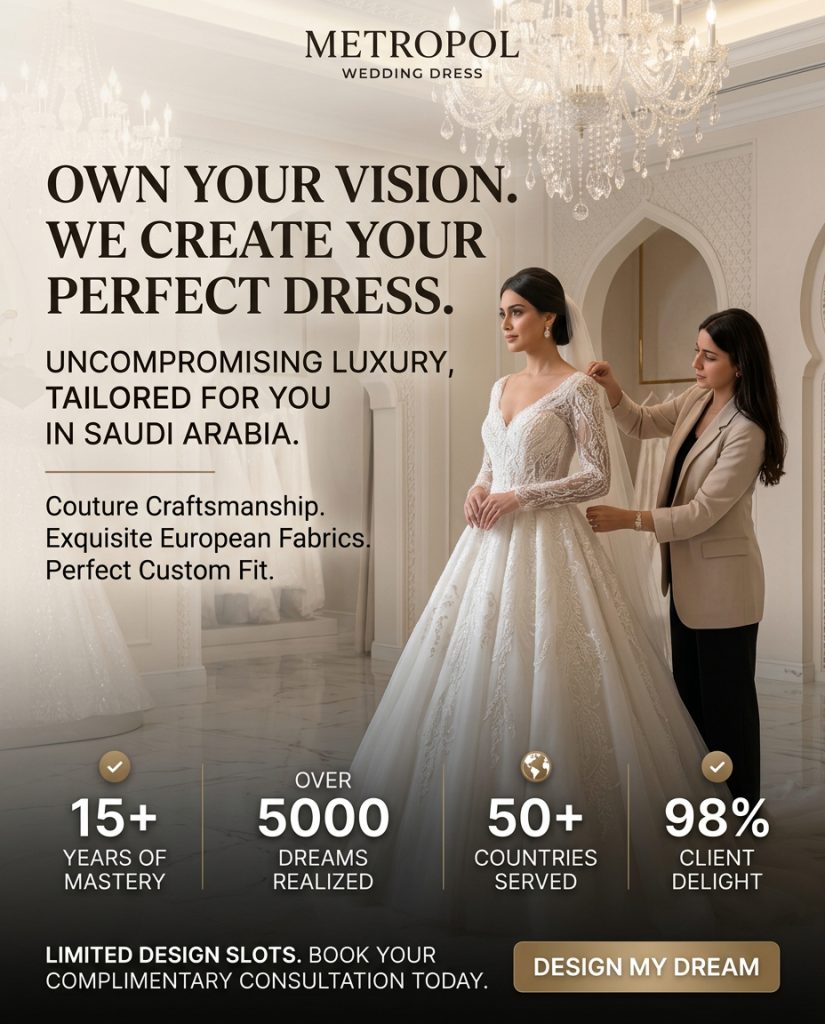
Custom Bridal Gown Manufacturing for Independent US Designers For an independent bridal designer, finding a wedding dress manufacturer is not simply a matter of comparing wholesale prices.
The real decision is whether a manufacturing partner can take your creative direction and turn it into a repeatable, technically controlled, commercially viable bridal gown without compromising the identity of your brand.
That distinction matters.
A designer may have a strong sketch, an excellent fabric source, a clear understanding of her customer, and a compelling brand story — yet still struggle when the design moves from a drawing into an actual garment. Bridal gowns are unusually demanding products. They combine fit, structure, drape, lace placement, embellishment, internal construction, comfort, movement, photography, packaging, shipping, and often highly individualized measurements.
For an independent U.S. designer, the ideal manufacturing relationship therefore looks less like a conventional clothing order and more like an extension of the design studio.
Metropol Wedding Dress positions itself as a wholesale wedding dress manufacturer and custom wedding dress producer serving international boutiques and retailers, with custom-made bridal production among its published services. The company is based in Karşıyaka, İzmir, Türkiye, and presents its production model around custom bridal, wholesale and international service.
For U.S. designers, the opportunity is particularly interesting when the goal is to develop gowns that are distinctive enough to belong to a specific brand but structured enough to be manufactured consistently.
A productive manufacturing partnership should help you answer questions such as:
- Can my sketch actually be engineered into a wearable gown?
- Can the manufacturer reproduce my approved sample?
- Can the same design be produced in multiple sizes?
- Can lace, embroidery, beading and appliqué placement remain consistent?
- Can I develop a small collection without immediately committing to excessive inventory?
- Can the manufacturer work from technical specifications rather than generic catalog images?
- Can my brand identity remain separate from the factory’s own collections?
- How will measurements and fit be communicated remotely?
- What happens when a sample needs correction?
- How should labels, fiber information, care instructions and country-of-origin requirements be handled for U.S. sales?
- What information should I prepare before requesting a quotation?
- How should I compare a low factory price with the true landed cost of a gown?
- Can the relationship support me when my boutique business grows?
This guide approaches custom bridal manufacturing from the designer’s side of the table.
The objective is not to tell you that every gown should be manufactured overseas, nor that one supplier is automatically better than another. The objective is to give an independent U.S. designer a framework for evaluating production partners intelligently.
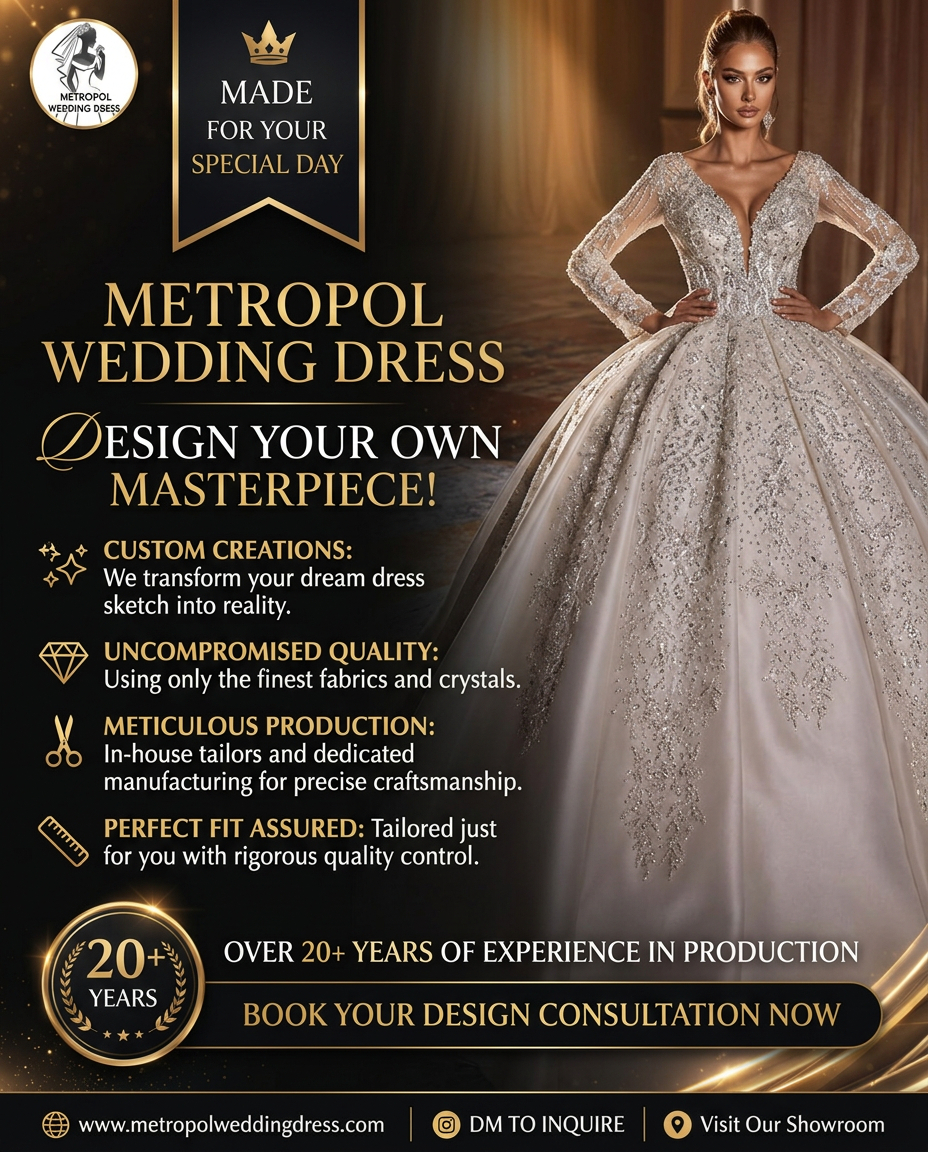
The Independent Designer’s Real Problem: Turning Taste Into a Repeatable Product
A bridal designer does not sell a sketch.
She sells the finished experience created by that sketch.
That experience includes the silhouette seen in the mirror, the way the gown moves when the bride walks, the way the neckline sits after several hours, how the train behaves when lifted, whether the interior construction remains comfortable, whether the lace looks intentional, whether the sample photographs correctly, and whether the finished garment resembles what the bride originally purchased.
That is why custom bridal manufacturing should be treated as a product-development system, not simply sewing.
A useful way to think about the relationship is:
Creative concept → technical interpretation → sample → fitting → correction → approved production standard → repeat production → quality control → delivery
If one link is weak, the entire chain becomes expensive.
For example, imagine an independent designer creates a gown with:
- a structured corset,
- sheer illusion panels,
- hand-positioned lace,
- a sculpted mermaid skirt,
- a detachable overskirt,
- covered buttons,
- a long train,
- and asymmetrical floral appliqué.
On paper, it may look straightforward.
In production, it is not.
The manufacturer has to determine how the internal corsetry supports the body, where seams should be positioned, how much ease is required, how the illusion material should be stabilized, how the lace motif should cross seams, how the train is supported, where the detachable component attaches, and how the design behaves when produced in different sizes.
This is where manufacturing expertise becomes part of the design process.
Why Independent U.S. Designers Need a Different Manufacturing Model
Large bridal companies often operate with established blocks, standardized collections, established grading systems, forecasted production and predictable purchasing volumes.
An independent designer frequently operates differently.
The business may have:
- a smaller initial collection,
- highly distinctive designs,
- lower production volumes,
- frequent design modifications,
- seasonal drops,
- custom client requests,
- private-label requirements,
- limited staff,
- and a much closer relationship between designer and customer.
This changes the definition of a “good manufacturer.”
The cheapest factory is not necessarily the cheapest manufacturing partner.
If a manufacturer saves $30 per gown but creates three rounds of corrections, inconsistent samples, unclear communication and unusable production pieces, the nominal savings disappear quickly.
A manufacturer charging more per unit may actually be less expensive if the process produces:
- fewer revisions,
- fewer rejected pieces,
- fewer fitting problems,
- fewer urgent shipments,
- fewer customer complaints,
- less internal management time,
- and more reliable delivery.
For an independent designer, manufacturing reliability is part of gross margin.
The Five Production Questions to Ask Before Discussing Price
Before asking a manufacturer, “What is your price per gown?”, ask five more important questions.
1. Can you understand the design?
A supplier should be able to interpret more than a product photograph.
You want a partner who can discuss:
- silhouette,
- construction,
- fabric behavior,
- lining,
- corsetry,
- neckline engineering,
- sleeve construction,
- train structure,
- embellishment placement,
- closure systems,
- fit,
- and production feasibility.
2. Can you make the first sample?
Sample development is where a manufacturer’s technical competence becomes visible.
A good sample is not necessarily perfect on the first attempt.
What matters is whether the manufacturer can identify what is wrong, understand your correction, and improve the product systematically.
3. Can you reproduce the approved sample?
This is often more important than making a beautiful prototype.
The real manufacturing test begins after approval.
If Sample A is excellent but Production Batch B contains variations in lace placement, seam proportions, color, measurements or internal construction, the manufacturing process is not sufficiently controlled.
4. Can you work at my volume?
An independent designer may need a completely different production structure from a large bridal chain.
Ask about:
- minimum order quantities,
- sample quantities,
- repeat orders,
- mixed-size orders,
- mixed-style orders,
- production scheduling,
- and replenishment.
5. Can you protect my brand identity?
Your manufacturer should understand the difference between:
“Make me a wedding dress.”
and
“Manufacture my wedding dress according to my brand’s design language and specifications.”
That distinction is fundamental.
Custom, Made-to-Measure, Made-to-Order, OEM and Private Label Are Not the Same
One of the most common mistakes independent designers make is using manufacturing terminology interchangeably.
They describe different commercial relationships.
| Production Model | What It Usually Means | Best Fit |
|---|---|---|
| Ready-to-wear wholesale | Existing designs purchased from a collection | Boutiques seeking established styles |
| Made-to-order | Existing or approved design produced after an order | Low-inventory bridal businesses |
| Custom-made | Design is developed or modified for a specific requirement | Designers and individualized gowns |
| Made-to-measure | Garment is constructed around specific measurements | Fit-focused bridal programs |
| OEM | Manufacturer produces according to the buyer’s specifications | Established brands |
| Private label | Product is manufactured for sale under the buyer’s brand | Designers building proprietary collections |
| Couture/bespoke | Highly individualized construction with substantial handwork | Luxury and premium positioning |
The terminology should be clarified before production begins.
A designer might think she is ordering a “custom gown” while the factory interprets the request as a modification of an existing wholesale model.
That difference can affect:
- pattern ownership,
- construction,
- price,
- minimum quantities,
- sample development,
- branding,
- and production expectations.
A professional quotation should therefore define what is actually being manufactured.
The Designer-to-Factory Translation: Your Technical Brief
The most effective way to improve a manufacturing relationship is to improve the information entering the factory.
A vague brief creates a vague result.
A technical bridal brief should ideally contain enough information for the manufacturer to understand both the visual objective and the construction requirements.
A Useful Bridal Production Brief
Design identity
Include:
- collection name,
- style number,
- season,
- intended customer,
- retail positioning,
- target price range,
- intended market.
Silhouette
Specify whether the gown is:
- A-line,
- ball gown,
- mermaid,
- trumpet,
- sheath,
- fit-and-flare,
- column,
- princess,
- empire,
- or another construction.
Bodice
Describe:
- neckline,
- bust structure,
- corset,
- boning,
- cups,
- waistline,
- torso length,
- back shape,
- closure,
- transparency,
- and support requirements.
Skirt
Specify:
- volume,
- number of layers,
- lining,
- train length,
- overskirt,
- slit,
- godets,
- pleats,
- gathers,
- or other construction details.
Surface design
Document:
- lace,
- embroidery,
- sequins,
- pearls,
- crystals,
- appliqué,
- beading,
- embroidery density,
- and placement.
Fabric
Specify the intended material where known.
For example:
- silk satin,
- polyester satin,
- mikado,
- crepe,
- chiffon,
- organza,
- tulle,
- stretch tulle,
- lace,
- embroidered lace,
- jacquard,
- or a blended fabric.
The actual fabric should be confirmed through sampling because the same generic fabric category can behave very differently depending on weight, weave, finish and composition.
Fabric Is Not Decoration. It Is Engineering.
One of the most important lessons in bridal manufacturing is that fabric selection cannot be separated from construction.
Two fabrics may look almost identical in a photograph and produce completely different gowns.
Consider mikado.
A heavier mikado can create architectural volume and hold a clean shape.
A softer satin can create movement and fluidity.
A stretch crepe can support a fitted silhouette differently from a non-stretch crepe.
A lightweight tulle can create softness but may require additional layers to achieve opacity or volume.
Lace creates another level of complexity because its appearance depends on:
- motif scale,
- repeat,
- edge,
- direction,
- transparency,
- backing,
- placement,
- and how motifs are joined.
For independent designers, this means a manufacturer should not simply ask, “Which fabric do you want?”
A better conversation is:
What does the fabric need to accomplish?
Does it need to:
- hold structure?
- drape?
- stretch?
- photograph cleanly?
- remain opaque?
- support embroidery?
- carry a train?
- tolerate boning?
- resist wrinkling?
- maintain shape?
- remain comfortable against the skin?
The answer determines the material and construction.
The Anatomy of a High-Quality Bridal Sample
A bridal sample should be evaluated from several perspectives, not just appearance.
Exterior
Inspect:
- silhouette,
- symmetry,
- neckline,
- seam placement,
- hem,
- train,
- lace positioning,
- embellishment,
- closure,
- and finishing.
Interior
Turn the garment inside out.
Look at:
- seam finishing,
- lining,
- boning,
- waist stay,
- bust support,
- internal tapes,
- zipper installation,
- hook-and-eye placement,
- seam allowances,
- and reinforcement.
This is where two gowns that look similar from the outside can be dramatically different in manufacturing quality.
Movement
A bridal gown is not a mannequin garment.
Ask the sample model to:
- walk,
- sit,
- turn,
- raise her arms,
- bend slightly,
- walk backward,
- lift the train,
- and move naturally.
A beautiful gown that becomes uncomfortable after ten minutes is not a successful product.
A Practical Quality-Control Framework for Bridal Designers
Instead of asking whether a gown is “good,” divide inspection into categories.
| Inspection Area | Questions |
|---|---|
| Fit | Does the bodice sit correctly? |
| Symmetry | Are left and right sides balanced where intended? |
| Construction | Are seams and internal supports secure? |
| Fabric | Does material behave as expected? |
| Lace | Are motifs positioned consistently? |
| Embellishment | Are beads and appliqués secure? |
| Closure | Does zipper/button/hook system operate smoothly? |
| Hem | Is length consistent with the approved specification? |
| Train | Does it fall correctly? |
| Comfort | Can the wearer move naturally? |
| Appearance | Does the sample match the approved design? |
| Packaging | Can the gown survive transportation appropriately? |
This framework can then be converted into a production inspection sheet.
That is much more useful than simply telling a supplier, “Please make sure the quality is good.”
The Sample Approval Loop
A professional custom bridal process should allow for controlled iteration.
Think of it as:
Version 01 → comments → Version 02 → technical approval → production standard
Not:
sample → disappointment → argument → remake
Your comments should be specific.
Instead of:
“The waist looks wrong.”
Say:
“Raise the waist seam approximately 1 cm at center front and reduce the visual drop toward the side seam. Maintain the original skirt volume.”
Instead of:
“The lace doesn’t look luxurious.”
Say:
“Reduce the concentration of large motifs around the bust and extend the smaller floral elements toward the waist to create a softer transition.”
Specific feedback reduces interpretation errors.
Remote Manufacturing: How a U.S. Designer Can Control Quality From Abroad
International production does not eliminate the need for quality control.
It changes the quality-control system.
For a U.S. designer working with a manufacturer in Türkiye, communication should ideally be built around documented approvals rather than informal conversations.
A useful remote workflow is:
Step 1 — Design submission
Send:
- sketches,
- technical drawings,
- references,
- measurements,
- fabric requirements,
- color requirements,
- and special construction instructions.
Step 2 — Technical clarification
The manufacturer identifies:
- unclear details,
- construction concerns,
- fabric questions,
- measurement inconsistencies,
- and potentially impractical elements.
Step 3 — Material confirmation
Confirm:
- fabric,
- lining,
- lace,
- trim,
- closures,
- embellishments.
Step 4 — Sample
Produce the development sample.
Step 5 — Review
Designer reviews photographs and, where appropriate, the physical sample.
Step 6 — Correction
Document every required change.
Step 7 — Approval
The final sample becomes the production reference.
Step 8 — Production
The approved specification is used as the manufacturing benchmark.
Step 9 — Inspection
Finished gowns are checked against the approved reference.
Step 10 — Shipment
The goods are packaged and dispatched according to the agreed shipping arrangement.
The important concept is traceability.
Every important decision should be traceable to an approved version.
What Should a U.S. Designer Send to a Manufacturer?
Use this pre-production package.
Designer Manufacturing Checklist
- Front sketch
- Back sketch
- Side view where necessary
- Close-up images
- Technical notes
- Measurements
- Size range
- Fabric specification
- Color
- Lace reference
- Embellishment reference
- Closure specification
- Train length
- Lining requirement
- Boning requirement
- Bust support requirement
- Branding instructions
- Label requirements
- Packaging requirements
- Target delivery window
- Quantity
- Sample requirement
- Quality expectations
- Shipping destination
The more complex the gown, the more important this becomes.
Why Bridal Manufacturing Requires More Than a Standard Clothing Factory
A bridal gown combines multiple manufacturing disciplines.
A single gown can involve:
- pattern making,
- tailoring,
- corsetry,
- draping,
- lace placement,
- embroidery,
- hand embellishment,
- pressing,
- lining,
- structural reinforcement,
- finishing,
- inspection,
- and specialized packaging.
This is why comparing bridal manufacturers solely by “pieces per day” can be misleading.
A factory optimized for basic dresses may be excellent at basic dresses and still be a poor partner for a couture-inspired bridal collection.
Independent designers should ask:
What type of garment does this manufacturer understand best?
The answer matters more than a generic claim of “clothing manufacturing.”
A Better Way to Compare Manufacturers
Do not create a supplier shortlist based on price alone.
Score each potential partner from 1–5.
| Category | Weight |
|---|---|
| Sample quality | 20% |
| Technical communication | 15% |
| Bridal construction expertise | 15% |
| Consistency | 15% |
| Flexibility for smaller brands | 10% |
| Material capability | 10% |
| Lead-time reliability | 5% |
| Branding/private label capability | 5% |
| Documentation | 5% |
The weighting can be changed according to your business model.
For a luxury designer, sample quality may deserve even more weight.
For a growing boutique, repeatability and production consistency may be more important.
The Price Per Gown Is Only One Number
Suppose Manufacturer A quotes:
$400 per gown
and Manufacturer B quotes:
$470 per gown.
It is tempting to choose A.
But imagine Manufacturer A produces:
- more corrections,
- more defects,
- more communication time,
- inconsistent sizing,
- and delayed delivery.
Meanwhile Manufacturer B produces an approved sample more accurately and requires fewer interventions.
The $70 difference may be economically insignificant compared with the operational cost of failure.
A better formula is:
True Manufacturing Cost = Product Cost + Development Cost + Corrections + Quality Failures + Logistics + Duties/Taxes Where Applicable + Internal Management Time + Customer-Service Cost
For an independent brand, management time is particularly important.
The designer is often also:
- creative director,
- buyer,
- salesperson,
- customer-service manager,
- merchandiser,
- marketer,
- and business owner.
A difficult factory relationship consumes scarce management capacity.
Understanding the U.S. Import Side
If a U.S. designer imports bridal gowns, manufacturing decisions should be connected to import and labeling requirements from the beginning.
This is not an area where a manufacturer should casually promise, “Everything is handled.”
The U.S. Textile Fiber Products Identification Act requires covered textile products to disclose information including fiber content and the identity of the manufacturer or responsible business, and imported textile products generally need country-of-origin information.
The FTC’s Textile Fiber Rule similarly addresses disclosure of fiber names and percentages, manufacturer or marketer identification, and the country where the product was processed or manufactured.
Care labeling is another consideration. The FTC Care Labeling Rule requires covered textile apparel manufacturers and importers to provide appropriate care instructions, with requirements concerning permanent labels and the visibility/accessibility of care information.
For that reason, an independent U.S. designer should establish responsibility for:
- fiber-content information,
- country-of-origin marking,
- care instructions,
- brand labels,
- packaging information,
- commercial invoices,
- customs classification,
- and import documentation.
The precise tariff classification of a bridal gown depends on its actual construction and textile characteristics. The current U.S. Harmonized Tariff Schedule contains numerous apparel classifications under Chapters 61 and 62, including multiple categories for women’s dresses.
Do not calculate a landed-cost model from a generic “wedding dress duty rate.”
Instead, confirm the correct classification for the specific product and consult the current HTS and an appropriate customs professional when necessary. The U.S. International Trade Commission maintains the current HTS and its revisions.
This distinction is especially important for highly constructed bridal gowns because fabric composition, garment construction and classification details can influence the applicable tariff treatment.
The U.S. Designer’s Labeling Checklist
Before commercial production, confirm:
- Brand name
- Fiber content
- Country of origin
- Care instructions
- Size information
- Manufacturer/importer identification where applicable
- Private-label requirements
- Hangtag requirements
- Packaging requirements
- Any state-specific requirements relevant to your sales model
- Customs documentation
- Commercial invoice information
- Product classification
The manufacturer can provide information and production support, but the U.S. business should understand its own regulatory responsibilities.
Why “Country of Origin” Should Be Discussed Before Production
A common operational mistake is leaving labeling until the gowns are already finished.
That creates unnecessary rework.
Country-of-origin information is particularly relevant for imported textile products under U.S. rules.
Therefore, labeling should be part of the production specification rather than an afterthought.
If your brand sells a gown under its own name, decide early:
Which labels belong inside the garment?
Which information belongs on the hangtag?
Which information belongs on packaging?
Who supplies the labels?
Who attaches them?
Who verifies them?
Those questions are operationally small but commercially important.
Building a Private-Label Bridal Collection
Private label can be especially attractive for independent designers who want to create a recognizable collection without owning an entire manufacturing operation.
The model can allow a designer to focus internal resources on:
- design,
- branding,
- photography,
- customer acquisition,
- wholesale relationships,
- styling,
- retail experience,
- and customer service.
The manufacturer handles much of the physical production.
But private label works only when the manufacturer understands that the product is your brand asset.
The factory should not simply become a replacement for your design studio.
The objective is:
Your concept + your brand + manufacturing expertise = your commercial collection
From One Gown to a Collection: Think in Product Families
Independent designers can reduce development complexity by designing collections around product families.
For example:
Family A — Romantic
Common characteristics:
- soft tulle,
- floral lace,
- delicate appliqué,
- lightweight construction,
- flowing skirts.
Family B — Architectural
Common characteristics:
- mikado,
- structured bodices,
- clean seams,
- sculptural skirts,
- minimal embellishment.
Family C — Modern Minimal
Common characteristics:
- crepe,
- satin,
- clean necklines,
- narrow silhouettes,
- restrained detailing.
Family D — Statement Couture
Common characteristics:
- dramatic trains,
- three-dimensional appliqué,
- dense embroidery,
- detachable elements,
- intricate construction.
The advantage is not simply marketing.
Product families allow you to build manufacturing knowledge across related styles.
Once the manufacturer understands your preferred:
- bodice,
- waist,
- sleeve,
- lining,
- closure,
- seam,
- and finishing standards,
future designs can become more efficient to develop.
The Hidden Value of a Good Pattern Block
A reliable pattern block is one of the most valuable assets in bridal manufacturing.
A pattern block is not merely a template.
It becomes a foundation for:
- fit consistency,
- grading,
- proportion,
- design development,
- sample accuracy,
- and repeat production.
An independent designer should therefore ask whether the manufacturer can maintain consistency between related designs.
For example, if three gowns belong to the same collection, the designer may want the bust, waist and overall fit philosophy to feel related even though the skirts and necklines differ.
That is a brand-level decision.
The manufacturer should understand it.
Grading Is Not Simply “Making the Dress Bigger”
A gown does not always scale perfectly by increasing every measurement proportionally.
Bridal proportions can change across sizes.
For example:
- bust distribution changes,
- waist-to-hip proportions change,
- torso length can vary,
- armhole proportions change,
- neckline balance changes,
- skirt volume can require adjustment.
This is why a designer should request clarity about the manufacturer’s size development and grading process.
If your collection is intended for a broad U.S. customer base, size development should be considered during product development rather than after the collection has already been approved.
Fit Is a Brand Issue
Independent designers often treat fit as a production issue.
It is actually a branding issue.
A customer may forgive a website that loads slowly.
She is much less likely to forgive a wedding gown that does not fit properly.
A successful bridal brand therefore needs a fit philosophy.
Ask:
- Is the brand structured or relaxed?
- Is the gown designed for strong corsetry?
- Is comfort prioritized?
- Is stretch incorporated?
- How much ease is intended?
- How should the bodice feel?
- How should the waist sit?
- How much movement should the bride have?
These decisions should be documented.
Lace Placement: One of the Biggest Differences Between “Made” and “Well Made”
Lace is one of the most visually powerful elements in bridal design and one of the easiest to get wrong.
The question is not simply whether the correct lace was used.
The question is:
Was the lace engineered into the gown?
High-quality lace placement considers:
- motif direction,
- visual balance,
- seam placement,
- neckline edge,
- hem,
- transparency,
- symmetry,
- body contour,
- and visual weight.
For a designer, a useful instruction is to identify zones.
Zone 1 — Face and neckline
The lace should frame rather than visually overwhelm the face.
Zone 2 — Bust
The placement should work with the garment’s internal structure.
Zone 3 — Waist
Motifs can be used to emphasize or soften the transition.
Zone 4 — Hip
Placement can visually shape the silhouette.
Zone 5 — Skirt and train
The density may change to create movement and hierarchy.
This transforms lace placement from decoration into design engineering.
Embellishment Needs a Production Strategy
Handwork is attractive in bridal fashion, but it also introduces variability.
Before production, clarify:
- embellishment density,
- bead type,
- sequin type,
- crystal type,
- color,
- placement,
- attachment method,
- acceptable variation,
- and inspection criteria.
A designer should avoid vague instructions such as:
“Make it heavily beaded.”
Instead, specify the visual effect.
For example:
“Dense embellishment across the upper bodice, gradually reducing toward the waist, with concentrated three-dimensional floral elements at the shoulder and center back.”
The manufacturer can then translate the concept into an executable specification.
Detachable Bridal Pieces Can Increase Commercial Value
A detachable overskirt, cape, sleeve, bow, train or bolero can transform one bridal gown into multiple styling experiences.
For independent designers, this can be commercially useful.
One core gown can potentially support:
- ceremony styling,
- reception styling,
- photographs,
- after-party styling,
- and different retail packages.
But detachable elements introduce engineering questions.
The attachment must be:
- secure,
- discreet,
- comfortable,
- repeatable,
- and easy for the retailer or bride to use.
The visual connection between the detachable component and the base gown should also look intentional.
Production Communication: The Language of Fewer Mistakes
A manufacturer cannot read a designer’s mind.
The best partnerships therefore create a shared vocabulary.
Instead of saying:
“Make the skirt more dramatic.”
Use:
“Increase skirt volume through additional gathered layers while maintaining the current waist circumference.”
Instead of:
“Make the corset tighter.”
Use:
“Increase internal waist support while preserving the approved bust measurement and maintaining comfortable movement.”
Instead of:
“The back should be more elegant.”
Use:
“Raise the center-back neckline slightly and reduce the visual width of the closure area.”
Precision improves outcomes.
The Manufacturer Evaluation Interview
Before committing to a long-term relationship, an independent designer should interview a potential supplier.
Ask about development
- How do you receive technical drawings?
- Can you develop patterns from sketches?
- How do you handle unclear specifications?
- How many sample revisions are normally possible?
- How are sample corrections documented?
Ask about production
- What is the minimum production quantity?
- Can styles be mixed?
- Can sizes be mixed?
- How are repeat orders handled?
- What happens if a production piece fails inspection?
Ask about materials
- Can I provide my own fabric?
- Can you source alternatives?
- Can you reproduce a specific lace placement?
- How are substitute materials approved?
Ask about quality
- What is inspected before shipment?
- Is inspection performed against an approved sample?
- How are defects classified?
- What happens when an issue is discovered?
Ask about logistics
- How are gowns packaged?
- How are wrinkles minimized?
- What shipping methods are available?
- What documentation is provided?
- Who is responsible for customs coordination?
Ask about branding
- Can you manufacture under my label?
- Can you attach my labels?
- Can packaging be customized?
- Can design information remain confidential?
A Supplier Should Be Able to Say “No” Sometimes
This sounds counterintuitive.
But a manufacturer who agrees to every design request without questioning technical feasibility may not be protecting the project.
A competent production partner should sometimes say:
“This can be done, but here is the manufacturing consequence.”
For example:
“We can make the skirt this full, but the current fabric will require additional support.”
Or:
“The lace can be placed exactly this way, but the motif will be interrupted at the side seam.”
Or:
“The neckline can be lowered, but the internal support needs to be redesigned.”
That is useful information.
A manufacturing partner should not merely execute instructions.
They should help you understand the consequences of those instructions.
The Economics of Small-Batch Bridal Production
Independent designers often face a difficult commercial equation.
They need enough inventory to look credible but not so much inventory that cash becomes trapped in unsold gowns.
Bridal inventory can be particularly expensive because gowns are:
- large,
- specialized,
- style-specific,
- size-specific,
- and often seasonal in demand.
A manufacturing strategy can therefore be designed around:
Samples + controlled inventory + made-to-order production + repeatable manufacturing
rather than buying large quantities of every design.
This can help a young brand test its market before committing substantial capital.
The exact economics depend on the business model, retail strategy, quantities, shipping costs, duties, alterations, returns and customer acquisition costs.
The “Cheap Gown” Trap
A low factory price can create a misleading sense of profitability.
Imagine a gown costs $350 to manufacture.
That does not mean its landed cost is $350.
The actual calculation may include:
- sample development,
- fabric,
- packaging,
- freight,
- insurance,
- customs-related costs,
- duties where applicable,
- warehousing,
- local delivery,
- alterations,
- quality-control costs,
- photography,
- payment processing,
- marketing,
- and retail overhead.
The U.S. HTS contains different classifications and tariff treatments for apparel, and the applicable treatment should be verified against the actual product rather than assumed from a generic wedding-dress category.
The correct question is therefore:
“What is my landed and sellable cost?”
not:
“What is the factory price?”
A Simple Landed-Cost Framework
Use:
Factory Cost
Development Allocation
Packaging
International Freight
Insurance Where Applicable
Duties and Import Costs
Domestic Delivery
Inspection / Quality Control
Alteration Allowance
=
Approximate Landed Product Cost
Then separately calculate:
Retail Price – Landed Product Cost = Gross Product Margin
Your business model may also require additional allocations for:
- sales commissions,
- showroom costs,
- marketing,
- photography,
- customer acquisition,
- payment processing,
- returns,
- and overhead.
The exact numbers should be built from your own invoices and commercial terms.
A Better Question Than “What Is Your MOQ?”
Minimum order quantity matters.
But the more useful question is:
“What is the smallest commercially sensible production program for my brand?”
For one designer, that may mean:
- several samples,
- small quantities of selected styles,
- made-to-order replenishment.
For another, it may mean:
- a complete seasonal collection,
- standardized sizes,
- and planned wholesale production.
MOQ should be evaluated against sales velocity.
A low MOQ is valuable only if the product can still be manufactured economically and consistently.
The U.S. Boutique and Independent Designer Use Case
Consider a fictional independent designer based in California.
She has:
- six original bridal designs,
- a strong Instagram following,
- a small appointment-only studio,
- no internal production team,
- and a goal of launching a wholesale collection.
Her biggest risk is not lack of creativity.
Her biggest risk is production complexity.
She could attempt to:
- design,
- source fabrics,
- hire pattern makers,
- find seamstresses,
- manage sampling,
- control quality,
- handle packaging,
- and organize production herself.
Or she could separate the business into two systems:
Brand side
She controls:
- creative direction,
- customer,
- brand identity,
- photography,
- merchandising,
- sales,
- wholesale accounts.
Manufacturing side
The production partner supports:
- pattern development,
- sample creation,
- construction,
- embellishment,
- finishing,
- production,
- and shipment.
That separation can allow the designer to spend more time on the activities that actually differentiate her brand.
Another Scenario: The Boutique That Wants Its Own Label
A bridal boutique may discover that selling the same widely available styles as neighboring boutiques creates price competition.
A private-label collection can change the conversation.
Instead of:
“We sell this designer’s gown.”
the boutique can say:
“This is our collection.”
That creates opportunities for:
- differentiated merchandising,
- exclusive styles,
- controlled pricing,
- unique photography,
- brand recognition,
- and stronger customer loyalty.
However, private label should be built around genuine product differentiation.
Simply putting a different label on an indistinguishable gown is not a sustainable brand strategy.
What Independent Designers Should Own
Even when production is outsourced, the designer should maintain control over key intellectual and commercial assets.
These can include:
- design specifications,
- approved samples,
- brand identity,
- style numbers,
- product descriptions,
- technical drawings,
- size charts,
- photography,
- packaging standards,
- and commercial positioning.
Contracts and local legal advice may be appropriate for questions involving intellectual property, exclusivity, confidentiality or ownership.
The principle is simple:
Outsource manufacturing, not brand ownership.
Five Manufacturing Red Flags
Red Flag 1: The Supplier Cannot Explain How the Sample Will Be Built
If the answer is always:
“Don’t worry, we can make anything.”
Ask for technical clarification.
Red Flag 2: The Price Is Extremely Low but the Specification Is Vague
Low pricing without a clear scope can create expensive surprises later.
Red Flag 3: No Defined Approval Sample
Without an approved reference, quality disputes become subjective.
Red Flag 4: Every Communication Is About Quantity
A manufacturer interested only in quantity may not be the right partner for a highly design-driven collection.
Red Flag 5: No Clear Responsibility for Defects
Before production, determine what happens when:
- measurements are wrong,
- fabric differs,
- embellishment is missing,
- a zipper fails,
- a hem is incorrect,
- or the finished gown does not match the approved sample.
Five Positive Signals
Signal 1: They Ask Questions
Good manufacturers want information.
Signal 2: They Identify Problems Before Production
This saves money.
Signal 3: They Understand the Difference Between Sample and Production
A prototype is not the final commercial product.
Signal 4: They Can Explain Their Quality Process
You should understand what happens before shipment.
Signal 5: They Respect Your Design Language
The manufacturer should contribute technical knowledge without replacing your creative direction.
What Makes Metropol Wedding Dress Relevant to This Model?
Metropol Wedding Dress publicly describes itself as a wholesale wedding dress manufacturer and wholesale bridal factory, while also offering custom-made wedding dress production for boutiques and retailers internationally.
Its published custom-production material describes a process involving consultation, concept development, material selection, fittings and final gown production.
For an independent designer, that model is relevant because the commercial requirement is rarely simply “find a dress supplier.”
The more useful objective is to find a manufacturing relationship capable of moving between:
existing production knowledge → custom development → sample approval → repeat manufacturing
That is particularly valuable when a designer is building a collection rather than purchasing isolated gowns.
As with any international supplier, designers should independently confirm current production capabilities, minimum quantities, lead times, material availability, commercial terms, shipping arrangements and labeling responsibilities before placing an order.
Why İzmir Can Be an Interesting Manufacturing Base for Bridal Brands
Türkiye has a significant textile and apparel manufacturing ecosystem, and İzmir is an established commercial and industrial center.
For an international buyer, geographic location matters less than the actual production capabilities of the individual supplier.
A designer should therefore avoid choosing a supplier simply because it is “in Turkey.”
The useful questions are:
- What bridal products does the company actually manufacture?
- Can it handle complex construction?
- Can it develop samples?
- Can it work from technical specifications?
- Can it maintain quality?
- Can it communicate effectively?
- Can it ship internationally?
- Can it support repeat production?
Location is a starting point.
Manufacturing competence is the decision.
The First Order Should Be Treated as a Test, Not a Commitment
One of the safest approaches for a new designer-manufacturer relationship is to use the first project as a controlled pilot.
Do not immediately build your entire collection around a supplier you have never tested.
Instead:
Pilot Stage
Select one or two representative gowns.
Choose designs that test different capabilities.
For example:
Gown A: structured and minimalist
Gown B: lace-heavy and embellished
If the supplier can successfully execute both, you have learned much more than if you order ten simple gowns.
Evaluate:
- communication,
- sample accuracy,
- technical interpretation,
- material handling,
- finishing,
- packaging,
- delivery,
- and response to corrections.
Then decide whether to scale.
The Bridal Manufacturing Scorecard
After receiving your first samples, score the supplier.
Design Interpretation — /10
Did the sample actually understand the sketch?
Construction — /10
Is the internal and external construction appropriate?
Fit — /10
Does the garment behave correctly on the intended body?
Materials — /10
Did the selected materials deliver the intended effect?
Detail — /10
Are lace, embroidery and embellishment handled properly?
Communication — /10
Were questions answered clearly?
Corrections — /10
Were requested revisions implemented accurately?
Consistency — /10
Does the finished piece match the approved specification?
Commercial Viability — /10
Does the final cost support your business model?
Partnership Potential — /10
Would you trust this supplier with the next collection?
A supplier with an excellent price but poor overall score may be a false economy.
Production Planning for a Bridal Launch
A designer should work backward from the date the collection must be available.
For example:
Launch date
← photography
← final gowns
← production
← approval
← sample corrections
← first sample
← pattern development
← technical briefing
← design finalization
The mistake is to start with:
“We need the collection by June.”
Instead, ask:
What must be finished before June, and how long does every previous stage realistically require?
Build contingency into the schedule.
Bridal production is particularly sensitive to late changes because one modification can affect:
- pattern,
- fabric quantity,
- embellishment,
- sewing,
- pressing,
- fitting,
- photography,
- and packaging.
Don’t Approve a Sample Based Only on Photographs
Photographs are useful.
They are not the entire quality-control system.
A photograph may not reveal:
- internal boning,
- seam stress,
- lining behavior,
- closure durability,
- actual weight,
- movement,
- comfort,
- transparency,
- or construction quality.
Where commercially practical, physical sample evaluation remains valuable.
If remote approval is necessary, request a structured set of images and videos covering:
- front,
- back,
- side,
- neckline,
- bust,
- waist,
- hem,
- train,
- inside construction,
- closure,
- and major embellishment areas.
The Bridal Packaging Problem
Wedding gowns are unusually sensitive to transportation.
A beautiful gown can arrive with:
- crushing,
- creasing,
- displaced embellishment,
- distorted layers,
- or packaging-related damage.
Packaging should therefore be considered during production planning.
The objective is not simply:
“Put the dress in a box.”
The objective is:
Protect the garment while controlling shipping volume and preserving the product’s presentation.
Ask the manufacturer how the gown will be:
- folded,
- protected,
- bagged,
- boxed,
- labeled,
- and prepared for international transportation.
The best packaging solution depends on the gown’s structure and embellishment.
The Alteration Question
Even a high-quality bridal gown may require local alteration.
That is normal in many bridal business models.
The key is understanding which adjustments should be expected.
Potential local alterations may include:
- hem length,
- bustle,
- minor side-seam adjustment,
- strap adjustment,
- sleeve adjustment,
- or final fit refinement.
However, if every gown requires major structural correction, the problem may be upstream in:
- sizing,
- pattern development,
- measurement communication,
- or manufacturing quality.
A healthy production model distinguishes normal final bridal alteration from manufacturing defects.
Designing for Alterability
An intelligent bridal gown is not only beautiful.
It can also be adjusted.
Designers can consider:
- seam allowance,
- accessible internal seams,
- adjustable closures,
- corsetry,
- modest extension allowances,
- removable components,
- and alteration-friendly construction.
This can increase the commercial usefulness of the gown for boutiques.
A manufacturer should understand your desired alteration philosophy.
A Designer’s Pre-Production Control Sheet
Before authorizing production, verify:
Product
- Style number
- Approved sketch
- Approved sample
- Size range
- Color
- Fabric
- Lining
- Lace
- Embellishment
- Closure
- Train
- Detachable components
Branding
- Brand label
- Size label
- Care label
- Fiber-content information
- Country-of-origin marking
- Hangtag
- Packaging
Commercial
- Unit cost
- Sample cost
- Quantity
- Payment terms
- Production lead time
- Shipping terms
- Destination
- Inspection terms
- Defect policy
Import
- Product classification reviewed
- Importer responsibility identified
- Required documentation confirmed
- Labeling reviewed
- Landed-cost estimate prepared
For U.S. sales, the FTC rules on textile fiber identification and care labeling should be reviewed for the specific product and business structure.
What a Strong Manufacturing Brief Looks Like
Here is a simplified example.
Style: MW-014
Silhouette: Fit-and-flare mermaid
Neckline: Structured sweetheart
Bodice: Internal corsetry with supportive construction
Fabric: Structured satin outer layer
Skirt: Fitted through hip, expanding below knee
Train: Moderate chapel train
Back: Low illusion back
Lace: Floral appliqué concentrated at shoulder and bodice, decreasing toward waist
Closure: Concealed zipper with bridal hook-and-eye support
Lining: Soft lining appropriate for bridal wear
Color: Warm ivory
Branding: Private-label brand labels supplied by designer
Sample size: Agreed development size
Reference: Approved technical sketch and inspiration images
Critical quality points: Bodice symmetry, neckline stability, lace placement, train shape, zipper alignment
This is much more useful than sending a Pinterest image and asking for “something similar.”
The Difference Between Inspiration and Specification
Independent designers should be careful with reference images.
A reference photograph explains what you like.
It does not necessarily explain how to manufacture it.
A technical specification translates visual inspiration into measurable decisions.
For example:
Inspiration: “I like this dramatic skirt.”
Specification: “Full A-line skirt with approximately X level of volume, structured underlayer, soft outer tulle, and chapel-length train.”
The second instruction gives a manufacturer something to work with.
Use Visual References Ethically and Strategically
Designers naturally research other bridal brands.
That is part of the creative process.
But manufacturing briefs should distinguish between:
inspiration
and
copying a proprietary design.
Your strongest collection is one in which references help communicate a design language while the final product reflects your own creative direction.
A manufacturer should also understand which elements are:
- reference only,
- required,
- optional,
- or prohibited.
This can prevent accidental misunderstandings.
Building a Long-Term Manufacturer Relationship
The best supplier relationship becomes more efficient over time.
After several collections, the manufacturer may understand:
- your preferred fabrics,
- your preferred fit,
- your quality standards,
- your typical customer,
- your embellishment philosophy,
- your packaging,
- your preferred communication style,
- and your production calendar.
That institutional knowledge has value.
It can shorten development time and reduce errors.
Therefore, the objective should not necessarily be to constantly find the cheapest supplier.
It may be to build a stable manufacturing ecosystem.
The Manufacturer as a Product-Development Partner
For an independent designer, a high-value manufacturer can contribute more than labor.
They may help identify:
- construction risks,
- material alternatives,
- production efficiencies,
- finishing improvements,
- fit problems,
- and ways to preserve a visual effect at a commercially realistic cost.
That is where technical expertise becomes commercially useful.
The designer remains the creative authority.
The manufacturer contributes production intelligence.
The “Can We Make It?” Conversation
Before finalizing a highly complex gown, ask three questions.
Can it be made?
Usually, many things can.
Can it be made consistently?
This is more important.
Can it be made consistently at a commercially viable cost?
This is the question that matters most to a business.
A designer may create a spectacular gown requiring dozens of hours of handwork.
If the resulting wholesale cost makes the retail price unacceptable to the target customer, the design may need modification.
That does not mean compromising creativity.
It means designing with commercial intelligence.
Designing for Manufacturing Without Designing Something Boring
“Manufacturable” does not mean “basic.”
The objective is not to remove complexity.
The objective is to place complexity where it creates the greatest visual value.
For example, instead of adding expensive handwork everywhere, a designer might concentrate craftsmanship around:
- neckline,
- bodice,
- sleeves,
- waist,
- or train.
This creates visual hierarchy.
A gown can therefore feel luxurious without every square inch carrying the same production intensity.
The 80/20 Principle in Bridal Detail
In many designs, a small number of visual decisions create most of the perceived luxury.
Those may be:
- a perfect neckline,
- an exceptional lace placement,
- a sculptural silhouette,
- a beautiful train,
- a distinctive back,
- or one memorable embellishment technique.
Independent designers should identify those high-value details.
Then protect them during cost engineering.
Do not reduce the elements that define the gown.
Reduce complexity where the customer will not notice it.
Cost Engineering Without Destroying the Design
Suppose a gown is too expensive to manufacture.
Do not immediately remove the signature detail.
Instead evaluate:
- Can the lining be simplified?
- Can the number of internal layers change?
- Can embellishment density vary by zone?
- Can a detachable element replace part of the construction?
- Can a more suitable fabric produce the same visual effect?
- Can lace placement be redesigned?
- Can handwork be concentrated rather than eliminated?
This is intelligent product development.
What “Quality” Should Mean in Bridal Manufacturing
Quality is not one thing.
It has at least six dimensions.
Visual quality
Does the gown look beautiful?
Technical quality
Is it correctly constructed?
Fit quality
Does it fit the intended customer?
Functional quality
Can the bride move and wear it comfortably?
Consistency quality
Can the same result be reproduced?
Commercial quality
Can the product generate a healthy margin?
A gown can be beautiful and still fail commercially.
A manufacturer should help protect all six.
A 30-Point Manufacturer Due-Diligence Checklist
Before placing a meaningful order, ask:
- Can you develop custom bridal samples?
- Can you work from technical drawings?
- Can you interpret reference photographs?
- Do you have bridal-specific construction experience?
- What sample-development process do you use?
- How are revisions communicated?
- What is the minimum order?
- Can orders contain multiple styles?
- Can orders contain multiple sizes?
- How are repeat orders handled?
- How is fabric approved?
- How is lace approved?
- How is embellishment specified?
- How is the approved sample documented?
- How is production inspected?
- What happens when a defect is discovered?
- Can you manufacture under a private label?
- Can you apply supplied labels?
- How are gowns packaged?
- What shipping options are available?
- What information appears on commercial documents?
- Can you provide fiber information?
- Can you provide country-of-origin information?
- Can you support U.S.-bound production documentation?
- What is the expected production timeline?
- How are urgent changes handled?
- How are material substitutions approved?
- What happens if a requested fabric becomes unavailable?
- Who is the main production contact?
- Can the relationship scale with my brand?
The Independent Designer’s Ideal Workflow
A practical long-term workflow can look like this:
1. Brand strategy
Define customer, price point and design language.
↓
2. Collection architecture
Create a balanced range rather than isolated gowns.
↓
3. Technical design
Translate concepts into specifications.
↓
4. Manufacturer consultation
Identify production opportunities and constraints.
↓
5. Sample development
Create the first physical interpretation.
↓
6. Fitting
Evaluate silhouette, support, movement and comfort.
↓
7. Corrections
Document precise changes.
↓
8. Approval
Create the definitive production standard.
↓
9. Production
Manufacture against the approved specification.
↓
10. Quality control
Inspect finished pieces.
↓
11. Shipping and import
Move products to the U.S. according to the agreed commercial and logistical arrangement.
↓
12. Retail
Merchandise and sell the collection.
↓
13. Feedback
Record customer and alteration feedback.
↓
14. Product improvement
Use real-world information in the next collection.
That last step is frequently ignored.
It should not be.
Use Your First Collection as Data
After your first season, examine:
- Which silhouettes sold?
- Which sizes moved?
- Which fabrics performed best?
- Which gowns required alterations?
- Which details customers loved?
- Which details retailers struggled with?
- Which styles photographed well?
- Which styles were difficult to merchandise?
- Which styles produced the strongest margin?
- Which production details caused delays?
This information can make the second collection dramatically better.
The manufacturing relationship then becomes a learning system rather than a simple supplier transaction.
The Feedback Loop Between U.S. Retail and Overseas Production
A designer selling in the United States has access to valuable information that the manufacturer may not have.
The designer sees:
- bride objections,
- fitting problems,
- preferred silhouettes,
- price sensitivity,
- showroom behavior,
- retailer feedback,
- social-media reactions,
- and sales data.
The manufacturer sees:
- construction,
- material behavior,
- production time,
- technical constraints,
- and repeatability.
When those two perspectives are combined, product development improves.
This is one of the strongest reasons to build a long-term relationship rather than treating every order as a transaction.
What Should the Designer Measure?
A mature bridal brand should monitor manufacturing KPIs.
Useful metrics include:
Sample First-Pass Rate
How often does the first sample require major correction?
Production Defect Rate
How many gowns require correction or rejection?
On-Time Delivery Rate
How often does production meet the agreed schedule?
Sample-to-Production Consistency
How closely does production match the approved sample?
Alteration Rate
How often do gowns require significant alteration?
Cost Variance
How often does actual cost differ from quoted cost?
Repeat Order Accuracy
Are repeat styles reproduced consistently?
These metrics turn subjective supplier management into business management.
The Most Valuable Question: “What Happens When Something Goes Wrong?”
Every supplier looks good when everything works.
The real test is a problem.
Ask in advance:
What happens if the sample is wrong?
What happens if the fabric changes?
What happens if production is late?
What happens if several gowns fail inspection?
What happens if a design detail is misunderstood?
What happens if the shipment is delayed?
A professional relationship is not defined by the absence of problems.
It is defined by how problems are managed.
A Practical Communication Rule
When a production issue occurs:
Describe the problem → explain the impact → specify the correction → confirm the deadline.
For example:
“The neckline is approximately 1 cm lower than the approved sample. This changes the intended bust proportion. Please return the neckline to the approved measurement while maintaining the current shoulder placement. Please confirm the correction before production continues.”
This is much more productive than:
“This is not right.”
Five Ways to Reduce Manufacturing Errors
1. Use style numbers
Every design should have a unique identifier.
2. Version your specifications
Use:
- V1
- V2
- Final
- Production Approved
3. Keep a master approval file
Do not rely on scattered messages.
4. Photograph critical details
Especially:
- lace,
- neckline,
- back,
- closures,
- embellishment.
5. Confirm changes in writing
A verbal agreement should be summarized.
These simple systems become increasingly valuable as order volume grows.
When Custom Manufacturing Makes More Sense Than Wholesale
Wholesale ready-made gowns can be attractive when:
- you need immediate inventory,
- you want proven styles,
- you have limited development resources,
- or you are testing the bridal category.
Custom manufacturing becomes more attractive when:
- your brand has a distinct aesthetic,
- you want exclusive designs,
- you need private labeling,
- you want control over materials,
- your customers request modifications,
- or you want a collection competitors cannot simply buy from the same catalog.
Neither model is universally superior.
The correct choice depends on the business.
When a Designer Should NOT Use Custom Manufacturing
Custom manufacturing may not be the best choice if:
- you do not yet understand your customer,
- you are constantly changing your aesthetic,
- you cannot provide clear design direction,
- you have no budget for sampling,
- you are unwilling to manage approvals,
- or you expect every custom gown to be cheaper than an established wholesale gown.
Custom production creates opportunities.
It also creates responsibilities.
When a Manufacturer Should NOT Be Used
A supplier may not be suitable if:
- communication is consistently unclear,
- samples are repeatedly wrong,
- quality is unpredictable,
- timelines are unreliable,
- pricing changes without explanation,
- there is no clear approval process,
- or the company cannot demonstrate the type of bridal production you require.
Walking away early can be cheaper than correcting a failed collection later.
How Metropol Wedding Dress Can Fit the Independent-Designer Model
For designers considering an international bridal manufacturing partner, Metropol Wedding Dress publicly presents its business around wholesale bridal manufacturing and custom-made wedding dress production for international buyers.
Its published custom-dress material describes collaboration around design concepts, fabric and material selection, fittings and final production.
That makes the company relevant to a designer who is evaluating a manufacturing relationship rather than simply shopping for finished bridal inventory.
The important next step, however, should always be specific.
An independent designer should provide:
- her designs,
- target quantities,
- size range,
- target retail positioning,
- material requirements,
- branding requirements,
- desired production timeline,
- and shipping destination.
Then the manufacturer can determine what is technically and commercially realistic.
For international buyers, Metropol lists its company center in Karşıyaka, İzmir and provides direct contact information through its official website.
The U.S. Designer’s “Ready to Contact a Manufacturer” Checklist
You are ready to approach a manufacturer when you can answer:
About the brand
Who is the customer?
What is the retail price range?
What makes the collection different?
About the product
How many styles are planned?
What sizes are required?
Which fabrics are essential?
Which details are non-negotiable?
About production
How many units are needed initially?
Is production made-to-order or stocked?
What is the target launch date?
About branding
Is private labeling required?
Who supplies the labels?
What packaging is required?
About logistics
Where will the goods be delivered?
Who will manage import arrangements?
Has landed cost been calculated?
If these questions cannot be answered, the project is not necessarily impossible.
It simply needs more preparation.
The Most Important Lesson for Independent Bridal Brands
A manufacturing partner should not be selected because it can make a beautiful wedding dress.
Many companies can make a beautiful wedding dress.
The more important question is:
Can this company make my wedding dress repeatedly, according to my specifications, at a commercially viable cost, with the consistency my brand requires?
That is the real manufacturing test.
For independent U.S. designers, this distinction can determine whether a collection becomes:
- a creative project,
- a profitable business,
- or an operational headache.
The strongest manufacturing relationship sits between creativity and discipline.
The designer protects the vision.
The manufacturer protects the production.
Both protect the customer experience.
A Final Decision Framework
Before signing a production agreement, rate your potential partner from A to F in these areas:
| Area | A Strong Partner Should Demonstrate |
|---|---|
| Design interpretation | Understands technical and visual direction |
| Bridal expertise | Understands gowns beyond basic apparel |
| Sampling | Can develop and correct samples |
| Fit | Understands bridal proportions and structure |
| Materials | Can work with varied fabrics and trims |
| Embellishment | Can execute detailed surface work |
| Consistency | Can reproduce approved standards |
| Communication | Responds clearly and specifically |
| Quality control | Has an identifiable inspection process |
| Flexibility | Can work with independent-brand realities |
| Branding | Can support private-label requirements |
| Logistics | Can support international shipment |
| Documentation | Can provide necessary production information |
| Commercial logic | Pricing supports your business model |
| Scalability | Can grow with the collection |
If the partner scores highly across the board, price becomes only one part of the decision.
Five Different Ways to Start the Conversation
CTA 1 — The Designer-to-Manufacturer Approach
Have a bridal concept that deserves to become a real collection?
Share your sketches, references, measurements and production goals with Metropol Wedding Dress and start a conversation about custom bridal gown manufacturing for your brand.
CTA 2 — The Private-Label Approach
Your bridal collection should look like your brand — not a generic catalog.
If you are developing a private-label or made-to-order bridal line, discuss your collection requirements with Metropol Wedding Dress and explore what can be developed from your own design direction.
CTA 3 — The Product-Development Approach
The most valuable conversation often happens before the first gown is produced.
Bring your most challenging design to the table. Discuss fabric, construction, embellishment, fit and production requirements with the Metropol Wedding Dress team before committing to a larger collection.
CTA 4 — The Boutique-Growth Approach
Ready to move beyond buying the same styles available to every other bridal boutique?
Explore custom and wholesale bridal manufacturing with Metropol Wedding Dress and investigate whether an original private-label collection fits your retail strategy.
CTA 5 — The Direct B2B Approach
If you already have a collection concept, don’t start with a generic price request.
Send your style list, technical references, quantity expectations, target market and branding requirements to Metropol Wedding Dress and request a production discussion built around your actual project.
Final Takeaway
Custom bridal gown manufacturing for an independent U.S. designer is not fundamentally about finding someone who can sew.
It is about building a reliable bridge between design intent and commercial product.
The bridge has several parts:
Design
Your creative identity must remain clear.
Technical Development
The sketch must become a workable garment.
Sampling
The first physical product must be evaluated honestly.
Fit
The gown must perform on a real body.
Materials
Fabric, lace, structure and embellishment must work together.
Production
The approved design must be reproducible.
Quality Control
Finished gowns must be compared against a defined standard.
Branding
The finished product must belong visually and commercially to your brand.
Import Readiness
U.S. labeling and import considerations should be planned rather than improvised. FTC textile rules address fiber disclosure, identification and country-of-origin information, while care-labeling requirements apply to covered textile apparel.
Commercial Discipline
The factory price is only one part of the real cost.
Partnership
The right manufacturer becomes part of the product-development system without replacing the designer’s creative authority.
For an independent U.S. bridal designer, that is the difference between outsourcing production and actually building a scalable manufacturing operation.
Metropol Wedding Dress presents itself as a wholesale and custom bridal manufacturer serving international boutiques and retailers, with custom-made bridal production among its published services.
If your objective is to develop original gowns rather than simply purchase generic inventory, the first conversation should therefore be about your collection, your customer, your specifications and your production goals.
Because the best bridal manufacturer is not necessarily the one that says:
“Yes, we can make it.”
It is the one that can explain:
how it will be made, how it will be controlled, how it can be reproduced, what it will cost, and what needs to happen before you put your name on it.
FAQ: Custom Bridal Gown Manufacturing for Independent U.S. Designers
1. Can an independent U.S. bridal designer work directly with a manufacturer in Türkiye?
Yes. International manufacturing can be structured around direct communication, sample development, production approval and international shipment. The designer should establish clear responsibilities for design specifications, payment, shipping, labeling and import procedures before production begins.
2. What is the difference between custom bridal manufacturing and wholesale wedding dress purchasing?
Wholesale purchasing normally involves selecting existing designs from a manufacturer’s collection. Custom manufacturing involves developing or modifying a gown according to the buyer’s specifications. For an independent designer seeking a distinctive collection, custom manufacturing can provide considerably more control over design and product identity.
3. Can a manufacturer produce gowns under my own brand name?
Potentially, depending on the manufacturer’s private-label capabilities and the commercial agreement. Private-label requirements should be discussed before production, including labels, packaging, hangtags, documentation and branding standards.
4. Do I need to provide technical drawings?
Technical drawings are strongly recommended for complex designs. A sketch, front-and-back views, measurements, material references and construction notes can significantly reduce ambiguity during sample development.
5. What if I only have inspiration photographs?
A manufacturer can often use photographs as references, but photographs should not be treated as complete technical specifications. A better process is to identify the exact elements you want to achieve and convert them into a design brief.
6. How many samples should an independent designer order?
There is no universal number. One representative sample can be useful for testing a manufacturer, while a collection launch may require several development samples. The important principle is to test the supplier before committing substantial production volume.
7. Should my first test gown be my easiest design?
Not necessarily. A better test can involve two contrasting designs: one that tests structure and another that tests lace, embellishment or complex detailing. This reveals more about the manufacturer’s capabilities.
8. Can bridal gowns be produced in small quantities?
Many custom and made-to-order manufacturing models can accommodate smaller programs than large-scale fashion production, but minimum quantities vary by manufacturer, style and material. The designer should request the actual MOQ for her specific project.
9. How do I know whether a manufacturer can reproduce my approved sample?
Ask how the approved sample is documented and how production quality is checked against it. A repeatable manufacturing process should have a clear reference point rather than relying on memory or informal instructions.
10. What should I inspect inside a bridal gown?
Inspect lining, boning, seams, reinforcement, zipper installation, hook-and-eye construction, seam allowances, waist support and finishing. Exterior appearance alone does not reveal the full quality of a bridal gown.
11. Why is lace placement so important?
Lace can visually change the proportions of a gown. Poor placement can interrupt symmetry, distort the neckline or create unwanted visual weight. High-quality lace placement should be treated as part of the garment’s design and construction.
12. Can I provide my own fabric?
This depends on the manufacturer’s production system. If you intend to supply materials, establish who is responsible for inspection, shipping, testing, wastage, storage and replacement before production begins.
13. What happens if my preferred fabric becomes unavailable?
The manufacturer should not substitute a material without approval when the substitution could affect the product. Establish a material-substitution procedure before production.
14. How should an independent designer communicate corrections?
Use precise, measurable instructions whenever possible. Identify the problem, describe the intended correction and reference the approved design or measurement.
15. Is a photograph enough to approve a bridal sample?
A photograph is useful but cannot reveal everything. Physical inspection or structured video and image documentation may be appropriate for remote projects, particularly when internal construction or garment movement matters.
16. How important is the pattern block?
Extremely important. A reliable pattern foundation can improve fit consistency and make future styles more efficient to develop.
17. Does grading simply mean increasing all measurements proportionally?
No. Bridal proportions can change across sizes, so grading should be evaluated as a technical process rather than a simple enlargement of the original pattern.
18. Should I design for alterations?
Yes. Bridal gowns frequently undergo final alterations. Thoughtful seam allowances, closures and construction can make appropriate local alterations easier without compromising the original design.
19. Can detachable bridal pieces improve a collection?
They can. Detachable skirts, capes, sleeves, bows and trains can create multiple styling options from a core gown. However, the attachment system must be designed and tested carefully.
20. How should I calculate the real cost of an imported gown?
Start with factory cost and add development, packaging, freight, applicable duties and import costs, domestic delivery, inspection, alteration allowance and other relevant expenses. Do not assume that the factory price is the landed cost.
21. Should I calculate U.S. import duty from a generic wedding-dress percentage?
No. The correct tariff classification depends on the actual product. The current U.S. Harmonized Tariff Schedule contains multiple apparel classifications, and the specific classification should be verified for the garment.
22. What U.S. labeling issues should I discuss with my manufacturer?
Discuss fiber content, country of origin, manufacturer or marketer identification, care instructions, size information and private-label requirements. U.S. textile labeling rules establish specific disclosure requirements for covered textile products.
23. Are care labels required for bridal gowns?
Covered textile apparel generally falls under the FTC Care Labeling Rule, which requires appropriate care instructions and sets requirements for care labels. The exact application should be reviewed for the specific product and transaction.
24. Should the manufacturer or the U.S. designer be responsible for compliance?
Responsibilities should be clearly assigned contractually and operationally. The U.S. business should understand its own obligations as an importer, seller or brand owner rather than assuming that the overseas manufacturer automatically assumes every U.S. compliance responsibility.
25. What makes a good bridal manufacturing partner different from a general apparel factory?
A bridal specialist should understand structured bodices, trains, lace placement, embellishment, fit, delicate materials and the finishing standards expected from bridal garments. The more complex the collection, the more important this specialization becomes.
26. Is the cheapest manufacturer usually the best choice?
No. The correct comparison should consider total cost, sample accuracy, defect rates, communication, delivery reliability, correction costs and repeatability.
27. Should I place a large first order to get a better price?
Usually, a new manufacturer should be tested before a major commitment. A pilot project can reveal production weaknesses that are inexpensive to correct before scaling.
28. What should I ask about MOQ?
Ask about MOQ by style, color and size, and whether different styles can be combined into one production order. Also ask whether repeat orders have different minimums.
29. Can a manufacturer help improve my design?
A technically experienced manufacturer may identify construction problems, material limitations and production opportunities. That input can be valuable, but the designer should remain responsible for the creative direction.
30. How can I protect my design identity when working with a manufacturer?
Use clear technical specifications, style numbers, approved samples, documented communication, appropriate confidentiality and contractual protections where necessary. Keep ownership and brand decisions clearly defined.
31. What should I do if the manufacturer suggests changing my design?
Ask why. A suggested change may solve a construction or cost problem. Evaluate whether the proposed change preserves the visual and commercial purpose of the original design.
32. How can I tell whether a manufacturer understands my target customer?
Discuss your customer profile, retail positioning, intended price range, fit philosophy and design language. A manufacturer does not need to know your customer exactly as you do, but should understand the product you are trying to create for that customer.
33. Can a small bridal brand eventually scale with a custom manufacturer?
Potentially. The relationship can become more efficient as the manufacturer learns your patterns, fit standards, materials and production expectations. The manufacturer should nevertheless be evaluated again as volume and complexity increase.
34. What is the most important document in a custom bridal production project?
There is no single universal document, but an approved technical specification combined with an approved physical sample is an especially valuable production reference.
35. What is the biggest mistake independent bridal designers make?
Treating manufacturing as an afterthought. The earlier production realities are incorporated into design development, the easier it becomes to protect quality, timing and margin.
36. What should I send when requesting a manufacturing quotation?
Send your style list, sketches, measurements, material requirements, size range, quantity, branding requirements, packaging expectations, target delivery window and shipping destination. The more specific the brief, the more meaningful the quotation can be.
37. How early should I contact a manufacturer before a bridal collection launch?
As early as practical. Sampling, corrections, material approval and production can all take time, and complex gowns may require more development than expected. Work backward from the date you need finished products rather than starting with the launch date alone.
38. Can Metropol Wedding Dress work with independent designers rather than only large bridal retailers?
Metropol publicly describes custom-made wedding dress services alongside wholesale bridal manufacturing and international service for boutiques and retailers. Designers should contact the company directly with their specific production requirements to confirm current capabilities, minimums and terms.
39. Does international manufacturing mean the designer loses control?
It should not. A properly documented development and approval system can give the designer substantial control over specifications, materials, branding and quality standards. Distance makes documentation more important, not less important.
40. What is the best first step for a designer considering custom bridal manufacturing?
Do not begin with a generic request for a price list.
Begin with one representative design.
Prepare the sketch, measurements, fabric concept, construction requirements, branding requirements and target quantity. Ask the manufacturer to discuss how that gown would be developed, sampled, approved and produced.
The quality of that first conversation can tell you more than a catalog full of beautiful gowns.
Final Perspective for Independent U.S. Designers
The future of an independent bridal brand is not necessarily about owning every part of production.
It is about knowing which parts must remain under your control and which parts can be entrusted to specialists.
You should own:
the vision,
the customer,
the brand,
the design language,
the product standards,
and the commercial strategy.
A capable manufacturing partner can then help you own the part that is often hardest to build internally:
the ability to turn those ideas into consistent physical products.
That is the real promise of custom bridal gown manufacturing.
Not simply more dresses.
Not simply lower production costs.
Not simply overseas sourcing.
But the ability for an independent designer to take an original idea and build a bridal product that can be sampled, refined, manufactured, delivered and ultimately trusted by a bride.
For a U.S. designer building a serious collection, that is where manufacturing stops being a back-office function and becomes a competitive advantage.
Metropol Wedding Dress can be approached as a potential production partner for designers and bridal businesses seeking custom, wholesale and private-label-oriented manufacturing. Its official materials identify its business center in Karşıyaka, İzmir and describe custom bridal production for international buyers.
The next step is not to ask, “How cheap can you make this gown?”
The better question is:
“Can we build this gown together to the standard my brand requires — and can you reproduce that standard every time?”
That is the conversation worth having.
Related Topics

12.09.2025
Designer Illusion Neckline Bridal Dresses in 2025 The world of bridal fashion is ever-evolving, and in 2025, the designer illusion neckline bridal dress remains a standout trend, captivating brides with its blend of elegance, sophistication,...
07.05.2023
Bridal gown manufacturers play a crucial role in the wedding industry, contributing to the creation of stunning and unique dresses that brides cherish on their special day. These manufacturers are responsible for designing, producing, and...
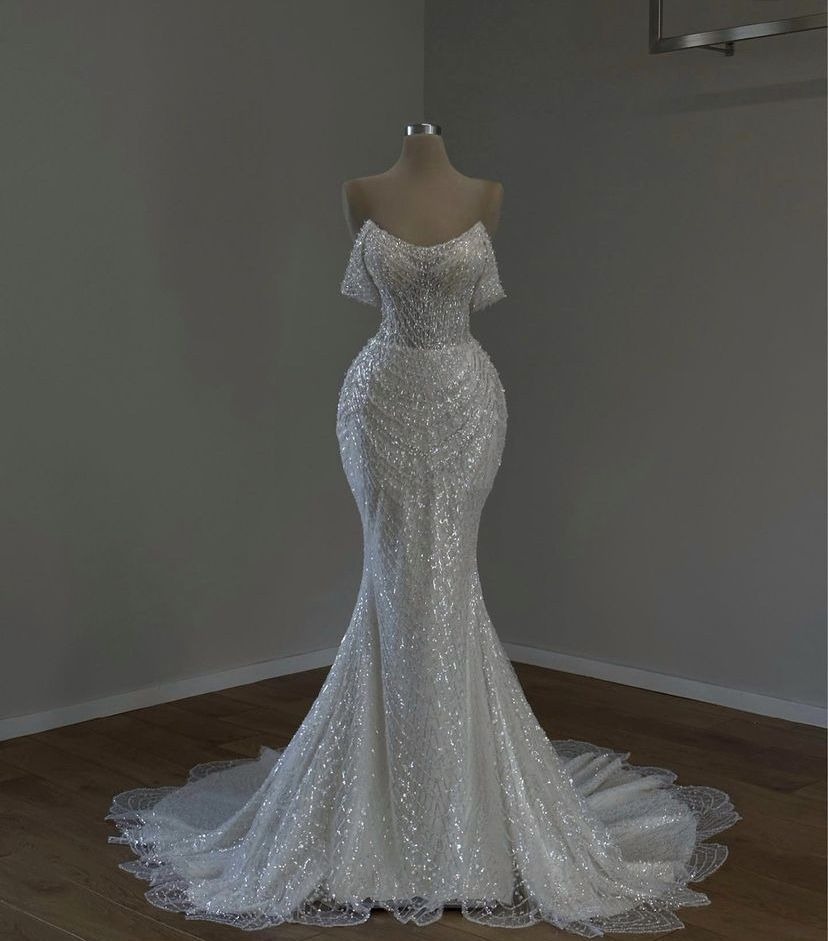
12.04.2026
Boho Brautkleider Spitzenkleider – Perfekt für Deine Traumhochzeit. Dieser Satz beschreibt nicht nur ein Kleidungsstück, sondern eine ganze Lebenshaltung, eine Atmosphäre von Freiheit, Romantik und natürlicher Eleganz. In einer Zeit, in der Bräute immer häufiger...

14.03.2026
VIP Bridal Trends Turkey In the ever-evolving world of haute couture weddings, VIP Bridal Trends Turkey stands out as the pinnacle of elegance, innovation, and accessibility for discerning brides worldwide. Whether you are a high-profile...

03.09.2025
Boho Short Wedding Dresses In the world of bridal fashion, few styles capture the essence of free-spirited romance quite like the boho short wedding dress. This trend blends whimsical, nature-inspired elements with a playful, knee-length...
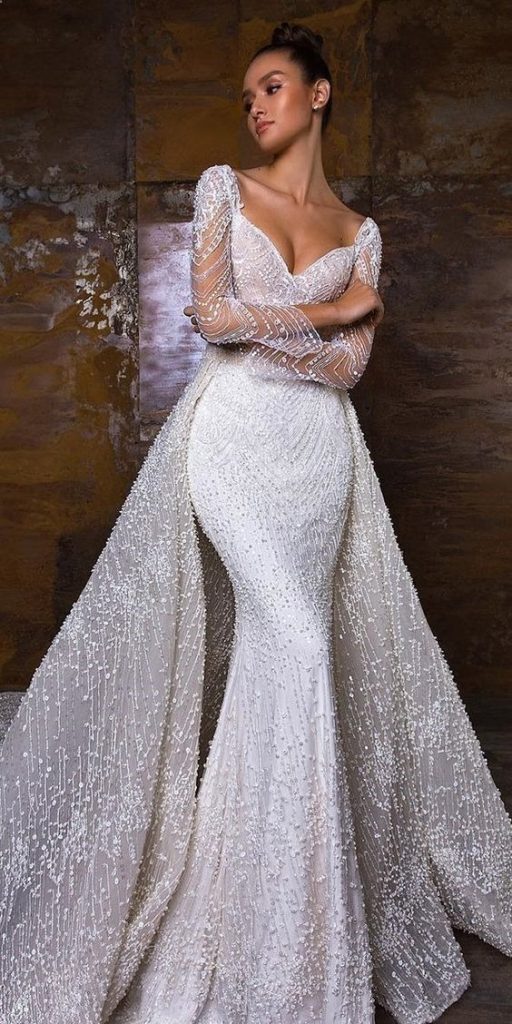
17.07.2025
Cheap eco friendly bridal gown in Turkey combines affordability, sustainability, and stunning design, making it an ideal choice for environmentally conscious brides. Turkey’s vibrant bridal market, especially in cities like Antalya and Istanbul, offers a...
Comments