
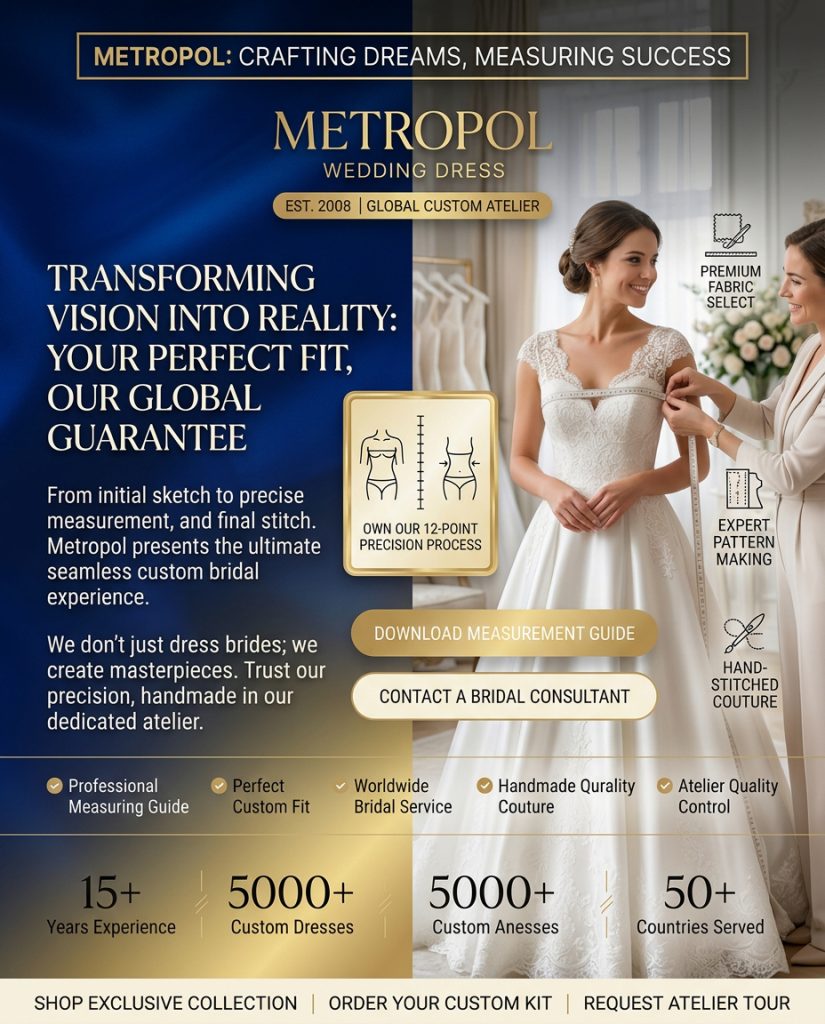
Custom Boho Wedding Dresses for Outdoor Weddings in Canada Custom Boho Wedding Dresses for Outdoor Weddings in Canada: A Complete Guide to Personal Style, Fabric Selection and Bridal Comfort
1. A Wedding Dress That Belongs to Your Story, Not Just Your Wedding Day
There is something unforgettable about an outdoor wedding in Canada. Imagine exchanging vows beside a quiet lake, surrounded by towering evergreens, while the afternoon sunlight filters through the trees. Picture a vineyard ceremony in British Columbia, a countryside celebration in Ontario, or an intimate wedding overlooking the breathtaking Canadian Rockies.
These settings have one thing in common: they create an atmosphere that feels personal, natural and beautifully unforced.
A traditional bridal gown can certainly look spectacular in these environments. However, many modern brides are looking for something that feels less conventional. They want a wedding dress that reflects their personality rather than following a predefined bridal formula.
This is where custom boho wedding dresses become particularly appealing.
Bohemian bridal fashion is not simply about lace, loose sleeves or flowing skirts. It is an approach to design that combines individuality, craftsmanship, movement and romantic simplicity. A boho gown can be delicate or dramatic, minimalist or richly detailed, vintage-inspired or distinctly contemporary.
More importantly, customization allows these elements to work together rather than forcing a bride to choose between the dress she loves and the practical requirements of her wedding location.
At Metropol Wedding Dress, the philosophy behind custom bridal design begins with an important question:
What would your ideal wedding dress look like if it were designed around your personality, your body, your venue and the experience you want to have on your wedding day?
The answer may involve a soft A-line silhouette, handmade-looking lace details, a flowing chiffon skirt, detachable sleeves or a dramatic open back. It may also involve practical decisions that are less visible but equally important, such as lining construction, hem length, fabric weight and support through the bodice.
A successful custom boho wedding dress brings all these considerations together.
Why Canadian outdoor weddings deserve a different design approach
Canada offers extraordinary wedding environments, but its geographical diversity creates different clothing requirements.
A summer wedding in the Okanagan Valley is not the same experience as an autumn ceremony in Quebec. A beach celebration on Vancouver Island presents different challenges from a mountain wedding near Banff or a garden reception in Toronto.
The dress must respond to its surroundings.
For example:
- A lakeside wedding may benefit from a lightweight skirt that moves beautifully in a breeze.
- A forest ceremony may require a hemline that is less vulnerable to damp ground and uneven paths.
- A vineyard celebration may suit a romantic lace gown with a relaxed silhouette.
- An autumn countryside wedding may call for long sleeves, a removable wrap or a more substantial bodice.
- A mountain ceremony may require additional planning for temperature changes and unexpected weather.
The most successful design is not necessarily the most elaborate one. It is the one that looks intentional, feels comfortable and remains practical throughout the celebration.
2. Understanding the Boho Bridal Aesthetic
Bohemian wedding fashion has evolved considerably. Its modern interpretation combines traditional romantic elements with contemporary tailoring and a more individual approach to bridal style.
Instead of treating boho as one fixed appearance, it is more useful to understand it as a collection of design characteristics.
The five elements that define a modern boho wedding dress
1. Natural movement
A boho gown should feel alive when the bride walks. Soft skirts, fluid fabrics, carefully placed layers and comfortable construction create movement without unnecessary bulk.
2. Expressive detailing
Lace, floral appliqués, embroidered elements, delicate buttons and textured fabrics add character. The objective is not to decorate every available surface but to create details that contribute to the overall design.
3. Relaxed elegance
A bohemian dress can be sophisticated without feeling overly formal. A well-designed neckline, a softly fitted waist or a beautifully shaped sleeve can create an elegant appearance without excessive structure.
4. Individual character
Modern boho bridal fashion leaves room for personal interpretation. Some brides prefer vintage-inspired lace, while others love minimalist silhouettes with only a few distinctive details.
5. A connection with the environment
The dress should complement the wedding setting. Natural textures and flowing shapes often work particularly well with outdoor surroundings because they create visual harmony rather than competing with the landscape.
Boho does not mean sacrificing structure
One common misunderstanding is that a bohemian wedding dress must be loose, oversized or completely unstructured.
This is not true.
A custom gown can have a supportive bodice, carefully shaped waistline, defined neckline and precisely constructed skirt while maintaining a relaxed bohemian appearance.
The distinction is between how a dress looks and how it is engineered.
For example, a gown may feature a fitted bodice with internal support, a flowing chiffon overlay and delicate floral lace. From the outside, the dress appears soft and effortless. Underneath, its construction provides the stability required for walking, sitting, dancing and moving comfortably.
That combination is one of the most valuable opportunities offered by custom design.
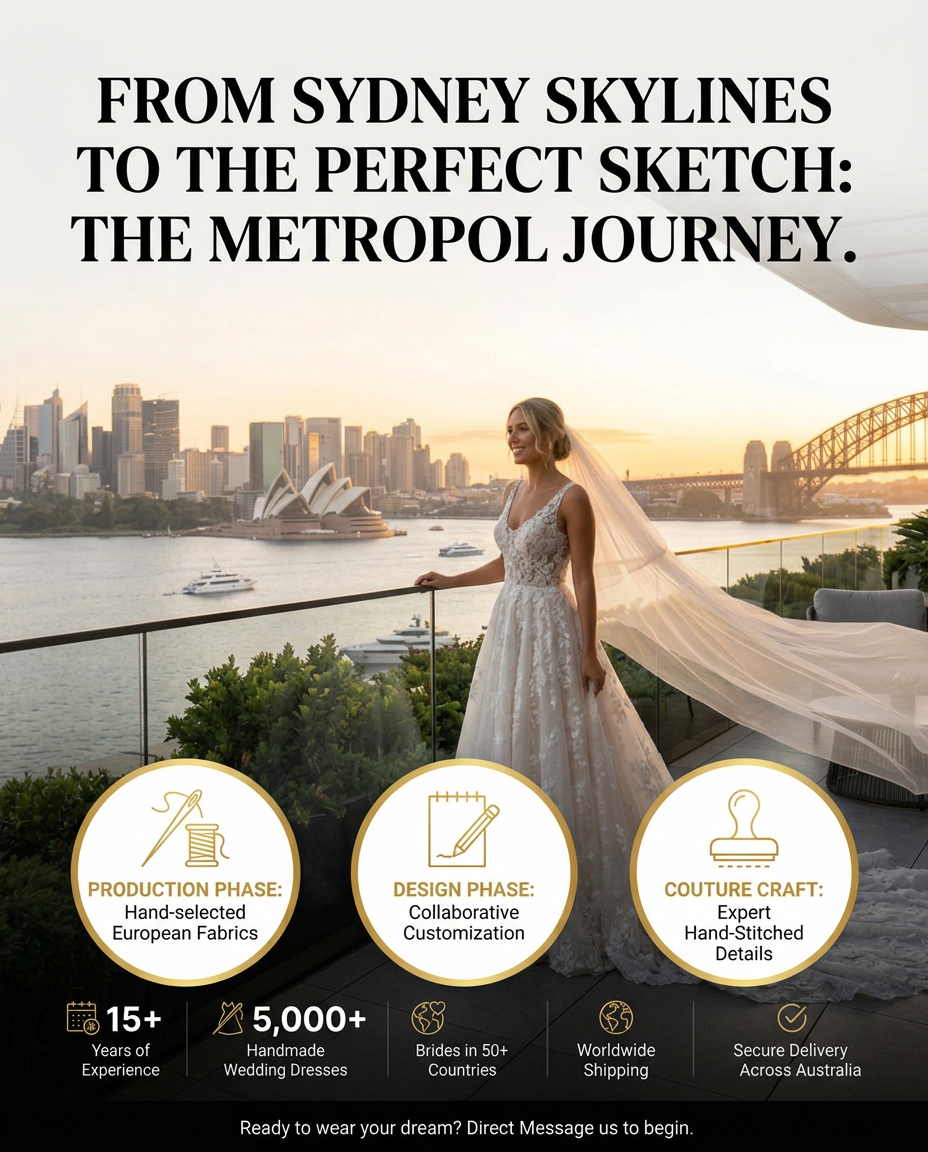
3. Choosing a Silhouette That Works With the Landscape
Silhouette selection should be based on more than body shape or current fashion trends.
For outdoor weddings, the bride should also consider walking surfaces, wind exposure, ceremony duration, seating arrangements and the transition between the ceremony and reception.
A beautiful silhouette that becomes difficult to manage after twenty minutes may not be the right choice for a full outdoor celebration.
Five silhouettes worth considering
A-line boho wedding dresses
The A-line silhouette is one of the most versatile options for outdoor bridal celebrations.
It follows the upper body and gradually opens from the waist, creating a balanced shape without excessive skirt volume.
Its advantages include:
- Comfortable movement.
- A romantic appearance without unnecessary weight.
- Compatibility with several lace and fabric combinations.
- Easier movement through many outdoor venues than extremely wide skirts.
- Flexibility for both relaxed and formal styling.
An A-line gown with a lace bodice and a lightweight flowing skirt can be particularly attractive for garden, vineyard and countryside weddings.
Empire-waist wedding dresses
An empire waist places the waistline higher on the body, usually just below the bust.
This construction creates an elongated appearance and allows the skirt to fall freely.
It is often associated with romantic, vintage-inspired and Grecian bridal designs.
For an outdoor celebration, an empire silhouette can work beautifully with chiffon, soft georgette and delicate lace.
The important consideration is bodice support. The neckline, underbust construction and strap placement should be designed carefully to provide the desired comfort and security.
Fit-and-flare bohemian gowns
A fit-and-flare dress follows the body through the bodice and hips before opening toward the lower skirt.
This silhouette offers a more defined appearance while retaining the softness associated with bohemian fashion.
It can be especially effective when paired with:
- Floral lace.
- A low or illusion back.
- Softly shaped sleeves.
- A modest train.
- A lightweight skirt extension.
Brides should consider the mobility of the hip and knee areas, particularly if the venue includes grass, gravel or uneven walking surfaces.
Relaxed sheath wedding dresses
A sheath gown follows a relatively straight line from the upper body toward the hem.
It is a strong option for brides who appreciate understated elegance.
A simple sheath dress can become distinctly bohemian through its materials and details: textured lace, a soft cowl neckline, delicate straps, an open back or a detachable flowing overskirt.
Its relatively limited skirt volume can also make movement easier in many outdoor settings.
However, fabric choice is important. A very lightweight or body-skimming fabric may require thoughtful lining and construction to achieve the desired coverage and fit.
Romantic layered skirts
Some brides want the freedom of a flowing gown without choosing a traditional full ball gown.
Layered chiffon, soft tulle and organza can create volume while maintaining a lighter visual appearance.
The number of layers, their length and their attachment points should be considered carefully.
More layers do not automatically produce a better dress. Excessive volume can become inconvenient on narrow paths, during windy ceremonies or when sitting on outdoor furniture.
The goal is to create movement that feels intentional.
Silhouette comparison for outdoor Canadian weddings
| Silhouette | Visual character | Outdoor practicality | Design consideration |
|---|---|---|---|
| A-line | Romantic and balanced | Excellent versatility | Control skirt volume |
| Empire waist | Soft and vintage-inspired | Good | Prioritize bodice support |
| Fit-and-flare | Defined and feminine | Venue-dependent | Allow sufficient walking room |
| Sheath | Minimal and contemporary | Very good in suitable fabrics | Ensure comfortable lining |
| Layered skirt | Airy and dramatic | Depends on volume | Consider wind and ground contact |
Design insight: The best silhouette is the one that allows a bride to perform every important activity comfortably. Walking down a grassy aisle, sitting for dinner, greeting guests and dancing should all be part of the design conversation.
4. The Fabric Decision: Where Beauty Meets Engineering
Fabric is one of the most influential decisions in custom bridal design.
Two gowns with identical patterns can look completely different when constructed from different materials. Their weight, movement, transparency, surface texture and response to light will change.
For an outdoor wedding, fabric selection should be treated as a functional design decision rather than a purely aesthetic preference.
Chiffon: The language of movement
Chiffon is associated with lightweight elegance and fluid movement.
It works particularly well for:
- Flowing skirts.
- Romantic overlays.
- Soft sleeves.
- Layered designs.
- Relaxed A-line silhouettes.
In a gentle breeze, chiffon can create beautiful movement in photographs.
However, its delicate nature means that the design must account for possible snagging, fraying and transparency. A suitable lining and carefully finished seams are important.
Georgette: A little more substance
Georgette provides a soft, flowing appearance with more texture and body than many lightweight chiffon fabrics.
It can be a useful choice for brides who want movement without an extremely delicate or floating appearance.
It works particularly well in relaxed silhouettes and dresses that need a little more visual substance.
Lace: Texture, romance and personality
Lace is central to many bohemian bridal designs, but not all lace behaves in the same way.
Different constructions create different visual and practical results.
Chantilly lace
Fine and delicate, Chantilly lace is often associated with soft romantic detailing. It can be particularly beautiful on sleeves, necklines and flowing overlays.
Corded lace
Corded lace features raised outlines that create a more defined pattern. It can provide visual depth and work well on bodices or selected sections of a skirt.
Guipure lace
This type of lace often has a more substantial appearance, with connected motifs and less of the delicate net background found in some other lace constructions.
It can create a stronger decorative effect.
Floral lace appliqués
Floral appliqués can be positioned strategically to create a design that feels personal rather than repetitive.
They may be concentrated around the shoulders, neckline, waist or skirt.
For outdoor weddings, placement matters. Lace that frequently catches on branches, rough surfaces or accessories may require additional attention.
Tulle: Volume without visual heaviness
Tulle is a versatile net-like material commonly used for skirts, veils and decorative layers.
Its appearance changes depending on its stiffness, density and number of layers.
Soft tulle can create an airy, romantic effect, while firmer varieties provide more shape.
For a boho gown, soft tulle is often the more natural starting point, especially when combined with lace or chiffon.
Organza: Lightness with structure
Organza is sheer but generally holds more shape than chiffon.
It can add volume and definition without requiring an extremely heavy construction.
This makes it useful for layered skirts, sleeves and decorative elements.
However, the finished garment should be evaluated for edge stiffness and comfort against the skin.
Crepe: Modern simplicity
Crepe is valued for its relatively smooth, matte appearance and controlled drape.
It is a particularly interesting option for brides who want boho influences without traditional floral decoration.
A crepe gown can be paired with:
- A lace back panel.
- Detachable sleeves.
- A soft chiffon overskirt.
- An asymmetric neckline.
- Subtle embroidered details.
It provides a contemporary foundation for a more restrained interpretation of bohemian bridal fashion.
Fabric selection matrix
| Fabric | Movement | Visual character | Useful applications | Main consideration |
|---|---|---|---|---|
| Chiffon | Very fluid | Airy and romantic | Skirts and overlays | Delicacy and snagging |
| Georgette | Fluid | Soft and textured | Skirts and dresses | Transparency and lining |
| Chantilly lace | Depends on base | Fine and delicate | Sleeves and overlays | Delicate handling |
| Guipure lace | More defined | Textured and decorative | Bodices and accents | Weight and flexibility |
| Soft tulle | Light and floating | Ethereal | Skirts and veils | Layer management |
| Organza | Controlled | Crisp and light | Volume and structure | Edge comfort |
| Crepe | Smooth and fluid | Contemporary | Sheath and A-line gowns | Fit and underlayers |
A practical fabric test before ordering
Never evaluate a fabric solely by looking at a photograph.
Ask to examine a physical swatch whenever possible.
Try these simple checks:
- Hold the material against natural daylight to evaluate transparency.
- Gently move it to understand how it falls.
- Compare the front and reverse surfaces.
- Ask whether the material requires a lining.
- Consider how it feels against bare skin.
- Ask about pressing, steaming and cleaning requirements.
- Confirm whether the actual production fabric will match the approved sample.
A photograph can communicate colour and texture, but it cannot fully demonstrate weight, hand feel or drape.
5. Designing for Canada’s Four Seasons
Canada should never be treated as one uniform wedding climate.
Regional conditions, elevation, proximity to water and the specific wedding date all influence the bride’s experience.
A custom dress should be designed around the expected conditions rather than broad assumptions about the season.
Spring: Romance with a practical layer
Spring weddings can be beautiful, particularly in gardens and countryside venues.
However, temperatures may vary significantly throughout the day.
A bride planning a spring outdoor wedding might consider:
- Three-quarter or long sleeves.
- A lightweight lining.
- A removable lace bolero.
- A detachable wrap.
- A skirt that avoids excessive contact with wet ground.
- Comfortable shoes suitable for softer surfaces.
The advantage of detachable elements is flexibility. The bride can wear a more covered look during the ceremony and remove an additional layer when moving indoors.
Summer: Airflow and freedom of movement
Summer is often associated with outdoor weddings, but a beautiful summer dress should not become uncomfortable in warm conditions.
For a summer celebration, consider:
- Lightweight fabrics.
- Breathable construction.
- Minimal unnecessary internal layers.
- Comfortable strap placement.
- A skirt with manageable volume.
- Secure bodice support.
- An appropriate lining that does not feel excessively heavy.
The objective is to reduce unnecessary weight while maintaining coverage and structure.
A chiffon skirt over a carefully selected lining can be an effective combination.
Autumn: Texture and romantic layering
Autumn creates wonderful opportunities for bohemian bridal design.
The landscape itself offers inspiration through warm colours, changing foliage and softer natural light.
Potential design directions include:
- Long lace sleeves.
- Textured floral appliqués.
- Warm ivory tones.
- Layered skirts.
- Detachable capes.
- Soft wraps.
- More substantial bodice construction.
A bride planning an autumn wedding should also consider the difference between afternoon and evening temperatures.
A removable outer layer can be more practical than relying on a single heavy dress.
Winter: Bohemian elegance beyond summer
Boho fashion does not need to disappear when the temperature drops.
A winter bohemian gown can combine delicate details with more substantial materials.
Consider:
- Long sleeves.
- Higher necklines.
- Lined bodices.
- Velvet or textured accessories.
- Removable bridal coats.
- Layered underskirts.
- A carefully selected outer garment.
The challenge is balancing warmth, mobility and visual proportion.
An excessively heavy dress can become tiring, while a lightweight dress without an appropriate outer layer may not provide enough comfort.
Canada’s regional wedding considerations
| Region | Possible wedding setting | Design priorities |
|---|---|---|
| British Columbia | Vineyard, coast, forest, mountain | Flexible layers and terrain-aware hems |
| Alberta | Mountain, lake, countryside | Weather contingency and secure construction |
| Ontario | Garden, estate, lakeside | Versatile fabrics and adaptable styling |
| Quebec | Countryside, historic venue, garden | Seasonal layering and elegant detailing |
| Atlantic Canada | Coastal, garden, countryside | Wind-aware design and manageable trains |
| Northern Canada | Remote landscape, lodge, outdoor ceremony | Logistics, warmth and practical transport |
These are design considerations, not fixed climate rules. The actual wedding location and forecast should guide the final decisions.
6. When the Dress Must Work With the Ground
One of the most overlooked aspects of outdoor bridal design is the relationship between the dress and the walking surface.
A gown can look perfect in a studio but behave very differently on grass, gravel, sand or forest paths.
The hemline deserves particular attention.
Grass and garden venues
Long skirts can collect grass, moisture and small pieces of natural debris.
A bride who wants a full-length gown should discuss the final hem length using the shoes she intends to wear.
The dress should be long enough to create the desired appearance without becoming a constant tripping or cleaning concern.
Gravel and stone paths
Gravel can be particularly challenging for delicate lace edges and long trains.
A shorter train, detachable train or bustle arrangement may offer a better balance between visual impact and practicality.
Beach and sandy venues
Sand can enter the lower layers of a dress, especially when the skirt is extremely full.
A lightweight skirt with fewer unnecessary layers may be easier to manage.
Shoes should also be considered early because heel height can affect how the hem sits.
Forest and woodland ceremonies
Woodland settings often involve uneven ground, roots and narrow walking paths.
A controlled skirt volume, secure bodice and manageable hem can make the ceremony much more comfortable.
A dress should be evaluated not only while standing still but also while walking, turning and stepping onto different surfaces.
The detachable train solution
A detachable train is worth considering for brides who want a dramatic ceremony entrance without carrying the same amount of fabric throughout the reception.
It can provide two different looks:
- A more dramatic appearance during the ceremony and photographs.
- A lighter, more practical dress for dinner and dancing.
The attachment method should be tested before the wedding. A beautiful detachable design is only useful if it remains secure during movement and can be removed without difficulty.
7. Customization: Turning a Bridal Idea Into a Finished Dress
The most valuable part of custom bridal design is the ability to make decisions that work together.
Customization should not be a random collection of additional features. Each design choice should support the overall concept.
A useful way to approach the process is to divide customization into five areas.
Area one: Neckline and bodice
The neckline influences the visual balance of the entire gown.
Popular directions include:
- Sweetheart.
- V-neck.
- Square neckline.
- Off-the-shoulder.
- Boat neckline.
- Scoop neckline.
- Illusion neckline.
- Asymmetric neckline.
The right option depends on personal preference, support requirements, sleeve design and the intended overall appearance.
A deep V-neck, for example, may create an elegant elongated line, but its construction must provide adequate support.
An off-the-shoulder design can look wonderfully romantic, but sleeve placement and arm mobility should be tested.
Area two: Sleeve design
Sleeves can transform a simple gown into a distinctive bohemian design.
Options include:
Bell sleeves: Create movement and a vintage-inspired appearance.
Bishop sleeves: Offer a softly gathered shape that can look romantic and elegant.
Flutter sleeves: Add lightness without the visual weight of a full sleeve.
Fitted lace sleeves: Provide a more defined and sophisticated appearance.
Detachable sleeves: Allow the bride to change the look between ceremony and reception.
The most important technical consideration is mobility. Sleeves should allow the bride to raise her arms, embrace guests and dance comfortably.
Area three: Back design
The back of a wedding dress deserves as much attention as the front.
Outdoor ceremonies and wedding photography often create opportunities for rear and side views.
Popular custom options include:
- Open backs.
- Illusion lace backs.
- Button details.
- Low V-shaped backs.
- Lace-covered backs.
- Decorative straps.
- Subtle cut-outs.
An open-back design should be evaluated for support, particularly if the gown has a fitted bodice.
The dress must remain secure during normal movement.
Area four: Skirt construction
The skirt determines much of the gown’s movement and overall personality.
A bride might choose:
- A single flowing layer.
- A layered chiffon skirt.
- A lace overlay.
- A split-front design.
- A detachable overskirt.
- A soft train.
- An asymmetric hem.
The final design should be tested while walking and sitting.
Area five: Personal details
Custom design becomes particularly meaningful when it includes details connected to the bride’s story.
Examples include:
- Embroidery inspired by a favourite flower.
- A meaningful date inside the gown.
- Personalised initials.
- A family-inspired lace motif.
- A removable bow.
- Hand-finished buttons.
- A subtle colour accent.
- A custom veil.
These details do not need to be visible to every guest.
Sometimes the most meaningful part of a wedding dress is the element that only the bride knows is there.
8. The Hidden Construction Details That Separate a Beautiful Dress From a Wearable One
A wedding dress is a garment that must perform over many hours.
It should remain comfortable during standing, walking, sitting, hugging, eating, dancing and photography.
This is why the internal construction deserves serious attention.
Bodice support
The bodice should be designed according to the chosen neckline, fabric, silhouette and level of support required.
Depending on the design, construction may involve:
- Internal lining.
- Stabilising layers.
- Boning.
- Waist stays.
- Structured cups.
- Reinforced seams.
- Secure fastening systems.
Not every gown requires all these features.
A minimalist sheath dress may need a very different internal construction from a fitted lace gown with an open back.
The designer should explain how the selected structure supports the intended design.
Lining and skin comfort
A beautiful outer fabric does not guarantee a comfortable dress.
The lining is in direct contact with the body and can influence temperature, movement and skin sensitivity.
Important questions include:
- Does the lining feel smooth against the skin?
- Does it create unnecessary warmth?
- Is it sufficiently opaque?
- Does it move naturally with the outer layer?
- Are seams positioned comfortably?
- Are lace edges finished appropriately?
If the bride has sensitivities to certain materials, these should be discussed before the fabric is approved.
Fastenings and closures
Buttons, zippers, hooks and other fastening systems should be selected according to the design.
Decorative buttons can create a beautiful visual effect, but the underlying fastening system must still be practical.
The bride should be able to put on and remove the dress without unnecessary difficulty.
Seam strength and finishing
Outdoor celebrations involve movement, and the dress may experience more physical contact than it would during a short indoor ceremony.
Seam finishing, reinforcement and the quality of attachment points are therefore important.
This is especially relevant for:
- Detachable sleeves.
- Overskirts.
- Trains.
- Heavy lace appliqués.
- Decorative straps.
- Bodice closures.
A visually delicate gown can still have carefully engineered construction.
The movement test
Before approving the final dress, perform these movements:
- Walk at a natural pace.
- Turn in both directions.
- Sit on a standard chair.
- Raise both arms.
- Hug another person.
- Walk up and down a step.
- Bend slightly.
- Practise a few dance movements.
These simple tests can reveal design issues that are difficult to identify during a stationary fitting.
9. Custom Design Versus Buying a Ready-Made Boho Wedding Dress
Not every bride needs a completely custom gown.
The right purchasing route depends on how closely available designs match the bride’s requirements.
A ready-made dress may be an excellent choice when the desired silhouette, fabric and details already exist.
A custom design becomes more valuable when the bride wants several elements combined in a specific way.
| Consideration | Ready-made gown | Custom gown |
|---|---|---|
| Design selection | Existing styles | Developed around a brief |
| Personal details | Limited by available options | Greater design flexibility |
| Measurements | Usually standard sizing | Depends on the agreed production model |
| Fabric choice | Predetermined | May offer approved alternatives |
| Production time | Stock-dependent | Requires design and production time |
| Price | Varies by brand and model | Depends on complexity and materials |
| Alterations | Often required | May still be required depending on the process |
| Unique design | Limited | Greater potential |
A useful distinction: custom-made is not always the same as made-to-measure
These terms should not be treated as interchangeable.
Made-to-order generally means that a selected design is produced after an order is placed. It may still follow standard sizing.
Made-to-measure generally means that the garment is developed using the customer’s measurements.
Bespoke design generally involves a more individual design and pattern-development process.
The exact meaning can differ between businesses, so brides should request a written explanation of what is included.
For example, a dress may be described as custom while still using a standard base pattern.
That does not automatically make it a poor choice. The important thing is to understand what is actually being customised.
10. The Custom Wedding Dress Journey: From Inspiration to Final Approval
A custom gown is the result of a series of decisions.
The process becomes easier when each stage has a clear purpose.
Stage 1: Establish the wedding environment
Before selecting lace or a neckline, define the wedding conditions.
Consider:
- Ceremony location.
- Wedding date.
- Expected temperature.
- Outdoor or indoor reception.
- Walking surfaces.
- Ceremony duration.
- Photography requirements.
- Travel arrangements.
These details create the foundation for design decisions.
Stage 2: Develop a visual direction
Collect inspiration images, but avoid relying on photographs alone.
A useful design brief should identify what you like about each reference.
For example:
- Image one: the neckline.
- Image two: the skirt movement.
- Image three: the lace pattern.
- Image four: the back design.
- Image five: the overall colour.
This makes it easier to communicate the desired result without expecting one reference photograph to represent the entire gown.
Stage 3: Prioritise the design features
Not every detail needs equal importance.
Create a hierarchy.
Essential: The silhouette, comfort, overall appearance and desired neckline.
Important: Fabric texture, sleeve shape and back design.
Optional: Additional appliqués, decorative buttons, detachable elements and embroidery.
This helps control complexity and makes decisions easier if the original concept exceeds the available budget.
Stage 4: Confirm materials
Review the actual fabric options.
Ask for details about fibre content, weight, transparency, care requirements and availability.
If the design includes multiple fabrics, evaluate how they work together.
A chiffon overlay may look beautiful with a particular lace, but the combined weight and texture should be considered.
Stage 5: Review measurements
Professional measurements are strongly recommended.
Measurements should be taken according to the supplier’s instructions, with consistent posture and appropriate undergarments.
The measurement process should clarify:
- Bust.
- Underbust.
- Waist.
- Hips.
- Shoulder width.
- Torso length.
- Hollow-to-hem or other relevant length measurements.
- Sleeve length where applicable.
The exact measurement list depends on the pattern and design.
Measurements should not be treated as a guarantee that no alterations will ever be necessary.
Stage 6: Approve the design specification
Before production begins, the buyer should understand what is being made.
The written specification should identify:
- Agreed silhouette.
- Fabric selection.
- Colour.
- Neckline.
- Sleeve construction.
- Back design.
- Skirt layers.
- Train length.
- Closure type.
- Included accessories.
- Customisation limits.
- Production timeline.
- Payment conditions.
- Shipping arrangements.
- Alteration responsibilities.
This is one of the most important stages in the entire process.
Stage 7: Production and quality review
During production, the agreed specifications should guide construction.
If a design change becomes necessary, the implications should be communicated clearly before proceeding.
The buyer should understand whether the change affects price, production time or the finished appearance.
Stage 8: Final inspection and fitting
The completed dress should be inspected for:
- Overall appearance.
- Correct colour.
- Fabric consistency.
- Seam finishing.
- Secure attachments.
- Fastening operation.
- Lining comfort.
- Hem accuracy.
- Decorative detail placement.
- Fit and mobility.
The final fitting should include the actual shoes and intended undergarments whenever possible.
Stage 9: Wedding preparation
The dress should be stored and transported according to the fabric’s care requirements.
Arrange professional steaming or pressing if appropriate.
A small emergency kit can also be useful.
Suggested items include:
- Safety pins.
- Fashion tape.
- Needle and thread.
- Spare fastening components where available.
- A clean cloth.
- Appropriate stain-treatment supplies recommended for the fabric.
Avoid experimenting with cleaning chemicals on delicate bridal materials.
11. Timing Your Order: Why the Wedding Date Should Drive the Decision
Custom bridal production requires planning.
A bride should not assume that a dress can be designed, produced, delivered and adjusted within a few weeks.
The actual timeline depends on the supplier, design complexity, material availability, production capacity and shipping arrangements.
Some Canadian bridal businesses publish made-to-order or custom timelines ranging from several months to longer production schedules. These are examples rather than universal standards.
For a bride planning a custom boho wedding dress, a sensible approach is to begin discussions approximately 9–12 months before the wedding whenever possible.
A possible planning structure is:
| Stage | Suggested planning window |
|---|---|
| Initial research | 12 months before |
| Design consultation | 10–12 months before |
| Fabric and specification approval | 9–10 months before |
| Production | According to supplier agreement |
| Delivery and inspection | Before the alteration deadline |
| Alterations and fittings | Allow a dedicated final window |
| Final preparation | Close to the wedding |
The supplier’s confirmed production schedule should always take priority over a generic timeline.
What if the wedding is only four months away?
A shorter timeline does not automatically make a custom dress impossible.
However, the bride should immediately establish:
- Whether the design is feasible.
- Whether materials are available.
- Whether production capacity exists.
- Whether expedited production is offered.
- Whether shipping time is included.
- Whether a local alteration professional can accommodate the schedule.
A simpler design with fewer hand-applied details may be more realistic than a heavily embroidered gown requiring extensive manual work.
The important thing is to obtain a realistic commitment rather than relying on optimistic estimates.
12. Understanding the Cost of a Custom Boho Wedding Dress
A custom wedding dress should be evaluated according to the complete scope of work rather than its appearance alone.
Two gowns may look similarly detailed in photographs while requiring very different amounts of labour and material.
The final cost may depend on:
- Fabric type.
- Fabric quantity.
- Lace quality.
- Pattern complexity.
- Bodice construction.
- Number of layers.
- Hand-applied decoration.
- Embroidery.
- Sleeve construction.
- Detachable elements.
- Train design.
- Production location.
- Shipping and applicable taxes.
- Alteration requirements.
Where does the budget actually go?
A useful purchasing exercise is to divide the quotation into cost categories.
| Cost category | What to clarify |
|---|---|
| Design development | Is consultation included? |
| Pattern and construction | Is the pattern custom-developed? |
| Main fabric | Which material and quantity are included? |
| Lace and embellishments | Are these machine-made or hand-applied? |
| Internal construction | What support and lining are included? |
| Labour | What finishing processes are involved? |
| Accessories | Are veils, sleeves or overskirts included? |
| Shipping | Is delivery included or charged separately? |
| Taxes | Which taxes may apply? |
| Alterations | Are alterations included or separate? |
A more intelligent way to control costs
Rather than removing every decorative detail, identify which features create the strongest visual impact.
For example:
A bride may choose a relatively simple chiffon skirt with an intricately detailed bodice.
Another may prefer a minimalist crepe gown with dramatic detachable sleeves.
A third may choose a clean silhouette and invest in a distinctive lace back.
All three approaches can produce a memorable result without requiring decoration everywhere.
Budget principle: Spend on the elements that define the design, not on details that simply increase complexity.
Questions to ask before accepting a quotation
- Is the quoted price fixed or estimated?
- Which fabrics are included?
- Are sample swatches available?
- Are design changes charged separately?
- Is the veil included?
- Are detachable accessories included?
- Are alterations included?
- Is international shipping included?
- Who is responsible for import-related charges?
- What happens if production is delayed?
- What is the cancellation and refund policy?
A transparent quotation makes it easier to compare suppliers fairly.
13. Buying a Custom Wedding Dress From Outside Canada
Some brides may consider working with an international bridal manufacturer or designer.
This can expand the available design options, but it introduces additional purchasing considerations.
A lower initial quotation does not necessarily mean a lower final cost.
International order considerations
Before placing an order, confirm:
Product specification
The written description should clearly identify the materials, design details and construction requirements.
Measurement process
Ask how measurements are collected, checked and used.
Sample approval
Where possible, request fabric swatches and clear photographs of comparable workmanship.
Production communication
Establish who will provide updates and how design changes are approved.
Shipping
Confirm the carrier, shipping method, tracking arrangements and expected delivery window.
Import costs
Determine whether customs duties, taxes, brokerage fees or other charges may apply.
Returns and corrections
Understand the policy if the finished gown differs from the agreed specification.
Canadian textile labelling considerations
Canadian textile labelling rules are relevant to manufacturers, importers and retailers responsible for regulated textile products.
The Competition Bureau explains that textile labels generally include dealer identification and fibre-content information, subject to applicable requirements and exceptions. Fibre disclosure generally applies to fibres representing at least 5% of the total fibre mass.
Custom-made products may have specific documentation provisions.
Businesses selling into Canada should verify the applicable rules for their product and commercial arrangement rather than assuming that every garment follows an identical labelling process.
The buyer’s protection checklist
Before paying a deposit, obtain written confirmation of:
- Seller’s legal or business identity.
- Full product specification.
- Final price and currency.
- Deposit and balance terms.
- Estimated completion date.
- Delivery arrangements.
- Customs and tax responsibilities.
- Alteration responsibilities.
- Defect and correction procedures.
- Refund and cancellation conditions.
A custom dress is a significant purchase. Clear documentation protects both the buyer and the supplier.
14. Three Outdoor Wedding Scenarios: How the Design Changes
The best way to understand customisation is to see how different environments lead to different design decisions.
The following examples are illustrative design scenarios, not claims about individual customer projects.
Scenario A: A vineyard wedding in British Columbia
The vision: A relaxed afternoon celebration among vineyards, with natural light, greenery and an intimate reception.
Design direction: A soft A-line gown with a floral lace bodice, a flowing chiffon skirt and delicate sleeves.
Why it works:
The A-line shape provides a romantic appearance without excessive volume. The chiffon creates movement, while the lace adds texture and detail.
A modest train can provide a more formal ceremony appearance without making the dress unnecessarily difficult to manage.
Recommended details:
- Lightweight skirt construction.
- Carefully lined bodice.
- Secure sleeve attachment.
- Manageable train.
- Neutral ivory or another personally selected bridal tone.
Scenario B: A mountain wedding in Alberta
The vision: A ceremony surrounded by mountain scenery, with dramatic photographs and changing outdoor conditions.
Design direction: A structured lace bodice, a flowing skirt and detachable long sleeves or an elegant outer layer.
Why it works:
Mountain conditions can change quickly, so the design should allow the bride to adapt her outfit.
A secure bodice provides stability, while detachable elements create styling flexibility.
Recommended details:
- Reliable bodice support.
- Practical hem length.
- Weather-appropriate outer layer.
- Secure fastening systems.
- Shoes selected for the terrain.
- A backup indoor or sheltered photography plan.
Scenario C: A woodland wedding in Ontario
The vision: An intimate ceremony among trees, with natural decorations and a relaxed atmosphere.
Design direction: A soft sheath or A-line dress with botanical lace, a simple neckline and subtle open-back detailing.
Why it works:
The woodland environment already provides considerable visual texture.
A gown with carefully placed lace can complement the surroundings without competing with them.
A controlled skirt volume also helps with movement along forest paths.
Recommended details:
- Botanical lace placement.
- Comfortable lining.
- Moderate skirt volume.
- Secure back construction.
- Hemline adjusted to the actual walking surface.
15. Bridal Accessories: Completing the Boho Look Without Overcomplicating It
Accessories should support the dress rather than compete with it.
The strongest bridal styling often comes from choosing a few complementary elements.
Veils
A soft tulle veil can create an ethereal appearance.
For an outdoor ceremony, consider its length, weight and attachment.
Long cathedral veils can be dramatic, but they may become difficult to manage in strong winds or on uneven ground.
A shorter veil or detachable alternative may provide greater flexibility.
Hair accessories
Boho bridal styling often works beautifully with:
- Floral hairpieces.
- Delicate combs.
- Pearl pins.
- Minimalist headbands.
- Botanical-inspired accessories.
The choice should complement the neckline and hairstyle.
Footwear
Shoes should be selected according to the actual venue.
For grass, gravel or sand, a very narrow heel may be impractical.
Brides might consider block heels, wedges, elegant flats or a second pair for the reception.
The shoes should be available during the final hem fitting.
Jewellery
A detailed lace neckline may look best with minimal jewellery.
A simple gown can provide more freedom for statement earrings or a distinctive necklace.
The goal is visual balance.
Bridal wraps and outer layers
For cooler weather, an outer layer can become part of the styling rather than an emergency addition.
Possible choices include:
- Lace boleros.
- Lightweight shawls.
- Bridal capes.
- Soft wraps.
- Tailored bridal coats.
These pieces can also create a second visual look for photographs.
16. Common Custom Bridal Design Mistakes and How to Avoid Them
A custom dress offers flexibility, but more choices also create more opportunities for confusion.
The following mistakes are particularly important to avoid.
Mistake 1: Choosing fabric before considering the venue
A material that looks beautiful in a studio may not be appropriate for the expected weather or terrain.
Better approach: Define the wedding environment first, then select fabrics.
Mistake 2: Using too many inspiration photographs without a clear design brief
Different reference images may contain conflicting design features.
Better approach: Identify the exact element you like in each photograph.
Mistake 3: Assuming custom means no alterations
Customisation does not automatically eliminate fitting requirements.
Better approach: Clarify whether the dress is made-to-measure, made-to-order or bespoke, and agree on the alteration process.
Mistake 4: Overlooking the weight of the finished dress
Several lightweight layers can collectively become heavy.
Better approach: Ask about the finished garment’s approximate weight and try a comparable construction where possible.
Mistake 5: Ignoring wind
Long veils, lightweight skirts and detachable elements can behave unpredictably in exposed locations.
Better approach: Test attachments and consider alternative styling arrangements.
Mistake 6: Ordering too late
Production, shipping and alterations require time.
Better approach: Work backwards from the wedding date using the supplier’s confirmed schedule.
Mistake 7: Focusing only on the front view
The back, sides and movement of the dress matter just as much.
Better approach: Review photographs and design drawings from multiple angles.
Mistake 8: Approving a sample without checking the actual materials
A sample may not represent the exact fabric or finishing used in production.
Better approach: Request confirmation of the final materials in writing.
Mistake 9: Forgetting sitting comfort
A dress may look perfect while standing but feel restrictive during dinner.
Better approach: Include sitting and movement tests in the fitting.
Mistake 10: Treating the train as a purely decorative feature
The train interacts with the venue, walking surface and reception arrangements.
Better approach: Consider a manageable train, bustle or detachable option.
17. How to Evaluate a Bridal Supplier Before Ordering
Choosing the supplier is just as important as choosing the dress.
A good purchasing decision requires more than attractive product photographs.
Brides should evaluate design communication, technical understanding, production transparency and after-sales support.
The supplier evaluation framework
| Evaluation area | What a buyer should look for |
|---|---|
| Design understanding | Can the supplier interpret a detailed brief? |
| Material knowledge | Can they explain fabric differences? |
| Construction | Can they describe internal support and finishing? |
| Communication | Are responses clear and consistent? |
| Specification | Are agreed details documented? |
| Timing | Is the production schedule realistic? |
| Pricing | Are included and excluded items clear? |
| Quality control | Is there a defined inspection process? |
| Shipping | Are delivery responsibilities explained? |
| After-sales | Is there a correction or support policy? |
Questions that reveal real expertise
Instead of asking only whether a supplier can make a particular dress, ask questions that reveal their understanding of the design.
For example:
- How would you adapt this skirt for a garden venue?
- Which lace construction would work best for these sleeves?
- How would you support this neckline?
- Can the train be detached?
- What happens if the measurements change?
- How will the dress be packed for international transport?
- Which components are included in the quotation?
- How will the finished garment be inspected?
A knowledgeable supplier should be able to explain the reasoning behind important design recommendations.
18. Metropol Wedding Dress: A More Personal Approach to Bridal Style
A wedding dress should be more than a product selected from a collection of photographs.
It should reflect the person wearing it.
For brides exploring custom boho wedding dresses for outdoor weddings in Canada, Metropol Wedding Dress represents an opportunity to approach bridal style through individual design preferences, practical considerations and a clear understanding of the desired result.
The starting point is not a particular trend.
It is the bride’s vision.
Perhaps you imagine a delicate lace gown with long flowing sleeves. Perhaps you prefer a minimalist silhouette with a dramatic open back. You may want a romantic skirt that moves naturally in the wind or a versatile design with detachable details for a change between ceremony and reception.
Each concept begins with a different set of priorities.
What should your design consultation establish?
A productive bridal consultation should help clarify:
- The overall style direction.
- The wedding location and season.
- The preferred silhouette.
- The fabric and texture preferences.
- The desired neckline and sleeve design.
- The level of bodice support.
- The preferred train length.
- The available production time.
- The budget and included services.
- The practical requirements for delivery and fitting.
These decisions provide a foundation for evaluating whether a particular custom design is appropriate.
A design philosophy based on thoughtful decisions
The best bridal designs are not necessarily the most complicated.
Sometimes a single lace detail creates more personality than an entire skirt covered in embellishment.
Sometimes a carefully selected fabric transforms a simple silhouette.
Sometimes the most valuable customisation is invisible: improved support, a better lining, a more practical hem or a fastening system that allows the bride to move confidently.
The objective is to create a dress that feels complete.
Metropol Wedding Dress invites brides to think beyond the idea of simply finding a beautiful gown and consider what makes a gown genuinely right for their wedding.
19. Your Custom Boho Wedding Dress: The Final Decision Framework
Before approving a design, step back and consider the complete wedding experience.
A dress should satisfy five essential requirements.
1. Personal identity
Does it reflect your taste, personality and preferred bridal aesthetic?
2. Environmental suitability
Does it work with the wedding location, season and expected conditions?
3. Physical comfort
Can you walk, sit, dance and move without constantly adjusting the dress?
4. Construction quality
Are the fabric, lining, seams, closures and decorative details appropriate for the intended design?
5. Purchasing confidence
Are the specifications, price, delivery schedule, alteration responsibilities and commercial terms clear?
If these five areas are addressed, the bride can make a much more informed decision.
The final pre-order checklist
- Wedding date confirmed.
- Venue and ceremony surface identified.
- Expected seasonal conditions considered.
- Silhouette selected.
- Fabric preferences discussed.
- Physical fabric samples reviewed where possible.
- Neckline and sleeve details confirmed.
- Bodice support discussed.
- Back design approved.
- Train and hem length considered.
- Detachable elements documented.
- Measurements professionally checked.
- Complete quotation reviewed.
- Production schedule confirmed.
- Shipping arrangements understood.
- Alteration responsibilities established.
- Final specification approved in writing.
Conclusion: Let Your Wedding Dress Become Part of the Experience
An outdoor wedding is memorable because of the atmosphere it creates. The landscape, the people, the light and the personal details come together to make the celebration unique.
The wedding dress should belong naturally within that experience.
A custom boho wedding dress offers the freedom to create something that feels romantic without being conventional, detailed without being excessive and elegant without sacrificing comfort.
For a Canadian outdoor wedding, that freedom becomes particularly valuable. Different regions, changing seasons and varied landscapes require thoughtful decisions about fabric, silhouette, construction and styling.
A flowing chiffon skirt may be perfect for a summer vineyard celebration. A lace gown with detachable sleeves may suit a mountain ceremony. A minimalist sheath dress with botanical details may be exactly right for an intimate woodland wedding.
There is no universal formula.
There is only the design that brings together your preferences, your setting and the way you want to feel on your wedding day.
At Metropol Wedding Dress, the conversation about your gown should begin with your vision and continue through the details that make that vision wearable.
Because the most beautiful wedding dress is not simply the one that attracts attention.
It is the one that allows you to feel completely yourself while experiencing one of the most meaningful days of your life.
20. Five Ways to Begin Your Bridal Design Journey
CTA 1 — The Personal Design Invitation
Your wedding dress should tell your story.
Start with the silhouette, fabrics and details you love. Explore how a custom boho design could bring your bridal vision to life with Metropol Wedding Dress.
CTA 2 — The Outdoor Wedding Solution
Planning an outdoor wedding in Canada?
Let’s think beyond appearance. Consider the season, venue, walking surface, fabric and movement before deciding on your ideal gown.
CTA 3 — The Fabric-First Approach
Not sure which fabric is right for your wedding?
Explore chiffon, lace, georgette, tulle and other bridal materials before making your final design decision.
CTA 4 — The Customization Invitation
Have a dress in mind that you cannot find anywhere?
Bring together your favourite neckline, sleeve style, skirt shape and personal details to explore a more individual bridal design.
CTA 5 — The Wedding-Date Approach
Your wedding date is getting closer. Your dress planning should start now.
Discuss your preferred design, production requirements and delivery expectations early enough to make informed decisions.
Discover your bridal possibilities with Metropol Wedding Dress.
Related Topics

21.12.2025
Türkische Hochzeitskleider im Fokus Hochwertige Verarbeitung zu attraktiven Preisen In der Welt der Brautmode nehmen türkische Hochzeitskleider eine besondere Stellung ein. Türkische Hochzeitskleider im Fokus: Hochwertige Verarbeitung zu attraktiven Preisen – dieser Satz fasst perfekt...

17.01.2026
High End Custom Wedding Dresses Crafted for American Brides The modern American bride is no longer searching for just a wedding dress—she is searching for a statement, a reflection of her identity, and a timeless...

15.05.2025
Wedding Dress İmport From İstanbul The wedding dress industry is a vibrant and ever-evolving sector, with Istanbul, Turkey, emerging as a significant hub for high-quality, affordable, and stylish wedding dresses. Known for its rich textile...

22.04.2026
Simple Wedding Dresses with Long Sleeves When it comes to wedding fashion, trends may come and go, but elegance, simplicity, and timeless design always remain in style. In recent years, brides around the world have...

30.03.2024
Créateurs De Robes De Mariée 5 meilleures Les fabricants de robes de mariée jouent un rôle crucial dans l’industrie du mariage, contribuant à la création de robes magnifiques et uniques que les mariées chérissent lors...

05.02.2026
Les robes de mariée sur mesure valent elles le prix Avantages et inconvénients Le mariage est l’un des événements les plus marquants de la vie d’une personne. Pour beaucoup de futures mariées, la robe représente...
Comments