
How to Launch a Bridal Collection Without Holding Large Inventory Launching a bridal collection sounds expensive.
At first glance, the traditional model appears to require dozens — perhaps hundreds — of wedding dresses in multiple silhouettes, sizes, colors and price points. A new boutique may imagine racks filled with ball gowns, A-line dresses, mermaid silhouettes, minimalist satin gowns, lace wedding dresses, plus-size options and fashion-forward statement pieces.
But there is a fundamental problem with that model:
A wedding dress is not an ordinary retail product.
A bride usually does not walk into a boutique, select a random size from a rack and leave with it in a shopping bag. She wants to see how a gown looks on her body, discuss alterations, consider customization, compare silhouettes and often order a gown specifically for her.
That creates an opportunity for a different business model.
Instead of buying large quantities of finished wedding dresses, a bridal retailer can build a carefully selected sample collection, use supplier production capacity as an extension of its own inventory, and order the final gown after the customer has committed to the purchase.
This approach can reduce inventory risk, preserve working capital and allow a new bridal business to offer a much broader design assortment than its physical stock would suggest.
In other words:
You do not necessarily need a warehouse full of wedding dresses to operate a well-stocked bridal business. You need the right samples, the right supplier, the right ordering system and the right customer experience.
That distinction is the foundation of a modern low-inventory bridal strategy.
Quick Summary: The Low-Inventory Bridal Model
A bridal collection can be launched with considerably less finished inventory by separating what the bride needs to see from what the boutique actually needs to own.
The boutique invests primarily in:
- carefully selected sample wedding dresses;
- photography and visual merchandising;
- fitting and appointment infrastructure;
- supplier relationships;
- fabric and lace swatches;
- size and measurement tools;
- ordering systems;
- customer acquisition;
- alterations partnerships;
- reliable production and logistics.
The manufacturer, meanwhile, produces the customer’s final gown after the order is placed.
This is different from conventional fashion retail.
In many bridal businesses, the dresses displayed on the showroom floor are samples designed to help the customer make a decision. The final wedding gown can then be produced as a special order rather than being pulled from a large warehouse of finished inventory. Industry buying guidance describes this distinction between sample gowns and sellable stock as one of the defining characteristics of bridal retail.
For a new boutique, this can change the economics of the entire launch.
Instead of asking:
“How many dresses can I afford to buy?”
the better question is:
“How many customer decisions can my sample collection support?”
That is a very different way of thinking about inventory.
1. Start With the Business Model — Not the Dresses
One of the most common mistakes made by new bridal retailers is choosing gowns before choosing the commercial model.
The owner starts browsing collections, falls in love with designs and gradually builds a large assortment.
Then the financial reality arrives.
Some styles sell quickly.
Some generate appointments but few orders.
Some are beautiful but difficult to fit.
Some are too trend-dependent.
Some occupy valuable showroom space without generating enough revenue.
And some become expensive samples that eventually need cleaning, repair, discounting or replacement.
The better approach is to design the inventory architecture first.
A useful bridal inventory structure can look like this:
| Inventory Layer | Purpose | Ownership Requirement |
|---|---|---|
| Core samples | Everyday appointments | Boutique owns |
| Hero samples | High-impact styles | Boutique owns |
| Experimental samples | Trend testing | Limited |
| Trunk-show samples | Temporary assortment expansion | Often supplier/designer controlled |
| Made-to-order gowns | Customer purchases | Produced after order |
| Custom gowns | Customer-specific requests | Produced after approval |
| Sample-sale gowns | End-of-life inventory recovery | Boutique owns |
The important idea is that these categories do not need to be treated equally.
Your showroom might physically contain 20–30 carefully chosen gowns while your customer-facing assortment represents a much larger design universe through catalogs, digital lookbooks, supplier collections and temporary trunk-show programs.
Current bridal buying guidance emphasizes that boutiques commonly work with samples, designer relationships, market appointments and trunk shows rather than treating bridal inventory exactly like ordinary ready-to-wear stock.
That is precisely where a low-inventory strategy becomes powerful.
2. Think of Samples as Sales Equipment
A sample wedding dress is not simply inventory.
It is closer to a piece of sales equipment.
A coffee shop needs an espresso machine.
A car dealership needs demonstration vehicles.
A bridal boutique needs gowns that allow brides to visualize themselves as brides.
That changes how you should evaluate a sample.
The question should not only be:
“Will this exact gown sell?”
Instead ask:
“How many sales conversations can this gown create?”
A single well-selected sample may help sell:
- the same design;
- another size;
- another fabric;
- another neckline;
- another color;
- another customization;
- another silhouette from the same supplier;
- or even a completely different gown.
This is why buying a sample solely because you personally love it can be dangerous.
The best sample collection is not necessarily the most beautiful collection.
It is the collection that gives a bride enough visual and physical information to make a confident buying decision.
3. Build the Collection Around Bridal Buying Decisions
A customer does not necessarily think in manufacturer SKU numbers.
She thinks:
- “I want something romantic.”
- “I don’t want too much volume.”
- “I want sleeves.”
- “I want something fitted.”
- “I hate strapless dresses.”
- “I want a modern wedding dress.”
- “I want to feel elegant but not overly traditional.”
- “I want something that photographs beautifully.”
- “I need something suitable for a destination wedding.”
- “I want to hide my arms.”
- “I want to show my waist.”
- “I need a dress that can be altered.”
- “I want something different from what everyone else is wearing.”
Your sample collection should therefore be designed around customer problems and preferences, not simply around the supplier’s catalog.
A useful assortment matrix might include:
Silhouette
- A-line
- Ball gown
- Mermaid
- Fit-and-flare
- Sheath
- Column
- Princess
- Minimalist structured silhouettes
Construction
- Corset
- Structured bodice
- Soft draping
- Layered skirt
- Structured satin
- Lace construction
- Beaded construction
Style personality
- Romantic
- Modern
- Minimalist
- Classic
- Glamorous
- Bohemian
- Fashion-forward
- Modest
- Contemporary
Customer requirement
- Petite-friendly
- Curve-friendly
- Sleeve options
- Low-back
- High-neck
- Convertible
- Lightweight
- Destination-friendly
This creates a much more intelligent collection than simply buying “the 30 prettiest gowns.”
4. The 80/20 Principle Is Particularly Useful in Bridal
A new retailer rarely needs every possible design.
A relatively small number of styles may generate the majority of customer interest.
That means the initial collection should be designed as a testing system.
For example, imagine a boutique launches with 24 carefully selected samples.
Instead of distributing the collection randomly, the buyer might create:
- 5 core A-line gowns;
- 4 fitted/mermaid gowns;
- 3 minimalist gowns;
- 3 romantic lace gowns;
- 3 statement gowns;
- 2 modest designs;
- 2 curve-focused designs;
- 2 experimental/trend designs.
The exact numbers should depend on the local customer profile.
The principle is more important than the formula.
Use a limited number of physical samples to test a larger commercial assortment.
Then measure:
- appointment requests;
- try-ons;
- “favorite” selections;
- fitting problems;
- quoted prices;
- orders;
- lost sales;
- requested modifications;
- customer objections;
- lead time concerns.
After several months, the collection becomes evidence-based.
The boutique can remove weak samples and reinvest in designs that repeatedly produce customer interest.
5. The Supplier Becomes Part of Your Inventory Strategy
This is the most important shift in thinking.
A low-inventory bridal boutique should not operate as if the manufacturer is merely a vendor.
The manufacturer becomes part of the retailer’s supply chain infrastructure.
You need to understand:
- production capacity;
- standard lead times;
- sample availability;
- customization capability;
- grading;
- sizing;
- fabric availability;
- lace availability;
- embellishment options;
- quality-control procedures;
- packaging;
- shipping;
- export documentation;
- payment terms;
- replacement procedures;
- remake policies;
- communication speed.
The goal is not simply to find the cheapest wedding dress supplier.
The goal is to find a manufacturing partner that allows your boutique to sell confidently without carrying excessive inventory.
That distinction can have a larger impact on profitability than a small difference in wholesale price.
6. Why Made-to-Order Production Changes the Economics
Consider a simplified example.
A boutique purchases 100 wedding dresses at an average wholesale cost of $500.
That represents:
$50,000 of inventory.
But the boutique does not know exactly which styles will sell.
Perhaps 20 dresses become best sellers.
Another 30 generate moderate demand.
The remaining 50 move slowly.
The boutique now has capital trapped in products that may take months or years to sell.
Now consider a sample-based model.
Suppose the boutique invests $15,000 in carefully selected samples and uses a manufacturer for made-to-order production.
The boutique still needs working capital.
But the amount of cash exposed to speculative finished inventory is significantly lower.
This does not eliminate business risk.
It changes the type of risk.
Instead of carrying large amounts of product risk, the retailer carries more supplier and service risk.
That is often easier to manage.
7. The Three Inventory Models You Should Compare
There is no single correct model for every bridal retailer.
Three approaches are particularly useful.
Model A: Traditional Stock-Based Retail
You purchase finished dresses before the customer buys them.
Advantages
- Immediate availability
- Customer can potentially take a gown quickly
- Simple operational concept
- Useful for urgent weddings
- Can support sample-sale events
Disadvantages
- High capital requirement
- Greater dead-stock risk
- More storage
- More markdown exposure
- Larger size and style complexity
- Capital remains tied up in finished products
This model may work for established businesses with strong historical sales data.
It is less attractive for an untested boutique.
Model B: Sample + Made-to-Order
The boutique owns selected samples.
The customer chooses a style.
The final gown is produced after the order.
Advantages
- Lower finished-goods inventory
- Wider design assortment
- Better cash efficiency
- Easier collection testing
- Lower dead-stock exposure
- Strong customization potential
Disadvantages
- Production lead time
- Supplier reliability becomes critical
- Customer must understand ordering expectations
- Requires strong measurement and order management
For many new bridal boutiques, this is the most interesting model to investigate.
Model C: Hybrid Inventory
The boutique uses:
- samples;
- made-to-order gowns;
- a small number of ready-to-wear pieces;
- discontinued samples;
- trunk shows;
- occasional special-event inventory.
This is often the most flexible approach.
For example:
80% of sales: made-to-order
10%: ready-to-wear/urgent orders
10%: sample sales or special inventory
The actual percentages will vary dramatically by market.
The important point is that the boutique does not force every customer into the same fulfillment pathway.
8. A Trunk Show Can Expand Your Collection Without Expanding Your Warehouse
A trunk show is particularly interesting for low-inventory bridal businesses.
A designer or manufacturer can provide an extended group of samples for a limited period, allowing a boutique to present more styles without permanently owning all of them.
Industry descriptions of bridal trunk shows commonly describe them as limited-time events where a boutique receives an extended collection, customers try the gowns and orders are placed rather than customers simply taking the temporary samples home.
That creates an unusual retail advantage.
For a weekend, your boutique can look much larger than it normally is.
Instead of investing $20,000 in permanent samples, a retailer might use a temporary event to test whether a particular collection resonates with its clientele.
This can answer a crucial question:
“Should I permanently add this designer or design category?”
before making a larger commitment.
9. Use Trunk Shows as Market Research
Do not think of a trunk show only as a promotional event.
Treat it as a live market-research laboratory.
Track:
| Metric | What It Tells You |
|---|---|
| Appointments booked | Demand |
| Show-up rate | Appointment quality |
| Gowns tried | Collection relevance |
| Gowns saved/favorited | Product appeal |
| Quotes issued | Commercial interest |
| Orders placed | Conversion |
| Average order value | Economic value |
| Objections | Product weaknesses |
| Customization requests | Market gaps |
| Lost sales | Missing assortment |
Suppose a temporary collection attracts 40 appointments.
Customers repeatedly request:
- long sleeves;
- clean satin;
- detachable overskirts;
- larger sample sizes;
- custom necklines.
That is not just sales data.
It is product-development intelligence.
Your next sample purchase should reflect what you learned.
10. Supplier Selection: The Questions That Matter More Than Price
When interviewing a wholesale wedding dress manufacturer, price should not be the first question.
Ask about the entire order lifecycle.
Production
- Where is the gown manufactured?
- Is production in-house or outsourced?
- What is the normal production lead time?
- What happens during peak season?
- Is rush production available?
- How are production delays communicated?
Quality
- Is every gown inspected before shipment?
- What are the most common quality issues?
- How are beading and lace checked?
- How are measurements verified?
- What happens if a gown arrives with a manufacturing defect?
Materials
- Which fabrics are available?
- Can fabric swatches be provided?
- Can lace patterns be changed?
- Can colors be customized?
- Can lining or construction be modified?
Sizing
- What size chart is used?
- Are custom measurements possible?
- Is grading performed in-house?
- What happens if the customer measurement changes?
Commercial terms
- What is the MOQ?
- Is the MOQ per style or total order?
- Can sizes be mixed?
- Can styles be mixed?
- Are samples charged differently?
- Are sample costs refundable against future orders?
Logistics
- Which countries are regularly served?
- Which shipping methods are available?
- Who handles export documentation?
- What happens at customs?
- What is the standard packaging method?
These questions protect your business far more effectively than negotiating a few dollars off the wholesale price.
11. Don’t Confuse Low Inventory With Low Risk
This distinction deserves emphasis.
A low-inventory business is not automatically a low-risk business.
You may reduce inventory investment while increasing exposure to:
- production delays;
- supplier communication problems;
- inconsistent quality;
- customs delays;
- incorrect measurements;
- fabric shortages;
- customer dissatisfaction;
- last-minute wedding deadlines.
Therefore, the objective is not:
“Hold as little inventory as possible.”
The objective is:
“Hold the minimum inventory necessary to deliver an excellent customer experience while maintaining operational resilience.”
That is a much better purchasing philosophy.
12. Build a Supplier Scorecard
A professional buyer should not evaluate manufacturers emotionally.
Create a scorecard.
For example:
| Category | Weight |
|---|---|
| Product quality | 25% |
| Production reliability | 20% |
| Communication | 15% |
| Lead time | 15% |
| Customization | 10% |
| Pricing | 10% |
| Logistics support | 5% |
Then score each supplier from 1 to 10.
A supplier with a lower price but poor production reliability may score worse overall than a more expensive manufacturer.
This is especially important in bridal because a delayed wedding gown can damage the customer’s trust in the retailer.
A €50 saving is insignificant if it creates a customer-service crisis.
13. Why Turkey Can Be Interesting for International Bridal Buyers
For international retailers, production location can influence:
- communication;
- travel access;
- shipping;
- supplier visits;
- sampling;
- production oversight;
- customization;
- export logistics.
Türkiye is already home to a substantial textile and apparel manufacturing ecosystem, and İzmir is used by multiple bridal manufacturers serving international markets.
For example, Metropol Wedding Dress identifies its company center in Karşıyaka, İzmir and positions itself as a wholesale wedding dress manufacturer and wholesale bridal factory offering custom-made wedding dress solutions for boutiques and retailers worldwide.
This does not mean every Turkish manufacturer is automatically suitable for every boutique.
The buyer still needs to evaluate:
- product quality;
- production consistency;
- MOQ;
- sample terms;
- lead time;
- export experience;
- communication;
- packaging;
- payment conditions;
- customization;
- after-sales support.
Location is a sourcing advantage only when the supplier’s operational performance supports it.
14. The Real Value of a Manufacturer Is Flexibility
Imagine two suppliers.
Supplier A
Wholesale price: $420
MOQ: 20 pieces
Production: 8 weeks
Customization: limited
Communication: slow
Supplier B
Wholesale price: $470
MOQ: 3 pieces
Production: 4–6 weeks
Customization: available
Communication: fast
Quality control: documented
For a new boutique, Supplier B may be considerably more valuable.
Why?
Because the retailer is not optimizing for unit price alone.
It is optimizing for:
cash efficiency + assortment flexibility + customer satisfaction + speed of learning.
That is the real economics of low-inventory bridal retail.
15. Start With a Sample Collection, Not a Full Collection
A common launch mistake is trying to look “big.”
The owner thinks a premium bridal boutique needs a huge showroom.
It does not.
It needs a coherent showroom.
A smaller collection can actually feel more premium if every gown has a reason for being there.
Instead of displaying 80 average designs, imagine a showroom with 25 highly curated gowns.
Every dress has a role.
One creates drama.
One demonstrates minimalist elegance.
One proves the supplier’s lace quality.
One shows a strong fitted silhouette.
One appeals to modest customers.
One demonstrates sleeve possibilities.
One represents the price-entry point.
One is the social-media hero.
One demonstrates customization.
This makes the showroom feel intentional rather than incomplete.
16. Create “Anchor Gowns”
Your collection should contain several anchor gowns.
An anchor gown is a dress that immediately communicates your brand.
It should be:
- visually distinctive;
- photographically strong;
- technically well-made;
- aligned with your target customer;
- easy to explain;
- memorable after the appointment.
You might have:
The Minimalist Anchor
Clean satin, architectural structure and modern lines.
The Romance Anchor
Lace, soft volume and delicate detailing.
The Glamour Anchor
Beading, sculptural construction and dramatic silhouette.
The Fashion Anchor
A distinctive neckline, detachable element or unconventional construction.
The Commercial Anchor
A highly wearable design that fits the largest segment of your target market.
The collection then has a story.
17. Use Digital Inventory to Multiply Physical Inventory
Your website can show more styles than your showroom physically contains.
This is one of the most powerful aspects of modern bridal retail.
But there is an important rule:
Never make the digital assortment appear more immediately available than it really is.
A product page should clearly explain:
- sample availability;
- ordering method;
- estimated production timeframe;
- customization options;
- size availability;
- whether the pictured gown is a showroom sample;
- whether the final gown is made to order.
Transparency improves trust.
A customer who understands the process is much less likely to become frustrated later.
18. Your Website Should Sell the Process, Not Just the Dress
Many bridal websites behave like online catalogs.
That is a missed opportunity.
A low-inventory bridal retailer should explain how buying works.
For example:
Step 1 — Discover
Browse the collection online.
Step 2 — Book
Schedule a private bridal appointment.
Step 3 — Try
Visit the showroom and try selected samples.
Step 4 — Refine
Discuss fit, fabric, neckline, sleeves and customization.
Step 5 — Order
Place the gown order using the agreed measurements and specifications.
Step 6 — Produce
The manufacturing partner produces the final gown.
Step 7 — Inspect
The boutique checks the gown when it arrives.
Step 8 — Fit
Alterations are completed if required.
Step 9 — Collect
The bride receives the completed gown according to the agreed schedule.
This turns a potentially confusing supply-chain process into a premium customer journey.
19. A Low-Inventory Model Requires a High-Information Sales Process
When you do not hold hundreds of finished gowns, information becomes part of your product.
Your staff should know:
- which silhouettes can be modified;
- which fabrics are available;
- which gowns can have sleeves added;
- which necklines can change;
- what the expected production timeline is;
- which sizes can be produced;
- how custom measurements work;
- what alterations are realistic;
- which designs are better suited to particular body proportions.
This is why bridal retail is not simply clothing sales.
It is consultative selling.
The salesperson is helping the bride translate an emotional idea into a manufacturable product.
20. Create a “Customization Menu”
Customization can increase perceived value without requiring the boutique to stock every variation.
For example:
Neckline
- sweetheart;
- straight;
- V-neck;
- bateau;
- high neck;
- off-shoulder.
Sleeve
- sleeveless;
- short sleeve;
- long sleeve;
- detachable sleeve;
- illusion sleeve.
Skirt
- standard;
- fuller;
- lighter;
- detachable overskirt;
- train modification.
Detail
- lace;
- embroidery;
- beading;
- appliqué;
- buttons;
- belt.
Not every manufacturer can provide every option.
The point is to determine the actual customization menu available from your production partner.
Then turn those options into a sales tool.
21. Don’t Promise “Anything Is Possible”
This is a critical professional rule.
A customer may ask:
“Can you make this dress exactly like this other dress, but with the neckline from another one and the back from a third?”
The answer should not automatically be yes.
Every customization has technical implications.
Changing a neckline can affect:
- bust support;
- boning;
- lining;
- shoulder balance;
- pattern construction.
Changing a skirt can affect:
- waist seam;
- weight distribution;
- train;
- hemline;
- movement.
Adding sleeves can affect:
- armhole construction;
- mobility;
- proportions;
- lace placement.
A professional supplier relationship therefore requires technical confirmation before commercial promises are made.
22. The Sample Size Problem
One of the hardest issues in bridal retail is sample sizing.
A showroom cannot carry every style in every size.
That is precisely why the low-inventory strategy must be supported by strong fitting processes.
Your staff can use:
- clips;
- temporary alterations;
- bust cups;
- modesty panels;
- adjustable corsetry;
- sample extenders;
- measurement techniques;
- visual explanation.
However, fitting aids should never create unrealistic expectations about the final garment.
The customer should understand what is being demonstrated and what will be produced.
A sample is a tool for visualization.
The final gown is a separate production item.
23. Build Your Size Strategy Before Buying Samples
Do not decide sample sizes based purely on what suppliers offer.
Analyze your target market.
Ask:
- What body-size distribution do we see?
- What sizes are competitors carrying?
- Which customers are currently underserved?
- Which silhouettes work particularly well for different proportions?
- What sample size allows the greatest number of customers to visualize the garment?
- Can the supplier produce extended sizes?
- Can custom measurements be supported?
Your sample strategy should be designed around conversion, not simply convenience.
24. The Hidden Cost of a Sample
The wholesale price of a sample is only one part of its cost.
A sample can generate additional expenses:
- shipping;
- customs;
- cleaning;
- pressing;
- repairs;
- storage;
- insurance;
- handling;
- photography;
- showroom space;
- eventual discounting.
Therefore, calculate:
Total Sample Cost = Purchase + Logistics + Maintenance + Selling/Display Costs
Then estimate:
Sample Payback = Total Sample Cost ÷ Gross Profit per Order
If a sample costs $600 and the average gross profit attributable to its sales is $300, it needs to contribute roughly two profitable orders to recover that direct investment.
This is far more useful than simply saying:
“This dress is affordable.”
25. Sample ROI Is More Important Than Sample Price
Consider two gowns.
Gown A
Sample cost: $400
Orders generated: 1
Gown B
Sample cost: $650
Orders generated: 6
The cheaper sample was not necessarily the better investment.
A serious buyer should track:
Sample Revenue Contribution
and
Orders per Sample
and
Gross Profit per Sample
and
Appointment Conversion After Try-On
This creates an actual feedback loop between buying and sales.
26. When Should You Remove a Sample?
Do not keep a gown indefinitely simply because you paid for it.
A sample should have a lifecycle.
Possible exit triggers include:
- low appointment interest;
- low try-on rate;
- repeated negative customer feedback;
- poor fit;
- damaged condition;
- outdated styling;
- supplier discontinuation;
- replacement by a stronger style.
The final stage can be a:
Sample Sale
This converts an aging sales asset into cash.
It can also create an opportunity to attract price-sensitive customers without discounting the entire new collection.
27. Your Collection Needs a “Kill List”
A sophisticated buyer needs the courage to remove products.
Every buying cycle should answer:
Which gowns are we no longer willing to allocate showroom space to?
Create categories:
Keep
Strong sales and strong customer response.
Watch
Interesting but insufficient data.
Replace
Repeatedly underperforming.
Retire
Damaged, outdated or strategically irrelevant.
Event-only
Useful for trunk shows or special campaigns but not permanent inventory.
This prevents showroom clutter.
28. Avoid the “More Dresses = More Sales” Trap
More dresses can actually make selling harder.
Too many options can create:
- decision fatigue;
- weaker brand identity;
- longer appointments;
- increased operational complexity;
- higher inventory investment;
- more visual clutter.
A boutique’s value is not necessarily its number of SKUs.
Its value can be its ability to make the customer feel:
“They understand what I am looking for.”
That is a merchandising advantage.
29. Build a Bridal Collection Like a Portfolio
Think like an investment manager.
Do not put all your capital into one type of gown.
Build a portfolio.
Core
Reliable commercial styles.
Growth
Styles likely to gain popularity.
Differentiators
Designs that make your boutique memorable.
Experiments
New trends with limited financial exposure.
Traffic Builders
Styles that generate social media attention.
Premium
Higher-value gowns that increase average order value.
This portfolio approach allows the retailer to experiment without betting the entire business on a trend.
30. A Practical First-Launch Collection
Here is an illustrative structure for a small boutique.
20–25 permanent samples
40% commercial core
Everyday designs with broad appeal.
20% modern/minimalist
Clean silhouettes, satin and architectural construction.
15% romantic
Lace, soft details and feminine styling.
10% statement
Dramatic pieces designed to create excitement.
10% inclusive/special-fit
Styles selected for customers underserved by the core assortment.
5% experimental
Trend-driven designs.
These are not universal percentages.
They are a starting framework.
Your market data should determine the final mix.
31. Add Temporary Inventory Instead of Permanent Inventory
When a new collection arrives, do not automatically buy everything.
Instead:
- Request samples.
- Study the collection.
- Select a limited number.
- Run a trunk show or preview.
- Measure customer reaction.
- Identify winners.
- Permanently add only the strongest performers.
This is essentially inventory testing before inventory commitment.
It is one of the smartest ways to reduce buying risk.
32. The “Digital Shelf” Can Extend the Collection
A boutique can use digital merchandising to display designs that are available to order but not physically displayed.
This requires excellent communication.
Every digital product should distinguish between:
In showroom
and
Available to order
and, where applicable,
Available for special event/trunk show
This allows your boutique to look larger without purchasing every design.
33. The Financial Model You Should Build Before Launch
Before placing your first major order, create a simple financial model.
At minimum, calculate:
Fixed costs
- showroom rent;
- salaries;
- utilities;
- insurance;
- website;
- software;
- photography;
- marketing;
- professional services.
Sample investment
- gowns;
- shipping;
- customs;
- accessories;
- display equipment.
Variable costs
- payment processing;
- alterations;
- packaging;
- shipping;
- customer acquisition;
- commissions.
Revenue assumptions
- appointments per month;
- appointment-to-sale conversion;
- average order value;
- gross margin;
- cancellation rate.
Then calculate the break-even point.
34. Example Break-Even Calculation
Suppose monthly fixed operating costs are:
$10,000
Suppose average gross contribution per wedding dress sale is:
$1,000
The boutique needs approximately:
10 gross-contribution-equivalent sales per month
to cover those fixed costs.
But this is only an illustration.
Real businesses must include:
- taxes;
- shipping;
- payment costs;
- alterations;
- refunds or cancellations where applicable;
- marketing;
- staff commissions;
- inventory depreciation.
The purpose of the calculation is not to predict the future perfectly.
It is to reveal which assumptions matter.
35. The Most Important Number May Be Appointment Conversion
Suppose:
100 appointments → 25 orders
Conversion = 25%
Now imagine the boutique improves consultation quality:
100 appointments → 35 orders
That is a 40% increase in orders without buying a single additional gown.
This is why low-inventory bridal retail should invest heavily in:
- staff training;
- appointment design;
- consultation;
- fitting;
- product knowledge;
- follow-up;
- customer confidence.
The next growth opportunity may not be another rack of dresses.
It may be better selling.
36. Measure Every Gown by the Customer Journey
A gown can fail at different points.
Problem 1: Nobody asks for it.
Marketing/assortment issue.
Problem 2: Customers try it but reject it.
Product or fit issue.
Problem 3: Customers love it but do not buy.
Could be price, timing, trust or competing alternatives.
Problem 4: Customers order it but complain about delivery.
Production/logistics issue.
Problem 5: Customers receive it but dislike the fit.
Measurement, pattern or alteration issue.
Therefore, “sales” alone is not enough.
You need a gown-level funnel.
37. A Useful Bridal Product Funnel
Track:
Views → Appointment Requests → Try-Ons → Favorites → Quotes → Orders → Delivered → Successful Final Fitting
This tells you where the actual problem exists.
A gown with high views but low appointments may need better product presentation.
A gown with many try-ons but few orders may have a pricing or fit issue.
A gown with strong orders but poor final fitting outcomes may have a production or measurement problem.
This is how inventory decisions become data-driven.
38. The Manufacturer Should Help You Sell
A strong wholesale partner can potentially provide:
- high-resolution images;
- product specifications;
- fabric information;
- measurement charts;
- videos;
- technical details;
- customization information;
- collection updates.
These assets reduce your content-production burden.
They also allow a small boutique to present a professional digital collection.
Metropol Wedding Dress positions itself as a wholesale manufacturer offering both standard wholesale bridal production and custom-made wedding dress solutions for international boutiques and retailers.
For any supplier, however, confirm exactly which marketing assets and commercial permissions are included before publishing them.
39. Your Product Data Should Be Better Than Your Competitors’
A product page should answer questions before the customer asks them.
Include:
Style information
- silhouette;
- neckline;
- sleeve;
- fabric;
- train;
- embellishment;
- back;
- construction.
Ordering information
- sample availability;
- made-to-order availability;
- production timeline;
- customization options.
Fit information
- size range;
- measurement process;
- alteration considerations.
Commercial information
For B2B buyers:
- wholesale availability;
- MOQ;
- sample policy;
- lead time;
- private label possibilities;
- shipping information.
Do not invent figures.
If a supplier’s MOQ or lead time changes, update the page.
40. Private Label Can Create Another Low-Inventory Opportunity
A boutique does not necessarily need to build its own factory to develop a private-label bridal collection.
A manufacturing partner may handle:
- pattern development;
- sampling;
- grading;
- cutting;
- sewing;
- embellishment;
- quality control;
- packaging.
The boutique controls:
- brand identity;
- collection direction;
- merchandising;
- customer experience;
- marketing;
- retail relationship.
However, private label can require higher development investment than simply buying an existing wholesale collection.
It is most attractive when the retailer has enough market knowledge to identify a clear design gap.
41. Do Not Start Private Label Too Early
There is a temptation for a new boutique to say:
“We need our own exclusive collection.”
Maybe.
But first prove that you understand your customer.
Sell existing styles.
Track:
- silhouettes;
- price acceptance;
- neckline preferences;
- customization requests;
- fabric preferences;
- size requirements;
- seasonal demand.
Then develop private-label styles based on evidence.
Your customer data becomes your design brief.
That is considerably stronger than designing from intuition alone.
42. Use a “Demand Before Production” Philosophy
Traditional fashion often follows:
Design → Produce → Stock → Market → Sell
A low-inventory bridal model can reverse part of this:
Design/Select → Display → Generate Demand → Take Order → Produce → Deliver
This reduces speculative inventory.
It also aligns production more closely with actual customer demand.
That is the core structural advantage of the model.
43. But Protect the Customer From Long Lead Times
Made-to-order works only when the timeline fits the wedding date.
Every appointment should establish:
Wedding date → required fitting date → expected gown arrival → production lead time → ordering deadline
Do not treat production lead time as a vague promise.
Build a buffer.
If the manufacturer normally says four weeks, that does not mean you should promise the bride four weeks.
Consider:
- production variation;
- shipping;
- customs;
- weekends and holidays;
- alterations;
- unexpected corrections.
A professional retailer sells confidence, not just a gown.
44. Create a Wedding-Date Risk System
Categorize orders:
Green
Comfortable production and fitting window.
Amber
Limited buffer.
Red
Extremely tight schedule.
Red orders should trigger management review before acceptance.
This is particularly important for international orders.
A gown that requires international shipping should not be treated like a local stock transfer.
45. International Buyers Need to Think Beyond the Factory
For importers, the purchase is not complete when the manufacturer ships the gown.
The full chain is:
Supplier → Export → Carrier → Customs → Import → Local Delivery → Inspection → Alteration → Bride
Every stage can create delay or cost.
The buyer should understand:
- Incoterms;
- shipping method;
- customs responsibility;
- commercial invoice;
- packing list;
- tariff classification;
- import taxes/duties where applicable;
- local compliance requirements;
- insurance;
- claims procedure.
Because these requirements differ by destination, buyers should confirm them with the relevant customs authorities, broker or logistics provider before importing commercially.
46. A Low-Inventory Model Needs Strong Quality Control
When you do not physically inspect a large warehouse of finished goods, incoming quality control becomes even more important.
Create a standard receiving checklist.
Upon arrival
Check:
- style;
- size;
- color;
- fabric;
- embellishment;
- accessories;
- measurements;
- seams;
- zipper;
- buttons;
- lace;
- beadwork;
- hem;
- train;
- lining;
- packaging.
Photograph significant defects immediately.
Record them.
Do not rely on memory.
This documentation creates an evidence trail for supplier communication.
47. Create a Supplier Defect Classification
Not every imperfection has the same commercial impact.
Critical
The gown cannot be sold or safely fitted.
Major
The gown requires substantial correction.
Minor
A correctable cosmetic issue.
Acceptable
Normal production variation.
The exact definitions should be agreed with your supplier.
This creates consistency when discussing quality disputes.
48. Never Build Your Business Around One Supplier Without a Contingency Plan
A primary manufacturer may be excellent.
That does not mean you should have no backup.
Your contingency options could include:
- secondary supplier;
- local alteration specialist;
- emergency ready-to-wear inventory;
- alternative fabric source;
- substitute sample styles;
- rush-production agreement.
The objective is not to duplicate your entire supply chain.
It is to avoid being completely exposed to a single operational failure.
49. The “Two-Supplier” Strategy
A practical structure could be:
Primary supplier
70–80% of collection.
Secondary supplier
20–30% or selected categories.
The second supplier can provide:
- alternative silhouettes;
- urgent production;
- different price points;
- specialized customization;
- backup capacity.
This also gives the buyer benchmarking information.
50. Common Mistake: Buying Based on Supplier Photos Alone
A photograph can hide:
- fabric quality;
- lining construction;
- weight;
- stiffness;
- transparency;
- beadwork quality;
- seam quality;
- finishing.
For this reason, samples matter.
Before committing significant capital to a manufacturer, inspect actual garments whenever possible.
If physical inspection is impractical, request detailed technical information, fabric swatches, videos and sample garments appropriate to the commercial relationship.
A supplier’s website is not a substitute for due diligence.
51. Common Mistake: Choosing the Lowest Wholesale Price
Low wholesale price can be attractive.
But the real metric is:
Cost per successful customer delivery.
Suppose Supplier A sells a gown for $350 but has frequent defects.
Supplier B sells it for $450 with better consistency.
If Supplier A creates:
- extra shipping;
- remakes;
- customer compensation;
- staff time;
- emergency alterations;
- lost reputation;
then the $100 price difference may be irrelevant.
A buyer should optimize total cost of ownership, not simply purchase price.
52. Common Mistake: Treating Lead Time as a Marketing Number
A supplier saying:
“Production: 4 weeks”
does not necessarily mean:
“The bride will receive the gown in 4 weeks.”
You need to understand what the number actually means.
Does it include:
- cutting?
- sewing?
- finishing?
- quality control?
- packaging?
- shipping?
Usually, these stages need to be considered separately.
Always clarify.
53. Common Mistake: Overloading the First Collection With Trends
Trends are useful for attracting attention.
But bridal gowns are not disposable fast fashion.
A wedding dress purchase is emotional and highly personal.
A new boutique should balance:
timeless commercial styles + contemporary design + controlled experimentation.
If every sample is trend-driven, the collection can age quickly.
54. Common Mistake: Ignoring Alterations
A gown can be beautifully manufactured and still require local alteration.
Budget for:
- hemming;
- bust adjustments;
- bustle;
- straps;
- cups;
- waist adjustments;
- sleeve adjustments.
The boutique should have a reliable alterations workflow.
The final customer experience includes the fit.
Not merely the factory production.
55. Common Mistake: Confusing Customization With Alteration
These are not identical.
Customization
The manufacturer changes the design before production.
Examples:
- different neckline;
- sleeve addition;
- changed fabric;
- modified train.
Alteration
The finished gown is adjusted after production.
Examples:
- hemming;
- taking in;
- shortening straps;
- adding bustle points.
This distinction should be communicated to customers.
56. Create a Customer Order Specification Sheet
For every made-to-order gown, record:
Customer
- name;
- contact information;
- wedding date.
Product
- style number;
- color;
- fabric;
- size;
- custom measurements.
Customization
- neckline;
- sleeves;
- train;
- lace;
- beading;
- other approved changes.
Commercial
- agreed price;
- deposit;
- balance;
- payment dates.
Production
- order date;
- production target;
- shipping;
- expected arrival.
Approval
- customer confirmation;
- supplier confirmation.
This document becomes the operational backbone of the sale.
57. Use Visual Approval for Custom Orders
Words can be misunderstood.
If a customer requests:
“More lace on the bodice.”
What does that mean?
Instead, use:
- reference images;
- annotated sketches;
- marked-up photos;
- fabric swatches;
- written specifications.
Then obtain confirmation.
This reduces interpretation errors.
58. Your Sales Team Should Sell Confidence
A bride is rarely buying only fabric.
She is buying confidence that:
- the dress will arrive;
- the dress will fit;
- the dress will look like the chosen design;
- alterations can be completed;
- someone will help if something goes wrong.
Therefore, your sales process should answer the customer’s unspoken question:
“Can I trust you with one of the most important garments I will ever buy?”
That is the real product.
59. How to Position a Low-Inventory Boutique as Premium
Never market the business as:
“We don’t keep much stock.”
That sounds like a limitation.
Instead, position it as:
“A curated bridal studio where every gown is selected for fit, design and customization potential.”
The customer does not need to know your inventory strategy in financial terms.
She needs to understand the benefit:
- curated selection;
- personal attention;
- customization;
- access to broader collections;
- less overwhelming shopping;
- made-to-order craftsmanship.
The same operational model can be positioned as either “small” or “exclusive.”
Brand communication determines which one customers perceive.
60. The Boutique Is a Curator, Not a Warehouse
This may be the strongest positioning idea in the entire model.
A warehouse says:
“We have hundreds of dresses.”
A curator says:
“We know which dresses are right for you.”
The second proposition can be much more valuable.
Especially in bridal.
61. Create a “Curated Collection” Narrative
Instead of presenting dozens of disconnected SKUs, organize the collection into stories.
For example:
Modern Romance
Soft lace, clean structure and contemporary femininity.
Sculpted Minimalism
Satin, architectural lines and restrained detailing.
Timeless Elegance
Classic proportions with refined construction.
Statement Bride
Dramatic silhouettes and fashion-led details.
Destination Light
Lightweight gowns designed around movement and travel.
The categories become merchandising tools.
They also create content opportunities for your website, social media and email marketing.
62. A Better SEO Strategy: Answer the Buyer’s Real Questions
A page about low-inventory bridal retail should not simply repeat:
“wholesale wedding dresses,”
“bridal gowns,”
“wedding dress manufacturer”
dozens of times.
That creates little value.
Instead, build topical coverage around the actual buyer journey:
Discovery questions
- How many wedding dresses does a new boutique need?
- Can a bridal boutique operate without large inventory?
- What is a sample gown?
- How does made-to-order bridal work?
Commercial questions
- How much inventory should a bridal boutique carry?
- What should a bridal buyer ask a manufacturer?
- How should bridal MOQ be evaluated?
Operational questions
- How should made-to-order gowns be managed?
- What happens if production is delayed?
- How should samples be retired?
Sourcing questions
- How do you evaluate a Turkish wedding dress manufacturer?
- What should international bridal buyers ask a factory?
- What should be included in a wholesale bridal agreement?
Strategic questions
- Is made-to-order better than stocking wedding dresses?
- How can a bridal boutique reduce dead stock?
- How can a new bridal brand test a collection before buying deeply?
This creates a genuinely useful resource instead of a keyword-heavy article.
Google’s own guidance emphasizes people-first content, original value, depth of knowledge and satisfying the user’s goal rather than writing to an arbitrary word count.
63. Build Information Gain Into the Page
A visitor should learn something here that is not obvious from a generic search result.
Useful original frameworks include:
- sample ROI;
- supplier scorecards;
- collection portfolio design;
- trunk-show testing;
- inventory lifecycle;
- production-risk categories;
- appointment funnel;
- supplier contingency planning;
- made-to-order order sheets;
- customer-deadline risk management.
These are more valuable than simply defining “what is wholesale wedding dress.”
64. The Buyer’s Pre-Launch Checklist
Before launching your first collection, confirm:
Market
- Target customer defined
- Local competitor assortment reviewed
- Price positioning established
- Wedding seasonality understood
- Customer size requirements researched
Collection
- Core silhouettes selected
- Hero styles selected
- Experimental styles limited
- Sample sizes chosen strategically
- Product information available
Supplier
- Production lead time confirmed
- MOQ confirmed
- Sample terms confirmed
- Customization confirmed
- Quality-control process understood
- Shipping process understood
- Defect/remake process agreed
- Communication channel established
Sales
- Appointment process ready
- Measurement process ready
- Order form ready
- Deposit policy ready
- Customer agreement ready
- Alterations partner confirmed
Marketing
- Product photography ready
- Collection pages live
- Appointment booking ready
- Social media content prepared
- Trunk-show strategy planned
65. The First 90 Days Should Be Treated as a Test
Do not expect your first collection to be perfect.
Treat the first 90 days as a controlled learning period.
Days 1–30
Measure:
- appointment sources;
- most requested styles;
- customer objections;
- fitting issues.
Days 31–60
Analyze:
- conversion;
- average order value;
- best-performing silhouettes;
- missed opportunities.
Days 61–90
Decide:
- what to keep;
- what to replace;
- what to expand;
- which supplier styles to test;
- which samples should be retired.
The first collection is not merely a product assortment.
It is a data-generation system.
66. What a Successful Low-Inventory Bridal Business Looks Like
Imagine a bride visits your boutique.
She sees 25 gowns.
She tries on six.
She loves two.
The consultant shows her eight additional digital options.
One can be customized.
Another is available through an upcoming trunk show.
She chooses one.
The order is confirmed.
The manufacturer receives the specifications.
The gown is produced.
The boutique receives and inspects it.
The bride attends a fitting.
The gown is altered.
She collects it.
From the customer’s perspective, the boutique offered a substantial collection.
From the retailer’s perspective, only a small portion of that collection had to be physically owned.
That is the model working correctly.
67. Five Questions a Buyer Should Ask Before Signing With a Manufacturer
1. “What happens if my customer changes her mind about a customization?”
You need to know when production becomes irreversible.
2. “What is your actual production capacity during peak season?”
Average lead time is not enough.
3. “How do you handle defects?”
The answer should be operational, not vague.
4. “Can I order small quantities while I test your collection?”
This directly affects inventory risk.
5. “Who is responsible for communication from order to shipment?”
A named account manager can dramatically simplify operations.
68. Five Questions a Manufacturer Should Ask You
A good supplier should also want to understand the buyer.
They may ask:
- Who is your target customer?
- What price segment are you targeting?
- Which countries do you sell into?
- How many orders do you expect?
- Are you buying wholesale or developing private label?
If the supplier asks thoughtful questions, that can be a positive sign.
It suggests the relationship is being treated as a commercial partnership rather than a simple transaction.
69. Five Red Flags in a Bridal Supplier
Be cautious if a supplier:
1. Cannot explain production lead time clearly.
2. Avoids providing sample information.
3. Makes unlimited customization promises without technical confirmation.
4. Has no clear defect/remake procedure.
5. Pressures you to purchase large quantities before testing the product.
A low-MOQ supplier is not automatically good.
A high-MOQ supplier is not automatically bad.
The question is whether the commercial structure matches your stage of business.
70. What to Negotiate Besides Price
A buyer can negotiate:
- sample pricing;
- MOQ;
- mixed styles;
- mixed sizes;
- payment terms;
- sample credit;
- rush orders;
- customization;
- shipping;
- packaging;
- photography rights;
- exclusivity;
- territory;
- replacement policy;
- production priority;
- communication standards.
Often, these terms are more valuable than a small unit-price reduction.
71. Exclusivity Requires Careful Thinking
A supplier may offer territorial or style exclusivity.
That sounds attractive.
But ask:
What are you actually receiving in exchange for the exclusivity?
If exclusivity requires large minimum purchases, it may increase your inventory risk.
A better arrangement for a new boutique could be:
- limited geographic exclusivity;
- limited style exclusivity;
- exclusivity for a defined period;
- performance-based renewal.
Always document commercial terms clearly.
72. Use a Collection Scorecard Every Season
At the end of each season, score every gown from 1–10 on:
- sales;
- appointment demand;
- fitting;
- margin;
- customer feedback;
- photography performance;
- social engagement;
- customization potential;
- supplier reliability.
Then calculate an overall score.
This creates a repeatable buying process.
Over time, your collection becomes increasingly aligned with your actual market.
73. The Ultimate Objective: Inventory Efficiency
Inventory efficiency does not mean owning nothing.
It means every physical item should justify its existence.
Ask of every sample:
“Why is this gown here?”
If the answer is:
“Because it is beautiful,”
that is not enough.
Better answers are:
“It represents our core A-line category.”
“It demonstrates our lace quality.”
“It converts minimalist customers.”
“It is our premium anchor.”
“It solves a fitting problem.”
“It attracts social-media attention.”
“It is part of our seasonal test.”
That is intelligent merchandising.
74. A Strategic Formula for New Bridal Boutiques
A useful way to think about the business is:
**Small Physical Collection
- Large Digital Assortment
- Reliable Made-to-Order Production
- Temporary Collection Expansion
- Strong Customer Consultation
- Tight Quality Control
= Lower Inventory Exposure**
But there is another equation underneath it:
Supplier Reliability × Customer Trust × Operational Discipline = Scalability
If any of those variables approaches zero, the model becomes fragile.
75. Where Metropol Wedding Dress Can Fit Into This Model
For boutiques looking for a production partner rather than a conventional retail wholesaler, Metropol Wedding Dress presents itself as a wholesale wedding dress manufacturer and wholesale bridal factory based in İzmir, Türkiye, with custom-made wedding dress capabilities for boutiques and retailers.
Explore Metropol Wedding Dress wholesale and custom bridal production
For a retailer considering a partnership, the sensible next step is not to order a large quantity immediately.
Instead, discuss:
- the available collection;
- sample options;
- MOQ;
- production lead times;
- custom sizing;
- customization;
- quality control;
- export arrangements;
- shipping;
- payment terms;
- private-label possibilities where relevant.
The objective should be to determine whether the manufacturer’s production model fits your boutique’s inventory strategy.
76. A Better Way to Launch: The Pilot Collection
Instead of making a large opening purchase, consider a pilot.
Phase 1 — Supplier Evaluation
Select a small number of manufacturers.
Phase 2 — Sample Testing
Purchase or obtain representative samples under agreed commercial terms.
Phase 3 — Customer Testing
Put the gowns in front of real customers.
Phase 4 — Data Collection
Measure appointments, try-ons, favorites and orders.
Phase 5 — Supplier Evaluation
Measure quality, communication and lead time.
Phase 6 — Expansion
Increase commitment only after the model is proven.
This is essentially test before scale.
It protects cash.
It also protects the brand.
77. The Most Important Lesson for New Buyers
The goal is not to build the biggest bridal collection.
The goal is to build the most productive collection per square meter and per dollar invested.
A gown that sells six times is more valuable than three gowns that sell once each.
A supplier that consistently delivers is more valuable than one that offers the lowest quote.
A sample that teaches you what your customers want is more valuable than a sample chosen purely because it looks impressive.
And a boutique that can confidently explain its ordering process can compete with businesses carrying far more physical inventory.
78. The Low-Inventory Bridal Blueprint
If you want the entire strategy condensed into one operating model, use this:
1. Define your customer.
Know who you are designing the collection for.
2. Select a narrow but representative sample collection.
Do not attempt to display everything.
3. Establish a made-to-order production relationship.
The supplier becomes an extension of your inventory.
4. Use digital merchandising.
Show customers what can be ordered beyond the showroom.
5. Run trunk shows.
Use temporary collections to test demand.
6. Track every gown.
Measure the complete customer funnel.
7. Remove weak samples.
Do not let sunk cost control future buying.
8. Maintain a small ready-to-wear safety layer.
Use it for urgent timelines and selected customer needs.
9. Develop private label only after collecting market data.
Let customer demand guide product development.
10. Build supplier redundancy.
Never allow one operational failure to threaten the entire customer experience.
79. The Buyer’s Final Decision Matrix
Before purchasing any new sample, ask:
| Question | Yes/No |
|---|---|
| Does it fill a genuine assortment gap? | |
| Does it serve a target customer segment? | |
| Can the supplier reproduce it reliably? | |
| Is the sample cost justified? | |
| Is the silhouette commercially relevant? | |
| Does it demonstrate a capability we want to sell? | |
| Can it generate content? | |
| Can it be customized? | |
| Is the supplier lead time acceptable? | |
| Would we buy it again based on current evidence? |
If most answers are “no,” do not buy it simply because the gown is beautiful.
80. The New Definition of Bridal Inventory
Perhaps the most important conceptual shift is this:
Inventory is no longer only the dresses hanging in your showroom.
Your real commercial inventory can include:
- physical samples;
- supplier capacity;
- digital catalog access;
- fabric libraries;
- customization options;
- production slots;
- customer data;
- fitting expertise;
- supplier relationships;
- temporary trunk-show access.
The modern bridal boutique can therefore be much more asset-light than traditional fashion retail.
The showroom remains important.
But it becomes a decision-making environment, rather than a warehouse.
Conclusion: Build the Collection Your Customer Needs — Not the Warehouse You Think You Need
Launching a bridal collection without holding large inventory is not about cutting corners.
It is about designing the business around the way wedding dresses are actually purchased.
A bride wants to see, touch and try a gown.
She wants expert guidance.
She wants confidence in fit.
She wants to understand customization.
She wants to know when the dress will arrive.
She wants someone responsible for the process.
She does not necessarily care whether the final gown has been sitting in your warehouse for six months.
That creates an opportunity for a smarter retailer.
Instead of spending most of your capital on speculative finished stock, you can invest in a curated sample collection, a professional showroom, strong customer service and reliable manufacturing relationships.
The supplier produces what has been sold.
The boutique concentrates on what it does best:
curation, consultation, trust and customer experience.
For international bridal buyers, the model can go even further. A manufacturer in a strong production market such as İzmir can potentially become part of the retailer’s extended supply chain, provided the buyer performs proper due diligence on quality, lead times, MOQ, customization, logistics and commercial terms.
Metropol Wedding Dress positions its İzmir operation around wholesale bridal manufacturing and custom-made wedding dresses for boutiques and retailers worldwide.
The smartest first step is therefore not:
“How many wedding dresses should I buy?”
It is:
“What is the smallest physical collection I can build that gives my customer a complete bridal experience — and what production partner can reliably support everything beyond it?”
That question leads to a very different kind of bridal business.
One with less speculative inventory.
More flexibility.
Better cash discipline.
A broader apparent collection.
And, when executed correctly, a much more scalable path from first appointment to a successful bridal brand.
5 Ways to Start the Conversation With a Bridal Manufacturer
CTA 1 — For New Boutique Owners
Ready to launch without filling your showroom with unnecessary stock?
Start with a curated sample strategy. Share your target market, preferred silhouettes and estimated order volume with Metropol Wedding Dress and explore which wholesale and made-to-order options could fit your business model.
Discuss your bridal collection with Metropol Wedding Dress
CTA 2 — For Established Retailers
Looking to refresh your assortment without taking on excessive inventory?
Review new wholesale styles, identify gaps in your current collection and investigate a sample-plus-made-to-order approach before committing to deeper inventory.
CTA 3 — For International Buyers
Sourcing from Türkiye?
Treat your first order as a supplier evaluation, not simply a purchase. Confirm production, quality, customization, shipping and commercial terms before scaling your commitment.
CTA 4 — For Private-Label Brands
Have a bridal concept that your current suppliers cannot deliver?
Explore whether custom development or private-label production can turn your market insight into a differentiated collection.
CTA 5 — For Buyers Ready to Test
Do not start with a warehouse. Start with evidence.
Select representative samples, put them in front of real brides, measure the response and scale the styles that prove themselves.
Frequently Asked Questions — FAQ
1. Can I launch a bridal boutique without holding a large wedding dress inventory?
Yes. A sample-based, made-to-order model can allow a boutique to offer a broad collection while physically owning a much smaller number of gowns. The boutique uses samples for fitting and product discovery, then orders the customer’s gown after the sale.
2. What is a sample wedding dress?
A sample wedding dress is a gown kept by a bridal boutique primarily so customers can see and try the design. It is different from finished sellable stock because the customer may order a new gown based on the sample rather than purchasing the sample itself.
3. How many wedding dress samples does a new boutique need?
There is no universal number. A smaller showroom can work if the samples cover the key silhouettes, customer preferences and price positions of the target market. The objective is not maximum quantity but maximum assortment coverage.
4. Is made-to-order better than buying wedding dresses in bulk?
It depends on the business. Made-to-order can reduce finished-inventory exposure and increase assortment flexibility, while bulk purchasing can provide immediate availability. A hybrid model is often useful when customers have different delivery requirements.
5. Can a bridal boutique sell dresses it does not physically have?
Yes, provided the customer is clearly told that the gown is available to order rather than immediately available for collection. The boutique should communicate production and delivery expectations accurately.
6. What should I ask a wedding dress manufacturer before ordering?
Ask about MOQ, sample pricing, production lead time, quality control, customization, sizing, payment terms, shipping, defects, remakes and communication procedures.
7. Why is MOQ important for a new bridal business?
A high MOQ can force a new boutique to invest heavily before it understands which styles its customers actually want. Flexible ordering can reduce the financial risk of testing a collection.
8. Should I choose a manufacturer based on the lowest price?
No. Total cost matters more than unit price. Quality problems, delays, remakes, additional shipping and customer-service costs can make a low-priced supplier considerably more expensive in practice.
9. What is a bridal trunk show?
A trunk show is a temporary event where a boutique presents an expanded selection of a designer or manufacturer’s collection. It allows the retailer to offer additional designs without necessarily keeping all of them permanently in the showroom.
10. Can trunk shows reduce inventory investment?
They can help reduce the need for permanent sample ownership because temporary collections can be used to test customer demand before deciding which styles deserve permanent showroom space.
11. How can I know which wedding dress samples to buy?
Start with customer demand rather than personal preference. Build the collection around silhouettes, price points, aesthetics, fitting needs and customer segments that are relevant to your market.
12. Should every sample be a potential bestseller?
Not necessarily. Some samples can serve strategic purposes such as demonstrating lace quality, creating social-media content, attracting premium customers or showing a particular construction technique.
13. What is sample ROI?
Sample ROI measures the commercial value generated by a physical sample relative to the investment made in purchasing, shipping, maintaining and displaying it.
14. How do I calculate sample ROI?
Track the sample’s total cost and the orders or gross profit attributable to it. You can then compare the performance of different samples and make more informed buying decisions.
15. When should I remove a wedding dress sample?
Consider retiring a sample when it consistently generates little customer interest, no longer fits the brand, becomes damaged, becomes outdated or is repeatedly outperformed by another design.
16. Should I keep discontinued wedding dresses?
Only if they continue to have commercial value. Otherwise, a sample sale or other controlled exit strategy can recover part of the investment and create showroom space for stronger designs.
17. How many sizes should my showroom samples include?
That depends on your customer demographics and supplier capabilities. Rather than trying to represent every size in every style, select sample sizes strategically and invest in professional fitting techniques and accurate measurement procedures.
18. Can wedding dress manufacturers make custom measurements?
Some manufacturers offer custom sizing or made-to-measure services, while others operate using standardized size charts. Never assume this capability; confirm it with the specific manufacturer before promising it to customers.
19. Can I customize a wholesale wedding dress?
Potentially. Customization depends on the manufacturer and the construction of the gown. Changes such as sleeves, necklines, fabrics or embellishments should be confirmed technically before being promised to a customer.
20. What is the difference between customization and alterations?
Customization changes the garment during the production process. Alterations modify the completed garment after production. The two processes involve different technical and commercial considerations.
21. How much ready-to-wear inventory should a bridal boutique keep?
There is no universal percentage. A boutique can maintain a smaller ready-to-wear layer specifically for urgent weddings, sample sales or customers who need immediate availability while using made-to-order production for the majority of orders.
22. How can a boutique handle brides with short wedding timelines?
Create a deadline-risk system. Determine the wedding date, production timeline, shipping time, fitting schedule and necessary buffer before accepting an order. Consider ready-to-wear or rush-production options where available.
23. Is buying directly from a wedding dress manufacturer better than using a wholesaler?
Direct manufacturing can provide greater visibility into production and potentially more flexibility, but the right choice depends on the supplier’s quality, commercial terms, service and export capabilities.
24. Why might an international boutique consider a Turkish wedding dress manufacturer?
Türkiye has a significant textile and apparel production ecosystem, and manufacturers in cities such as İzmir serve international bridal and fashion markets. However, buyers should evaluate individual suppliers rather than assuming location guarantees quality.
25. What should an international buyer check before importing wedding dresses?
Check the commercial invoice, packing information, shipping terms, customs requirements, duties/taxes where applicable, tariff classification and local import requirements. Requirements differ by destination, so buyers should confirm details with appropriate customs professionals or authorities.
26. How can I reduce dead stock in my bridal boutique?
Use smaller sample collections, made-to-order production, temporary trunk shows, regular sample performance reviews and disciplined sample retirement.
27. Should a new bridal boutique offer private label?
Private label can create differentiation, but it may be better introduced after the retailer has collected enough customer data to understand which silhouettes, fabrics, price points and features have genuine demand.
28. How can I test a new bridal collection without buying everything?
Use a pilot collection. Purchase representative samples, run appointments, analyze customer behavior and expand only the styles and categories that demonstrate commercial potential.
29. What should a bridal supplier provide besides the wedding dresses?
Depending on the partnership, useful supplier support can include product photography, measurements, fabric information, technical specifications, sample support, customization, packaging and shipping assistance. Confirm exactly what is included in the agreement.
30. What is the biggest mistake when launching a low-inventory bridal collection?
Trying to compensate for limited inventory by buying too many different styles. The goal is not to imitate a warehouse. The goal is to create a curated customer experience supported by reliable production capacity.
31. Can a small bridal showroom compete with a larger boutique?
Yes. A smaller showroom can compete through curation, customer service, specialist knowledge, customization, appointment quality and supplier access. Physical SKU count is only one component of perceived assortment.
32. What should I track after launching my first bridal collection?
Track appointments, try-ons, favorites, quotes, conversion, average order value, sample performance, customization requests, customer objections, production delays, defects and final-fitting outcomes.
33. How long should I test a bridal sample before deciding whether to replace it?
There is no universal period. Give the sample enough exposure to generate meaningful data while considering seasonality, marketing activity and appointment volume. Decisions should be evidence-based rather than arbitrary.
34. How can I make a small bridal collection look larger?
Combine carefully selected physical samples with digital merchandising, supplier catalogs where appropriate, trunk shows and made-to-order availability. Clearly distinguish between gowns physically available in the showroom and designs available for order.
35. What makes a good wholesale wedding dress manufacturer?
A strong manufacturer should combine consistent product quality with reliable production, clear communication, realistic lead times, suitable MOQs, appropriate customization capabilities, transparent commercial terms and dependable logistics.
36. Should I use one wedding dress manufacturer or multiple suppliers?
A primary supplier can simplify operations, while a secondary supplier can reduce dependency and provide alternative capabilities. The right structure depends on the size and maturity of the business.
37. How can I protect my bridal business from supplier delays?
Use realistic delivery buffers, written production expectations, deadline-risk categories, supplier performance tracking and contingency options for urgent orders.
38. Is a low-MOQ supplier always the best choice?
No. Low MOQ reduces inventory exposure, but quality, reliability, communication, lead time and total cost remain essential. A flexible but unreliable supplier can still create significant business risk.
39. What is the most important metric for a bridal sample?
There is no single metric, but orders generated relative to the total investment in the sample is particularly useful. Also track try-on rate, customer preference, conversion and margin.
40. What is the simplest way to launch a bridal collection with limited capital?
Start with a focused sample collection, establish a reliable made-to-order production relationship, use digital merchandising to extend the assortment, test additional designs through temporary events and expand only after real customer demand has been demonstrated.
Final Buyer Takeaway
A successful bridal collection does not need to begin with a warehouse.
It can begin with a point of view, a carefully selected showroom, a reliable manufacturer and a disciplined purchasing strategy.
The retailers that manage inventory intelligently are not necessarily the ones with the most dresses.
They are the ones that understand which dresses need to be physically present, which dresses can be produced after purchase, which designs deserve further investment and which inventory should never have been purchased in the first place.
That is how a bridal business can become leaner without becoming smaller.
And that is how a boutique can build a collection that feels expansive to the bride while remaining disciplined from the buyer’s perspective.
Curate less. Learn faster. Order smarter. Build around demand.
That is the foundation of a modern, low-inventory bridal collection.
Related Topics
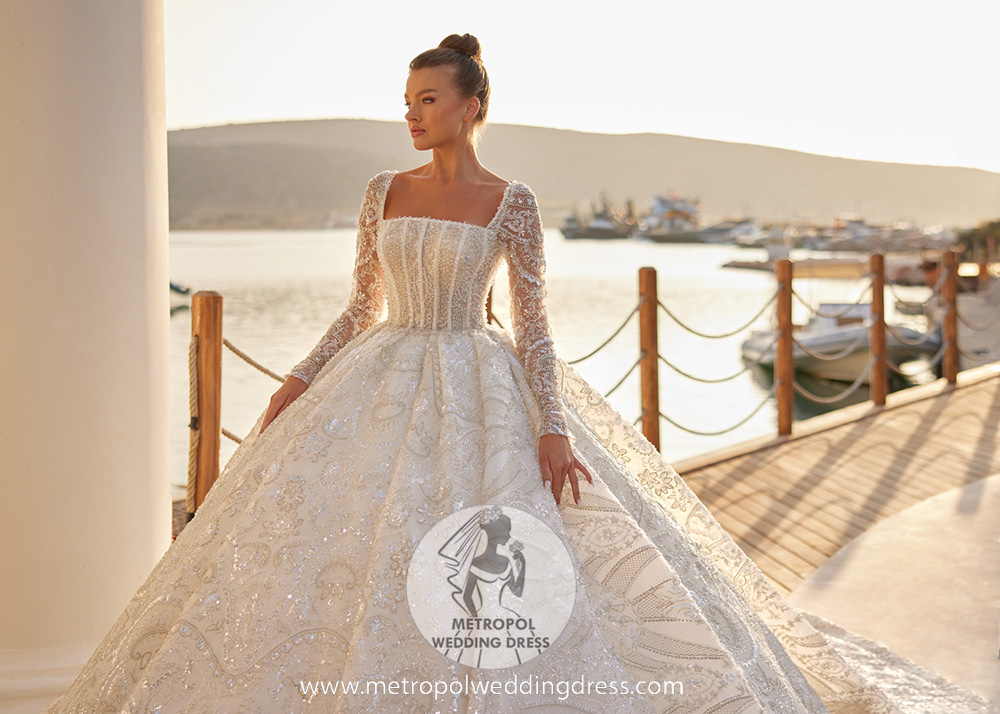
27.03.2026
Plus Size Custom Wedding Dresses Shop Flattering Unique Designs Planning a wedding is a magical and unforgettable experience. Every bride deserves to feel radiant, confident, and beautiful on her special day. For plus-size brides, finding...
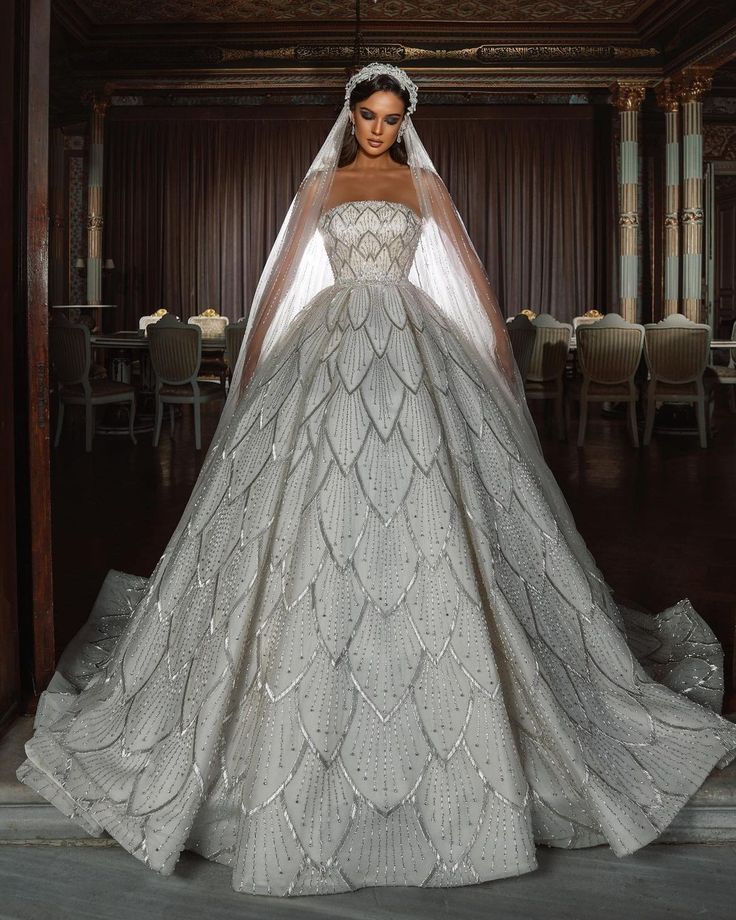
29.03.2026
Are you dreaming of a breathtaking custom wedding dress that turns heads, fits like a second skin, and arrives in Canada faster than you ever thought possible? The exact phrase “Buy Custom Wedding Dress from...
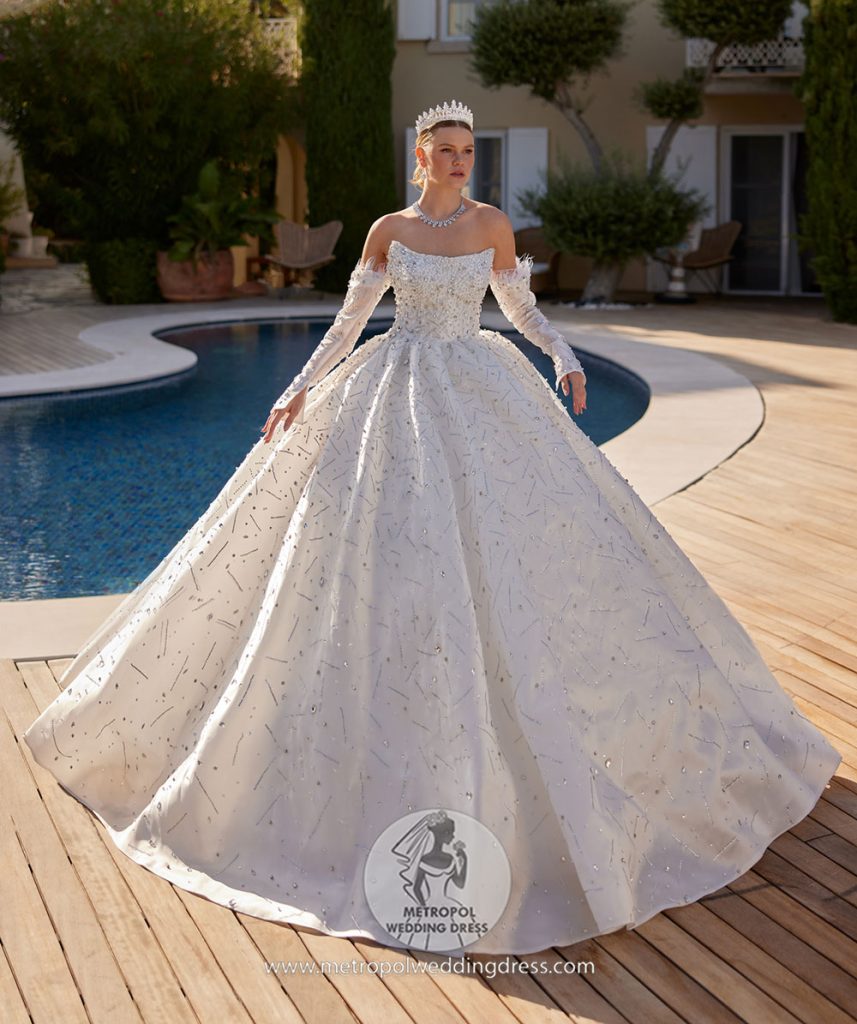
20.11.2025
Shipping Wedding Dresses from Turkey to USA 2025 Duties Taxes Costs In the enchanting world of bridal fashion, few things rival the allure of a perfectly crafted wedding dress. As brides-to-be across the United States...

17.01.2026
High Quality Luxury Wedding Dresses Designed for American Brides The American bridal industry has undergone a remarkable transformation over the past two decades. Brides today are no longer satisfied with mass-produced gowns that lack personality...

03.06.2025
Allure Bridals Wedding Dresses When it comes to timeless sophistication, innovative design, and impeccable craftsmanship, Allure Bridals consistently stands out as a leading name in the bridal fashion world. With decades of experience and a...
18.05.2024
Wholesale Bridal Gowns Producer Best 5 Finding the best wholesale wedding dress manufacturer depends on various factors such as quality, price, customization options, and reliability. Here are a few reputed manufacturers known for their quality...
Comments