
Bespoke Wedding Dresses
Bespoke wedding dresses typically start around $3,000–$4,000 and can exceed $10,000–$20,000 depending on fabric, handwork, complexity, and designer, while average off-the-rack or made-to-order gowns sit near $2,100 in the US. True value emerges when comparing total cost (including alterations) and the permanent fit and originality only a custom process delivers.
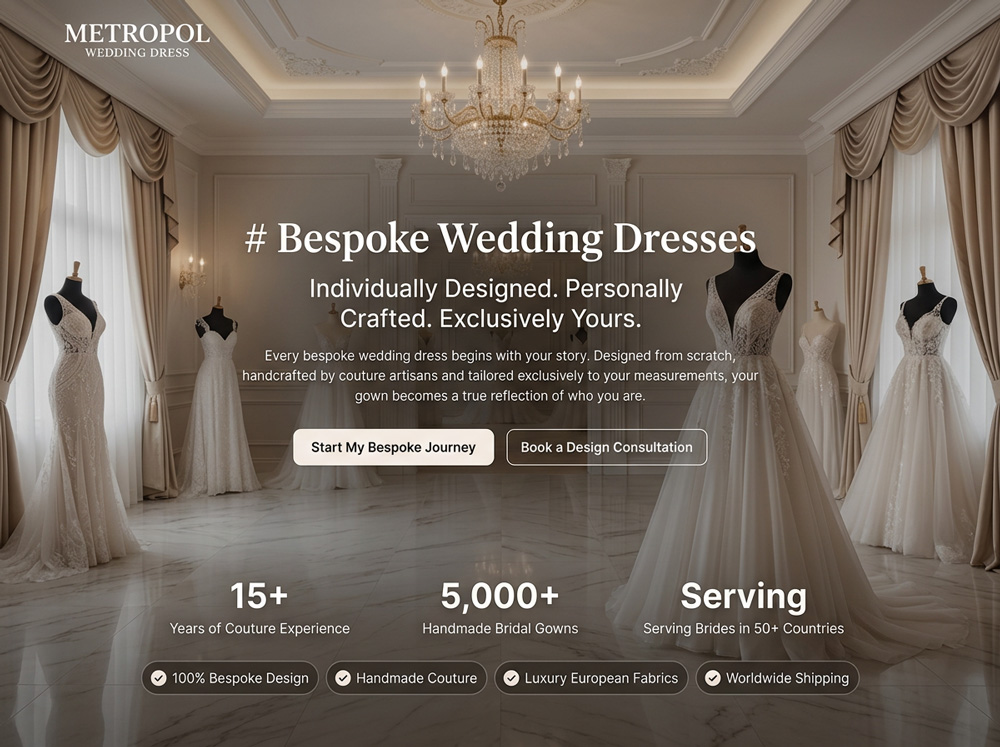
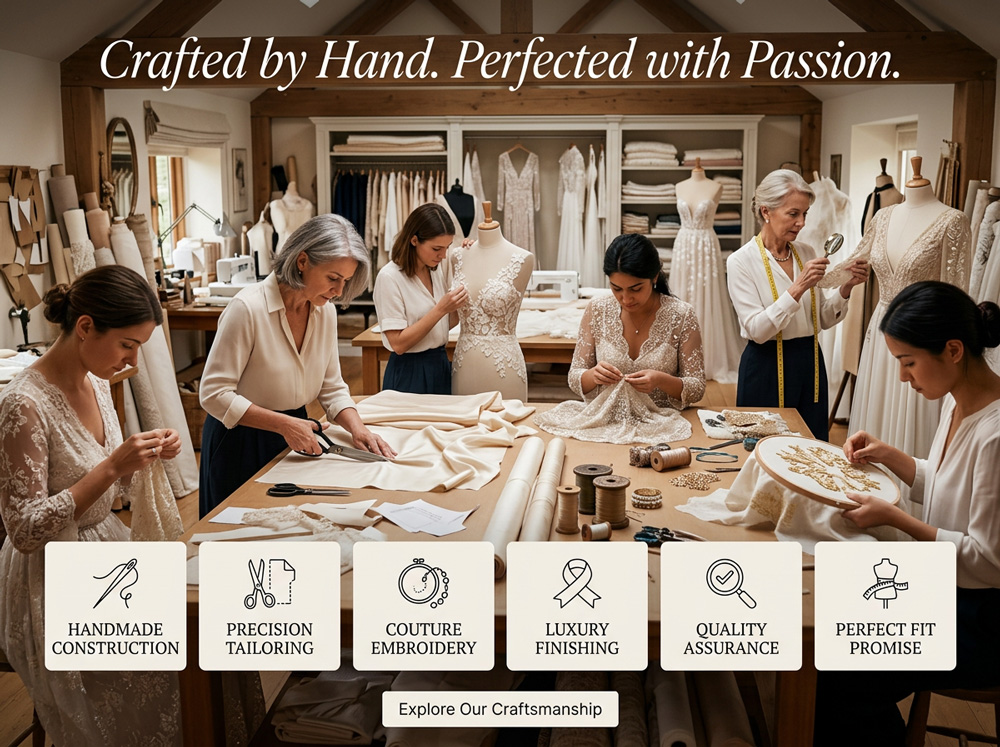
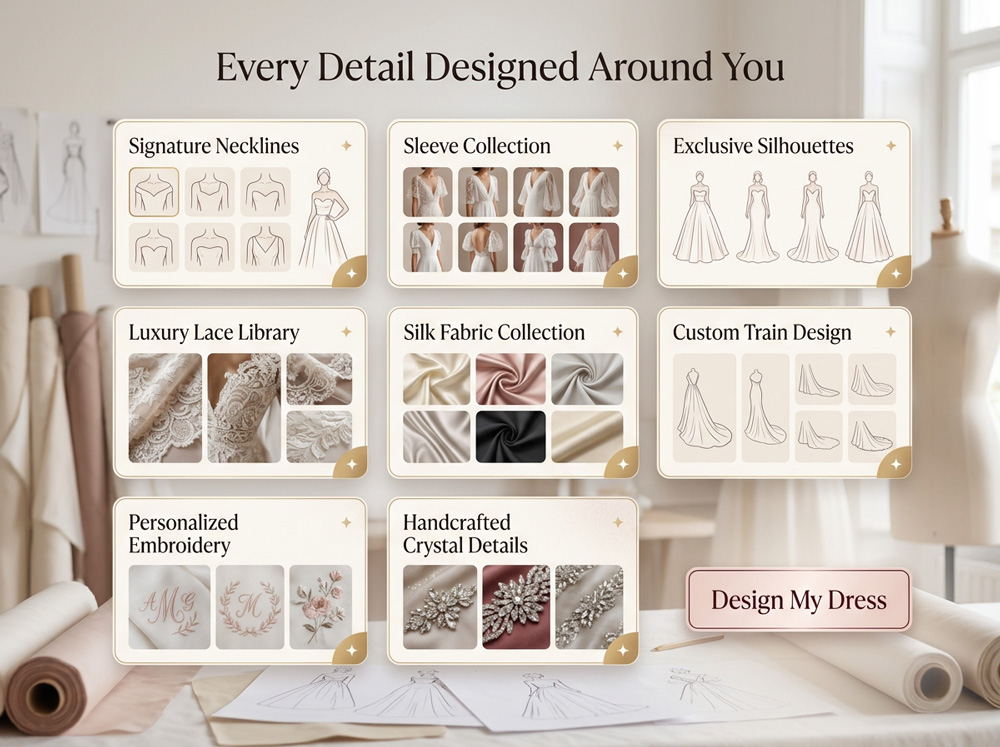
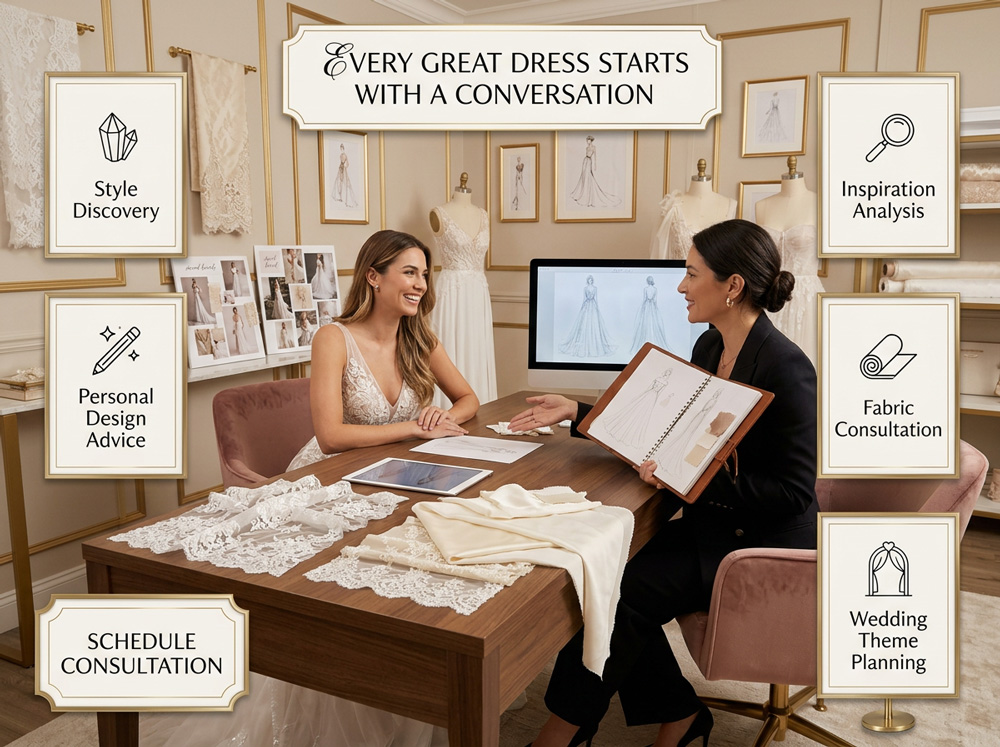
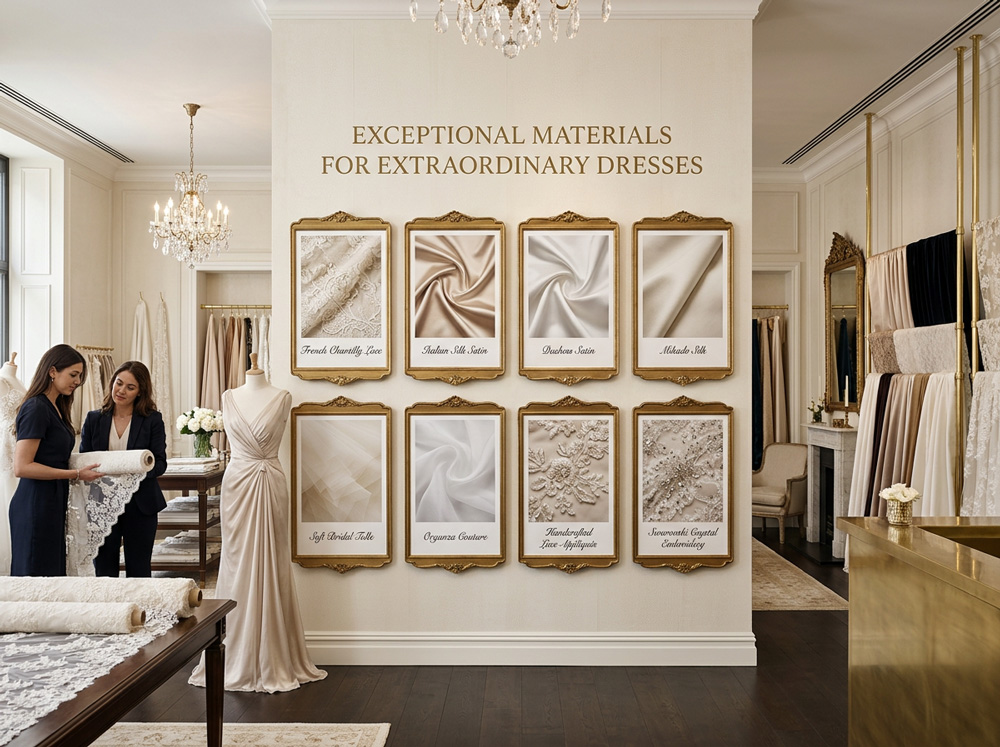
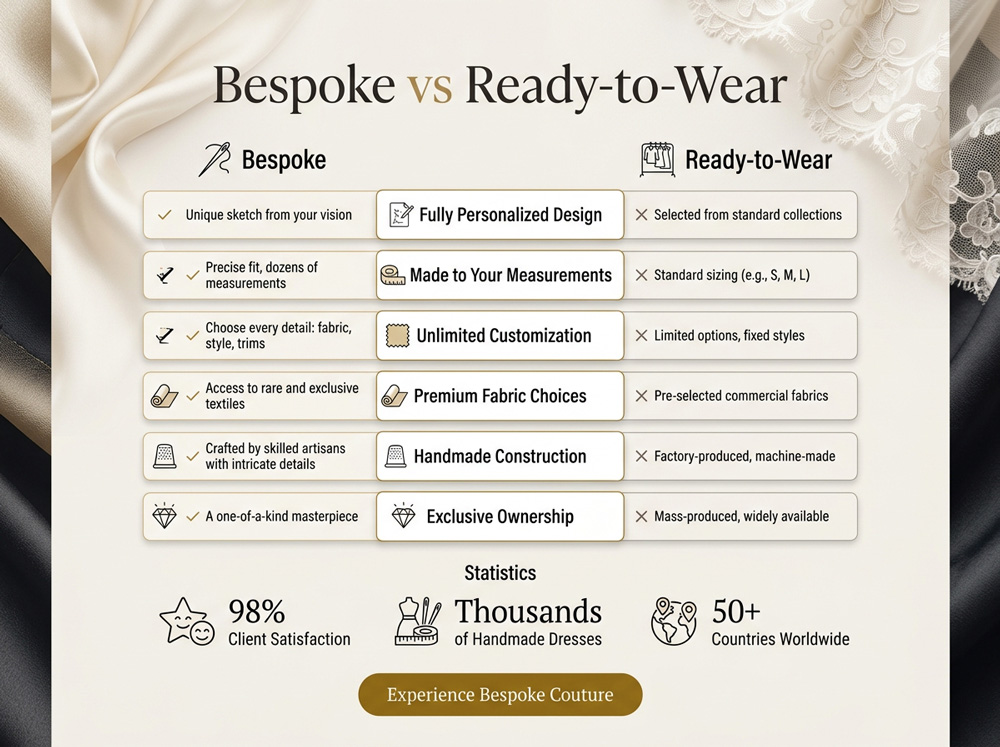
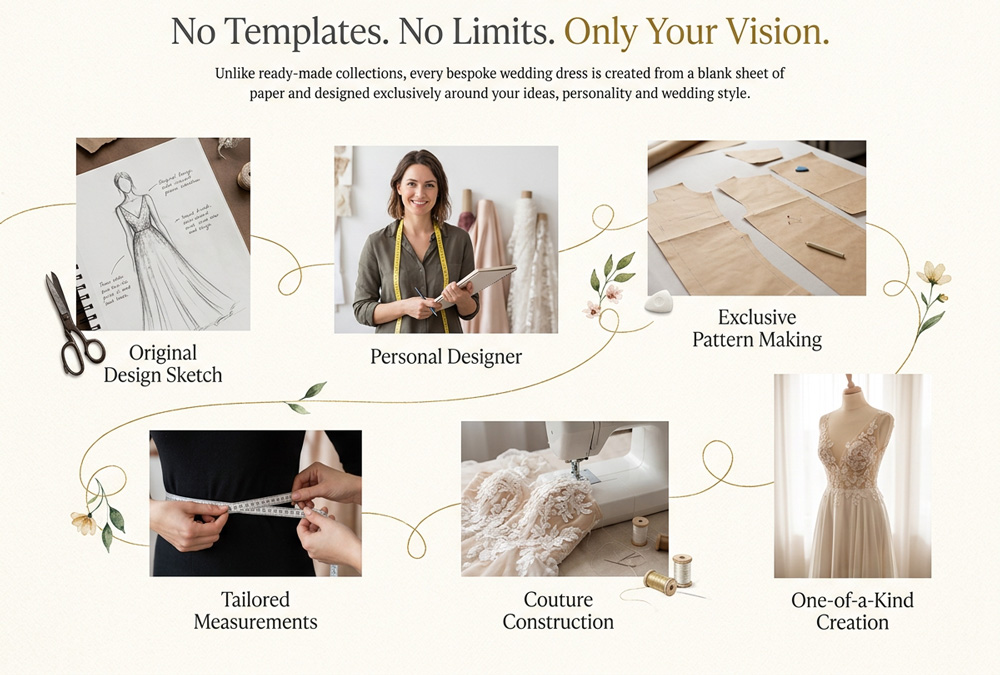
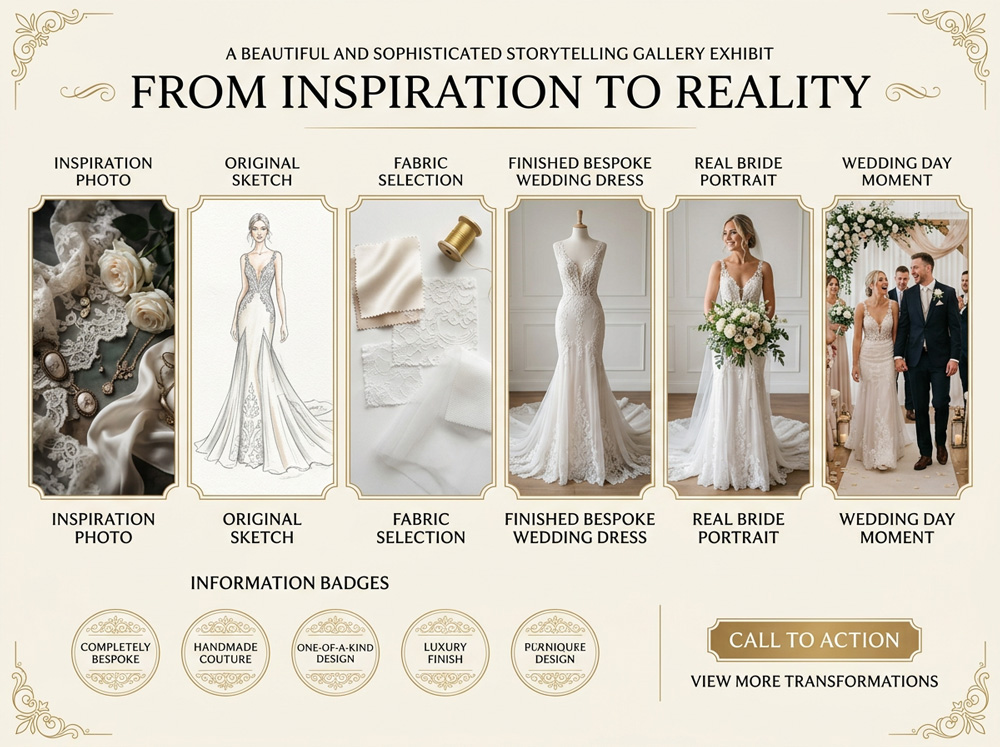
Metropol Wedding Dress, a Turkish atelier with two decades of experience, offers accessible bespoke and custom options in the €300–€2,000 range by combining skilled craftsmanship with efficient production, making high-quality personalization realistic for more brides without the extreme couture premium.
The Real Cost of a Dress Made Only for One Person
Most brides eventually confront the same quiet calculation: how much is a garment that exists solely for their body and vision actually worth? The answer is rarely a single number. It is a matrix of fabric meters, skilled hours, pattern engineering, fittings, risk, and the opportunity cost of settling for something that almost fits.
This is not another generic price list. It is a purchasing-manager-style breakdown of what drives bespoke wedding dress cost, where the money actually goes, how Metropol Wedding Dress structures its value proposition from its İzmir atelier, and the practical decisions that separate a smart investment from an expensive regret.
Cost Architecture: What You Are Actually Buying
A bespoke wedding dress is not a product pulled from inventory. It is a project. The price reflects four primary cost centers:
- Pattern and engineering — Drafting a new pattern from 20–40+ measurements rather than adjusting a standard size block. This invisible work determines whether the dress moves with the body or fights it.
- Materials — Silk mikado, French or Italian lace, multi-layer tulle, fine linings, boning, and embellishments. European-sourced lace and pure silk can multiply fabric cost several times compared with polyester blends.
- Skilled labor hours — Pattern cutting, muslin/toile fittings, construction, hand appliqué, beading, embroidery, and finishing. A relatively clean silhouette may require 40–60 hours; heavily embellished or structured gowns often exceed 100 hours.
- Process overhead and risk — Multiple fittings, revisions, quality control, and the atelier’s guarantee that the final garment matches the agreed design and measurements.
Industry data consistently places entry-level custom work around $3,000–$4,000, with many ateliers and independent designers clustering between $3,000 and $8,000 for fully bespoke pieces. True haute couture from major houses routinely begins at $8,000–$12,000 and climbs past $20,000–$50,000 when rare fabrics, extensive hand embroidery, or celebrity-level attention are involved.
Compare this with the broader market: The Knot’s recent Real Weddings data puts the average wedding dress (predominantly off-the-rack and made-to-order) at approximately $2,100 in the United States. That figure rarely includes the $200–$800 (and sometimes $1,000–$3,000) commonly spent on alterations to force a standard-size gown onto a non-standard body.
When alterations, potential design compromises, and the emotional cost of “almost” are added, the gap between a well-executed mid-range bespoke dress and a heavily altered boutique gown often narrows or disappears.
Metropol Wedding Dress: Cost Positioning From an Atelier That Builds at Scale
Metropol Wedding Dress operates from a substantial production facility in İzmir, Turkey (reports cite 800–1,200 square meters). Established in the early 2000s and expanded into wholesale and international markets, the company produces both ready collections and fully custom/bespoke gowns. Publicly stated price points for their range sit between roughly €300 and €2,000, positioning them in the accessible-luxury segment rather than the ultra-couture tier.
This is not low-cost fast fashion. It is the result of concentrated bridal specialization, local skilled labor, vertical control over molding, embroidery, and construction, and the ability to produce both individual custom orders and wholesale volumes. The atelier emphasizes collaborative processes: clients approve molds, receive progress photos, and can specify silhouette, neckline, fabric, lace placement, and cultural adaptations (including hijab-compatible designs).
For a bride or boutique buyer evaluating total cost of ownership, the relevant comparison is not Metropol’s upper range against a $15,000 Paris or New York couture house. It is Metropol’s custom capability against the combined price of a mid-tier boutique gown plus extensive alterations, plus the loss of full design control.
Cost Drivers Ranked by Impact
Fabric and lace quality usually move the needle furthest. Silk charmeuse, duchesse satin, or Chantilly/Alençon lace from established European mills costs multiples of synthetic alternatives and demands more careful handling. Extra yardage for trains, overskirts, or volume multiplies the difference.
Handwork intensity is the second major lever. Machine-applied embellishment is faster and cheaper. Hand-sewn beading, 3D floral appliqué, or motif-matched lace across seams adds days or weeks of specialized labor.
Structural complexity follows. Corsetry, boning channels, multi-layer skirts, dramatic trains, detachable elements, or architectural seams require more pattern work and fitting iterations.
Timeline pressure is frequently underestimated. Standard production for custom work often runs 4–8 months. Rush fees or compressed schedules raise both direct cost and the risk of compromises.
Geographic and production model differences matter. Labor rates, fabric sourcing networks, and overhead in Turkey versus Western Europe or the United States create structural cost advantages for ateliers like Metropol while still supporting high craftsmanship standards.
Comparative Reality Check: Bespoke vs. Made-to-Order vs. Off-the-Rack
| Path | Typical Base Price Range (USD approx.) | Alterations Reality | Design Freedom | Fit Precision | Timeline |
|---|---|---|---|---|---|
| Off-the-rack / sample | $300–$2,000 | Often substantial ($200–$1,500+) | Very limited | Compromised | Immediate to weeks |
| Made-to-order (existing design, your measurements) | $1,500–$5,000+ | Moderate to low | Moderate modifications | Good | 3–6+ months |
| Full bespoke (new pattern + design) | $3,000–$20,000+ | Minimal (built in) | Complete | Highest | 6–12 months typical |
Many brides discover that a $2,200 boutique dress plus $900 in alterations ends up in the same total range as a simpler custom gown that required no structural surgery and delivered exact proportions from the first wear.
Practical Cost Control Without Sacrificing the Result
- Decide early which elements are non-negotiable (silhouette, fabric hand-feel, specific lace motif) and which can be simplified.
- Request transparent line-item or tiered quotes that separate materials from labor.
- Schedule the first consultation 9–12 months out whenever possible; compressed timelines almost always cost more.
- Consider starting from a strong existing silhouette and personalizing rather than inventing every detail from zero if budget is constrained.
- Factor shipping, duties, and any final local hem or bustle work into the total when ordering internationally.
- Ask explicitly what is included in fittings and whether post-fitting changes carry extra fees.
Metropol’s model of mold approval and staged photo updates reduces the classic risk of “I didn’t realize it would look like that,” which itself has a cost in both money and stress.
Investment Perspective for the Bride and the Buyer
From a pure purchasing-manager lens, a wedding dress is a single-use (or very low-use) high-emotional-value asset. The rational questions become:
- Does the incremental cost deliver measurable improvements in fit, movement, and photographic performance?
- Does the process reduce the probability of last-minute expensive fixes?
- Does the garment retain sentimental or potential resale/heirloom value that a compromised fit would diminish?
For many, the answer favors controlled bespoke or high-quality custom when the price differential versus a heavily altered standard gown is modest. Metropol’s price band makes that differential particularly approachable.
The most expensive dress is the one that never quite feels like it belongs to the person wearing it. The least expensive is the one whose total cost (money + time + emotional energy) delivers exactly the experience intended.
Closing Note on Value
Bespoke wedding dresses cost is not a fixed market rate. It is the sum of decisions about materials, time, skill, and risk. Understanding those components allows clearer comparison between a $2,100 average market purchase plus alterations and a $3,500–$6,000 fully realized custom piece—or, in the case of efficient specialized ateliers such as Metropol, a well-executed custom gown that can sit comfortably inside or near that average while delivering superior personalization.
Clarity on drivers turns a potentially opaque expense into a managed investment.
FAQ – Bespoke Wedding Dress Cost & Process
1. What is the realistic starting price for a true bespoke wedding dress in 2025–2026? Most independent ateliers and mid-tier custom makers begin around $3,000–$4,000. Entry can be lower with simpler designs and efficient production models; major couture houses start significantly higher.
2. How does Metropol Wedding Dress price its custom and bespoke options? Public information places their overall range roughly €300–€2,000, encompassing both collection pieces and custom work, reflecting their Turkish production base and volume capability.
3. Why do some custom dresses cost less than heavily altered boutique gowns? Alterations on off-the-rack or made-to-order dresses frequently add $500–$2,000+. Custom work builds the fit in from the start, often neutralizing or reversing the total cost difference.
4. Which single factor most often increases the final price? Fabric quality combined with hand-applied lace or beading. Premium materials and labor-intensive embellishment dominate cost escalations.
5. How many fittings are typical for a bespoke gown? Two to four is common. The exact number depends on complexity and the atelier’s process; some include unlimited adjustments within a defined window.
6. Does “bespoke” always mean a completely original design from sketch? Strictly, yes—new pattern created for the individual. In practice the term is sometimes used more loosely for significant customization of an existing base. Clarify the process with the maker.
7. What is the usual timeline from first consultation to finished dress? Six to nine months is ideal for most full bespoke work. Four months is possible in some efficient ateliers; rush work carries premiums and risk.
8. Are materials included in the quoted price? Usually yes for a complete garment quote, but confirm. Some makers quote labor separately from client-supplied or specialty fabrics.
9. How much should I budget for international shipping and potential duties when ordering from Turkey? Varies by destination and declared value. Obtain a complete landed-cost estimate before committing.
10. Can I supply my own lace or heirloom fabric? Many ateliers accept this; it can reduce material cost but may increase labor if the fabric requires special handling or matching.
11. What happens if I change my mind about a design detail after the muslin fitting? Most makers allow reasonable adjustments at that stage. Major changes after fabric cutting usually incur additional fees.
12. Is a deposit required, and how much? Typically 30–50% to secure materials and production slot. Final balance is due before shipping or at the last fitting.
13. How does body-type complexity affect price? Extreme proportions or significant asymmetry may require more pattern engineering and fitting iterations, modestly increasing cost.
14. Are there hidden costs brides commonly overlook? Rush fees, extra fittings beyond the included number, complex bustles, preservation packaging, and post-wedding cleaning/preservation.
15. Does a lower price from an overseas atelier automatically mean lower quality? No. Specialized bridal production clusters can deliver high craftsmanship at structural cost advantages. Evaluate process transparency, fabric samples, and communication quality.
16. Can I get a detailed cost breakdown before committing? Reputable makers will explain the major drivers even if they do not publish a full open-book formula. Ask.
17. How does complexity of the train or overskirt influence cost? Extra fabric volume, additional layers, and the engineering required for weight distribution and movement all add measurable expense.
18. Is hand-beading always more expensive than machine embroidery? Yes, often dramatically so, because of the labor hours involved.
19. What is a realistic total “all-in” budget range for a quality custom dress including minor finishing? For many brides working with efficient makers, $3,500–$7,000 covers a well-executed piece with good materials and fit. Luxury houses sit higher.
20. Should I prioritize fabric quality or embellishment if my budget is fixed? Fabric quality and construction usually deliver more lasting satisfaction than dense surface decoration that can feel dated or heavy.
21. How do cultural or religious requirements (e.g., coverage, specific colors) affect pricing? They primarily influence design complexity and fabric quantity rather than a flat premium, provided the atelier has relevant experience.
22. Can the same atelier produce both simple and highly elaborate gowns at transparent price differentials? Yes. Transparent makers scale labor and material quotes to the actual work involved.
23. What questions should I ask in the first consultation to protect my budget? What is included in the base price? How are changes priced? What is the production calendar? Can I see recent examples in a similar price band? What is the revision policy?
24. Does ordering earlier ever reduce cost? It rarely lowers the base price, but it eliminates rush premiums and allows more time for fabric sourcing without urgency markups.
25. How does Metropol’s wholesale background influence individual custom pricing? Scale and specialized production infrastructure support competitive individual pricing while maintaining consistent quality standards.
26. Is a muslin/toile fitting worth the time and potential cost? For any structured or complex design, yes—it is the primary risk-reduction step in the entire process.
27. What percentage of the final price typically goes to materials versus labor? It varies widely; on heavily embellished gowns labor can dominate, while on clean silk silhouettes materials form a larger share.
28. Can I request a simpler version of a design I love to stay within budget? Experienced makers routinely offer “value-engineered” versions that preserve the essential silhouette and feeling while reducing costly elements.
29. How should a boutique buyer evaluate Metropol for wholesale custom or private-label work? Assess minimums, lead times, customization flexibility, quality consistency across sizes, and communication systems for progressive approvals.
30. Final practical question: when does spending more stop improving the result? When additional expenditure moves from better materials, better fit engineering, and better construction into pure brand prestige or marginal decorative excess that the wearer will not notice or value on the day.
Clarity on these points turns the cost conversation from anxiety into informed decision-making.
Bespoke wedding dresses
A more strategic approach treats the search as a global sourcing decision: identify ateliers that deliver true made-to-measure or full custom work through virtual consultations, precise measurements, and reliable international shipping. Metropol Wedding Dress, based in İzmir/Istanbul with a substantial production workshop, has built exactly this model—serving individual brides and wholesale partners across Europe, the Middle East, North America and beyond with custom gowns typically positioned between €300 and €2,000. The result is higher personalization and often better total value than many purely local options.
When “Near Me” Stops Being the Best Answer
Most brides begin with a map pin. They want to touch fabric, stand in front of a mirror, and leave with a dress that already exists. That instinct is understandable. It is also incomplete.
A purchasing-manager lens reframes the decision. The true cost of a wedding dress is not the sticker price on a local rack. It is the sum of base price + alterations + design compromises + time spent driving between appointments + the risk that the closest atelier simply does not stock the silhouette or fabric quality you actually want. When those factors are added, a well-run remote atelier with transparent process and global shipping frequently outperforms the nearest boutique.
Metropol Wedding Dress operates from a dedicated bridal workshop in Turkey (reports cite 800–1,200 m² capacity). The company began as a local retail operation and expanded into wholesale and direct custom work for international clients. Their published range sits in the accessible-luxury band of roughly €300–€2,000. They emphasize mold approval, progress photography, virtual consultations, and worldwide delivery. Brides in Dubai, London, New York, and numerous other cities have already used this pathway.
Distance Versus Process Quality
| Evaluation Criterion | Typical Local Boutique | Efficient Remote Atelier (e.g. Metropol model) |
|---|---|---|
| Design freedom | Limited to stocked styles + minor changes | Full custom or significant personalization from approved mold |
| Fit method | Standard size + alterations | Measurements + pattern adjustment or new pattern |
| Fabric range | Whatever is on the floor or current supplier list | Broader selection of lace, silk, tulle options sourced for bridal production |
| Timeline control | Dependent on local inventory and seamstress schedule | Production calendar managed from order placement |
| Total cost transparency | Base price + often substantial alteration invoices | Quoted package that includes construction and fit work |
| Communication | In-person appointments | Structured virtual + photo documentation + WhatsApp support |
The table is not an argument against every local maker. It is a decision filter. If the nearest atelier already offers true bespoke work, excellent communication, and competitive materials, proximity wins. If it offers mainly ready stock with expensive after-the-fact surgery, the map pin becomes less relevant.
How a Remote Bespoke Process Actually Works
- Initial virtual consultation – style direction, body considerations, wedding date, budget band.
- Measurement protocol – detailed guide or remote video measurement session.
- Design confirmation – sketches, fabric samples shipped if needed, or high-resolution imagery.
- Mold / toile approval – critical risk-reduction step; client signs off before expensive fabric is cut.
- Production with staged photography – lace placement, construction progress, final details.
- Final adjustments and shipping – tracked international delivery, sometimes with a local hem or bustle if required.
Metropol’s process documentation highlights mold approval and progressive photo updates. That single discipline removes the most common source of remote-order regret.
Expert Note The highest-risk moment in any custom order is the gap between verbal description and physical reality. Any atelier that refuses staged visual approval or treats measurements casually should be eliminated early, regardless of location.
Cost Reality for the “Near Me” Searcher
Local mid-range gowns frequently land between $1,500 and $4,000 before alterations. Alterations of $400–$1,500 are common once the dress is forced onto a real body. Full custom from an efficient specialist can sit in a similar or only modestly higher total band while eliminating most of the alteration line item and delivering exact proportions and preferred details.
Metropol’s price architecture is deliberately positioned below traditional Western European or North American couture houses while still supporting hand-finished construction, lace work, and made-to-measure accuracy. For a bride comparing a $2,800 local gown plus $900 alterations against a custom option in the €1,200–€1,800 range with included fit work and shipping, the arithmetic often favors the remote path—especially when design originality is valued.
Practical Checklist Before You Book Any Appointment (Local or Remote)
- Confirm whether the maker creates a new pattern or only adjusts an existing block.
- Ask for the exact number of included fittings or virtual reviews.
- Request recent examples of gowns in your approximate budget and silhouette family.
- Clarify revision policy after the mold/toile stage.
- Obtain a written production calendar tied to your wedding date.
- Verify shipping method, insurance, and duties responsibility for international orders.
- Test response time and clarity of communication before depositing money.
Common Mistakes When Searching “Near Me”
- Assuming proximity equals better quality or service.
- Ignoring total cost (alterations + travel time + limited choice).
- Booking the first available appointment without comparing process transparency.
- Underestimating lead time and then paying rush premiums.
- Failing to request fabric samples or progress documentation when working remotely.
Country and Region Considerations
Brides in the Middle East (including Qatar and surrounding markets) already form part of Metropol’s international client base. Local bridal shopping in Doha and other Gulf cities offers strong designer representation, yet custom work still often routes through regional or European ateliers. A Turkish specialist with established shipping routes and virtual capability sits in a practical middle ground: European-influenced craftsmanship, competitive production costs, and direct communication.
For European or North American brides the same logic applies. The decisive variables are process discipline and material honesty, not the distance between the workshop and the ceremony venue.
Decision Framework
Ask one primary question: “Does this maker reduce or increase the probability that the finished dress will look and feel exactly as intended on the day?”
If the answer is clearer with a remote atelier that shows mold approval, fabric options, and staged photography than with a local stock-driven boutique, the search term “near me” has done its job—it brought you to the decision point. It does not have to be the final answer.
Metropol’s combination of dedicated bridal production capacity, custom capability, virtual access, and worldwide shipping converts that decision into a practical option rather than a theoretical one.
The most useful “near me” result is the one that ultimately places the right dress on the right body at the right total cost—whether the workshop is ten kilometers away or several time zones away.
FAQ – Bespoke Wedding Dresses & the “Near Me” Search
1. Can I realistically order a bespoke wedding dress from Turkey if I live elsewhere? Yes. Multiple brides and boutiques already do so. Success depends on clear measurement protocols, mold approval, and tracked shipping.
2. How does Metropol handle the “near me” expectation? Through virtual consultations, detailed measurement guidance, mold sign-off, progress photos, and international delivery. Physical distance is managed by process rather than ignored.
3. What is the typical price band for Metropol custom work? Public information places their overall range approximately €300–€2,000 depending on complexity and materials.
4. How long does a remote custom order usually take? Plan 4–8 months for standard production. Confirm the exact calendar against your wedding date at the first consultation.
5. Do I need to travel to İzmir or Istanbul for fittings? Not necessarily. Many clients complete the process remotely. Some prefer one in-person visit if travel is feasible; others rely entirely on virtual and photographic approval.
6. What happens if the dress needs a final hem or bustle after arrival? Most brides arrange a simple local finishing appointment. This is far less costly and risky than major structural alterations on a standard-size gown.
7. How accurate can remote measurements be? When a clear protocol is followed (or a video session is used), accuracy is high. The mold/toile stage further protects against measurement error.
8. Is shipping insured and tracked? Reputable international bridal suppliers use tracked, insured courier services. Confirm details before payment of the balance.
9. Can I see fabric and lace samples before committing? Many remote ateliers, including those serving international clients, can ship sample swatches. Ask at the consultation stage.
10. What if I change my mind about a design detail mid-process? Early changes (before fabric cutting) are usually straightforward. Later changes after the mold is approved and fabric is cut typically incur additional cost and time.
11. How does Metropol’s wholesale background help individual brides? Scale and specialized production infrastructure support consistent quality and competitive pricing even on single custom orders.
12. Are cultural or modest-design requirements accommodated? Yes. Experience with diverse markets includes options suitable for different coverage preferences and regional aesthetics.
13. What is the deposit structure? Common practice is 30–50 % to secure materials and production slot, with balance due before shipping. Confirm the exact terms.
14. How do I compare a local boutique quote with a remote custom quote fairly? Add expected alterations, travel time, and any design limitations of the local option. Compare total expected cost and degree of personalization.
15. Can a boutique in my city order from Metropol on my behalf? Yes. Many bridal retailers use Metropol as a wholesale or private-label source and can manage the client relationship locally.
16. What communication channels are available? Email, WhatsApp, and structured virtual meetings are standard for international clients.
17. Is there a risk of customs duties or unexpected import fees? Duties depend on the destination country and declared value. Request a landed-cost estimate in advance.
18. How many progress photos should I expect? A transparent process includes photos at key stages: mold, lace application, construction milestones, and final garment.
19. What if the finished dress does not match the approved design? A clear written agreement on design specifications and photo approval stages provides the strongest protection. Choose makers who document each step.
20. Does “bespoke” from a remote atelier mean the same as local couture? It means a garment made to your measurements and agreed design. The level of handwork and fabric quality should be verified through examples and samples rather than assumed from the label.
21. How early should I start if I want a remote custom dress? Nine to twelve months is comfortable. Six months is often still workable for less complex designs.
22. Can I supply my own lace or special fabric? Many makers accept client-supplied materials; discuss handling and any extra labor implications.
23. What is the most common reason remote orders succeed? Disciplined mold approval and consistent visual documentation throughout production.
24. What is the most common reason they fail? Vague measurement instructions, no intermediate approval stages, or unrealistic timelines.
25. Should I still visit local boutiques even if I plan to order remotely? Yes—for fabric feel education, silhouette testing, and confidence that you understand what you are asking for. Use local appointments as research, not necessarily as the final purchase channel.
26. How does Metropol support wholesale partners searching for reliable supply “near” their market? Through customizable collections, low-to-moderate minimums in many cases, consistent quality, and worldwide shipping logistics.
27. Is virtual consultation as effective as an in-person one? For design direction, budget alignment, and measurement planning, yes. Fabric hand-feel is the main element best experienced in person or via samples.
28. Can the same atelier produce both simple clean silhouettes and heavily embellished gowns? Specialized bridal workshops routinely do both; pricing scales with labor and material intensity.
29. Final practical test before depositing money Ask the maker to walk you through the exact sequence of approvals and what happens if a photo stage reveals an issue. Clear answers indicate a mature process.
Short Summary Bespoke wedding dresses are a garment engineered from a pattern created specifically for one individual’s body and design requirements, rather than adapted from a standard size block or selected from existing inventory. In wedding attire this means a new pattern, multiple fittings or approvals, chosen fabrics, and construction that prioritizes exact proportion and movement over inventory efficiency. The distinction matters because it changes cost structure, timeline, risk profile, and final fit quality. Metropol Wedding Dress applies this principle through custom mold development and staged production within an accessible price band, making true made-for-one construction available beyond traditional haute-couture price points.
The Engineering Definition of Bespoke
Most people use “bespoke,” “custom,” and “made-to-measure” interchangeably. They are not the same. From a production and purchasing perspective the differences are structural.
- Off-the-rack / ready-to-wear: Pattern already exists. Garment is cut in graded sizes, sewn in batches, and sold from inventory. Fit is achieved afterward through alterations.
- Made-to-measure: Existing pattern is adjusted to the client’s key measurements. The garment is cut and sewn after the order, but the underlying architecture remains a modified standard block.
- Bespoke: A new pattern is drafted from the client’s full set of measurements and posture data. The design itself may also be original. Construction follows that unique pattern through fittings or progressive approvals until the garment matches the agreed specification.
In bridal terms, bespoke is the difference between forcing a body into a pre-existing shape and building the shape around the body. The practical consequences appear in seam placement, balance, movement, and the amount of post-delivery alteration required.
Why the Distinction Matters for Wedding Dresses
Bespoke wedding dresses is worn once under high visual and physical scrutiny. Photographers capture every angle. The wearer moves through ceremony, reception, dancing, and long hours of standing. A pattern that was never designed for that specific torso length, shoulder slope, or hip-to-waist relationship will require compensation—extra pins, tighter stays, or visible compromise.
Bespoke construction removes most of that compensation layer. The cost shifts upstream into pattern-making and fitting time rather than downstream into emergency alterations.
Comparison Table: Three Paths to a Wedding Dress
| Attribute | Off-the-Rack | Made-to-Measure | Full Bespoke |
|---|---|---|---|
| Pattern origin | Graded standard sizes | Adjusted standard block | Drafted for the individual |
| Design freedom | Limited to stocked styles | Moderate changes possible | Complete (within technical limits) |
| Fit method | Alterations after purchase | Built-in measurement adjustments | Progressive fitting or mold approval |
| Typical alteration load | High | Moderate to low | Minimal |
| Lead time | Immediate to weeks | 2–6 months | 4–9 months typical |
| Risk of “almost right” | High | Medium | Lowest when process is disciplined |
| Cost drivers | Inventory + brand + alterations | Labor + materials + adjustments | Pattern engineering + labor + materials |
The Actual Production Sequence
- Data capture – Comprehensive measurements, posture notes, and design brief.
- Pattern drafting – New blocks created for bodice, skirt, sleeves, and any structural elements.
- Toile / mold stage – Inexpensive fabric version tested for proportion, balance, and ease. Client approval is the critical gate.
- Fabric cutting and construction – Only after mold sign-off.
- Progressive fittings or photographic reviews – Refinements to length, volume, support, and detail placement.
- Finishing and delivery – Hand details, final press, packaging.
Metropol Wedding Dress operates this logic inside a dedicated bridal workshop. Clients approve molds before expensive fabric is committed. Progress photography documents lace placement and construction stages. The model supports both individual bespoke orders and wholesale partners who need consistent, customizable product. Price positioning remains in the accessible-luxury band rather than traditional couture territory.
Expert Observation The single highest-value step in any bespoke process is the mold or toile approval. Everything before it is reversible. Everything after it becomes expensive to change. Any maker who skips or rushes this stage is not practicing full bespoke discipline.
“You may also want to take a look at this article.” Custom Wedding Dresses Saudi Arabia
Material and Construction Implications
Because the pattern is unique, fabric behavior must be tested against that specific architecture. A silk mikado that drapes beautifully on a standard sample may need different under-structure when the client’s torso proportions differ. Lace motifs must be matched across newly drafted seams. Boning channels are placed according to the actual body rather than a graded average.
These requirements increase both material precision and skilled labor hours. They also eliminate the common problem of “the lace doesn’t match at the side seam because the pattern was never designed for this circumference.”
Common Misunderstandings
- “Bespoke just means expensive.” Cost is a function of hours and materials, not a mandatory premium. Efficient specialized workshops can deliver true pattern-based construction at lower total cost than a heavily altered designer label.
- “If it is made to my measurements it is bespoke.” Measurement adjustment of an existing pattern is made-to-measure. Bespoke begins with a new pattern.
- “I can skip fittings if the measurements are accurate.” Even perfect measurements do not capture how fabric and structure interact with movement and posture. Intermediate approval remains essential.
- “Local is automatically better for bespoke.” Process quality and pattern skill matter more than physical proximity. Remote ateliers with disciplined mold approval and documentation frequently outperform local stock-driven boutiques.
Decision Checklist for the Buyer
- Does the maker draft a new pattern or only adjust an existing one?
- Is a mold or toile stage included and required before fabric cutting?
- How many progressive reviews (in-person or photographic) are built into the timeline?
- What is the revision policy after mold approval?
- Are fabric and lace choices confirmed with samples or high-resolution references before cutting?
- Is the production calendar locked to the wedding date with clear milestones?
“You may also want to take a look at this article.” Couture Wedding Dresses
Real-World Cost and Value Logic
A typical mid-range boutique gown might cost $2,000–$3,500 plus $500–$1,500 in alterations. A disciplined bespoke process from a specialized atelier can land in a comparable or only modestly higher total range while delivering exact proportion, preferred design details, and near-zero post-delivery structural work. The purchasing decision therefore becomes one of risk reduction and personalization rather than pure sticker-price comparison.
Metropol’s combination of bridal-focused production capacity, mold-based workflow, and international shipping capability places this option within practical reach for individual brides and for retailers seeking private-label or custom capability.
Final Framing
Bespoke wedding dresses are not defined by price tag or marketing language. It is defined by the existence of a pattern that did not exist before the client’s measurements and requirements were known. Everything else—fabric quality, handwork intensity, timeline, and final cost—flows from that single engineering decision.
When the pattern is original and the approval process is rigorous, the garment ceases to be an approximation and becomes a calibrated response to one specific body and one specific occasion. That is the operational meaning of bespoke in wedding dress construction.
FAQ – What a Bespoke Dress Actually Is
1. What is the strict definition of a bespoke dress? A garment built from a pattern drafted specifically for the individual client’s measurements and design brief, not adapted from a pre-existing size block.
2. How is bespoke different from made-to-measure? Made-to-measure adjusts an existing pattern. Bespoke creates a new pattern.
3. Does “custom” mean the same as “bespoke”? Not always. “Custom” is often used loosely for any personalization. True bespoke requires new pattern engineering.
4. Why does the pattern origin matter so much? Seam placement, balance, ease, and structural support are determined by the pattern. An adjusted standard pattern still carries the assumptions of the original block.
5. Is a toile or mold always required for bespoke work? In disciplined practice, yes. It is the primary risk-control step before expensive fabric is cut.
6. Can a dress be bespoke if the client never visits the atelier in person? Yes, provided measurements are accurate, a mold stage is approved (physically or via detailed photography), and progressive reviews occur.
7. How many measurements are typically taken for a true bespoke wedding dress? Significantly more than standard retail sizing—often 20–40 data points plus posture and proportion notes.
8. Does bespoke automatically mean hand-sewn throughout? No. Construction methods vary. The defining feature is the unique pattern, not the percentage of hand stitching.
9. Why do some “bespoke” dresses still need alterations? Either the process was not fully pattern-based, the mold stage was skipped, or late design changes occurred after cutting.
10. How does Metropol approach the bespoke process? Through client-approved molds, staged production photography, and construction within a dedicated bridal workshop, supporting both individual and wholesale custom work.
11. Is bespoke always more expensive than a designer label gown? Not necessarily on a total-cost basis once alterations are included. Efficient specialized production can deliver pattern-based construction competitively.
12. What is the biggest cost driver inside a bespoke wedding dress? Combination of pattern engineering time, skilled construction hours, and premium materials—especially complex lace or hand embellishment.
13. Can I change the design after the mold is approved? Minor refinements are often possible. Major structural or design changes after fabric cutting usually incur additional cost and time.
14. How long does a proper bespoke process take? Typically 4–9 months depending on complexity and the atelier’s capacity. Rushing increases both cost and risk.
15. Does fabric choice affect whether a dress can be truly bespoke? Yes. Certain fabrics behave differently on a unique pattern and may require additional testing or structural support.
16. Is a local atelier required for genuine bespoke work? No. Process discipline and pattern skill matter more than geography. Remote workflows with strong documentation succeed regularly.
17. What should I ask a maker who claims to offer bespoke service? “Do you draft a new pattern or adjust an existing one? Is a mold or toile stage included before cutting?”
18. Can a ready-made design be turned into a bespoke dress? The silhouette can inspire the design, but if a new pattern is drafted for the client it becomes bespoke. If only the existing pattern is adjusted it remains made-to-measure.
19. How does posture affect bespoke pattern drafting? Shoulder slope, sway back, forward head posture, and hip asymmetry are captured and engineered into the pattern rather than corrected later with pins.
20. Are there limits to what can be achieved with bespoke construction? Technical limits of fabric, support, and wearability still apply. Extreme volume or weight must be engineered carefully.
21. Does bespoke eliminate the need for a final fitting? It greatly reduces structural work, but final length, bustle, or minor aesthetic adjustments are still common and expected.
22. How does Metropol’s production model support bespoke quality at accessible prices? Specialized bridal focus, workshop scale, and mold-based workflow reduce waste and rework while maintaining individual pattern accuracy.
23. What is the most common client mistake when commissioning a bespoke dress? Underestimating the importance of the mold approval stage or requesting major changes after fabric has been cut.
24. Can heirloom lace or special fabric be incorporated into a bespoke dress? Yes. The unique pattern allows precise placement and matching that is difficult with standard blocks.
25. Is there a difference between bespoke for the bride and bespoke for wholesale or private-label orders? The engineering principle is the same. Volume orders may use a base pattern family that is then individualized, while pure one-off bespoke drafts from zero for each client.
26. How should a purchasing manager evaluate a bespoke supplier? Examine pattern method, mold discipline, documentation quality, revision policy, and total landed cost rather than marketing language alone.
27. Does “bespoke” guarantee a perfect result? No process is risk-free. It guarantees a higher probability of correct proportion and reduced alteration load when executed rigorously.
28. What role does the designer or pattern maker’s skill play? Critical. A new pattern is only as good as the person drafting and interpreting the client’s measurements and movement needs.
29. Can the same atelier offer both collection dresses and true bespoke? Yes. Many specialized workshops maintain both paths. Clarity about which path a specific order follows is essential.
30. Final practical test If the maker cannot clearly explain how the pattern for your dress will differ from their standard blocks, the work is unlikely to meet a strict bespoke definition.