
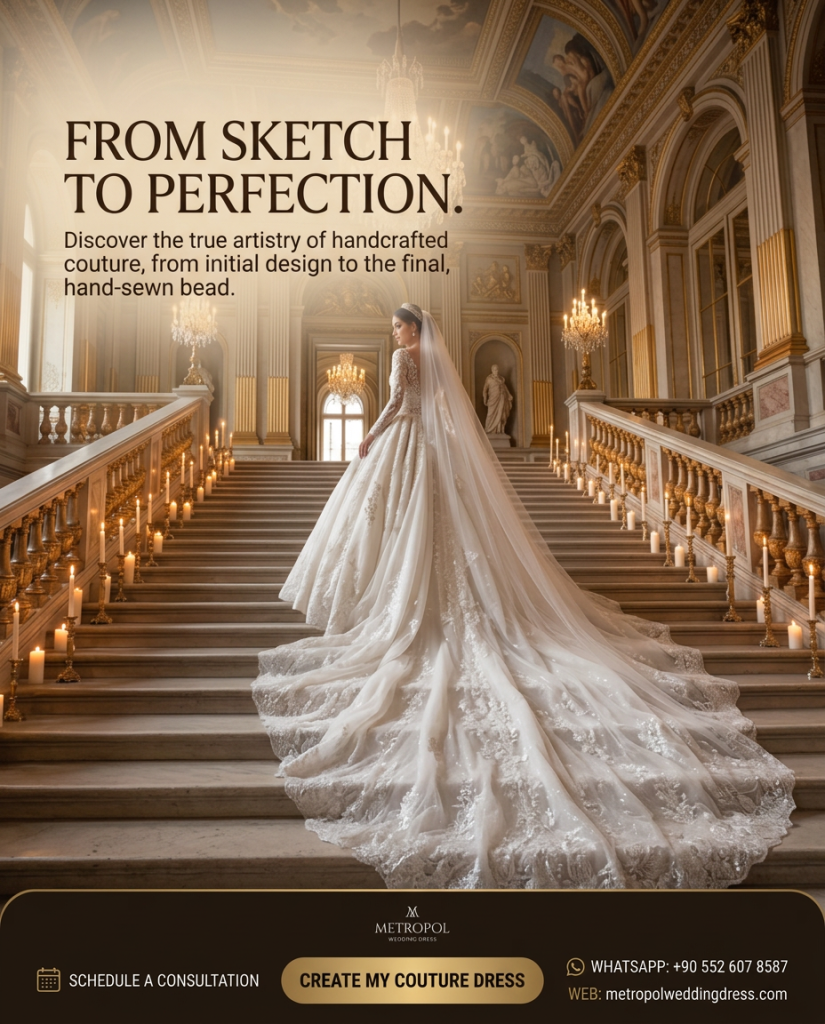
Minimalist Wedding Dress Designers Minimalist wedding dresses have become the defining choice for modern brides who value clean lines, exceptional fabric, and architectural precision over excess embellishment. In 2026, the strongest demand sits at the intersection of refined simplicity and true custom manufacturing. Metropol Wedding Dress, a Turkish atelier and production house based in İzmir, operates as a Custom Wedding Dress Manufacturer, Custom Bridal Gown Manufacturer, Bespoke Wedding Dress Manufacturer, and full-service OEM partner. The company delivers made-to-measure, made-to-order, private-label, and wholesale collections that meet the exacting standards of international boutiques and independent designers seeking minimalist silhouettes.
This guide examines why minimalist design now requires industrial-grade pattern accuracy, premium fabric engineering, and flexible production models. It covers material selection, construction sequences, cost structures, boutique sourcing strategies, and practical checklists so buyers can evaluate partners with clarity.
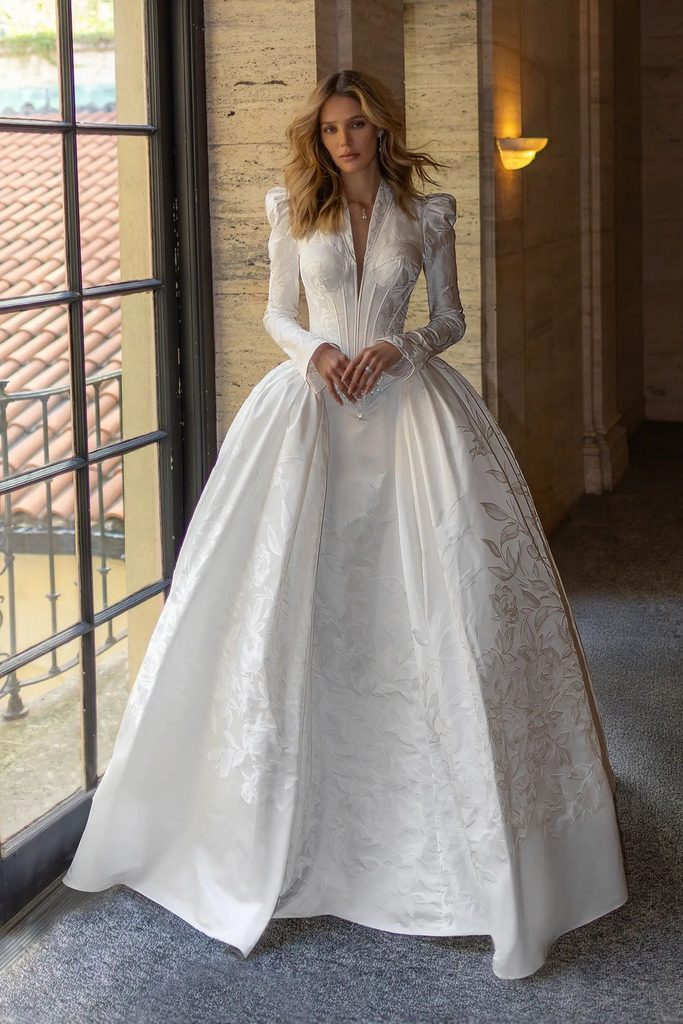
Bridal fashion has shifted. After years of layered lace, heavy beading, and high-volume skirts, the market has settled into a quieter language: column and sheath silhouettes, square or bateau necklines, bias-cut slips, and structured mikado that holds shape without bulk. The 2026 runway consensus from major houses reinforces this direction—precision tailoring, matte or softly lustrous surfaces, and details that appear only when the light or the movement of the body reveals them.
For boutiques and private-label brands, this aesthetic creates both opportunity and technical demand. A minimalist gown exposes every seam, every dart, and every millimeter of fit. There is nowhere to hide mediocre construction. That reality has elevated the role of the manufacturer who can execute clean architecture at scale.
Metropol Wedding Dress functions as a Couture Wedding Dress Manufacturer and Luxury Bridal Gown Manufacturer while simultaneously operating as a Custom Wedding Dress Factory and Custom Bridal Gown Factory. The atelier maintains a 1,200-square-meter production floor capable of both one-off bespoke pieces and larger wholesale runs. This dual capacity allows bridal shops to order a single sample for a specific client and later expand into a full private-label collection without changing partners.
Minimalist Wedding Dress Designers
A heavily embellished gown can mask minor fit issues or fabric irregularities. A minimalist column cannot. The difference appears in four critical areas:
- Pattern engineering must achieve exact grain alignment and consistent grading across sizes.
- Fabric selection must deliver both drape and structural memory.
- Seam finishes must be invisible or intentionally architectural.
- Quality control must catch tension variations that only become visible under photography lighting.
These requirements explain why many established boutiques now prefer working with a direct Wedding Dress Manufacturer for Boutiques or Bridal Gown Manufacturer for Bridal Shops rather than relying solely on intermediary agents. Direct access shortens the feedback loop between design refinement and production adjustment.
Core Silhouettes Defining the Current Season
- Slip dresses cut on the bias in silk charmeuse or crepe
- Sheath and column gowns in mikado or double-faced crepe
- Soft A-line shapes with controlled volume and clean waist seams
- Long-sleeve styles featuring delicate cut-outs or soft bishop sleeves
- Structured strapless or square-neck bodices paired with fluid skirts
Each silhouette benefits from the capabilities of a Handmade Wedding Dress Manufacturer or Handcrafted Bridal Gown Manufacturer that still maintains industrial consistency. Metropol’s team combines hand-finishing on critical areas (necklines, closures, hems) with machine precision on long seams, producing the hybrid quality expected by international clients.
Material Analysis for Minimalist Gowns
Fabric does the heavy lifting in minimalist design. The most frequently requested materials and their performance characteristics include:
| Fabric | Hand & Drape | Structure | Best Use | Considerations |
|---|---|---|---|---|
| Silk Crepe | Matte, fluid | Moderate | Bias slips, columns | Excellent for movement; requires careful steaming |
| Mikado | Crisp, sculptural | High | Architectural sheaths | Holds shape in humidity; heavier hand |
| Duchess Satin | Soft luster | Medium-high | Structured bodices | Classic bridal feel without high shine |
| Stretch Crepe | Soft with recovery | Low-medium | Body-skimming styles | Comfort for long wear; size consistency critical |
| Organza (as overlay or sleeve) | Sheer, crisp | Variable | Detail accents | Must be matched carefully to base fabric |
A reliable Custom Bridal Wear Manufacturer or Bespoke Bridal Wear Manufacturer sources these textiles with consistent mill relationships so that a sample approved in spring matches the bulk production delivered months later. Color matching, especially in the soft ivory and champagne range preferred for minimalist work, requires controlled dyeing lots and light-box verification.
Production Process from Sketch to Shipment
The sequence used by an experienced Tailor Made Wedding Dress Manufacturer typically follows these stages:
- Design intake and technical pack review (sketches, measurements, fabric references).
- Pattern development and first toile or muslin fitting.
- Fabric cutting with computer-assisted grading for multi-size runs.
- Internal structure (boning, interlining, cups) installed for shape retention.
- Main assembly with priority given to clean seam allowances and grain alignment.
- Hand-finishing of necklines, closures, and hems.
- Multi-stage quality inspection under natural and studio lighting.
- Pressing, packaging, and documentation for international shipping.
Because Metropol operates as both a Made to Measure Wedding Dress Manufacturer and a Made to Order Wedding Dress Manufacturer, the same process accommodates individual bride measurements or standardized size runs for boutique inventory. Lead times generally range from four to ten weeks depending on complexity and order volume, with clear communication checkpoints at each stage.
Working Models Available to Boutiques and Brands
- Private Label Wedding Dress Manufacturer services: exclusive designs produced under the boutique’s own label.
- OEM Wedding Dress Manufacturer / Bridal Gown OEM Supplier arrangements: production of client-supplied designs with full technical support.
- Wholesale Custom Wedding Dresses and Wholesale Custom Bridal Gowns programs with flexible minimums.
- One of a Kind Wedding Dress Manufacturer options for high-end clients seeking completely unique pieces.
- Exclusive Bridal Gown Manufacturer partnerships that protect design exclusivity within defined territories.
These flexible structures allow a Bridal Couture Manufacturer to serve both emerging designers building their first capsule and established retailers expanding an existing minimalist line.
Cost Structure Considerations
Pricing for minimalist production typically reflects fabric grade, construction complexity, and order volume rather than decorative labor. Key cost drivers include:
- Premium European or high-grade Asian silks and mikados
- Pattern development and grading fees for new styles
- Hand-finishing labor on critical zones
- Quality control intensity
- Shipping and customs documentation for export markets
As a Direct Wedding Dress Manufacturer and Direct Bridal Gown Manufacturer, Metropol removes intermediary mark-ups, allowing boutiques to maintain healthier margins while still offering premium quality. Price ranges for production pieces commonly fall between accessible mid-market levels and true luxury, depending on fabric and detailing. Transparent quoting based on tech packs prevents later surprises.
Practical Checklist for Selecting a Manufacturing Partner
- Confirm in-house pattern-making and grading capability
- Request fabric swatches from the actual mills used
- Review recent production samples under natural light
- Verify quality-control stages and rejection criteria
- Clarify communication protocols and revision windows
- Examine export experience to your target markets
- Assess willingness to protect designs under private-label agreements
- Evaluate flexibility for small initial orders that can scale
A partner functioning as an International Wedding Dress Manufacturer and Wedding Dress Exporter / Bridal Gown Exporter should demonstrate consistent on-time performance and proper documentation for customs clearance.
Real-World Application Scenarios
A European boutique developing a 2026 minimalist capsule can supply sketches and measurement charts to a Custom Bridal Collection Manufacturer. After sample approval, the same partner produces a limited wholesale run while retaining the ability to fulfill individual made-to-measure orders for clients who fall outside standard sizing.
An independent designer seeking a Personalized Wedding Dress Manufacturer or Customized Bridal Gown Manufacturer can iterate through multiple toiles with rapid feedback, then move into production without rebuilding the supply chain. The same facility that handles one-of-a-kind commissions can later support broader distribution as the brand grows.
Common Pitfalls and How to Avoid Them
- Approving a sample without testing fabric under the exact lighting conditions of the final photoshoot.
- Underestimating the impact of humidity or temperature on mikado and satin during transit.
- Failing to lock fabric lot numbers for multi-season consistency.
- Choosing a factory experienced only in heavily embellished work for a clean-line collection.
- Neglecting clear size-grading specifications when expanding beyond sample sizes.
Working with a Premium Wedding Dress Manufacturer or Premium Bridal Gown Manufacturer that already specializes in architectural minimalism reduces these risks significantly.
Expert Perspective on Longevity
Minimalist gowns tend to remain relevant longer than trend-driven designs. A well-cut column or bias slip can be restyled with different accessories across seasons and even worn again for formal events after the wedding. This longevity increases perceived value for the end client and supports higher price points for the boutique. Manufacturers who understand this extended lifecycle prioritize construction that survives repeated wear and professional cleaning without distortion of the original silhouette.
Final Considerations for Decision Makers
The strongest results occur when design vision and manufacturing capability are aligned from the outset. A Custom Bridal Dress Manufacturer that also offers private-label and wholesale pathways gives brands room to grow without changing production partners. Geographic advantages—such as Turkey’s established textile infrastructure and efficient logistics to Europe, the Middle East, and beyond—further support reliable delivery.
Metropol Wedding Dress continues to refine its position as a versatile partner capable of delivering both the precision of a couture atelier and the consistency required for wholesale distribution. For boutiques and designers focused on the current minimalist direction, the combination of technical skill, fabric expertise, and flexible commercial models provides a practical foundation for collections that meet contemporary demand.
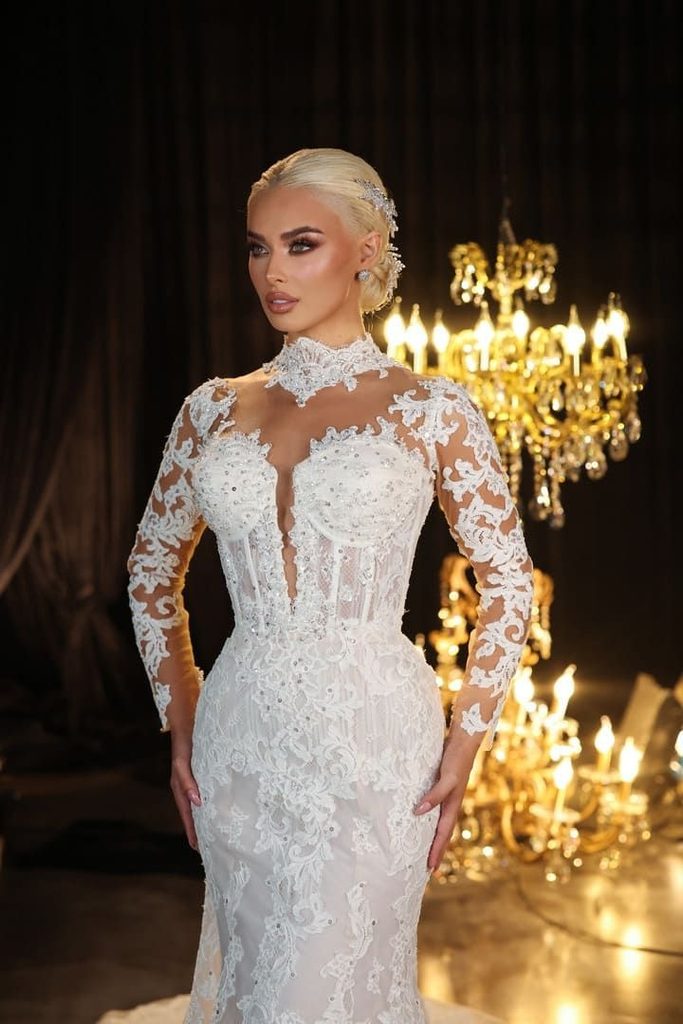
Frequently Asked Questions
What defines a true minimalist wedding dress in current production standards?
Clean silhouette, high-quality fabric that performs the design work, precise construction with no unnecessary surface decoration, and fit that appears effortless.
How does a Custom Wedding Dress Manufacturer approach pattern development for minimalist styles?
Patterns prioritize grain accuracy, consistent dart placement, and balanced seam allowances so the finished garment maintains its intended line under movement and photography.
Can a boutique order both single made-to-measure pieces and larger wholesale runs from the same partner?
Yes. Facilities structured as both Made to Measure Wedding Dress Manufacturer and wholesale producers accommodate both models under one roof.
What lead times should be expected for a new minimalist collection?
Typical ranges fall between four and ten weeks after final sample approval, depending on fabric availability and order complexity.
How important is fabric lot consistency for private-label programs?
Critical. A Private Label Wedding Dress Manufacturer should lock dye lots and maintain records so subsequent reorders match the original collection.
Does minimalist construction require less skilled labor than heavily embellished work?
No. It requires higher precision because imperfections cannot be camouflaged by beads or lace.
What quality-control steps are most relevant for clean-line gowns?
Lighting inspection, tension checks on long seams, grain verification, and fit evaluation on standardized forms plus client measurements.
Can designs be protected when working with an OEM Wedding Dress Manufacturer?
Reputable partners provide design protection agreements as standard practice for private-label and OEM clients.
How does a Bridal Gown Manufacturer for Bridal Shops handle size inclusivity?
Through accurate grading systems developed from the initial patterns rather than simple proportional scaling.
What shipping considerations apply when working with an International Wedding Dress Manufacturer?
Proper packing to protect structure, humidity control for certain fabrics, and complete customs documentation.
Is it possible to request fabric substitutions during development?
Yes, provided the technical performance of the new fabric is verified against the original design intent.
How does a Couture Wedding Dress Manufacturer differ from a standard wholesale producer?
Greater emphasis on hand-finishing, individual fitting protocols, and higher fabric grades while still offering scalable production.
What documentation should a boutique request before placing a first order?
Sample photos under natural light, fabric composition certificates, size charts, and a clear production timeline.
Can a Handcrafted Bridal Gown Manufacturer maintain consistency across multiple identical pieces?
Yes, when hand techniques are applied to controlled stages and supported by precise machine work on structural elements.
How are alterations typically handled after delivery?
Most partners provide detailed construction notes so local tailors can adjust hems or side seams without compromising the original architecture.
What role does a Wedding Dress OEM Supplier play for an independent designer?
Translating sketches into production-ready patterns, sourcing approved fabrics, and executing consistent runs while the designer retains creative control.
Are sustainable material options available through these manufacturers?
Many now offer certified silks, responsible mikado alternatives, and lower-impact dyeing processes upon request.
How does a Direct Bridal Gown Manufacturer reduce overall cost for the boutique?
By eliminating intermediate agents and allowing direct negotiation on fabric, volume, and finishing levels.
What happens if a fabric mill discontinues a preferred material?
An experienced partner maintains relationships with alternative mills and can propose closely matched substitutes for approval.
Can a boutique start with very small quantities?
Many Custom Bridal Gown Factory operations support low or no minimums for initial testing, then scale as demand grows.
How detailed should a tech pack be when submitting to a manufacturer?
Include measurements, fabric references, seam preferences, closure type, lining requirements, and any specific finishing notes.
What inspection methods are used before international shipment?
Multi-point visual and structural checks, steaming, and final packaging verification.
Does a Bespoke Bridal Wear Manufacturer also produce bridesmaid or evening pieces?
Many offer complementary categories under the same quality standards to support full collection development.
How are communication and revision rounds managed across time zones?
Clear milestone schedules, photo documentation at each stage, and designated contact points reduce delays.
What long-term advantages come from building a relationship with one primary manufacturer?
Consistent quality language, faster sampling cycles, preferential fabric access, and smoother scaling as the brand expands.
For boutiques and designers ready to develop or expand a minimalist bridal offering, direct collaboration with a capable production partner remains the most efficient path to market-ready collections.
The global bridal market increasingly relies on partners who can deliver couture-level finishing at commercially viable prices and realistic lead times. Turkey meets these requirements through a combination of factors that few other production regions match simultaneously.
Geographic proximity to Europe reduces transit times and freight costs compared with Asian alternatives. The long-standing customs arrangements between Turkey and the European Union facilitate smoother entry of goods into key markets. A deep textile heritage supplies both traditional hand skills and modern industrial capacity. Labor costs remain competitive relative to Western Europe while quality standards continue to rise. Finally, many Turkish ateliers have developed genuine expertise in both one-off bespoke work and private-label programs.
Metropol Wedding Dress illustrates this combination. Located in İzmir, the company maintains a substantial production workshop and serves as a Custom Wedding Dress Factory, Custom Bridal Gown Factory, and Wholesale Custom Wedding Dresses supplier. Its dual focus on individual client commissions and boutique wholesale orders allows partners to test designs at low volume before scaling.
Core Strengths of Turkish Bridal Production
Turkish manufacturers typically excel in several areas that matter most to bridal buyers:
- Pattern accuracy and grading across a wide size range
- Access to European and high-grade Asian fabrics at competitive landed costs
- Hand-finishing capacity for necklines, closures, and selective embellishment
- Willingness to work with flexible minimum order quantities
- Experience shipping to multiple international markets with proper documentation
These capabilities support roles ranging from Couture Wedding Dress Manufacturer and Luxury Bridal Gown Manufacturer to Private Label Wedding Dress Manufacturer and OEM Wedding Dress Manufacturer.
Production Models Available to International Buyers
Buyers can engage Turkish partners through several commercial structures:
- Made to Measure Wedding Dress Manufacturer services for individual brides
- Made to Order Wedding Dress Manufacturer programs for boutique stock
- Private Label Wedding Dress Manufacturer arrangements under the boutique’s own brand
- OEM Wedding Dress Manufacturer / Bridal Gown OEM Supplier relationships for client-supplied designs
- Wholesale Custom Wedding Dresses and Wholesale Custom Bridal Gowns with scalable volumes
- One of a Kind Wedding Dress Manufacturer commissions for high-end exclusivity
A single capable facility can often support multiple models simultaneously. This flexibility is particularly valuable for boutiques that begin with a small capsule and later expand into broader distribution.
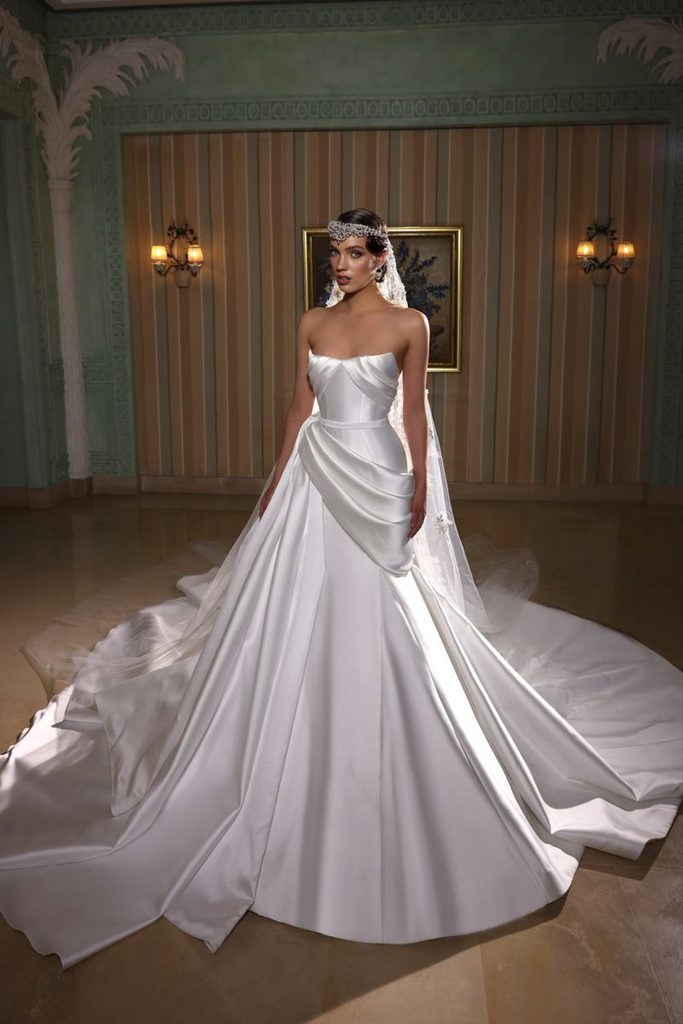
Material Sourcing and Construction Standards
Turkish bridal manufacturers commonly work with:
- Silk crepe, charmeuse, and mikado
- Duchess and stretch satins
- French and Italian laces
- High-quality organza and tulle overlays
A reliable Handmade Wedding Dress Manufacturer or Handcrafted Bridal Gown Manufacturer combines machine precision on long seams with hand techniques on critical zones. Quality control typically includes multi-stage inspection under natural and studio lighting, tension checks, and grain verification—especially important for clean or lightly embellished silhouettes.
Lead Times and Logistics Realities
Typical production timelines range from four to ten weeks after sample approval, depending on complexity and volume. Proximity to European ports and airports supports faster delivery than longer-haul Asian routes. Many exporters maintain experience with documentation required for EU, UK, Middle Eastern, and North American markets.
As an International Wedding Dress Manufacturer, Wedding Dress Exporter, and Bridal Gown Exporter, Metropol handles these logistics routinely, allowing boutique partners to focus on client relationships rather than supply-chain administration.
Cost Structure and Margin Considerations
Pricing reflects fabric grade, construction intensity, and order volume rather than pure geographic arbitrage. Key advantages for buyers include:
- Lower overhead relative to Western European ateliers
- Direct factory relationships that remove intermediary layers
- Ability to negotiate volume discounts once a relationship is established
A Direct Wedding Dress Manufacturer or Direct Bridal Gown Manufacturer model further improves transparency. Boutiques frequently report improved margins while still offering gowns that meet their quality expectations.
Evaluation Checklist for Selecting a Turkish Partner
- Confirm in-house pattern-making and grading capability
- Request recent production samples under natural light
- Verify fabric mill relationships and lot consistency practices
- Review quality-control stages and rejection criteria
- Clarify communication protocols and revision windows
- Assess export experience to your specific markets
- Examine design-protection policies for private-label work
- Evaluate flexibility for small initial orders that can grow
Partners functioning as Bridal Couture Manufacturer, Premium Wedding Dress Manufacturer, or Premium Bridal Gown Manufacturer should demonstrate both technical skill and commercial reliability.
Practical Application Scenarios
A European boutique developing a seasonal minimalist or lightly embellished collection can work with a Custom Bridal Collection Manufacturer or Custom Bridal Dress Manufacturer to refine samples, then move into limited wholesale production under private label.
An independent designer seeking a Personalized Wedding Dress Manufacturer or Customized Bridal Gown Manufacturer can iterate designs with rapid feedback cycles and later scale production without changing factories.
A multi-store retailer looking for consistent supply of core silhouettes can engage a Wedding Dress Manufacturer for Boutiques capable of both standard sizes and made-to-measure exceptions.
Risk Factors and Mitigation
Common challenges include currency fluctuation, occasional fabric availability shifts, and the need for clear technical communication across language and time zones. Mitigation strategies include:
- Locking fabric lots early in the process
- Using detailed tech packs with photographic references
- Establishing staged approval points
- Working with partners experienced in international client management
A Tailor Made Wedding Dress Manufacturer or Tailor Made Bridal Gown Manufacturer that already serves multiple export markets typically has systems in place to manage these variables.
Long-Term Partnership Value
The strongest results emerge from multi-season relationships. Consistent partners develop shared technical language, faster sampling cycles, preferential access to preferred fabrics, and smoother scaling as volumes grow. For brands focused on building lasting collections rather than one-off transactions, this continuity becomes a competitive advantage.
Metropol Wedding Dress continues to position itself as a versatile Custom Bridal Wear Manufacturer, Bespoke Bridal Wear Manufacturer, and full-service production partner capable of supporting both individual commissions and wholesale programs. Its İzmir location, production capacity, and export experience make it a practical option for international buyers seeking Turkish bridal manufacturing capabilities.
Frequently Asked Questions
Why do so many European boutiques source from Turkish bridal manufacturers?
Competitive pricing combined with high craftsmanship standards, shorter lead times than many Asian alternatives, and established export experience to European markets.
What production capacity can a typical İzmir-based Custom Wedding Dress Manufacturer support?
Facilities vary, but many handle both single made-to-measure orders and monthly volumes in the dozens to low hundreds of pieces while maintaining quality.
Are flexible minimum order quantities common?
Yes. Many partners functioning as Custom Bridal Gown Manufacturer or Private Label Wedding Dress Manufacturer accept low or no minimums for initial testing.
How do Turkish manufacturers handle private-label exclusivity?
Reputable suppliers provide design-protection agreements and produce under the client’s brand with appropriate labeling and packaging.
What lead times should buyers expect?
Four to ten weeks after final sample approval is typical, depending on fabric availability and construction complexity.
Can the same factory produce both heavily embellished and clean minimalist gowns?
Yes, provided the team has experience across both construction approaches and appropriate quality-control protocols for each.
How important is fabric lot consistency?
Critical for multi-season private-label programs. Strong manufacturers maintain records and relationships that support repeatability.
Do Turkish exporters manage shipping and customs documentation?
Experienced International Wedding Dress Manufacturer and Wedding Dress Exporter partners routinely handle documentation for major destination markets.
What communication practices work best across time zones?
Clear milestone schedules, photographic updates at each stage, and designated English-speaking contacts reduce delays.
Is made-to-measure service available alongside wholesale production?
Many facilities operate as both Made to Measure Wedding Dress Manufacturer and wholesale producers under one roof.
How are quality issues typically resolved?
Through defined inspection stages before shipment and clear post-delivery resolution processes agreed in advance.
Can independent designers work with an OEM Wedding Dress Manufacturer without large volumes?
Yes. Many Bridal Gown OEM Supplier relationships begin with small runs or even single samples and expand as the brand grows.
What role does hand-finishing play in Turkish production?
Critical zones such as necklines, closures, and selective detailing are frequently finished by hand even in industrial settings.
Are sustainable material options available?
An increasing number of manufacturers can source certified or lower-impact fabrics upon request.
How does a Direct Bridal Gown Manufacturer improve cost transparency?
By removing intermediary mark-ups and allowing direct negotiation on materials, labor, and volume.
What documentation should be requested before placing a first order?
Sample photos, fabric composition details, size charts, production timeline, and export references.
Can a boutique start with very small quantities and later scale?
Yes. Partners structured as Custom Wedding Dress Factory or Custom Bridal Gown Factory often support this progression.
How are revisions managed during sample development?
Through staged approvals with clear feedback windows to keep the overall timeline on track.
What long-term advantages come from building a relationship with one primary manufacturer?
Faster sampling, consistent quality language, preferential fabric access, and smoother volume growth.
Does Metropol Wedding Dress offer both retail-facing and wholesale services?
Yes. The company supports individual custom commissions as well as boutique and private-label wholesale programs.
For international buyers evaluating bridal fashion manufacturing options in Turkey, the combination of technical capability, commercial flexibility, and logistical advantages continues to make the region a practical and competitive choice.
Bridal retail has shifted toward more agile inventory models. Many boutiques no longer commit to large pre-season purchases of fixed styles. Instead, they prefer partners who can supply core silhouettes in controlled volumes, fulfill special-order requests, and support private-label development without forcing excessive stock risk.
Turkish wholesale factories have adapted to this demand. They combine industrial capacity with the ability to handle made-to-order and low-minimum programs. The result is a production environment that serves both volume-oriented retailers and design-driven boutiques.
Metropol Wedding Dress functions simultaneously as a Custom Wedding Dress Factory, Custom Bridal Gown Factory, Wholesale Custom Wedding Dresses supplier, and Wholesale Custom Bridal Gowns producer. This dual capability allows partners to begin with limited quantities and expand as demand is proven.
Key Operational Advantages of Turkish Wholesale Factories
Several structural factors make Turkey an effective base for bridal wholesale production:
- Established textile infrastructure supporting consistent fabric supply
- Skilled workforce experienced in both industrial sewing and selective hand-finishing
- Geographic proximity that shortens transit times to European markets
- Experience with international documentation and multi-market shipping
- Commercial flexibility regarding minimum order quantities
These advantages support roles ranging from Private Label Wedding Dress Manufacturer and OEM Wedding Dress Manufacturer to Bridal Gown OEM Supplier and Direct Wedding Dress Manufacturer.
Commercial Models Offered by Wholesale Factories
Buyers typically engage through one or more of the following structures:
- Standard wholesale runs of established styles
- Private-label production under the boutique’s own brand
- OEM manufacturing of client-supplied designs
- Hybrid programs combining stock silhouettes with made-to-measure options
- Seasonal capsule collections developed in collaboration with the factory
A capable partner can operate as a Made to Measure Wedding Dress Manufacturer for individual client orders while simultaneously fulfilling larger wholesale commitments. This flexibility is especially useful for multi-location retailers and growing private-label brands.
Production Flow in a Wholesale Bridal Factory
A typical sequence includes:
- Style selection or technical-pack submission
- Sample development and approval
- Fabric allocation and cutting
- Assembly with staged quality checks
- Finishing, pressing, and final inspection
- Packaging and export documentation
- Shipment and tracking
Factories functioning as Couture Wedding Dress Manufacturer or Luxury Bridal Gown Manufacturer maintain higher finishing standards even on wholesale runs, particularly on necklines, closures, and hems. Those operating primarily as volume producers prioritize consistency and throughput while still meeting agreed construction specifications.
Material and Construction Considerations for Wholesale
Wholesale programs require greater attention to lot consistency than one-off bespoke work. Key practices include:
- Securing fabric from reliable mills with repeatable dye lots
- Standardizing construction sequences across sizes
- Implementing multi-point inspection before packing
- Documenting any approved deviations clearly
A Handmade Wedding Dress Manufacturer or Handcrafted Bridal Gown Manufacturer may still apply hand techniques to critical areas even when producing at wholesale volumes. The balance between speed and finish quality is negotiated according to the price point and market positioning of the finished collection.
Logistics and Export Realities
Turkish factories serving international clients typically manage:
- Proper packing to protect structure and fabric
- Complete commercial invoices and certificates of origin
- Coordination with freight forwarders for air or sea routes
- Tracking and communication through delivery
As an International Wedding Dress Manufacturer, Wedding Dress Exporter, and Bridal Gown Exporter, Metropol handles these steps routinely. Proximity to European ports and airports supports relatively short transit times compared with longer-haul Asian alternatives.
Cost Structure and Margin Impact
Wholesale pricing is driven by fabric grade, construction complexity, order volume, and finishing level. Direct factory relationships remove intermediary layers, improving transparency and margin potential for the boutique.
A Direct Bridal Gown Manufacturer or Premium Wedding Dress Manufacturer can offer tiered pricing that rewards larger or repeat orders while still accommodating smaller initial commitments. Clear quoting based on technical specifications prevents later cost surprises.
Evaluation Checklist for Selecting a Wholesale Factory
- Confirm actual production capacity and current lead times
- Review recent wholesale samples under natural light
- Verify quality-control stages and documentation
- Assess flexibility on minimum order quantities
- Examine export experience to your destination markets
- Clarify communication protocols and revision windows
- Review design-protection policies for private-label work
- Evaluate willingness to support both stock and special-order programs
Partners positioned as Bridal Couture Manufacturer, Premium Bridal Gown Manufacturer, or Custom Bridal Collection Manufacturer should demonstrate both technical reliability and commercial responsiveness.
Practical Scaling Path for Boutiques
Many successful partnerships follow a progressive path:
- Initial sample or small test order
- Limited wholesale run of proven styles
- Private-label development of exclusive pieces
- Expansion into broader size ranges or seasonal capsules
- Ongoing replenishment and special-order support
A factory that can operate as both a One of a Kind Wedding Dress Manufacturer for exclusive pieces and a high-volume wholesale producer allows the boutique to grow without changing suppliers.
Common Challenges and Practical Solutions
- Fabric availability shifts → Lock lots early and maintain alternative options
- Communication across time zones → Establish clear milestone schedules and photographic updates
- Consistency across large runs → Require multi-stage inspection records
- Currency or shipping cost fluctuations → Discuss pricing validity periods and freight options in advance
Working with an experienced Tailor Made Wedding Dress Manufacturer or Tailor Made Bridal Gown Manufacturer that already serves multiple export markets reduces these risks.
Long-Term Partnership Benefits
Consistent partners develop shared technical language, faster sample turnaround, preferential access to preferred fabrics, and smoother volume adjustments. For retailers focused on building durable collections rather than opportunistic one-off purchases, this continuity becomes a measurable competitive advantage.
Metropol Wedding Dress continues to serve as a Custom Bridal Wear Manufacturer, Bespoke Bridal Wear Manufacturer, and full-service wholesale factory capable of supporting both limited and larger-scale programs. Its İzmir production base, export experience, and flexible commercial approach position it as a practical partner for international buyers seeking reliable Turkish wedding dress wholesale capacity.
Frequently Asked Questions
What distinguishes a wedding dress wholesale factory from a pure bespoke atelier?
Wholesale factories prioritize consistent production sequences, volume capacity, and export logistics while still offering customization options. Pure bespoke ateliers focus primarily on individual one-off commissions.
Can a boutique begin with very small quantities at a Turkish wholesale factory?
Yes. Many facilities functioning as Custom Wedding Dress Manufacturer or Custom Bridal Gown Manufacturer accept low or no minimums for initial testing.
How do private-label programs work with a wholesale factory?
The factory produces under the boutique’s brand, applies agreed labeling and packaging, and often provides design-protection agreements.
What typical lead times apply to wholesale orders?
Four to ten weeks after sample approval is common, depending on fabric availability and order complexity.
Are made-to-measure services available alongside wholesale production?
Yes. Partners operating as Made to Measure Wedding Dress Manufacturer and Made to Order Wedding Dress Manufacturer frequently support both models.
How is quality consistency maintained across larger runs?
Through standardized construction sequences, multi-stage inspections, and clear documentation of approved specifications.
What documentation should buyers request before placing a wholesale order?
Recent production samples, fabric composition details, size charts, lead-time confirmation, and export references.
Do Turkish wholesale factories manage international shipping?
Experienced International Wedding Dress Manufacturer and Wedding Dress Exporter partners routinely handle packaging, documentation, and freight coordination.
Can the same factory produce both clean minimalist and more embellished styles?
Yes, provided the team has experience across construction approaches and appropriate quality protocols for each category.
How are fabric lot changes handled in ongoing wholesale programs?
Strong partners maintain records, notify clients of any necessary substitutions, and seek approval before proceeding.
What communication practices reduce delays?
Staged photographic updates, designated contacts, and agreed revision windows keep projects on schedule.
Is design exclusivity protected in private-label arrangements?
Reputable Private Label Wedding Dress Manufacturer and OEM Wedding Dress Manufacturer partners provide formal protection agreements.
How does direct factory sourcing affect margins?
Removing intermediary layers typically improves cost transparency and available margin for the boutique.
Can independent designers use a wholesale factory for small capsule collections?
Yes. Many Bridal Gown OEM Supplier relationships begin with limited runs and expand as the brand grows.
What role does hand-finishing play in wholesale production?
Critical zones such as necklines and closures are often finished by hand even on volume orders to maintain quality standards.
Are sustainable or certified materials available for wholesale programs?
An increasing number of factories can source lower-impact or certified fabrics when specified in advance.
How should a boutique evaluate production capacity?
Request current lead times, monthly capacity figures, and examples of recent comparable wholesale shipments.
What happens if revisions are needed after sample approval?
Clear revision windows and cost implications should be defined in the initial agreement to avoid timeline disruption.
Can a single partner support both stock replenishment and special client orders?
Yes. Factories structured as Custom Bridal Gown Factory and wholesale producers frequently manage both streams.
Does Metropol Wedding Dress offer wholesale programs for international boutiques?
Yes. The company supports wholesale, private-label, and hybrid made-to-measure programs for partners in multiple markets.
For retailers and brands evaluating wedding dress wholesale factory options in Turkey, the combination of production flexibility, export experience, and competitive commercial terms continues to make the region a practical sourcing choice.
Related Topics

17.06.2025
The bridal industry is a vibrant and ever-evolving sector, with private label bridal gowns gaining significant traction among retailers, designers, and brides-to-be. Private label bridal gowns refer to wedding dresses manufactured by one company but...
08.08.2025
Bridal Gown Alterations in Turkey has emerged as a premier destination for bridal fashion, renowned for its exquisite craftsmanship, luxurious fabrics, and competitive pricing. Bridal gown alterations in Turkey are particularly sought after by brides...

10.12.2025
Wholesale Wedding Dress in UK The wedding industry in the United Kingdom continues to flourish, with thousands of weddings taking place every year and millions of pounds circulating across the bridal fashion market. For boutiques,...
07.05.2026
Von Instagram zum echten Brautkleid Hey du, stell dir vor: Du scrollst abends durch Instagram, siehst dieses eine Brautkleid, das einfach perfekt aussieht. Der Schnitt, der Stoff, wie es fällt, die Details… dein Herz schlägt...

03.06.2025
British Bridal Wholesale Wedding Dresses The UK has long been known for its sophisticated style, timeless elegance, and exceptional craftsmanship in the bridal industry. In recent years, British Bridal Wholesale Wedding Dresses have become a...
27.04.2026
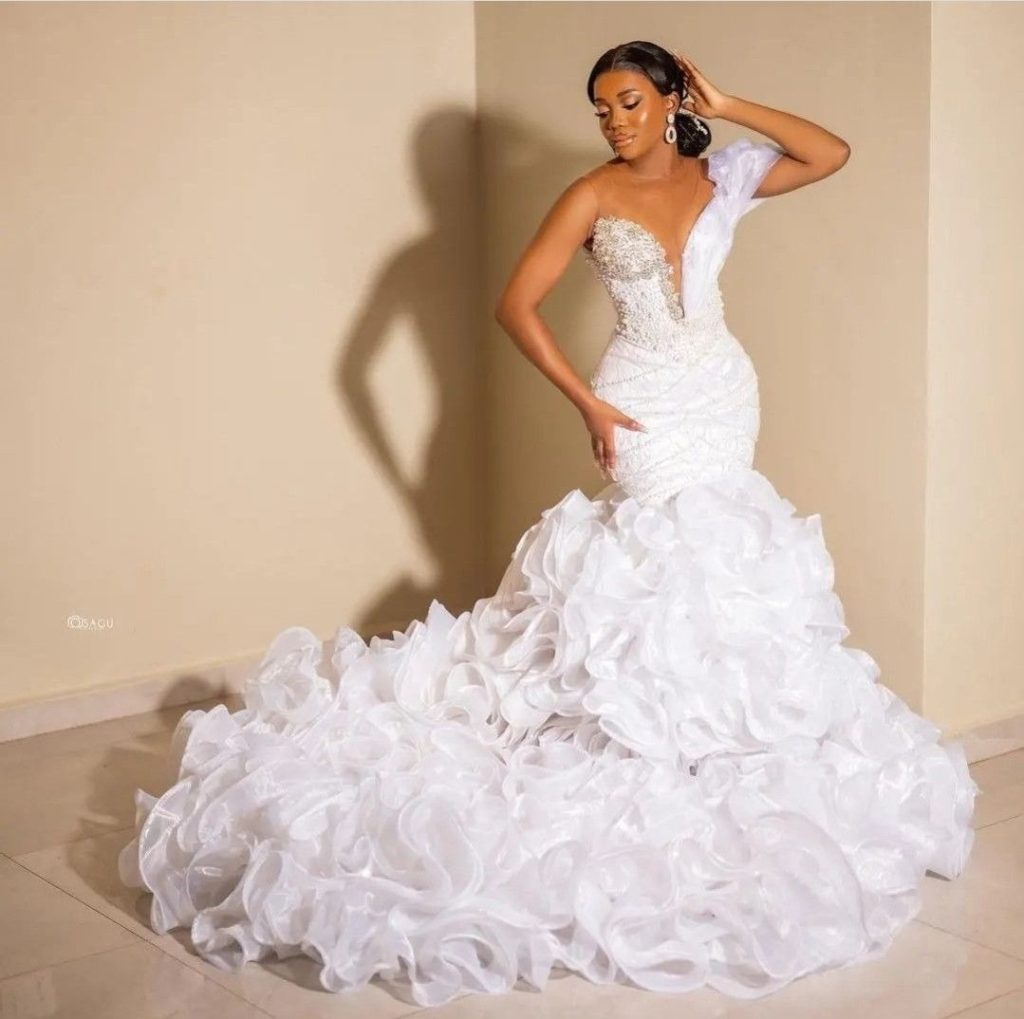
La robe de mariée luxe sirène reste, année après année, l’un des modèles les plus convoités par les futures mariées qui souhaitent allier élégance extrême, sensualité maîtrisée et sophistication. Si vous recherchez une robe de...
Comments